Bachelor of Science (BSC) Biology: Course Details, Eligibility, Syllabus, Fees, Career Scope & Salary
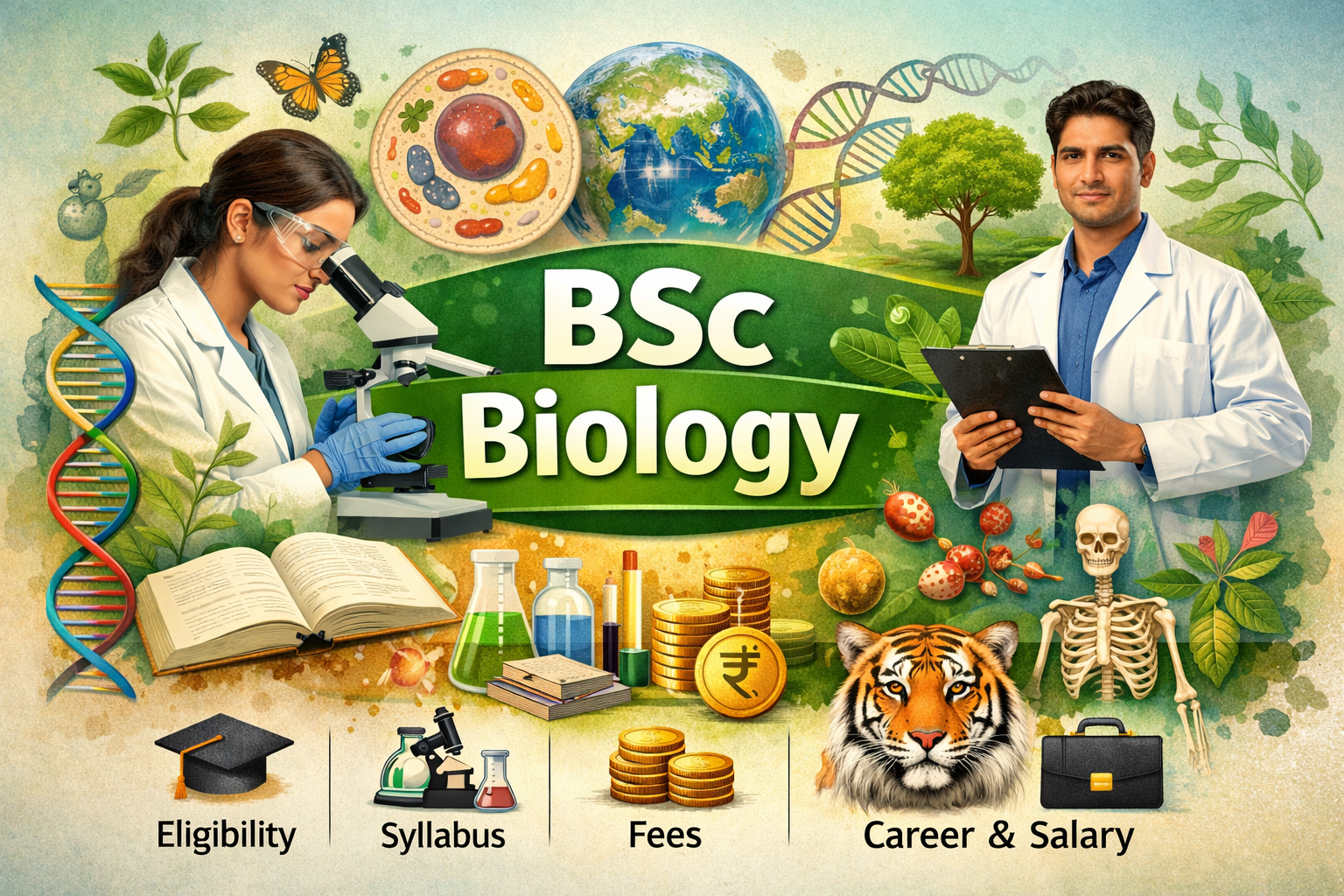
Bachelor of Science (BSc) Biology is one of the most popular undergraduate science courses chosen by students after completing Class 12 with Biology. It is a foundational degree that focuses on the study of living organisms, life processes, and biological systems at molecular, cellular, and ecological levels. The course builds a strong base for careers in healthcare, research, biotechnology, environmental science, education, and higher studies.
In India, BSc Biology is offered by almost all major universities and colleges, both government and private. The course combines theoretical learning with practical laboratory work, helping students develop analytical thinking, scientific temperament, and research-oriented skills.
Why Choose BSc Biology After 12th?
Choosing BSc Biology after Class 12 opens up a wide range of academic and career opportunities. It is a flexible degree that allows students to move into diverse fields such as research, teaching, healthcare support, pharmaceuticals, environmental science, and biotechnology.
Students who do not wish to pursue MBBS or allied medical courses often choose BSc Biology as a strong alternative. The course also acts as a stepping stone for higher education like MSc, PhD, MBA, and international studies. Additionally, the growing demand for life science professionals makes BSc Biology a future-oriented choice.
Who Should Study BSc Biology?
BSc Biology is suitable for students who have a genuine interest in biology and life sciences. It is ideal for those who enjoy laboratory experiments, research work, data analysis, and scientific writing. Students aiming for careers in research, teaching, biotechnology, environmental studies, or healthcare-related fields will benefit greatly from this course.
It is also a good option for students who want flexibility in career choices and plan to specialize later through postgraduate studies.
BSc Biology Course Overview
The Bachelor of Science (BSc) in Biology is a structured undergraduate program designed to provide students with a strong foundation in life sciences. The course focuses on understanding living organisms, their structure, functions, growth, evolution, and interaction with the environment. It balances theoretical concepts with extensive practical and laboratory-based learning, making it an ideal choice for students interested in scientific research, healthcare, biotechnology, and environmental studies.
People Also Read
Course Name and Degree Type
The official name of the course is Bachelor of Science in Biology (BSc Biology). It is an undergraduate academic degree awarded by recognized universities and colleges after successful completion of the program requirements.
BSc Biology is a foundational science degree, meaning it builds core scientific knowledge that can be further specialized at the postgraduate and doctoral levels. The degree is widely recognized in India and abroad and serves as a gateway to higher education, research careers, and various professional fields related to life sciences.
Course Level and Duration
BSc Biology is an undergraduate-level program with a total duration of three years. The course is usually divided into six semesters, with each semester focusing on different aspects of biological sciences.
In the initial semesters, students are introduced to basic concepts such as cell biology, biochemistry, and genetics. As the course progresses, more advanced subjects like molecular biology, biotechnology, ecology, and bioinformatics are introduced. The final year often includes project work or a dissertation, allowing students to apply their knowledge to real-world biological problems.
Study Mode (Regular / Distance / Online)
BSc Biology is mainly offered in regular (full-time) mode due to its strong emphasis on laboratory experiments, practical training, and hands-on learning. Regular mode allows students to access well-equipped laboratories, participate in fieldwork, and interact closely with faculty members.
Some universities and open institutions may offer distance or online programs in life sciences or biology-related fields. However, these modes usually have limited practical exposure. For students who want in-depth scientific training and better career prospects, the regular classroom mode is strongly recommended, especially for those planning to pursue research or higher studies.
Academic Discipline and Core Focus Areas
BSc Biology falls under the broad academic discipline of Life Sciences. The course is designed to study life at different levels—from microscopic cellular structures to complex ecosystems.
The core focus areas of the program include:
-
Cell Biology – understanding the structure and function of cells
-
Genetics – studying heredity, genes, and DNA
-
Microbiology – exploring microorganisms and their role in health and environment
-
Molecular Biology – learning about molecular mechanisms of life processes
-
Physiology – understanding how plants and animals function
-
Ecology – studying ecosystems, biodiversity, and environmental balance
-
Biotechnology – applying biological principles to technology and industry
-
Environmental Biology – addressing environmental issues and sustainability
These focus areas ensure that students gain full biological knowledge, practical skills, and analytical abilities required for careers in research, healthcare, biotechnology, education, and environmental sectors.
Eligibility Criteria for BSc Biology
The eligibility criteria for Bachelor of Science (BSc) Biology are set by universities and colleges to ensure that students have the required academic background to understand the core concepts of biological sciences. While the basic requirements remain similar across India, slight variations may exist depending on the institution.
Educational Qualification Required
To apply for BSc Biology, candidates must have successfully completed Class 12 (10+2) or an equivalent examination from a recognized board such as CBSE, ICSE, or a state board.
The candidate should have studied science subjects at the higher secondary level, as BSc Biology involves advanced scientific concepts that require prior knowledge of biology and related subjects.
Minimum Marks Criteria
Most colleges and universities require candidates to secure a minimum of 45% to 50% aggregate marks in Class 12. Reputed institutions and central universities may have higher cut-off percentages, especially for general category students.
For reserved category candidates (SC, ST, OBC, EWS, and PwD), relaxation in minimum marks is usually provided as per government norms. The exact cut-off may vary each year depending on the number of applicants and available seats.
Mandatory Subjects in Class 12
Biology is a compulsory subject for admission to BSc Biology. In addition to Biology, students are generally required to have studied:
-
Physics
-
Chemistry
Students from the PCB (Physics, Chemistry, Biology) stream are considered fully eligible. In some universities, students who studied Biology with Mathematics may also be eligible. However, candidates without Biology in Class 12 are not eligible for BSc Biology admission.
Age Limit (If Any)
In most colleges and universities, there is no upper age limit for admission to BSc Biology. The minimum age requirement is usually 17 years at the time of admission or as specified by the university.
Some institutions may set age limits for specific admission categories or entrance exams, so candidates are advised to check the official admission notification of the respective college or university.
Eligibility for Reserved Categories
Candidates belonging to reserved categories such as SC, ST, OBC, EWS, and PwD are provided relaxation in minimum qualifying marks and age limits, as per government regulations.
They may also be eligible for:
-
Reserved seats in colleges
-
Fee concessions
-
Scholarships and financial assistance
Valid category certificates issued by competent authorities must be submitted during the admission process to claim these benefits.
BSc Biology Admission Process in India
Admission to Bachelor of Science (BSc) Biology in India is a straightforward process, but it can vary depending on the type of college or university. Generally, students can gain admission either through merit-based selection or entrance examinations. Understanding the process is crucial to ensure timely applications and secure a seat in a reputed institution.
Merit-Based Admission Process
Many universities and colleges in India offer direct admission based on Class 12 marks, particularly for students from recognized boards.
Key steps in merit-based admission:
-
Application Submission – Students apply online or offline to the college of their choice.
-
Verification of Marks – Colleges verify the Class 12 mark sheet and eligibility criteria.
-
Merit List Publication – A merit list is released based on students’ scores in Biology, Physics, and Chemistry.
-
Counseling and Seat Allotment – Selected candidates are called for counseling, where they confirm their course and pay the admission fee.
Merit-based admission is commonly followed by government colleges, state universities, and some private institutions, especially for students with high scores in PCB subjects.
Entrance Exam-Based Admission Process
Some prestigious universities, central universities, and private institutions require candidates to clear entrance exams to secure admission to BSc Biology.
Why entrance exams are conducted:
-
To assess the candidate’s understanding of Biology and related subjects.
-
To maintain fairness in admission, especially when seats are limited.
-
To select students who are capable of handling advanced coursework.
Typical steps in entrance-based admission:
-
Check Eligibility – Ensure Class 12 marks and subjects meet the university requirements.
-
Fill Application Form – Submit details and pay the application fee online.
-
Appear for Entrance Exam – Exams test concepts in Biology, Physics, and Chemistry.
-
Result Announcement – Scores are published online.
-
Counseling and Seat Confirmation – Shortlisted students attend counseling and pay fees.
Common Entrance Exams for BSc Biology
Some of the popular entrance exams for admission to BSc Biology include:
-
CUET-UG (Central Universities Entrance Test) – Conducted for admission in most central universities.
-
University-Specific Exams – Many universities like Banaras Hindu University (BHU), Jamia Millia Islamia (JMI), and others conduct their own tests.
-
State-Level Exams – Some state universities and colleges conduct separate state-level entrance exams for science courses.
Students should check the official website of the university to know the exact pattern, syllabus, and dates of the entrance exams.
Step-by-Step Admission Process
A typical BSc Biology admission process in India involves the following steps:
-
Research Colleges and Courses – Shortlist universities based on location, reputation, facilities, and fees.
-
Check Eligibility Criteria – Confirm Class 12 subjects, minimum marks, and any age requirements.
-
Application Submission – Fill out online/offline forms before the last date.
-
Entrance Exam (If Applicable) – Prepare for and appear in entrance exams.
-
Merit List and Counseling – Colleges release a merit or entrance score-based list and invite students for counseling.
-
Document Verification – Submit mark sheets, certificates, ID proofs, and category certificates if applicable.
-
Fee Payment and Seat Confirmation – Pay the admission fee to secure your seat.
-
Commencement of Classes – Attend orientation and start the academic sessions.
Documents Required for Admission
Students must prepare the following documents for verification during admission:
-
Class 10 and Class 12 mark sheets
-
Passing certificates
-
Transfer certificate (TC) and migration certificate (if moving from another board or university)
-
Birth certificate or age proof
-
Category certificate (SC/ST/OBC/EWS/PwD)
-
Passport-sized photographs
-
Government-issued ID proof (Aadhaar, PAN, Voter ID, etc.)
Ensuring all documents are complete and valid is critical to avoid delays or rejection during the admission process.
BSc Biology Syllabus and Subjects
The BSc Biology syllabus is designed to provide students with a solid foundation in life sciences while also introducing advanced concepts in molecular biology, biotechnology, ecology, and environmental studies. The course emphasizes both theoretical understanding and practical laboratory experience, which are essential for careers in research, healthcare, biotechnology, teaching, and environmental science.
The program is typically structured across three years and divided into six semesters, with each year focusing on progressively advanced topics. Apart from core subjects, students are often required to complete practical experiments, lab work, and research projects, which develop analytical and technical skills.
BSc Biology Course Structure
The course is generally divided into three major components:
-
Core Subjects – Mandatory papers covering fundamental aspects of biology.
-
Elective Subjects – Optional papers allowing students to specialize in specific areas.
-
Practical / Laboratory Work – Hands-on experiments, lab exercises, and research projects that complement theory.
This combination ensures that students gain conceptual knowledge, problem-solving skills, and technical proficiency, preparing them for both higher education and professional roles.
Core Subjects vs Elective Subjects
-
Core Subjects: These are mandatory subjects covering all major branches of biology, including cell biology, genetics, physiology, ecology, and molecular biology. They ensure a broad understanding of the field.
-
Elective Subjects: Students may choose specialized subjects like biotechnology, microbiology, environmental biology, or bioinformatics depending on their interest and career goals. Electives allow students to focus on niche areas that match their professional ambitions.
Practical and Laboratory Components
Practical training is a critical part of the BSc Biology curriculum. Students perform experiments in laboratories, maintain records, and learn research methodologies. Practical components include:
-
Microscopy and observation of cells and tissues
-
Experiments in biochemistry and molecular biology
-
Microbiological culturing techniques
-
Plant and animal physiology experiments
-
Environmental sample analysis
-
Data collection, interpretation, and lab report writing
These practicals help students apply theoretical knowledge in real-world scenarios and prepare them for careers in research, clinical labs, and biotechnology.
| Year | Subject | Key Topics / Syllabus |
|---|---|---|
| 1st Year | Cell Biology | Structure & function of cells, organelles, cell membrane, transport mechanisms, cell signaling, cell division (mitosis & meiosis), stem cells |
| Biochemistry | Biomolecules (carbohydrates, proteins, lipids, nucleic acids), enzymes, enzyme kinetics, metabolic pathways, energy production | |
| Microbiology | Introduction to microorganisms, bacteria, viruses, fungi, protozoa, microbial growth, culture techniques, sterilization methods, role of microbes in health & environment | |
| Genetics | Mendelian genetics, inheritance patterns, chromosomes, DNA & RNA, gene expression, introduction to molecular genetics | |
| Practical Lab Work | Microscopy, staining techniques, biochemical assays, microbial culture, basic laboratory safety | |
| 2nd Year | Molecular Biology | DNA replication, transcription, translation, gene regulation, molecular biology techniques (PCR, gel electrophoresis) |
| Plant Physiology | Photosynthesis, respiration, transpiration, plant growth regulators, signal transduction, mineral nutrition, water relations | |
| Animal Physiology | Digestive, circulatory, respiratory systems, nervous & endocrine systems, comparative physiology | |
| Ecology | Ecosystems, biodiversity, conservation biology, population dynamics, community ecology, environmental challenges | |
| Immunology | Structure & function of immune system, antigens, antibodies, immune responses, vaccines, immunological disorders | |
| Practical Work | Molecular biology experiments, plant & animal physiology experiments, environmental & ecological sample analysis | |
| 3rd Year | Biotechnology | Recombinant DNA technology, genetic engineering, cloning, industrial & medical applications |
| Evolutionary Biology | Theories of evolution, natural selection, adaptation, speciation, phylogenetics | |
| Environmental Biology | Pollution, climate change, global warming, conservation strategies, sustainable practices, environmental impact assessment | |
| Bioinformatics | Computational biology, genomics & proteomics, sequence alignment, databases, molecular modeling | |
| Research Project / Dissertation | Independent research under faculty supervision, project planning, data collection & analysis, scientific report writing | |
| Practical Work | Advanced molecular biology & biotechnology experiments, ecological & environmental fieldwork, bioinformatics software training |
BSc Biology Specializations
BSc Biology offers students the opportunity to specialize in specific fields of life sciences based on their interests and career goals. While the core subjects provide a strong foundation in biology, choosing a specialization allows students to focus on a niche area, gain advanced knowledge, and improve employability.
Here are the most popular BSc Biology specializations in India:
1. General Biology
Overview:
General Biology is a broad-based specialization covering the fundamental principles of biology. Students study cell biology, genetics, ecology, physiology, and molecular biology without deep specialization in any single branch.
Why Choose It:
-
Ideal for students who want a full understanding of life sciences.
-
Provides flexibility for higher studies such as MSc, PhD, or MBA in healthcare/biotech management.
Career Opportunities:
-
Research Assistant
-
Lab Technician
-
Environmental Consultant
-
Teaching and academic roles
2. Microbiology
Overview:
Microbiology focuses on the study of microorganisms, including bacteria, viruses, fungi, and protozoa. The course explores microbial physiology, genetics, pathology, and applications in medicine, industry, and the environment.
Why Choose It:
-
For students interested in medical microbiology, virology, or industrial microbiology.
-
High demand in clinical laboratories, pharmaceuticals, and biotechnology.
Career Opportunities:
-
Microbiologist
-
Clinical Lab Technician
-
Quality Control Officer in pharmaceutical companies
-
Research Associate in biotech firms
3. Biotechnology
Overview:
Biotechnology combines biology with technology, focusing on applications like genetic engineering, molecular biology, and industrial biotechnology. Students learn laboratory techniques and research methods used in modern biological sciences.
Why Choose It:
-
Perfect for students interested in biotech industries, genetics, or pharmaceutical research.
-
Provides strong foundations for higher studies or professional roles in biotech and healthcare sectors.
Career Opportunities:
-
Biotechnologist
-
Genetic Engineer
-
Clinical Research Associate
-
Bioinformatics Analyst
4. Genetics
Overview:
Genetics is the study of genes, heredity, and variations in organisms. The specialization covers molecular genetics, cytogenetics, population genetics, and applications like genetic counseling and gene therapy.
Why Choose It:
-
Suitable for students fascinated by human genetics, genetic disorders, and molecular biology.
-
Growing opportunities in medical research, diagnostics, and biotechnology.
Career Opportunities:
-
Geneticist
-
Research Scientist in genomics labs
-
Clinical Genetic Counselor
-
Forensic Analyst
5. Environmental Biology
Overview:
Environmental Biology focuses on ecosystems, biodiversity, environmental issues, and conservation strategies. Students learn how to assess and manage environmental challenges such as pollution, climate change, and habitat destruction.
Why Choose It:
-
Ideal for students passionate about nature, conservation, and sustainable development.
-
Opens career options in government agencies, NGOs, and environmental consultancy.
Career Opportunities:
-
Environmental Consultant
-
Ecologist
-
Wildlife Biologist
-
Environmental Policy Analyst
6. Zoology and Botany
Zoology:
-
Focuses on animal biology, including physiology, anatomy, behavior, evolution, and ecology.
-
Career options: Animal Biologist, Wildlife Conservationist, Veterinary Assistant, Academic Researcher.
Botany:
-
Focuses on plant biology, including plant physiology, taxonomy, genetics, and biotechnology.
-
Career options: Botanist, Horticulturist, Plant Biotechnologist, Research Scientist.
Why Choose Them:
-
Ideal for students who want in-depth knowledge of either plants or animals.
-
Both provide a strong foundation for higher studies and research in specialized biological fields.
Top Colleges for BSc Biology in India
| College Name | Type | Location | Admission Process | Highlights |
|---|---|---|---|---|
| St. Stephen’s College | Government-Aided | Delhi | Merit-based (Class 12 marks + CUET-UG) | Highly reputed, strong faculty, well-equipped labs, research opportunities |
| Lady Shri Ram College (LSR) | Government-Aided | Delhi | Merit-based (Class 12 marks + CUET-UG) | Excellent academic record, interdisciplinary approach, strong placement support |
| Christ University | Private | Bengaluru | Entrance exam + merit | Modern labs, industry collaborations, elective options, research projects |
| Presidency College | Government | Chennai, Tamil Nadu | Merit-based | Strong focus on research, well-maintained labs, experienced faculty |
| Madras Christian College (MCC) | Private | Chennai, Tamil Nadu | Merit-based + counseling | full syllabus, active campus, practical exposure |
| Banaras Hindu University (BHU) | Central University | Varanasi, Uttar Pradesh | Entrance exam (BHU-UET) | Renowned central university, large campus, research-oriented program |
| University of Delhi (DU) | Central University | Delhi | Merit-based + CUET-UG | Multiple colleges under DU offer BSc Biology, diverse electives, research opportunities |
| Jawaharlal Nehru University (JNU) | Central University | Delhi | Entrance-based (JNU-CEE) | Strong focus on molecular biology, biotechnology, research and innovation |
| Mumbai University | Government | Mumbai, Maharashtra | Merit-based | Offers diverse specializations, practical exposure, strong alumni network |
| Fergusson College | Private | Pune, Maharashtra | Merit-based | Historic institution, research opportunities, well-equipped laboratories |
BSc Biology Fees Structure
| Fee Component | Government Colleges | Private Colleges | Additional Costs | Scholarships / Financial Assistance |
|---|---|---|---|---|
| Tuition Fees | ₹10,000 – ₹50,000 per year | ₹50,000 – ₹2,00,000 per year | N/A | Merit-based and need-based scholarships offered by government and college |
| Laboratory / Practical Fees | ₹2,000 – ₹5,000 per year | ₹5,000 – ₹20,000 per year | Lab consumables, reagents, equipment charges | Some colleges provide partial lab fee waivers |
| Examination / Registration Fees | ₹500 – ₹2,000 per year | ₹1,000 – ₹5,000 per year | Exam-related costs like certificates, evaluation | Fee concessions available for reserved categories |
| Hostel Fees | ₹10,000 – ₹25,000 per year | ₹25,000 – ₹1,00,000 per year | Boarding, mess charges, utilities | Scholarships or subsidized hostel seats in government colleges |
| Field Trips / Industrial Visits | ₹2,000 – ₹10,000 per year | ₹5,000 – ₹20,000 per year | Travel, accommodation, and study material costs | Colleges may provide financial support for essential visits |
| Total Annual Cost | ₹15,500 – ₹87,000 | ₹85,000 – ₹3,45,000 | Depends on extra activities and hostel facilities | Government scholarships: National Merit, State Merit, SC/ST/OBC/EWS scholarships |
Skills Required to Succeed in BSc Biology
BSc Biology is a scientific and research-oriented program, so students need a combination of theoretical knowledge, practical skills, and analytical abilities to excel. While the curriculum provides foundational knowledge, developing these skills is crucial for academic success, laboratory proficiency, and future career opportunities.
1. Analytical and Research Skills
Why It Matters:
Biology involves observing patterns, interpreting data, and understanding complex biological systems. Students must be able to analyze experimental results, identify trends, and draw logical conclusions.
How to Develop:
-
Practice solving biological problems and case studies.
-
Participate in lab experiments and research projects.
-
Learn to critically evaluate scientific papers and research articles.
Career Relevance:
Analytical skills are essential for research scientists, clinical researchers, environmental analysts, and bioinformaticians.
2. Observation and Laboratory Skills
Why It Matters:
Practical work is the backbone of BSc Biology. Accurate observation, careful measurement, and proper lab techniques are required for experiments in microbiology, biochemistry, genetics, and ecology.
How to Develop:
-
Attend all lab sessions and practice standard procedures.
-
Maintain a well-organized lab notebook with observations.
-
Develop attention to detail for error-free experiments.
Career Relevance:
Lab skills are essential for biotechnologists, microbiologists, lab technicians, and environmental consultants.
3. Data Analysis and Reporting Skills
Why It Matters:
Biology students often collect large amounts of experimental or field data. The ability to analyze data using statistical or computational tools and present findings clearly is crucial.
How to Develop:
-
Learn software tools like Excel, SPSS, R, or bioinformatics platforms.
-
Practice drawing graphs, charts, and tables.
-
Prepare well-structured lab reports and research documentation.
Career Relevance:
These skills are vital for clinical research associates, bioinformaticians, environmental analysts, and research coordinators.
4. Communication and Scientific Writing Skills
Why It Matters:
Biology is a research-driven field, and communicating your findings effectively is as important as conducting experiments. Students must present results, write reports, and explain concepts to peers and mentors.
How to Develop:
-
Practice writing lab reports, research papers, and project summaries.
-
Present findings in seminars and classroom discussions.
-
Improve verbal communication for teamwork and scientific presentations.
Career Relevance:
Strong communication skills help in academic teaching, research presentations, industry reports, grant applications, and publishing scientific articles.
5. Critical Thinking and Problem-Solving
Why It Matters:
Biology students often encounter unexpected results in experiments or challenges in research. Being able to think critically and solve problems is essential for success.
How to Develop:
-
Engage in case studies and research discussions.
-
Analyze scientific problems and propose solutions.
-
Participate in internships and research projects for practical exposure.
Career Relevance:
Critical thinking is essential for roles like research scientist, environmental consultant, clinical researcher, and biotech specialist.
6. Time Management and Organization Skills
Why It Matters:
Managing theory classes, practicals, assignments, and projects requires strong time management. Organizing work efficiently ensures timely completion of lab work and research projects.
How to Develop:
-
Use planners and schedules to balance coursework and practical sessions.
-
Prioritize tasks and set deadlines.
-
Maintain a systematic approach to experiments and fieldwork.
Career Relevance:
These skills are crucial for project-based research, internships, and professional lab roles.
Career Scope After BSc Biology
BSc Biology graduates have diverse career opportunities across research, healthcare, education, environmental science, and biotechnology. The degree equips students with theoretical knowledge, practical lab skills, and analytical abilities, making them suitable for both entry-level jobs and higher education.
Job-Oriented Career Options
-
Laboratory and Research Roles: Graduates can work in research labs, pharmaceutical companies, clinical laboratories, and biotech firms.
-
Healthcare and Clinical Roles: Opportunities include clinical research, hospital laboratories, and diagnostics.
-
Environmental and Conservation Careers: Roles in NGOs, government environmental departments, and wildlife organizations.
-
Teaching and Academic Careers: After postgraduate studies, graduates can become lecturers, teachers, or educational content creators.
Research and Laboratory-Based Careers
BSc Biology provides a strong foundation for research-oriented roles, where graduates can assist senior scientists, perform experiments, and contribute to innovation in biotechnology, microbiology, and molecular biology.
Government Sector Opportunities
-
Jobs in public health departments, research institutes, environmental agencies, and biotechnology centers.
-
Opportunities in agencies like ICMR, CSIR, DRDO, DBT, and state-level research labs.
Private Sector Opportunities
-
Careers in pharmaceuticals, biotech companies, clinical research organizations (CROs), and diagnostics.
-
Emerging roles in agri-biotech, environmental consultancy, and healthcare startups.
Teaching and Academic Careers
-
After MSc or PhD, graduates can work as college lecturers, school teachers, or academic researchers.
-
Opportunities exist in curriculum development, educational content creation, and online teaching platforms.
Job Profiles After BSc Biology
Here are some of the most popular job roles for BSc Biology graduates in India:
| Job Profile | Role & Responsibilities | Career Relevance |
|---|---|---|
| Biologist | Study living organisms, conduct research, and analyze biological data | Research, academia, environmental studies |
| Research Assistant | Assist in laboratory experiments, data collection, and report writing | Entry-level research jobs in biotech, pharma, and academic labs |
| Lab Technician | Handle lab equipment, conduct experiments, maintain lab safety | Hospitals, diagnostics, clinical labs |
| Clinical Research Associate (CRA) | Monitor clinical trials, manage data, and ensure compliance | Pharmaceutical companies, clinical research organizations |
| Environmental Consultant | Assess environmental impact, design sustainability plans | NGOs, government, and private environmental firms |
| Medical Representative | Promote pharmaceutical products to healthcare professionals | Pharma sales, marketing, and business development |
Salary After BSc Biology
The salary of a BSc Biology graduate depends on job profile, specialization, experience, and employer type. Here’s a general overview:
Freshers Salary in India
-
Entry-level roles: ₹15,000 – ₹25,000 per month
-
Laboratory assistants, research associates, and teaching assistants often start in this range.
Salary After Experience
-
With 2–5 years of experience: ₹25,000 – ₹50,000 per month
-
Experienced professionals in research, biotech, and clinical roles can earn significantly more.
Government vs Private Sector Salary
-
Government jobs offer stability, benefits, and pensions, but lower starting salary.
-
Private sector jobs provide higher pay, performance-based incentives, and faster career growth.
Salary Based on Specialization
-
Biotechnology / Molecular Biology / Bioinformatics – ₹30,000 – ₹60,000/month
-
Microbiology / Environmental Biology – ₹25,000 – ₹50,000/month
-
Teaching / Academic roles – ₹20,000 – ₹45,000/month (freshers), higher with MSc or PhD.
Higher Education Options After BSc Biology
After completing BSc Biology, students have multiple higher education pathways to specialize further or pursue professional careers. Postgraduate studies provide in-depth knowledge, research experience, and better job prospects.
MSc Biology and Related Specializations
-
Students can pursue MSc in Biology or specializations like Microbiology, Molecular Biology, Genetics, Zoology, Botany, Environmental Biology, and Biotechnology.
-
MSc typically lasts 2 years, including theory, practicals, and research projects.
-
This path is ideal for those planning research, teaching, or academic careers.
MSc Biotechnology and Microbiology
-
Focus on industrial applications, genetic engineering, clinical research, and microbial studies.
-
Opens opportunities in biotech companies, pharmaceuticals, hospitals, and research labs.
MBA After BSc Biology
-
For students interested in management, pharma marketing, biotech management, or healthcare administration, an MBA adds business expertise to science knowledge.
-
Career roles include product manager, pharma sales, business development, or project manager.
PhD After MSc Biology
-
Students aiming for advanced research or academic roles can pursue a PhD.
-
Research is often in genetics, molecular biology, microbiology, environmental science, or biotechnology.
Competitive Exams and Certifications
-
Graduates may appear for exams like UGC NET, CSIR NET, or state-level research fellowships to secure teaching or research positions.
-
Additional certifications in bioinformatics, environmental analysis, or clinical research increase employability.
BSc Biology vs Other Science Courses
BSc Biology is often compared with other life science courses to help students choose the right path.
| Feature | BSc Biology | BSc Biotechnology | BSc Microbiology | BSc Life Sciences |
|---|---|---|---|---|
| Focus Area | General life sciences, plants, animals, environment | Industrial applications, genetic engineering, biotech products | Microorganisms, clinical and industrial microbiology | Broad science, multidisciplinary including biology, chemistry, and environmental studies |
| Eligibility | PCB in Class 12 | PCB + Maths preferred | PCB | PCB or equivalent |
| Career Scope | Research, healthcare, teaching, environmental jobs | Biotech industry, R&D, pharma, research | Clinical labs, pharma, research, diagnostics | Research, education, lab work, multidisciplinary roles |
| Higher Studies | MSc, PhD, MBA | MSc Biotech, PhD, MBA | MSc Microbiology, PhD, MBA | MSc Life Sciences, PhD, interdisciplinary studies |
| Best For | Students wanting broad biology knowledge | Students focused on biotechnology | Students interested in microbes | Students seeking flexible, multidisciplinary biology-based career |
FAQs
What is BSc Biology?
BSc Biology is a three-year undergraduate course focusing on the study of living organisms, including plants, animals, microorganisms, and environmental systems.
Who can pursue BSc Biology?
Students who have completed Class 12 in the PCB (Physics, Chemistry, Biology) stream with minimum marks are eligible for BSc Biology admission.
What are the top specializations in BSc Biology?
Popular specializations include Microbiology, Biotechnology, Genetics, Zoology, Botany, Environmental Biology, and Molecular Biology for research and career-focused learning.
What career options are available after BSc Biology?
Graduates can pursue careers as Biologists, Lab Technicians, Clinical Research Associates, Environmental Consultants, Teachers, or Research Assistants in various sectors.
Can BSc Biology students do higher studies?
Yes, they can pursue MSc, PhD, or professional courses like MBA in biotechnology, bioinformatics, environmental management, or healthcare administration for advanced careers.
What is the average salary after BSc Biology?
Entry-level salaries range from ₹15,000 to ₹25,000/month, increasing to ₹50,000 or more with experience, specialization, or postgraduate education.
Is BSc Biology better than BSc Biotechnology?
BSc Biology is broad-based and flexible, while BSc Biotechnology is specialized and industry-focused. Choice depends on career goals and interest in biotechnology.
Are practicals important in BSc Biology?
Yes, practicals and lab work are essential for skill development, data analysis, and research, forming a core component of the BSc Biology curriculum.
Can I do a PhD after BSc Biology?
Yes, typically after MSc Biology or related specializations. PhD allows advanced research in genetics, microbiology, molecular biology, or environmental science.
Which colleges are best for BSc Biology in India?
Top colleges include St. Stephen’s College (Delhi), BHU (Varanasi), Lady Shri Ram College (Delhi), Christ University (Bengaluru), and Presidency College (Chennai).
BSc Biology vs Other Science Courses