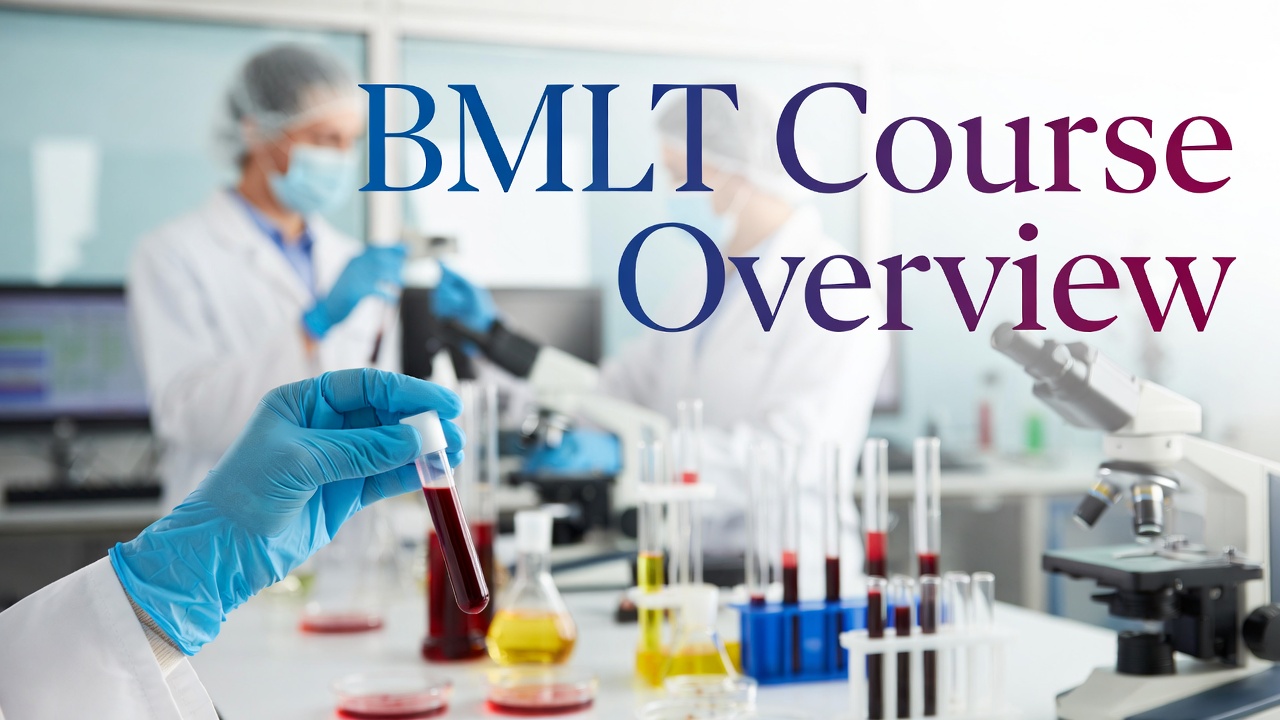
BMLT Course 2026: Duration, Colleges, Fees, Eligibility, Syllabus & Career Scope in India
The Bachelor of Medical Laboratory Technology (BMLT) is a 3-year undergraduate paramedical degree that trains students in clinical diagnostics, pathology, microbiology, hematology, biochemistry, and blood banking. It prepares skilled professionals who play a crucial role in disease detection and patient care behind the scenes. The course is known for its affordability, with government colleges charging ₹20,000–₹1 lakh in total, and reputed private institutes ranging from ₹1.5–6 lakhs. Some of India’s renowned educational institutions like AIIMS Delhi, JIPMER Puducherry, CMC Vellore, Manipal University, and PGIMER Chandigarh offer BMLT education.
🔔 BMLT Course 2026 Admission Alerts 2026
- WBJEEB JENPAS UG Registration: Application form for 2026 is accessible on wbjeeb.nic.in until April 15.
- Direct Admission: Many private colleges offer direct admission for BMLT 2026 based on 12th marks.
- Government College Fees: Government institutions generally offer more affordable BMLT education for 2026.
- Admission Process: BMLT 2026 admission can be merit-based or through entrance exams depending on the institution.
This course guide delves into the scope of BMLT course, popular job options and expected salary packages. Read more to find the course’s eligibility criteria, admission process, top college options, total fees and much more.
What is BMLT?
The Bachelor of Medical Laboratory Technology (BMLT) is a 3-4 year undergraduate degree program for aspiring medical lab professionals. This course develops skills in blood testing, microbiology, biochemistry, pathology, and histopathology, essential for the healthcare sector. Here is a quick overview of the course:
| Parameter | Description |
|---|---|
| Degree Full Form | Bachelor of Medical Laboratory Technology (BMLT) |
| Degree Type | Undergraduate (UG) degree in paramedical sciences |
| Typical Duration | 3 years |
| Eligibility (India) | 10+2 (Class 12) in Science stream (Physics, Chemistry, Biology) |
| Admission Process 2026 | Merit-based on 12th marks or entrance exams (e.g., JENPAS UG 2026, institutional tests); direct admission in many private colleges |
| Common Entrance Exams (India) | JENPAS UG 2026 (application till April 15, 2026), institutional entrance tests |
| Average Annual Fees (India) | Government colleges: ₹20,000 – ₹1,00,000; Private colleges: ₹1,00,000 – ₹3,00,000+ |
| Career Options | Medical Lab Technician, Lab Technologist, Phlebotomist, Pathology Assistant, Blood Bank Technician |
| Average Starting Salary (India) | ₹2.5 LPA – ₹4.5 LPA |
| Accreditation | Ensured by bodies like MCI or respective state councils |
BMLT Eligibility
To be eligible for the BMLT course in India, candidates must meet specific criteria. While these criteria vary from one institute to another, typically a candidate must:
- Have passed Class 12 (10+2) from a recognized board in the Science stream.
- Have studied Physics, Chemistry, and Biology (PCB); some colleges accept PCM or PCB.
- Have secured minimum aggregate marks: Usually 45–50% (relaxation of 5% for reserved categories like SC/ST/OBC).
- Be a minimum of 17 years by December 31 of the admission year.
- Have studied English as a subject is often mandatory in 12th.
Admission is based on 12th class marks or institute-level entrance exams. Candidates must have a minimum of 50% in their 10+2 exams with Physics, Chemistry, and Biology (PCB) as mandatory subjects.
- Some institutions use entrance exams like NEET UG, KEAM, MET, and IPU CET for BMLT admissions.
- Some colleges consider state CET exam scores for admissions.
- Some universities conduct institute-level entrance exams for BMLT admissions.
- Some colleges offer direct admissions based on 12th class marks.
- Candidates with a diploma in medical lab technology can apply for lateral entry into the BMLT course.
- Some colleges may require a minimum percentage in PCB subjects.
The following table provides a detailed overview of the BMLT eligibility criteria:
| Exam | Key Institutes | Tentative Period (2026) |
|---|---|---|
| CUET UG | BHU affiliates, Jamia Millia Islamia, various central/state universities | May–June |
| AIIMS Paramedical | AIIMS Delhi, AIIMS Rishikesh, AIIMS Patna | May–July |
| JENPAS UG | West Bengal government & private paramedical colleges (e.g., IPGMER Kolkata affiliates) | June–July |
| KCET | Karnataka state colleges/universities offering BMLT | April–May |
| University-Specific (e.g., IPU CET, Jamia Hamdard) | Guru Gobind Singh Indraprastha University affiliates, Jamia Hamdard | April–July (varies) |
Top BMLT Colleges
The top BMLT colleges in India offer a full curriculum and modern infrastructure. Colleges with NAAC and NABH accreditation are preferred, as they ensure high educational and training standards. Government colleges like AIIMS Delhi and JIPMER offer more affordable options, while private colleges like Manipal and Amity have higher fees.
The table below lists top BMLT colleges in India, including fees, internship hospitals, and placement information. Fees listed are for the entire course, and internship hospitals have formal affiliations with the colleges.
| Top College / Institute | Fees (Approx., per year or total) | Internship Hospitals / Affiliations | Placements (Key Sectors & Avg. Starting Salary) |
|---|---|---|---|
| AIIMS Delhi (or affiliates like AIIMS Rishikesh) | ₹1,000 – ₹10,000 total (highly subsidized) | AIIMS Hospital, Safdarjung, Dr. RML Hospital | Hospitals, labs, research; Avg. ₹3–5 LPA |
| JIPMER Puducherry | ₹30,000 – ₹50,000 total | JIPMER Hospital, MGMCRI, local institutes | Hospitals, diagnostic centers; Avg. ₹3–5 LPA |
| CMC Vellore | ₹1–1.5 lakhs total (low subsidized) | CMC Vellore Hospital, Schieffelin Institute | Hospitals, research; Avg. ₹4–6 LPA |
| Manipal Academy of Higher Education (MAHE) | ₹70,000 – ₹1 lakh per year (total ~₹2–3 lakhs) | Kasturba Hospital, Manipal Hospital | Hospitals, labs; Avg. ₹4–7 LPA |
| Amity University Noida | ₹1.5–2 lakhs per year (total ~₹6 lakhs) | Amity Hospital, Max, Fortis affiliates | Hospitals, healthcare; Avg. ₹4–6 LPA |
| SRM Institute of Science and Technology Chennai | ₹50,000–₹1 lakh per year (total ~₹2–2.5 lakhs) | SRM Hospital, Chennai Medical College affiliates | Hospitals, diagnostic centers; Avg. ₹4–7 LPA |
| Lovely Professional University (LPU) | ₹1–1.5 lakhs per year (total ~₹3–5 lakhs) | LPU-affiliated, Fortis, Max | Hospitals, healthcare; Avg. ₹4–6 LPA |
| PGIMER Chandigarh | ₹3,000–₹10,000 total | PGIMER Hospital, GMCH Chandigarh | Research labs, hospitals; Avg. ₹3.5–5.5 LPA |
| Government Medical Colleges (various) | ₹20,000–₹1 lakh total | Affiliated GMC hospitals | Government/private hospitals; Avg. ₹2.5–5 LPA |
| Jamia Hamdard University, Delhi | ₹1.5 lakhs per year (total ~₹4.5–6 lakhs) | Jamia-affiliated hospitals, diagnostic centers | Hospitals, labs, healthcare; Avg. ₹4–6 LPA (median ~₹4.9 LPA) |
| Jamia Millia Islamia (JMI), Delhi | ₹1.43 lakhs total (for B.Voc. MLS equivalent) | Affiliated hospitals/labs in Delhi NCR | Hospitals, diagnostic centers; Avg. ₹5–6 LPA |
| St. John’s National Academy of Health Sciences, Bengaluru | ₹90,000–₹1.5 lakhs total (approx.) | St. John’s Medical College Hospital, affiliates | Hospitals, research; Avg. ₹4–6 LPA (reputed for quality) |
| Armed Forces Medical College (AFMC), Pune | ₹45,000–₹60,000 total (service-oriented) | AFMC-affiliated military hospitals | Military/civilian hospitals, labs; Avg. ₹4–6 LPA (stable roles) |
| Dr. DY Patil Vidyapeeth, Pune | ₹75,000–₹1 lakh per year (total ~₹2.25–3 lakhs) | DY Patil Hospital, affiliated medical centers | Hospitals, diagnostic labs; Avg. ₹4–6 LPA (good private placements) |
BMLT Syllabus
The BMLT syllabus provides a full understanding of medical laboratory technology through theoretical and practical training. The course is typically divided into three years, each focusing on different core subjects and electives. The first year covers the basics of human anatomy, physiology, biochemistry, and microbiology. The second year explores clinical biochemistry, pathology, hematology, and blood banking. The third year covers advanced topics like microbiology, histopathology, immunology, and medical imaging, and culminates in a 6-12 month internship.
Here is a detailed overview of the syllabus of BMLT course along with core subjects and electives in the table below:
| Year | Typical Semesters | Core Subjects | Notes / Additional Elements |
|---|---|---|---|
| Year 1 | Semesters 1–2 | Human Anatomy & Physiology, General Biochemistry, Basics of Laboratory Techniques, General Pathology, General Microbiology, Basic Health Communication | Foundational sciences + introductory lab skills and practicals |
| Year 2 | Semesters 3–4 | Clinical Biochemistry, Hematology & Clinical Pathology, Microbiology & Immunology, Histopathology & Cytology, Blood Banking Basics, Quality Control in Labs | Builds diagnostic skills with emphasis on analysis and procedures |
| Year 3 | Semesters 5–6 | Advanced Microbiology & Serology, Advanced Hematology, Advanced Histopathology, Transfusion Medicine, Lab Management & Research Methods, Instrumentation & Automation | Specialized topics + professional skills; ends with 6–12 months compulsory internship in hospitals/labs |
BMLT Fees
BMLT course fees in India vary significantly based on the institution type. Government colleges are the most affordable, with annual fees ranging from ₹20,000 to ₹50,000, totaling ₹1-2 lakhs for the entire course. Private institutions can charge from ₹80,000 to ₹2 lakhs per year, totaling ₹3-6 lakhs.
Hostel fees, ranging from ₹40,000 to ₹1 lakh per year, are an additional consideration. Scholarships are available for eligible students, including those from SC/ST backgrounds, merit-based scholarships, and state health department scholarships.
- Ganesh Paramedical College, Delhi, offers BMLT courses with varying fee structures.
- Career College, Bhopal, provides BMLT programs with fees around ₹1-2 lakhs per year.
- Sunrise University, Rajasthan, NCR, charges approximately ₹1.5-2.5 lakhs annually for BMLT.
- AIIMS charges roughly ₹1.5 lakhs for the BMLT course.
- Private colleges like Apollo and Fortis offer BMLT courses with fees ranging from ₹2-6 lakhs.
- BMLT course fees can vary based on location; metro cities tend to be more expensive.
Career & Jobs After BMLT
The Bachelor of Medical Laboratory Technology (BMLT) course provides diverse career opportunities in hospitals, diagnostics centers, government institutions, research organizations, and educational institutions. BMLT graduates can work as laboratory technicians, medical laboratory technologists, research analysts, lecturers, and healthcare administrators. Salaries range from ₹2.4 to ₹9.8 LPA, depending on the job role, experience, and sector. Top recruiters include Dr. Lal PathLabs, SRL Diagnostics, Metropolis Healthcare, and government hospitals like ESIC and Indian Railways.
The table below provides a detailed overview of job sectors, job roles, and salary ranges for BMLT graduates in India.
| Job Sectors | Job Role | Salary (LPA) | Top Recruiters | Job Description |
|---|---|---|---|---|
| Hospitals | Clinical Laboratory Technician | ₹3 – ₹5 LPA | Fortis, Max, Apollo | Conducting laboratory tests, analyzing samples, and maintaining equipment |
| Diagnostics Centers | Medical Laboratory Technologist | ₹2.4 – ₹3.6 LPA | Dr. Lal PathLabs, SRL Diagnostics | Conducting laboratory tests, analyzing samples, and providing reports to doctors |
| Government Sector | Lab Technician | ₹3 – ₹5.4 LPA | ESIC, Indian Railways | Conducting laboratory tests, analyzing samples, and maintaining equipment in government hospitals |
| Research Institutions | Research Analyst | ₹3 – ₹6 LPA | ICMR, NIHR | Conducting research studies, analyzing data, and publishing papers in reputable journals |
| Educational Institutions | Lecturer | ₹3 – ₹7 LPA | Top medical colleges | Teaching medical laboratory technology courses, conducting research, and mentoring students |
| Healthcare Administration | Healthcare Administrator | ₹4 – ₹8 LPA | Hospitals, clinics | Managing hospital operations, supervising staff, and ensuring quality patient care |
| Quality Control | Quality Control Analyst | ₹3 – ₹6 LPA | Pharmaceutical companies | Ensuring quality control in pharmaceutical manufacturing, testing products, and maintaining equipment |
| All Sectors | Laboratory Manager | ₹5 – ₹9.8 LPA | Hospitals, diagnostics centers | Supervising laboratory staff, managing laboratory operations, and ensuring quality patient care |
BMLT Salary
Salaries for BMLT professionals in India vary based on experience, job role, and location. Freshers can expect ₹15,000-25,000 per month (₹1.8-3 lakhs per annum). With 3-5 years of experience, salaries increase to ₹25,000-40,000 per month. Here’s a broad salary progression for various job roles with increasing work experience:
- Lab Technician: ₹2-2.5 LPA (fresher), ₹3-4 LPA (3 years), ₹4-5 LPA (5 years)
- Lab Manager: ₹3-4 LPA (fresher), ₹4-6 LPA (3 years), ₹6-8 LPA (5 years)
- Research Analyst: ₹2.4-3 LPA (fresher), ₹3-4.5 LPA (3 years), ₹4.5-6 LPA (5 years)
- Research Scientist: ₹3-3.6 LPA (fresher), ₹4-5 LPA (3 years), ₹5-7 LPA (5 years)
- Lecturer: ₹2.4-3 LPA (fresher), ₹3-4 LPA (3 years), ₹4-6 LPA (5 years)
- Data Analyst: ₹3-4 LPA (fresher), ₹4-6 LPA (3 years), ₹6-8 LPA (5 years)
- Statistician: ₹3-4 LPA (fresher), ₹4-6 LPA (3 years), ₹6-8 LPA (5 years)
- Teacher: ₹2.4-3 LPA (fresher), ₹3-4 LPA (3 years), ₹4-6 LPA (5 years)
Higher Studies After BMLT
After completing the BMLT course, students can pursue higher studies to improve their career prospects. Options include MSc MLT, MSc Microbiology, MSc Biochemistry, and MBA Hospital Management. These 2-year courses offer specialization. Students can also pursue PhD programs for research. Additionally, students can prepare for government exams like UPSC Medical Officer and State PSC, requiring council registration. Specialized courses like Molecular diagnostics and Histopathology are also available.
The table below provides an overview of higher studies options after BMLT, including duration and outcomes.
| Higher Study Option | Duration | Career Prospects |
|---|---|---|
| MSc in Medical Laboratory Technology (MLT) | 2 years | Lab Manager, Senior Technologist, Research Scientist, Teaching roles |
| MSc in Clinical Biochemistry | 2 years | Biochemistry Specialist, Diagnostic Lab Expert, Pharma Research |
| MSc in Microbiology | 2 years | Microbiologist, Infection Control Specialist, Public Health Roles |
| MBA in Hospital / Healthcare Management | 2 years | Hospital Administrator, Lab Supervisor, Healthcare Manager |
| Postgraduate Diploma in Clinical Research / MLT | 1–2 years | Clinical Research Associate, Trial Coordinator, CRO Roles |
| PhD in Medical Laboratory Sciences / Related | 3–5 years | Academic Professor, Senior Researcher, R&D Leadership |
| Specialized Short Courses / Certifications | 6 months–1 year | Niche roles in Molecular Diagnostics, Histopathology, Blood Banking |
| Government Exam Preparation (UPSC/PSC) | Varies | Government Lab Technician/Officer, Public Sector Healthcare Jobs |
BMLT Comparison with Other Courses
Aspirants looking to train themselves in medical lab technology also have diploma and BSc options. While the 2-year DMLT provides quick job entry at the basic technician level, the 3-year BMLT (and similarly BSc MLT) delivers deeper knowledge, advanced diagnostic skills, and stronger long-term career growth with better salaries and higher roles. Here is a quick comparison:
| Feature | BMLT | DMLT | BSc MLT |
|---|---|---|---|
| Full Form | Bachelor of Medical Lab Technology | Diploma in Medical Lab Technology | Bachelor of Science in Medical Laboratory Technology |
| Duration | 3 years (often + 6–12 months internship) | 2 years | 3 years (often + 6–12 months internship) |
| Focus / Objective | In-depth laboratory diagnostic methods and equipment | Basic lab technician jobs | Deep knowledge in lab sciences, diagnostics, and research-oriented techniques |
| Career Growth | Long term growth with better salaries | Quick entry into jobs | Long term growth with better salaries and research/academic options |
Frequently Asked Questions (FAQs)
Q1. What is the full form of BMLT and what is its duration?
The full form of BMLT is Bachelor of Medical Lab Technology, and the course duration is 3 years. The BMLT course provides in-depth knowledge, preparing students for advanced roles in medical lab technology and offering long-term career growth with better salaries.
Q2. What are the mandatory subjects required for BMLT eligibility?
To be eligible for the BMLT course, candidates must have studied Physics, Chemistry, and Biology (PCB) in 10+2 and achieved a minimum score of 50%. Applicants must be at least 17 years old when joining the college.
Q3. What is the fee range for the BMLT course?
The fee range for the BMLT course in India typically varies from ₹20,000–₹1 lakh total in government colleges to ₹1–6 lakhs total in private institutions, depending on the institute and location.
Q4. What are the core subjects covered in the BMLT syllabus in the first year?
The first year of the BMLT syllabus covers core subjects like Human Anatomy, Physiology, and Biochemistry, providing a foundation for further studies in medical lab technology.
Q5. What is the duration and outcome of the MSc in Medical Laboratory Technology (MSc MLT) course after BMLT?
The MSc in Medical Laboratory Technology (MSc MLT) is a 2-year postgraduate course after BMLT, offering advanced specialization and training. It can open up senior job roles such as lab manager, research scientist, or academic positions with significantly higher salary potential.
Q6. What is the fees of BMLT in Delhi?
In Delhi, BMLT fees range from ₹20,000–₹50,000 total in government colleges (e.g., DSEU-affiliated) to ₹1.5–4 lakhs total in private institutes, depending on the college and category
Q7. What is better, BMLT or DMLT?
BMLT (3-year degree) is better for long-term growth, higher salaries, advanced roles, and further studies (MSc/PhD), while DMLT (2-year diploma) suits quicker job entry at basic technician level.
Q8. What is the scope of BMLT?
BMLT offers strong scope in hospitals, diagnostic labs, blood banks, research centers, and public health; starting salary ₹3–5 LPA, with growth to senior technologist, lab manager, or teaching roles.
Q: What is the BMLT Course 2026 fee structure in India?
The BMLT Course 2026 fee structure in India varies significantly. For government colleges, the annual fees for BMLT Course 2026 can range from ₹30,000 to ₹80,000. Private institutions offering BMLT Course 2026 typically charge between ₹80,000 and ₹2,50,000 per year. These figures are estimates for the academic year commencing in 2026.
Q: What are the eligibility criteria for BMLT Course 2026 admission?
To be eligible for BMLT Course 2026, candidates must have completed their 10+2 (or equivalent) examination from a recognized board. A minimum aggregate score of 50% in Physics, Chemistry, and Biology (PCB) is generally required for BMLT Course 2026. Some colleges may offer a 5% relaxation for reserved categories.
Q: Which are the top colleges for BMLT Course 2026 in India?
Several institutions are highly regarded for the BMLT Course 2026. Some top colleges include AIIMS (various locations), Christian Medical College (Vellore), and Manipal Academy of Higher Education. These institutions often boast excellent infrastructure and a high percentage of placements, with over 85% of BMLT Course 2026 graduates securing jobs within six months.
Q: What is the average salary after BMLT Course 2026 in India in 2026?
The average salary for a BMLT Course 2026 graduate in India in 2026 can range from ₹2.5 LPA to ₹5 LPA for freshers. With 2-3 years of experience, a BMLT Course 2026 professional can expect to earn ₹4 LPA to ₹8 LPA. Salaries depend on the employer (hospital, diagnostic lab), location, and specific role.
Q: What is the career scope after BMLT Course 2026 in India?
The career scope after BMLT Course 2026 in India is robust. Graduates can work as Medical Lab Technicians, Clinical Pathologists, or Research Assistants. Opportunities exist in hospitals, diagnostic centers, blood banks, and research laboratories. The healthcare sector is projected to grow significantly, ensuring a consistent demand for BMLT Course 2026 professionals.
Q: Can I pursue BMLT Course 2026 abroad after completing it in India?
Yes, pursuing further studies or employment abroad after completing BMLT Course 2026 in India is possible. Many countries like Canada, UK, and Australia recognize the BMLT Course 2026 degree. Graduates often pursue Master’s degrees or specialized certifications. Some international roles offer starting salaries upwards of 30,000 USD per annum for BMLT Course 2026 qualified professionals.