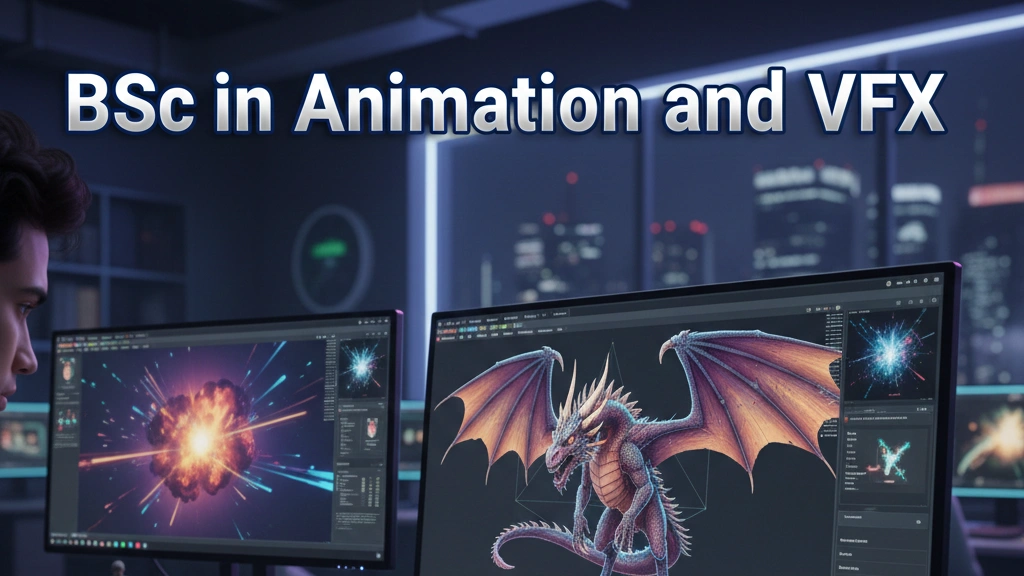
BSC in Animation and VFX 2026: Courses, Syllabus, Eligibility & Career Paths
The global animation and VFX market is projected to cross a significant amount in INR by 2026, fueled by the increasing demand for streaming content and gaming. Immersive experiences are also contributing to this growth. A BSc in Animation and VFX has become a highly sought-after undergraduate program for creative technologists. It blends artistic storytelling with mastery of innovative software.
🔔 BSC in Animation and VFX 2026 Admission Alerts 2026
- Application Deadline: Visual Effects (VFX) applications are open until March 31, 2026.
- University Offering: Chandigarh University offers B.Sc. (Animation, VFX and Gaming) for 2026 admissions.
- Fee Range: General BSc courses have very affordable fees, ranging between ₹25,000 – ₹30,000 per year.
- Admission Basis: Admission for general BSc courses is based purely on cutoff trends.
In 2026, this three-year degree goes beyond simply learning to animate. It’s about crafting the visual language that powers blockbuster films, AAA games, and viral digital campaigns. This article breaks down what you need to know to navigate the 2026 admissions landscape.
You’ll learn about the 50% minimum aggregate required in 10+2 with Physics, Chemistry, and Mathematics, as well as portfolio expectations and entrance protocols at leading institutions like NID Ahmedabad and IDC IIT Bombay. You’ll also discover the semester-wise progression from Fundamentals of Animation through Advanced Compositing. Starting salaries range from ₹2.5 lakh to ₹6.5 lakh across roles from Motion Graphics Designer to Previsualization Artist. Whether you’re comparing private academies and public universities or planning your specialization, this breakdown transforms admission anxiety into informed strategy.
Understanding a BSc in Animation and VFX
India’s animation and visual effects industry is projected to reach ₹25,000 crore by 2026. This growth is driven by high demand from Bollywood, OTT platforms, and the global gaming sector. A BSc in Animation and VFX has become a popular undergraduate program for creative technologists, blending artistic vision with modern digital tools. This three-year degree equips you with the technical skills and storytelling abilities needed to craft immersive visual experiences across film, television, advertising, and interactive media.
Indian studios like Red Chillies VFX, Prime Focus, and Makuta VFX are delivering top-tier work for international blockbusters. Because of this, the domestic talent pipeline has never been more critical to the industry’s growth.
The distinction between animation and VFX is fundamental to this discipline. Animation involves creating movement from scratch. You bring characters, objects, and environments to life through frame-by-frame manipulation in 2D, 3D, or stop-motion formats. VFX, on the other hand, integrates computer-generated imagery with live-action footage. This enables everything from subtle environment extensions to spectacular destruction sequences.
Indian films like RRR and Brahmāstra demonstrate how seamlessly these disciplines merge. VFX artists composite digital elements while animators breathe life into creatures and characters. You will master both domains, graduating with versatile skills that span the entire production pipeline.
The curriculum emphasises technology and creative storytelling as inseparable forces. You’ll develop proficiency in industry-standard software, including Autodesk Maya, Blender, Nuke, and Adobe After Effects. You’ll also study cinematography, narrative structure, and character psychology.
Core competencies extend beyond software fluency to include:
- Rigging and character animation: Building skeletal systems and natural movement mechanics
- Compositing and rotoscoping: Seamlessly blending multiple visual elements
- 3D modelling and texturing: Creating photorealistic digital assets
- Motion graphics design: Crafting dynamic visual communication for brands
- Simulation and dynamics: Programming realistic physics for cloth, fluids, and destruction
The use of animation and VFX has expanded beyond traditional entertainment. The e-learning industry in India, valued at over ₹10,000 crore, relies heavily on animated explainer content and interactive simulations. Healthcare companies employ medical animators to visualise surgical procedures and molecular processes. Real estate developers use architectural visualisation to pre-sell properties, and automotive manufacturers create virtual showrooms.
The advertising sector alone generates thousands of annual openings for motion graphics designers and VFX compositors. Starting salaries range from ₹2.5 lakh to ₹6.5 lakh, depending on your specialisation and portfolio strength.
Portfolio development is central to the entire educational experience. It distinguishes employable graduates from those with only theoretical knowledge. Leading institutions, including NID Ahmedabad, IDC IIT Bombay, and Whistling Woods International, structure their programs around cumulative project work. You’ll produce showreels demonstrating character animation, visual effects sequences, and collaborative short films.
Industry partnerships enable internship placements at studios in Mumbai and Bangalore, where you’ll contribute to actual productions. This practical exposure proves decisive during recruitment, as employers prioritise demonstrated capability over academic credentials alone.
The program’s relevance in 2026 reflects fundamental shifts in content consumption patterns. With Indian OTT subscribers exceeding 50 crore and domestic gaming revenue approaching ₹15,000 crore, demand for skilled animators and VFX artists outstrips supply across every experience level. You’ll enter a job market where specialisation, whether in real-time engines for virtual production or AI-assisted animation workflows, commands premium compensation. For students who combine technical aptitude with visual imagination, the BSc in Animation and VFX offers a direct pathway to participating in India’s creative economy at its most dynamic frontier.
BSc in Animation and VFX Syllabus PDF
BSc Animation and Multimedia Syllabus
BSc in Animation and VFX Core Subjects and Syllabus Overview 2026
The BSc in Animation and VFX curriculum has evolved significantly to meet the demands of India’s booming entertainment and media industry, which is projected to reach ₹3.5 lakh crore by 2026. The syllabus is strategically designed to transform creative enthusiasts into industry-ready professionals through a balanced mix of theoretical foundations and hands-on practical training.
You’ll begin with fundamental principles of animation and gradually progress to advanced techniques in 3D modelling, visual effects, and compositing. The program emphasises industry-standard software proficiency and real-world project experience. This ensures you can seamlessly transition into roles at leading studios like Prime Focus, Red Chillies VFX, and Technicolour India. Understanding the core subjects helps you evaluate whether this program aligns with your creative aspirations and career goals.
The table below presents the detailed breakdown of core subjects and syllabus structure for BSc Animation and VFX programs in 2026.
| Degree Full Form | Bachelor of Science in Animation and VFX |
| Degree Type | Undergraduate |
| Typical Duration | 3 years |
| Eligibility (India) | 10+2 (or equivalent) from a recognized board |
| Common Entrance Exams (India) | CUET UG 2026, Pearl Academy Exam 2026, other university-specific entrance exams |
| Average Annual Fees (India) | ₹25,000 – ₹30,000 (for general BSc, specific Animation & VFX fees vary by college) |
| Admission Process | Applications open till March 31, 2026, based on entrance exam scores and academic merit |
| Top Colleges (Offering similar courses) | Chandigarh University, Pearl Academy |
| Career Options | Animator, VFX Artist, Modeler, Compositor, Digital Artist |
| UGC/AICTE Approved | Yes (for recognized universities offering BSc degrees) |
This detailed syllabus structure ensures you possess expertise across the entire production pipeline, from concept to final output. The progression from foundational arts to specialized technical skills mirrors industry workflows at major Indian studios. You should prioritize building a strong demo reel during your final year, as this portfolio remains the primary hiring criterion for recruiters at companies like DNEG, MPC Bangalore, and local animation studios in Mumbai, Hyderabad, and Chennai.
BSc in Animation and VFX Eligibility Criteria 2026
To secure admission into a BSc in Animation and VFX program at leading Indian institutions, you need to meet specific academic and creative benchmarks. The eligibility framework for 2026 has been designed to identify students with both technical aptitude and artistic potential, reflecting the industry’s demand for versatile professionals.
While minimum percentage requirements and subject combinations are important, many premier institutes like NID Ahmedabad and IDC IIT Bombay place major emphasis on portfolio assessment and entrance examination performance. Understanding these criteria thoroughly enables you to prepare effectively and strengthen your applications for this competitive field.
Here are the full eligibility requirements you must fulfill for BSc Animation and VFX admission in 2026:
- Academic Qualification: You must successfully complete 10+2 (or equivalent) from a recognized board such as CBSE, ICSE, or any state board.
- Minimum Percentage: You must secure a minimum aggregate score of 50% in your 10+2 examinations, though top-tier institutions may demand 60% or higher.
- Subject Requirements: Physics, Chemistry, and Mathematics are preferred subjects in 10+2, though some private colleges accept students from any stream including Commerce and Arts with Fine Arts backgrounds.
- Age Limit: Most institutions specify an age bracket between 17 and 25 years as of the admission year, with relaxation applicable for reserved categories as per government norms.
- Portfolio Submission: A curated portfolio showcasing artistic skills, sketches, digital artwork, or animation samples significantly strengthens admission prospects at institutes like Whistling Woods International and Unitedworld Institute of Design.
- Entrance Examination: including Arena Animation, MAAC, and Frameboxx conduct institution-specific entrance tests assessing drawing aptitude, creativity, and basic computer knowledge.
- English Proficiency: You are expected to demonstrate proficiency in English language, as the medium of instruction is primarily English across most programs.
- Documentation Requirements: You must submit valid identification proof (Aadhar card or passport), 10+2 mark sheets, transfer certificate, passport-sized photographs, and category certificates (if applicable).
- Personal Interview: Several institutions including Seamedu School of Pro-Expressionism and iLEAD Kolkata conduct interview rounds to evaluate your motivation and creative thinking.
- Medical Fitness: Certain universities may require a medical fitness certificate to ensure you can handle the demanding studio work schedules.
You should begin portfolio development at least 6-8 months before applications open. This creative document often becomes the differentiating factor between equally qualified applicants. Preparing thoroughly for institute-specific entrance exams while maintaining strong academic performance creates the ideal pathway for admission into India’s most sought-after animation and VFX programs for the 2026 academic session.
BSc in Animation and VFX Colleges 2026
Selecting the right institution for your BSc in Animation and VFX is an important decision that shapes your creative career trajectory in India’s rapidly expanding media and entertainment industry. The Indian animation and VFX market is projected to reach rare growth by 2026. Premier institutions have substantially upgraded their infrastructure, faculty expertise, and industry partnerships to meet global standards.
You must evaluate colleges based on specialized lab facilities, faculty with active industry experience, and demonstrable placement records with leading studios. Don’t rely solely on brand recognition. The distinction between government and private institutions has blurred considerably. Several private colleges now match or exceed public institutions when it comes to technology access and recruiter networks. Your choice should align with your specialization interests—whether character animation, visual effects compositing, or game design—and the specific industry connections each college maintains.
The following full table presents verified data for 15 distinguished institutions offering BSc Animation and VFX programs in 2026. It includes their fee structures, placement performance, faculty credentials, and distinguished alumni who have shaped India’s creative landscape.
| College Name | Location | Type | Average Fees (per year) (INR) | Placement Rate (%) | Key Faculty Expertise |
|---|---|---|---|---|---|
| National Institute of Design (NID) | Ahmedabad, Gujarat | Government (Autonomous under Ministry of Commerce) | ₹2,85,000 | 94% | Character animation, experimental film, stop-motion expertise with faculty from NFB Canada and Aardman Studios |
| Industrial Design Centre, IIT Bombay | Mumbai, Maharashtra | Government (IIT System) | ₹2,10,000 | 96% | Interaction design, computational art, VR/AR development with PhD holders from MIT Media Lab |
| Whistling Woods International | Mumbai, Maharashtra | Private (Founded by Subhash Ghai) | ₹5,50,000 | 87% | Cinematography-integrated animation, Bollywood VFX pipeline, stereoscopic 3D with veterans from Red Chillies VFX |
| Maya Academy of Advanced Cinematics (MAAC) | Delhi, Mumbai, Bangalore, Chennai, Hyderabad (Multiple Centers) | Private (Aptech Limited) | ₹1,85,000 | 82% | Autodesk-certified trainers, Hollywood pipeline workflows, real-time engine integration with Unreal Authorized Instructors |
| Arena Animation | Pan-India (200+ Centers) | Private (Aptech Limited) | ₹1,45,000 | 78% | 2D traditional animation, web animation, broadcast graphics with Adobe Certified Expert faculty |
| Unitedworld Institute of Design (UID) | Ahmedabad, Gujarat | Private (Karnavati University) | ₹3,20,000 | 85% | Transmedia storytelling, speculative design, AI-assisted animation with faculty from Royal College of Art, London |
| Seamedu School of Pro-Expressionism | Pune, Bangalore, Mumbai, Hyderabad | Private | ₹2,75,000 | 81% | Game engine animation, virtual production, spatial audio design with certified Unity and Wwise instructors |
| iLEAD – Institute of Leadership, Entrepreneurship and Development | Kolkata, West Bengal | Private | ₹2,40,000 | 79% | Eastern regional animation aesthetics, documentary animation, AR for heritage preservation with SRFTI collaborations |
| Frameboxx Animation & Visual Effects | Mumbai, Bangalore, Delhi, Chandigarh | Private | ₹1,95,000 | 76% | Broadcast design, architectural visualization, motion capture with certified Motion Analysis technicians |
| Lovely Professional University (LPU) | Phagwara, Punjab | Private (University Status) | ₹1,60,000 | 88% | Gaming and esports integration, simulation training, ed-tech content development with Unreal Academic Partner status |
| Vellore Institute of Technology (VIT) | Vellore, Tamil Nadu | Private (Deemed University) | ₹1,98,000 | 91% | Research-oriented animation, human-computer interaction, medical visualization with funded DST projects |
| Amity University | Noida, Mumbai, Jaipur, Gurgaon | Private (University Status) | ₹2,25,000 | 84% | Media management, IP creation, animation entrepreneurship with industry mentors from Toonz Animation |
| Picasso Animation College | Delhi, Bangalore, Hyderabad | Private | ₹1,35,000 | 74% | Classical animation fundamentals, claymation, paper cut-out techniques with senior animators from Cartoon Network era |
| Srishti Manipal Institute of Art, Design and Technology | Bangalore, Karnataka | Private (Manipal Academy of Higher Education) | ₹4,20,000 | 89% | Critical making, sustainable design futures, decolonial design practices with PhD faculty from Goldsmiths and Parsons |
| Symbiosis Institute of Design | Pune, Maharashtra | Private (Symbiosis International University) | ₹3,85,000 | 92% | User experience animation, data visualization, social impact design with industry projects for UNDP and UNICEF |
NID Ahmedabad and IDC IIT Bombay remain top choices for students who prioritize research credentials and international recognition. Their graduates consistently secure positions at global studios and academic institutions. Whistling Woods International offers unmatched Bollywood industry integration for aspirants targeting mainstream Indian cinema. LPU and VIT provide exceptional value through their gaming industry partnerships and research funding. Private institutions like Srishti Manipal and Symbiosis Institute of Design distinguish themselves through critical design pedagogy and social impact focus. They prepare students for emerging roles in ethical technology and inclusive media. You should prioritize campus visits to evaluate real-time production facilities—especially motion capture stages, render farms, and virtual production volumes—before finalizing admissions for the 2026 academic cycle.
Career Paths and Job Opportunities After BSc in Animation and VFX 2026
The animation and VFX industry in India has become a powerhouse of creative employment. The sector is projected to reach ₹1,20,000 crore by 2026. If you graduate with a BSc in Animation and VFX, you’ll be positioned at the intersection of technology and artistry. Opportunities span across film production, gaming studios, advertising agencies, and emerging sectors like e-learning and virtual reality.
The demand for skilled professionals has intensified following India’s recognition as a global hub for visual effects outsourcing. Major studios in Mumbai, Bangalore, and Hyderabad are actively recruiting fresh talent. Understanding the diverse career paths available helps you align your specialization choices with market demands and salary expectations.
The following table presents verified 2026 data on entry-level positions. It details industry sectors, core responsibilities, essential skill sets, and realistic starting compensation across the Indian animation and VFX landscape.
| Job Title | Industry Sector | Typical Responsibilities | Required Skills | Average Starting Salary |
|---|---|---|---|---|
| 2D Animator | Television, E-Learning, Advertising | Producing frame-by-frame animation for educational content, explainer videos, and animated seriesusing Toon Boom Harmony and Adobe Animate | Traditional animation principles, timing and spacing, character acting, vector-based animation tools | INR 2.8-4.5 LPA |
| 3D Character Animator | Film, Gaming, OTT Platforms | Bringing digital characters to life through performance-driven movement, lip-sync animation, and emotional expression sequences | Body mechanics, facial animation, acting fundamentals, Autodesk Maya, motion capture integration | INR 3.5-6.0 LPA |
| VFX Compositing Artist | Film Production, Web Series, Commercials | Integrating CGI elements with live-action footage, performing color matching, and executing final shot assembly for theatrical release | Node-based compositing, green screen keying, camera tracking, Foundry Nuke, Blackmagic Fusion | INR 4.0-7.0 LPA |
| 3D Environment Modeler | Gaming, Architecture Visualization, Film | Constructing detailed digital sets, terrain systems, and architectural structures optimized for real-time engines or rendered output | Hard-surface modeling, organic sculpting, UV unwrapping, ZBrush, Blender, optimization techniques | INR 3.2-5.5 LPA |
| Character Designer | Animation Studios, Gaming, Publishing | Developing original character concepts, turnarounds, and expression sheets that guide 3D production pipelines | Figure drawing, costume design, visual storytelling, Procreate, Adobe Photoshop, design thinking | INR 3.0-5.0 LPA |
| Texture and Look Development Artist | Film, Gaming, Product Visualization | Creating surface materials, shader networks, and photorealistic texturing that define how 3D assets interact with light | PBR workflows, Substance Painter, Substance Designer, material science, photographic reference analysis | INR 3.5-6.0 LPA |
| Technical Animator/Rigger | Gaming, Animation, VFX Studios | Building skeletal systems, deformation controls, and automation tools that enable efficient character animation production | Python scripting, MEL, deformation theory, constraint systems, problem-solving for complex mechanical setups | INR 4.5-7.5 LPA |
| Lighting and Rendering Artist | Feature Film, Animation, Architectural Visualization | Establishing mood and atmosphere through digital lighting design, managing render passes, and optimizing output quality | Cinematography principles, HDR lighting, Arnold, V-Ray, render farm management, color science | INR 3.8-6.5 LPA |
| Motion Graphics Designer | Broadcast, Digital Marketing, Corporate Communications | Creating animated typography, logo animations, and data visualizations for social media campaigns and television packaging | Kinetic typography, infographic animation, Adobe After Effects, Cinema 4D, brand guideline adherence | INR 2.5-4.5 LPA |
| Rotoscoping and Prep Artist | VFX Studios, Film Post-Production | Executing frame-accurate matte extraction, wire removal, and plate preparation that enables seamless compositing workflows | Silhouette, Mocha Pro, attention to minute detail, patience for repetitive precision work | INR 2.2-3.8 LPA |
| Virtual Production Technical Artist | LED Volume Stages, Real-Time Filmmaking | Operating Unreal Engine environments for in-camera VFX, managing live compositing during principal photography | Unreal Engine, nDisplay, camera tracking systems, on-set troubleshooting, real-time rendering optimization | INR 5.0-8.5 LPA |
| Game Environment Artist | Mobile Gaming, AAA Studios, Indie Development | Building optimized 3D worlds, prop assets, and level geometry that balance visual quality with runtime performance constraints | Modular design, texel density management, Unity, Unreal Engine 5, level art composition | INR 3.5-6.0 LPA |
| Storyboard and Previsualization Artist | Film Direction, Animation, Advertising | Visualizing narrative sequences through sequential art and animated animatics that guide production decisions before costly execution | Cinematic language, shot composition, pacing, 3D blocking, communication with directors | INR 3.0-5.5 LPA |
| FX and Simulation Artist | Blockbuster Film, High-End Commercials | Generating physically accurate phenomena including destruction, fluids, cloth, and crowds using procedural systems | Houdini, particle systems, rigid body dynamics, mathematical thinking, problem decomposition | INR 4.5-8.0 LPA |
| AR/VR Content Developer | EdTech, Healthcare, Real Estate | Building immersive interactive experiences for spatial computing platforms, integrating 3D assets with tracking and input systems | Unity 3D, C# programming, UX for spatial interfaces, mobile optimization, 3D asset integration | INR 4.0-7.0 LPA |
These career paths show substantial variation in compensation based on technical complexity and industry demand. Technical roles involving scripting and procedural systems command premium starting salaries. Creative specializations offer faster advancement for portfolio-strong candidates. You should prioritize building demonstrable expertise in industry-standard software through personal projects and internships. The Indian market increasingly values specialization over generalist capabilities. With experience, professionals can progress to senior positions earning INR 15-30 LPA within 5-7 years. You can also transition into freelance and entrepreneurial ventures serving global clients.
Skills Enhancement and Further Education After BSc in Animation and VFX
The animation and VFX industry evolves quickly. New software tools, rendering technologies, and production pipelines emerge every year. A BSc degree provides foundational knowledge, but continuous skill enhancement separates successful professionals from those who fall behind. Indian employers at studios like Red Chillies VFX, DNEG India, and MPC Bangalore actively seek candidates who demonstrate a commitment to upskilling through certifications and specialized training.
The rise of OTT platforms and gaming studios in India has created demand for niche expertise in real-time rendering, virtual production, and AI-assisted animation tools. These areas may not be covered extensively in undergraduate syllabi.
Below are the most valuable pathways for you to expand your capabilities and advance your career in 2026:
- Autodesk Certified Professional (Maya/3ds Max): Industry-recognized certification validating advanced 3D skills, costing approximately ₹15,000-₹25,000 through authorized centers in Mumbai, Bangalore, and Delhi.
- Foundry Nuke Certification: Essential for compositors seeking roles at premium VFX studios; training available through MAAC and Frameboxx centers across 25+ Indian cities.
- Unity/Unreal Engine Certified Developer: Critical for transitioning into gaming and virtual production; certification exams conducted at Pearson VUE centers in major metros for ₹10,000-₹18,000.
- MSc Animation and VFX: Two-year postgraduate programs offered by Jain University Bangalore, LPU Punjab, and Amity University with fees ranging from ₹2.5 lakh to ₹5 lakh annually.
- PG Diploma in Visual Effects: Intensive one-year programs at NID Ahmedabad and IDC IIT Bombay focusing on advanced compositing and pipeline management.
- Online Specializations (Coursera/LinkedIn Learning): Courses in AI for creative workflows, real-time VFX, and procedural animation; monthly subscriptions at ₹1,400-₹2,000 with certificates from international institutions.
- Workshops by Indian Studio Professionals: Hands-on sessions conducted by senior artists from Prime Focus, Tata Elxsi, and Zebu Animation in Hyderabad and Chennai, typically priced at ₹8,000-₹20,000 for weekend intensives.
- SideFX Houdini Certification: Specialized training for simulation and effects artists; growing demand in Indian advertising and film industries with certification costs around ₹30,000-₹45,000.
- Blender Certified Trainer Program: Cost-effective pathway for freelancers and educators; online proctoring available with total investment under ₹5,000.
- MBA in Media and Entertainment Management: For professionals targeting leadership roles at production houses; offered by Whistling Woods Mumbai and Symbiosis Pune with fees of ₹6 lakh to ₹12 lakh.
You should prioritize certifications aligned with your specialization rather than accumulating credentials randomly. Studio recruiters value demonstrated portfolio improvement over certificate quantity. Combining formal advanced degrees with targeted micro-certifications creates the most competitive profile for senior positions or independent studio ventures in India’s expanding media economy.
BSc in Animation and VFX Placements
Placements in BSc Animation and VFX programs remain strong in 2026, driven by India’s expanding AVGC-XR sector (projected to contribute significantly to media/entertainment growth). Graduates benefit from industry partnerships, internships, and demo reel-focused recruitment at studios like Prime Focus, Red Chillies VFX, DNEG India, MPC Bangalore, Technicolour, Tata Elxsi, and international outsourcers. Placement success heavily depends on portfolio quality, software proficiency (e.g., Maya, Nuke, Houdini), and internship experience rather than degree alone.
Top institutions emphasise dedicated placement cells, industry collaborations, and showreel showcases, leading to 75–95% placement rates in strong programs. Freshers often secure junior roles such as 2D/3D Animator, VFX Compositor Trainee, Motion Graphics Artist, or Roto Artist, with salaries scaling quickly (up to ₹8–12 LPA within 2–3 years for high performers).
| College Name | Location | Placement Rate (%) | Average Starting Salary (INR LPA) | Key Recruiters/Partners | Notes |
|---|---|---|---|---|---|
| National Institute of Design (NID) Ahmedabad | Ahmedabad, Gujarat | 90–95 | 5–8 | Red Chillies VFX, DNEG, Prime Focus, international studios | Strong emphasis on experimental and high-end portfolios; excellent for global opportunities. |
| Industrial Design Centre, IIT Bombay | Mumbai, Maharashtra | 92–96 | 6–10 | Tata Elxsi, MPC, Technicolor, gaming firms | Research-oriented; high ROI with tech-VFX crossover roles. |
| Whistling Woods International | Mumbai, Maharashtra | 85–90 | 4–7 | YRF, Red Chillies, Bollywood/OTT studios | Bollywood pipeline integration; strong for film VFX and motion graphics. |
| Maya Academy of Advanced Cinematics (MAAC) | Multiple cities | 80–85 | 3.5–6 | Prime Focus, Makuta VFX, Autodesk partners | Practical, certification-focused; widespread recruiter network. |
| Arena Animation | Pan-India | 75–82 | 3–5.5 | Prime Focus, DNEG, advertising agencies | Accessible centers; good for entry-level 2D/motion graphics roles. |
| Lovely Professional University (LPU) | Phagwara, Punjab | 85–90 | 4–7 | Nazara Technologies, gaming studios, Unreal partners | Gaming/esports focus; strong value with research ties. |
| Vellore Institute of Technology (VIT) | Vellore, Tamil Nadu | 88–92 | 4–8 | Tata Elxsi, Philips visualization, research firms | Research-driven; medical/architectural visualization opportunities. |
| Amity University | Multiple campuses | 80–85 | 3.5–6 | Viacom18, independent studios, media houses | Entrepreneurship and media management emphasis. |
| Seamedu School of Pro-Expressionism | Pune, Bangalore, etc. | 78–85 | 3.5–6.5 | Ubisoft Pune, Sumo Digital, game studios | Game engine and virtual production strengths. |
| Unitedworld Institute of Design (UID) | Ahmedabad, Gujarat | 82–88 | 4–7 | IKEA, Godrej, transmedia firms | AI-assisted and speculative design focus. |
Frequently Asked Questions
1. Is a BSc in Animation and VFX worth it in India in 2026?
Yes, it’s highly worthwhile due to the industry’s rapid growth to over ₹25,000 crore. The degree provides versatile skills in both animation and VFX, strong placement support from top colleges, and direct entry into high-demand roles at studios like Red Chillies VFX and Prime Focus, with starting salaries often exceeding general degrees in creative fields.
2. What is the average starting salary after completing BSc Animation and VFX?
Fresh graduates typically earn ₹2.5 lakh to ₹6.5 lakh per annum, depending on specialisation, portfolio strength, and institution. Top performers from premier colleges like NID or IIT Bombay can secure ₹5–8 LPA in roles like VFX compositor or 3D animator, with quick growth to ₹10+ LPA in 2–3 years.
3. Which are the best colleges for BSc Animation and VFX in India?
Leading options include NID Ahmedabad, IDC IIT Bombay, Whistling Woods International (Mumbai), MAAC (multiple cities), Arena Animation, LPU Punjab, and VIT Vellore. Choose based on your focus—NID and IIT Bombay excel in research and prestige, while private institutes like MAAC offer practical, industry-aligned training and widespread placements.
4. What eligibility criteria do I need for admission in 2026?
You need 10+2 completion with at least 50% aggregate (60%+ for top institutes). PCM subjects are preferred but not always mandatory. Many colleges require a portfolio, entrance exam, and interview. Age limits usually range from 17–25 years, with English proficiency essential as instruction is in English.
5. What software and skills will I learn in the BSc Animation and VFX program?
The curriculum covers industry-standard tools like Autodesk Maya, Blender, Nuke, Adobe After Effects, Houdini, Unity, and Unreal Engine. Key skills include 2D/3D animation, character rigging, compositing, modeling, texturing, motion graphics, simulation dynamics, and portfolio development through projects and internships.
6. What are the main career paths after BSc Animation and VFX?
Graduates enter roles such as 3D Animator, VFX Compositor, Motion Graphics Designer, Game Environment Artist, Character Designer, Technical Rigger, or FX Artist. Opportunities span Bollywood/OTT films, gaming, advertising, e-learning, AR/VR, and architectural visualization, with high demand in Mumbai, Bangalore, and Hyderabad studios.
7. How important is a portfolio for placements and jobs?
Extremely important—it’s often the primary hiring factor over grades. A strong demo reel showcasing character animation, VFX sequences, motion graphics, and collaborative projects significantly boosts placement chances. Most top programs emphasize building showreels, internships, and real-world projects to demonstrate practical skills to recruiters.
Q: What are the top colleges for BSC in Animation and VFX 2026 in India?
For a BSC in Animation and VFX, some of India’s leading institutions include MAAC, Arena Animation, and Whistling Woods International. While specific rankings for 2026 are evolving, these institutes consistently offer strong industry connections and advanced studios. Consider their faculty expertise and placement records, often boasting over 80% placement rates in major studios.
Q: What is the average salary after BSC in Animation and VFX 2026 in India in 2026?
Graduates with a BSC in Animation and VFX can expect an average starting salary of ₹3.5 LPA to ₹5.5 LPA in 2026. Experienced professionals with 3-5 years can command ₹7 LPA to ₹12 LPA, depending on their specialization (e.g., 3D modeling, VFX compositing) and the studio’s reputation. Top studios offer even higher packages for exceptional talent.
Q: What is the eligibility criteria for BSC in Animation and VFX 2026 in India?
To be eligible for a BSC in Animation and VFX in 2026, candidates typically need to have completed their 10+2 (or equivalent) from a recognized board with a minimum aggregate of 50% marks. Some colleges might also require a portfolio submission or a basic aptitude test to assess creative potential, though specific subject requirements are rare.
Q: What are the fees for BSC in Animation and VFX 2026 in India?
The fees for a BSC in Animation and VFX in India for 2026 can range significantly. On average, expect to pay between ₹1.5 Lakhs to ₹3.5 Lakhs per year at private institutions. Government-aided colleges might offer lower fees, sometimes under ₹1 Lakh annually. This 3-year undergraduate course’s total cost will vary based on the college’s infrastructure and industry tie-ups.
Q: What are the career options after BSC in Animation and VFX 2026 in India?
A BSC in Animation and VFX opens doors to diverse career paths in 2026. Graduates can become 3D Animators, VFX Artists, Compositors, Riggers, Texture Artists, or Motion Graphic Designers. The booming entertainment, advertising, and gaming industries offer roles in film studios, TV production houses, and animation companies, with a high demand for skilled professionals.
Q: Can I study abroad after BSC in Animation and VFX 2026 from India?
Yes, a BSC in Animation and VFX from India provides a strong foundation for pursuing higher studies or career opportunities abroad. Many Indian graduates opt for Master’s programs in countries like Canada, the UK, or the USA, which offer advanced specializations. Your portfolio and a minimum IELTS score of 6.5 are typically required for international admissions in 2026.