BSc Medical Imaging Technology: Course Details, Eligibility, Admission, Syllabus, Scope, and Career Opportunities
BSc Medical Imaging Technology is a popular undergraduate course in the healthcare field. This course focuses on the use of advanced imaging equipment to diagnose diseases and injuries inside the human body. Medical imaging plays a very important role in modern hospitals because doctors depend on imaging reports to provide accurate treatment.
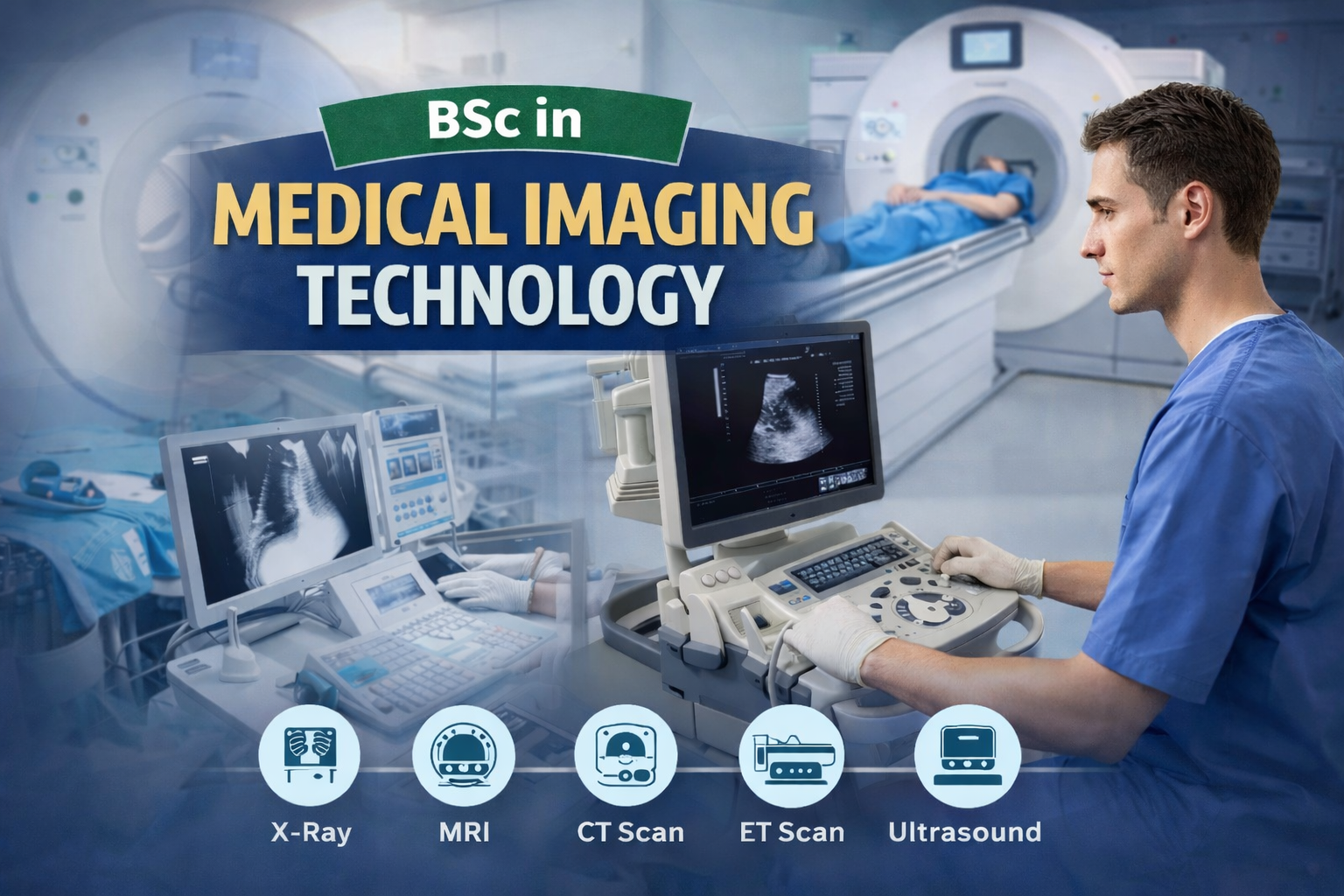
The course teaches students how to operate machines such as X-ray, CT scan, MRI, and ultrasound. Students also learn about human anatomy, radiation safety, patient care, and imaging techniques. With the rapid growth of the healthcare sector, the demand for skilled medical imaging professionals is increasing every year.
This course is ideal for students who are interested in healthcare technology and want to work in hospitals or diagnostic centers without becoming a doctor.
What is BSc Medical Imaging Technology?
BSc Medical Imaging Technology is a three to four-year undergraduate program that trains students to work with diagnostic imaging equipment. The main goal of this course is to teach students how to capture high-quality images of the human body for disease diagnosis.
Medical imaging helps doctors detect problems such as fractures, tumors, infections, and internal injuries. Students learn both theoretical concepts and practical skills so that they can work confidently in real hospital environments.
The course includes subjects such as:
-
Human Anatomy
-
Radiographic Techniques
-
MRI and CT Imaging
-
Ultrasound Technology
-
Radiation Physics
-
Patient Care
Students also undergo clinical training in hospitals to gain hands-on experience.
Why Choose BSc Medical Imaging Technology?
BSc Medical Imaging Technology is an excellent career choice for students who want to build a future in the healthcare sector without pursuing a long medical degree. The course focuses on diagnostic imaging techniques that help doctors detect diseases accurately. With the rapid advancement of medical technology and the growing number of hospitals and diagnostic centers, the demand for skilled imaging professionals is increasing every year. This course provides both technical knowledge and hands-on training, making students job-ready soon after graduation.
High Demand in Healthcare Sector
Medical imaging plays a major role in modern diagnosis. Doctors rely on imaging reports such as X-rays, CT scans, MRI scans, and ultrasound to identify internal injuries and diseases. Almost every hospital, clinic, and diagnostic center requires trained imaging technologists to operate these machines. As healthcare facilities continue to expand in urban and rural areas, the need for qualified professionals in this field is growing rapidly. This ensures stable job opportunities for graduates.
Good Career Growth
BSc Medical Imaging Technology offers strong career growth with experience and skill development. Fresh graduates usually start working as radiographers or imaging technicians. With experience, they can move into higher roles such as senior radiographer, MRI or CT specialist, imaging department supervisor, or technical consultant. Professionals can also pursue postgraduate courses or certifications to specialize in advanced imaging technologies, which further improves salary and career prospects.
Practical and Skill-Based Course
One of the biggest advantages of this course is its practical nature. Students learn to operate real imaging machines during clinical training in hospitals and diagnostic centers. They also gain knowledge about patient positioning, radiation safety, and image quality control. Because the course focuses heavily on hands-on training, students develop job-ready skills and practical confidence before entering the professional field.
Opportunity to Work Abroad
Medical imaging professionals are required globally because diagnostic imaging is an essential healthcare service in every country. After gaining experience and required certifications, graduates can apply for jobs in countries with advanced healthcare systems. International opportunities often provide higher salaries and exposure to modern imaging technologies.
BSc Medical Imaging Technology Course Highlights
| Particulars | Details |
|---|---|
| Course Name | BSc Medical Imaging Technology |
| Course Level | Undergraduate |
| Course Duration | 3–4 Years |
| Eligibility | 10+2 with Physics, Chemistry, Biology |
| Admission Process | Merit-based or Entrance Exam |
| Average Fees | ₹50,000 – ₹2,50,000 per year |
| Career Options | Radiographer, MRI Technician, CT Scan Technician |
| Average Salary | ₹3 LPA – ₹8 LPA |
Eligibility Criteria for BSc Medical Imaging Technology
Students who wish to apply for BSc Medical Imaging Technology must meet certain academic and basic physical requirements. The eligibility criteria ensure that students have the necessary background knowledge to understand medical imaging concepts and technical subjects.
Educational Qualification
Candidates must complete 10+2 (Class 12) from a recognized board. Physics, Chemistry, and Biology are usually the main required subjects because they help students understand imaging techniques and human body structure. Some colleges also accept students with Mathematics, especially if the course includes technical or equipment-related subjects. A science background is important because the course involves medical and technological concepts.
Minimum Marks
Most institutes require students to secure at least 50% marks in Class 12. However, government colleges or top universities may require higher marks due to strong competition. Reserved categories may receive relaxation in minimum marks as per admission rules.
Age Limit
The minimum age requirement for admission is generally 17 years. This ensures that students are mature enough to handle hospital environments and practical training. Most colleges do not set a strict upper age limit, especially for private institutions.
Medical Fitness
Since the course includes clinical training in hospitals, students must be physically fit. Imaging technologists often stand for long hours while operating machines and assisting patients. Some institutes may ask for a basic medical fitness certificate during admission.
| Criteria | Details |
|---|---|
| Educational Qualification | Candidates must complete 10+2 (Class 12) from a recognized board with Physics, Chemistry, and Biology as main subjects. Some colleges also accept Mathematics. |
| Minimum Marks | Most institutes require at least 50% marks in Class 12. Top colleges may require higher marks. |
| Age Limit | The minimum age for admission is generally 17 years. Most institutes do not specify a maximum age limit. |
| Medical Fitness | Students should be physically fit because the course includes clinical training and practical sessions in hospitals. |
| Entrance Requirement | Admission is usually merit-based, but some universities may conduct entrance exams. |
| Documents Required | Class 10 and 12 mark sheets, ID proof, passport-size photographs, and category certificates (if applicable). |
Admission Process for BSc Medical Imaging Technology
The admission process for BSc Medical Imaging Technology is simple and may differ slightly depending on the college or university. Most institutes follow a step-by-step procedure that includes application submission, selection, and final enrollment.
Step 1: Application Form
Students need to fill out the application form either online through the official college website or offline by visiting the campus. The form requires personal details, educational qualifications, and contact information. Candidates should carefully check eligibility criteria before submitting the application.
Step 2: Merit or Entrance Exam
Many colleges provide admission based on merit, which is calculated using Class 12 marks in science subjects. However, some universities conduct entrance exams to test students’ basic knowledge of Physics, Chemistry, and Biology. Entrance exams help institutions select candidates when the number of applications is high.
Step 3: Document Verification
After selection, students must submit important documents for verification. These usually include Class 10 and Class 12 mark sheets, identity proof, passport-size photographs, and category certificates (if applicable). Document verification ensures that all details provided by the candidate are correct.
Step 4: Fee Payment
Once documents are verified, students must pay the admission fee to confirm their seat. Fee structure varies depending on whether the institute is government or private. After fee payment, students receive confirmation of admission.
Step 5: Final Enrollment and Orientation
After completing all formalities, students are enrolled in the course and attend orientation sessions. Colleges introduce students to laboratories, imaging equipment, and hospital training schedules. Practical training usually begins in the early semesters to build technical confidence.
Duration of BSc Medical Imaging Technology
The course duration is generally 3 to 4 years, including practical training.
Academic Learning
Students learn theoretical subjects related to imaging technology and human anatomy.
Practical Training
Clinical training is conducted in hospitals where students operate imaging machines under expert supervision.
Internship
Many colleges include a 6 to 12-month internship, which helps students gain real-world experience.
BSc Medical Imaging Technology Syllabus
The syllabus is designed to provide strong technical knowledge and practical exposure.
First Year Subjects
-
Human Anatomy
-
Human Physiology
-
Basic Radiography
-
Medical Terminology
-
Radiation Physics
Students learn basic medical science concepts and introduction to imaging techniques.
Second Year Subjects
-
Radiographic Techniques
-
CT Scan Technology
-
MRI Technology
-
Ultrasound Imaging
-
Pathology
This year focuses on imaging equipment and disease diagnosis.
Third Year Subjects
-
Advanced Imaging Techniques
-
Interventional Radiology
-
Radiation Protection
-
Patient Care
-
Hospital Training
Students gain advanced technical and clinical knowledge.
Internship Training
Students work in diagnostic centers and hospitals to gain hands-on experience.
| Year | Subjects | Description |
|---|---|---|
| First Year | Human Anatomy, Human Physiology, Basic Radiography, Medical Terminology, Radiation Physics | Students learn basic medical science, structure of the human body, and fundamental imaging concepts along with introduction to radiography equipment. |
| Second Year | Radiographic Techniques, CT Scan Technology, MRI Technology, Ultrasound Imaging, Pathology | This year focuses on advanced imaging machines, scanning methods, and understanding diseases through diagnostic imaging techniques. |
| Third Year | Advanced Imaging Techniques, Interventional Radiology, Radiation Protection, Patient Care, Hospital Training | Students gain detailed technical knowledge, learn safety procedures, and develop clinical skills through hospital-based practical training. |
| Internship | Clinical Internship / Practical Training | Students work in hospitals and diagnostic centers to gain hands-on experience in operating imaging equipment and assisting radiologists in real diagnostic procedures. |
Skills Required for BSc Medical Imaging Technology
To succeed in this field, students should develop the following skills:
Technical Skills
Students must learn how to operate imaging machines accurately.
Attention to Detail
Small errors in imaging can affect diagnosis.
Communication Skills
Imaging technologists must guide patients during scanning procedures.
Problem-Solving Skills
Professionals must handle equipment and patient situations carefully.
Physical Stamina
The job requires long working hours in hospitals.
Career Opportunities After BSc Medical Imaging Technology
After completing the course, students can work in hospitals, diagnostic centers, and healthcare institutions.
Radiographer
Radiographers operate X-ray machines and help doctors diagnose diseases.
MRI Technician
MRI technicians handle magnetic imaging equipment.
CT Scan Technician
They operate CT scan machines to capture internal body images.
Ultrasound Technician
They perform ultrasound imaging for pregnancy and organ diagnosis.
Imaging Technologist
They manage multiple imaging machines in hospitals.
Top Recruiters for Medical Imaging Technology
-
Government Hospitals
-
Private Hospitals
-
Diagnostic Centers
-
Research Institutes
-
Medical Colleges
Healthcare infrastructure growth is increasing employment opportunities.
Salary After BSc Medical Imaging Technology
Salary depends on experience, skills, and workplace.
| Experience Level | Average Salary |
|---|---|
| Fresher | ₹2.5 LPA – ₹4 LPA |
| 2–5 Years | ₹4 LPA – ₹6 LPA |
| Senior Level | ₹6 LPA – ₹10 LPA |
Professionals working in metro cities usually earn higher salaries.
Scope of BSc Medical Imaging Technology in India
The scope of BSc Medical Imaging Technology in India is expanding quickly because of the rapid growth of the healthcare sector. Medical imaging has become an essential part of modern diagnosis, helping doctors detect diseases accurately and at an early stage. With increasing awareness about health and the development of advanced hospitals and diagnostic centers, the demand for skilled imaging professionals is rising every year. This course provides strong technical and practical knowledge, making graduates suitable for multiple roles in healthcare institutions.
Growing Hospitals and Diagnostic Centers
India is witnessing continuous growth in private hospitals, multi-specialty healthcare centers, and diagnostic laboratories. Every healthcare facility requires imaging departments for services such as X-ray, CT scan, MRI, and ultrasound. As new hospitals open in both urban and rural areas, the need for trained medical imaging technologists is increasing. This creates steady job opportunities for graduates across the country.
Technological Advancements
Modern imaging equipment such as MRI, CT scan, digital X-ray, and PET scan machines are becoming more advanced and widely used. These machines require skilled professionals who understand both technical operations and patient handling. As healthcare technology continues to improve, trained imaging technologists will remain in high demand.
Government Healthcare Expansion
Government initiatives to improve public healthcare infrastructure are also increasing employment opportunities. Many government hospitals are upgrading their diagnostic departments with advanced imaging machines. This expansion requires trained professionals to operate equipment and assist doctors in diagnosis.
Higher Education Options After BSc Medical Imaging Technology
After completing BSc Medical Imaging Technology, students can pursue higher studies to gain specialization and improve career prospects. Advanced education helps professionals move into senior technical or administrative roles.
MSc Medical Imaging Technology
This postgraduate course provides advanced knowledge of imaging equipment, diagnostic techniques, and modern medical technologies. It helps students become specialists in imaging departments and increases job opportunities in large hospitals.
MSc Radiology
MSc Radiology focuses more on imaging science and diagnostic interpretation support. Students learn advanced radiographic techniques and imaging analysis, which helps them work closely with radiologists and medical teams.
MBA in Hospital Management
Students interested in management roles can pursue an MBA in Hospital Management. This course teaches hospital administration, healthcare operations, and management skills, allowing graduates to move into leadership or administrative positions.
Certification Courses
Short-term certification programs in MRI, CT scan, ultrasound, or interventional radiology help students gain specialization in specific imaging areas. These certifications improve technical skills and increase salary potential.
Advantages of Studying BSc Medical Imaging Technology
BSc Medical Imaging Technology offers many benefits for students who want to build a stable career in the healthcare sector.
-
High Demand in Healthcare Industry: Imaging professionals are required in almost every hospital and diagnostic center.
-
Skill-Based Practical Course: The course includes hands-on training, making students job-ready.
-
Good Salary Growth: Salary increases with experience and specialization.
-
Opportunities in India and Abroad: Skilled professionals can work in different countries after gaining experience.
-
Fast Career Entry into Medical Field: Students can start working immediately after graduation due to practical training exposure.
Challenges in Medical Imaging Technology
Although BSc Medical Imaging Technology provides strong career opportunities, students should also understand the challenges associated with this field.
Work Pressure in Hospitals
Imaging departments often handle a large number of patients daily. Professionals must work efficiently while maintaining accuracy in imaging procedures.
Night Shifts in Emergency Departments
Hospitals operate 24/7, so imaging technologists may need to work in rotational or night shifts, especially in emergency cases.
Handling Advanced Machines Carefully
Imaging equipment is highly sensitive and expensive. Professionals must operate machines carefully and follow technical guidelines to avoid errors.
Following Strict Radiation Safety Rules
Some imaging procedures involve radiation exposure. Technologists must follow strict safety protocols to protect both patients and themselves.
With proper training and experience, professionals learn to manage these challenges effectively.
Difference Between Radiology and Medical Imaging Technology
| Basis | Radiology | Medical Imaging Technology |
|---|---|---|
| Definition | Radiology is a medical specialization that focuses on diagnosing and sometimes treating diseases using imaging techniques. | Medical Imaging Technology is a technical field that focuses on operating imaging equipment to produce diagnostic images. |
| Course Type | Requires a medical degree (MBBS) followed by postgraduate specialization in radiology. | Requires an undergraduate degree such as BSc Medical Imaging Technology or related diploma courses. |
| Role in Healthcare | Radiologists analyze and interpret medical images to diagnose diseases and guide treatment. | Imaging technologists capture and process images using machines like X-ray, MRI, CT scan, and ultrasound. |
| Main Responsibilities | Interpreting scans, preparing diagnostic reports, and consulting with doctors for treatment planning. | Operating imaging machines, positioning patients, maintaining image quality, and assisting radiologists. |
| Educational Duration | Usually 8–10 years including MBBS and postgraduate specialization. | Generally 3–4 years for a bachelor’s degree including practical training. |
| Technical vs Medical Focus | More focused on medical diagnosis and clinical interpretation. | More focused on technical operation of imaging equipment and patient handling. |
| Work Environment | Hospitals, medical colleges, diagnostic centers, and specialized radiology departments. | Hospitals, diagnostic labs, imaging centers, and healthcare institutions. |
| Salary Range | Higher salary due to advanced medical qualification and specialization. | Moderate starting salary with growth based on experience and specialization. |
| Career Growth | Can become senior radiologist, interventional radiologist, or department head. | Can become senior radiographer, MRI/CT specialist, or imaging department supervisor. |
| Patient Interaction | Limited direct interaction; mainly involved in image interpretation. | Regular patient interaction during imaging procedures and preparation. |
Future Trends in Medical Imaging Technology
The healthcare sector is rapidly adopting new technologies.
Artificial Intelligence in Imaging
AI is helping doctors detect diseases faster.
Digital Imaging Systems
Modern digital machines are replacing traditional equipment.
Portable Imaging Devices
Portable imaging machines are increasing accessibility in rural areas.
These trends will create more job opportunities in the future.
Conclusion
BSc Medical Imaging Technology is a highly valuable course for students interested in healthcare technology. The course provides strong theoretical knowledge and practical training in imaging techniques such as X-ray, MRI, CT scan, and ultrasound.
With the rapid growth of hospitals and diagnostic centers, the demand for skilled imaging professionals is increasing every year. Students completing this course can find good job opportunities with attractive salaries and career growth. Those who wish to continue their studies can also pursue higher education for advanced roles.
Overall, BSc Medical Imaging Technology is an excellent career option for students who want to work in the medical field with technical skills and practical experience.
FAQs
1. What is BSc Medical Imaging Technology?
BSc Medical Imaging Technology is an undergraduate healthcare course that teaches students to operate imaging machines like X-ray, MRI, CT scan, and ultrasound for disease diagnosis in hospitals and diagnostic centers.
2. What is the duration of BSc Medical Imaging Technology?
The duration of BSc Medical Imaging Technology is generally three to four years, including academic study and practical hospital training. Some colleges also include internship programs for hands-on professional experience.
3. What are the eligibility criteria for BSc Medical Imaging Technology?
Students must complete 10+2 with Physics, Chemistry, and Biology from a recognized board with at least 50% marks. Some institutes may also require entrance exams and medical fitness.
4. Is BSc Medical Imaging Technology a good career option?
Yes, BSc Medical Imaging Technology offers strong career opportunities because hospitals and diagnostic centers always require trained imaging professionals. The course is skill-based and provides good salary growth with experience.
5. What jobs are available after BSc Medical Imaging Technology?
Graduates can work as radiographers, MRI technicians, CT scan technicians, ultrasound technicians, and imaging technologists in hospitals, diagnostic centers, and healthcare institutions with good career growth opportunities.
6. What is the average salary after BSc Medical Imaging Technology?
Fresh graduates usually earn between ₹2.5 lakh and ₹4 lakh per year. With experience and specialization in advanced imaging techniques, professionals can earn higher salaries in hospitals and diagnostic centers.
7. Can I pursue higher studies after BSc Medical Imaging Technology?
Yes, students can pursue MSc Medical Imaging Technology, MSc Radiology, MBA in Hospital Management, or specialized certification courses in MRI, CT scan, and ultrasound to improve knowledge and career opportunities.
8. Is NEET required for BSc Medical Imaging Technology?
No, NEET is not required for most colleges offering BSc Medical Imaging Technology. Admissions are usually based on merit or entrance exams conducted by universities or institutes.
9. What skills are required for medical imaging technology?
Students need technical knowledge, attention to detail, communication skills, and ability to operate machines carefully. Understanding patient care and following radiation safety guidelines are also important skills.
10. What is the scope of BSc Medical Imaging Technology in India?
The scope is growing rapidly due to increasing hospitals and diagnostic centers. Skilled imaging professionals are required for operating advanced machines, making this field highly promising for future healthcare careers.