BSMS Course: Eligibility, Fees, Best Colleges, Entrance Exam 2026 and More
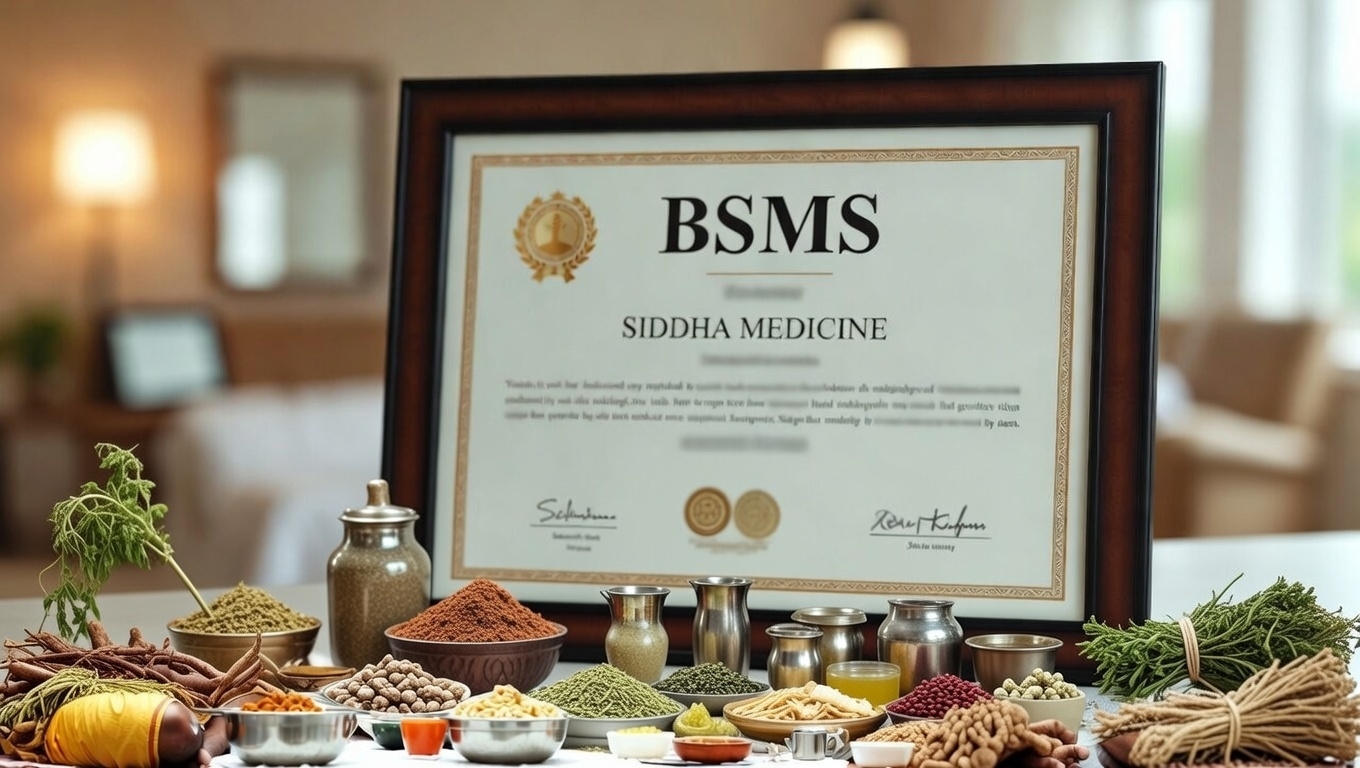
The BSMS course is a five-and-a-half-year undergraduate programme in the ancient Siddha medical system. The BSMS full form stands for Bachelor of Siddha Medicine and Surgery. Regulated by the National Commission for Indian System of Medicine (NCISM) under the Ministry of AYUSH, Government of India, it includes 4.5 years of education and 1 year of mandatory internship.
Admission into this course is regulated through the National Eligibility cum Entrance Test (NEET-UG), conducted by the National Testing Agency (NTA), followed by AYUSH counselling processes. The average BSMS fees range from Rs. 50,000 to Rs. 3 lakhs.
Read on to find India’s top BSMS colleges, fees, updated BSMS syllabus, eligibility, jobs and more.
BSMS Course Overview
Here is a quick overview of the Bachelor of Siddha Medicine and Surgery programme:
| Particulars | Description |
| BSMS Full Form | Bachelor of Siddha Medicine and Surgery |
| BSMS Average Fees | Rs. 50,000 to Rs. 3 lakhs |
| BSMS Entrance Exam | NEET |
| Subjects Required | Physics, Chemistry, Biology or Botany and Zoology |
| BSMS Admission Process | Entrance score + college/university guidelines |
| BSMS Top Job Roles | Siddha practitioner, pathologist, researcher, nutritionist, drug safety officer, teacher |
| BSMS Top Colleges | KUHS, Sri Sairam Medical College, ATSVS Siddha Medical College |
| BSMS Average Starting Salary | Rs. 3-5 LPA |
BSMS Course Eligibility Criteria
Candidates seeking entry into the BSMS course must fulfil the following eligibility criteria:
- Minimum age of 17 years by December 31 of the admission year.
- Successful completion of 10+2 with minimum required percentage in Physics, Chemistry, Botany or Physics, Chemistry, Biology with any other subject.
- Passing Tamil as a subject at Class 10 level or higher secondary, or studying Tamil during the first professional year in applicable institutions.
- Qualification in NEET-UG as the sole basis for merit-based selection.
BSMS Admission Process
Medical students seeking admisison into BSMS course must follow the steps listed below:
- Qualify the NEET-UG exam with minimum marks required for a candidate’s respective category.
- Qualified candidates must participate in AYUSH or AACCC counselling for allotment of seats based on NEET score, rank and preference.
- Register with the allotted college and complete admission formalities to secure the seat.
Based on past trends, the NEET exam 2026 is expected to be scheduled for May 3, 2026. Official notification is yet to be released. Eligible candidates can apply for the NEET exam via the NTA’s official website.
NEET Cut-off for BSMS Admissions
The NEET cut-off for BSMS admissions is the same as for MBBS, BAMS, BHMS, BDS and other medical exams. Here is an overview of NEET cut-offs from the last two years.
| Category | 2025 Cut-off | 2024 Cut-off | Qualifying Percentile |
| General (UR) | 686–144 | 720–162 | 50th |
| OBC | 143–113 | 161–127 | 40th |
| SC | 143–113 | 161–127 | 40th |
| ST | 143–113 | 161–127 | 40th |
| General PWD | 143–127 | 161–144 | 45th |
| OBC PWD | 126–113 | 145–127 | 40th |
| SC PWD | 126–113 | 145–127 | 40th |
| ST PWD | 126–113 | 141–127 | 40th |
| EWS | 686–144 | 720–162 | 50th |
Top Colleges for BSMS Course in India
BSMS programme is offered in private as well as government colleges in India. Some notable institutions include:
| College | BSMS Course Fees | Total Seats | Top Facilities |
| KUHS, Thrissur | Rs. 2,48,000 | 50 | Sports facilities, literary events, cultural programmes |
| Sri Sairam Medical College, Chennai | Rs. 3,50,000 | 50 | Smart board classrooms, central library, hostel, gym, bank |
| ATSVS Siddha Medical College, Munchirai | Rs. 3,00,000 | 40 | Hostel, canteen, transport, library |
| RVS Medical College | Rs.2,00,000 – Rs. 3,00,000 | 30 | Herbal garden, library, transportation, ATM, temples |
| National Institute of Siddha, Chennai | NA | 60 | Library with 13,000+ books, catalogues Siddha literature |
| Government Siddha Medical College (Chennai/ Palayamkottai) | Rs. 48,000-65,000 | NA | Library, herbal garden, hostel |
| Velumailu Siddha Medical College & Hospital, Chennai | Rs. 5,00,000 – 6,00,000 | 40 | Hostel, transport, e-library, canteen |
| Maria Siddha Medical College & Hospital | NA | 60 | Transportation, library, field visits |
Curriculum and BSMS Syllabus
The BSMS syllabus is built around the core philosophies of the Siddha medical system, revolving around seven elements – plasma, blood, muscle, fat, bone, nerve and semen/ovum. BSMS students learn to treat patients using herbal, mineral, dietary and other practices. The traditional Siddha system has proven effective in treating arthritis, joint diseases, skin diseases, UTIs, liver problems, neurological disorders and hemiplegic conditions.
Most BSMS courses are divided into three parts – First Professional, Second Professional and Third Professional:
| First Professional Year (18 months) |
| History and Fundamental Principles of Siddha Medicine |
| Human Physiology |
| Biochemistry |
| Microbiology |
| Tamil/English |
| Second Professional Year (18 months) |
| Medicinal Botany and Pharmacognosy |
| Materia Medica – Pharmaceuticals |
| Materia Medica – Pharmacology |
| Forensic Medicine and Toxicology |
| Principles of Modern Pathology |
| Siddha Pathology |
| Principles and Disciplines of Disease Prevention and Public Health |
| Third Professional Year (18 months) |
| General Medicine |
| Paediatrics |
| Varmam Therapy, External Therapies and Special Medicine |
| Surgery including Ophthalmology, ENT, Dentistry and Dermatology |
| Obstetrics and Gynaecology |
| Research Methodology and Medical Statistics |
BSMS vs Other Courses
Medical students in India also opt for other popular courses such as MBBS, BAMS and BHMS among others. Here is a detailed comparison of BSMS with other medical courses, including top colleges, average packages and more.
| Parameter | BSMS | BAMS | BHMS | MBBS |
| Full Form | Bachelor of Siddha Medicine and Surgery | Bachelor of Ayurvedic Medicine and Surgery | Bachelor of Homeopathic Medicine and Surgery | Bachelor of Medicine and Bachelor of Surgery |
| Course Duration | 5.5 years | 5.5 years | 5.5 years | 5.5 years |
| Entrance Exam | NEET | NEET | NEET | NEET |
| Course Description | Trains students in Siddha system, the most ancient Indian medical system. | Focuses on Ayurvedic medical practices | Specialises in homeopathic medical treatments. | Flagship degree offering expertise in allopathic and clinical science. |
| Course Fees | Rs. 45,000 to Rs. 6,00,000 | Rs. 50,000 to Rs. 50,00,000 | Rs. 20,000 to Rs. 10,00,000 | Rs. 10,000 to Rs. 60,00,000+ |
| Top Colleges in India | ATSVS Siddha Medical College Munchirai, National Institute of Siddha Chennai, GSMC Chennai/Palayamkottai | IMS-BHU Varanasi , AIIA Delhi, DPU Pune | NIH Kolkata, DPU Pune, GMCH Chandigarh | AIIMS Delhi, CMC Vellore, BHU Varanasi |
| Average Package | INR 3-5 LPA | INR 3-5 LPA | INR 3.5-5 LPA | INR 5-6 LPA |
Scope & Employment Opportunities
Graduates of the BSMS course get access to opportunities in government (National Ayush Mission, National Rural Health Mission, public hospitals etc.) and private institutions (pharma firms, diet planning, wellness centres, etc.). Top job roles include:
| Job Role | Description | Average Starting Salary (INR) |
| Siddha Practitioner | Registered doctors who diagnose and treat ailments using Siddha principles. | 3–6 LPA |
| Research Associate / Officer | Conduct clinical studies, test Siddha formulations and support research projects. | 3.5–6 LPA |
| Teaching Faculty / Lecturer | Teach Siddha principles, clinical practices, and guide students in medical colleges (requires further MD qualification). | 4–7 LPA |
| Siddha Pathologist | Apply Siddha techniques along with lab methods to identify and diagnose diseases. | 4–7 LPA |
| Nutritionist | Design diet and lifestyle plans based on Siddha principles for patients and clients. | 3.5–8 LPA |
| Drug Safety Officer | Monitor safety of Siddha medicines, ensure regulatory compliance, and handle adverse event reporting in pharma companies or AYUSH bodies. | 4.5–8 LPA |
| Medical Officer (Government AYUSH) | Work in public hospitals, PHCs, or AYUSH missions by providing Siddha care under government schemes. | 5–8 LPA |
FAQs
Is NEET required for a BSMS course?
Yes, NEET-UG is mandatory for admission to a BSMS course. All seats in the undergraduate Siddha programmes are filled solely through NEET-UG qualification followed by AACCC counselling. No direct college-level admission is allowed.
What do BSMS doctors practice?
BSMS graduates practise as registered Siddha physicians, diagnosing and treating diseases using traditional Siddha methods. They employ herbal, mineral, and animal-based medicines, varmam therapy and other traditional procedures for holistic treatment.
What is the salary after doing BSMS?
Entry level BSMS salary ranges typically from Rs. 3-5 LPA, with higher levels going up to Rs. 8 LPA. Further, BSMS salary varies based on experience, opportunity, additional certifications and other factors.
Which college is best for BSMS?
National Institute of Siddha, Sri Sairam Medical College, ATSVS Siddha Medical College and Government Siddha Medical College are some prominent Siddha medical institutions in India offering undergraduate and postgraduate courses.
Is BSMS a good career option?
BSMS is a good career option for medical professionals looking to specialise in the niche domain of Siddha studies. BSMS graduates can earn an average salary of 3-5 LPA, with government and private job opportunities.
What is BSMS full form in medical?
BSMS full form in medical is Bachelor of Siddha Medicine and Surgery. It is a five and a half years long undergraduate programme in ancient Indian Siddha medicine system.