Certified Management Accountant (CMA) 2026: Eligibility, Admission, Syllabus, Fees & Career Options
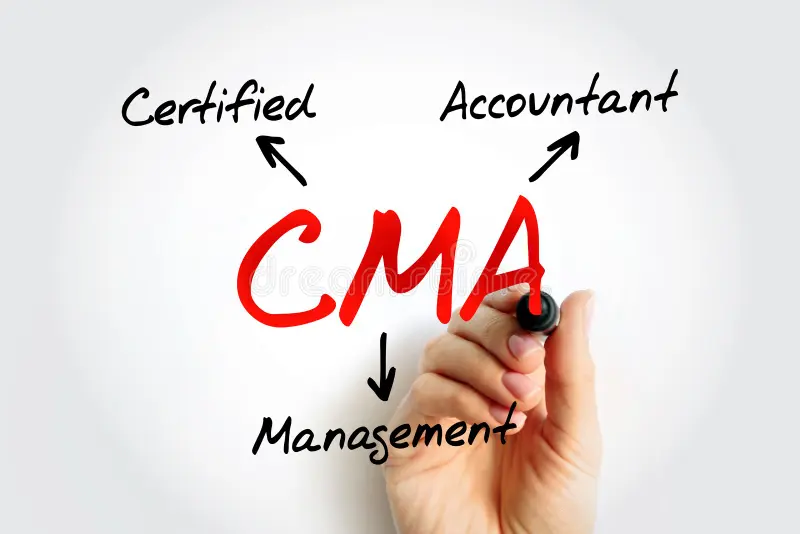
The Certified Management Accountant (CMA) certification is a globally recognized professional qualification in management accounting and financial management. It equips candidates with expertise in strategic financial planning, cost management, decision-making, and performance analysis. CMA is offered in two primary variants: CMA USA by the Institute of Management Accountants (IMA) and CMA India by the Institute of Cost Accountants of India (ICMAI).
🔔 Certified Management Accountant (CMA) 2026 Admission Alerts 2026
- ICMAI Registration: The Institute of Cost Accountants of India (ICMAI) facilitates CMA admission forms throughout the year.
- CMA June 2026 Late Fee: A late fee of INR 500 applies for CMA June 2026 registration for Foundation, Intermediate, and Final courses.
- CMA Final Dec 2026 Deadline: ICMAI will close CMA Final Dec 2026 registration on July 31, 2026.
- CMA Intermediate Dec 2026 Deadline: The last date to register for the CMA Intermediate December 2026 exam is July 31, 2026, as notified by ICMAI.
- CMA Foundation Eligibility: Candidates must have passed Class 12th from a recognized board or college with a minimum of 40% marks to be eligible for CMA Foundation.
With rising demand for professionals in multinational corporations, consulting firms, finance, and manufacturing industries, CMA holders are highly sought after for leadership roles in corporate finance, strategic planning, and decision-making. This complete guide covers both CMA USA and CMA India, with updated insights for 2026, to help aspirants choose the right path.
CMA Course: Key Highlights
| Particular | Details |
|---|---|
| Conducting Body | Institute of Cost Accountants of India (ICMAI) |
| Course Levels | Foundation, Intermediate, Final |
| Exam Frequency | Twice a year (June and December) |
| Foundation Eligibility | Passed Class 12th with minimum 40% marks |
| Intermediate Eligibility | Passed Senior Secondary Examination / Higher Secondary School Examination |
| CMA Final Dec 2026 Registration Deadline | July 31, 2026 |
| CMA Intermediate Dec 2026 Registration Deadline | July 31, 2026 |
| Late Fee for June 2026 Registration | ₹500 (Foundation, Intermediate, Final) |
| Skills Acquired | Financial accounting, strategic management, decision analysis |
| Career Focus | Management accounting, strategic management, business decision-making |
| Official Website | icmai.in |
Eligibility Criteria for CMA
The Certified Management Accountant (CMA) course, conducted by the Institute of Cost Accountants of India (ICMAI), has three levels: Foundation, Intermediate, and Final. Eligibility requirements differ for each level. There is no upper age limit, and registration remains open throughout the year (with cutoff dates for exam terms).
CMA Foundation Eligibility
Candidates must have:
- Passed Class 10 (or equivalent) from a recognized board.
- Passed Senior Secondary Examination (10+2) from a recognized board or an equivalent qualification, such as:
- National Diploma in Commerce (AICTE or State Board).
- Diploma in Rural Service (National Council of Higher Education).
Candidates awaiting 10+2 results can apply for provisional admission.
CMA Intermediate Eligibility
Candidates qualify through one of these routes:
- Passed 10+2 and CMA Foundation Course.
- Graduation in any discipline (except Fine Arts).
- Passed Foundation (Entry Level) Part I of CAT (ICMAI).
- Passed both Foundation (Entry Level) Part I and Competency Level Part II of CAT (ICMAI).
- Passed Foundation of ICSI (along with 10+2).
- Other qualifying examinations (as listed in ICMAI prospectus Annexure VI).
Direct entry to Intermediate is available for graduates (no need to clear Foundation). Candidates awaiting graduation results can apply provisionally.
CMA Final Eligibility
Candidates must have passed both groups of CMA Intermediate.
- Practical training (typically 3 years, with specifics on timing) is required for full qualification, but not for registering at Final level.
- For exam appearance deadlines:
- June term → Register by January 31.
- December term → Register by July 31.
- All registrations occur online via icmai.in or offline through regional councils.
| Level | Eligibility Criteria | Provisional Admission Allowed? | Direct Entry/Other Routes |
|---|---|---|---|
| Foundation | Passed Class 10 or equivalent from a recognized board. – Passed Class 12 (10+2) or equivalent (e.g., National Diploma in Commerce, Diploma in Rural Service). | Yes (awaiting Class 12 results) | No |
| Intermediate | Passed Class 12 (10+2) and CMA Foundation.
|
Yes (awaiting graduation results) | Yes (for graduates or equivalent qualifiers) |
| Final | Passed both groups of CMA Intermediate. | No | No |
CMA Specializations and Focus Areas
The Certified Management Accountant (CMA) qualification from the Institute of Cost Accountants of India (ICMAI) primarily focuses on cost accounting, management accounting, financial strategy, taxation, auditing, and corporate laws. Unlike some professional courses, the core CMA curriculum does not offer multiple formal specializations. Instead, it provides a broad, integrated skill set in management accounting and strategic finance.
The only element of choice comes at the Final level (under Syllabus 2022), where candidates must select one elective paper (Paper 20) from three options during enrollment. This elective allows a degree of focus in advanced areas.
Elective Options in CMA Final (Paper 20 – Group IV)
| Elective Code | Paper Name | Key Focus Areas |
|---|---|---|
| 20A | Strategic Performance Management and Business Valuation (SPMBV) | Performance measurement systems, balanced scorecard, EVA, business valuation techniques (DCF, multiples), mergers & acquisitions valuation |
| 20B | Risk Management in Business (RMB) | Enterprise risk management, financial risk (currency, interest rate), operational risk, risk mitigation strategies, derivatives for hedging |
| 20C | Entrepreneurship and Startup (ENTS) | Entrepreneurial skills, startup ecosystem, business planning, funding sources (VC, angel), incubation, innovation management |
Candidates choose one elective permanently at Final registration. All electives are 100 marks and emphasize practical, strategic application.
Core Focus Areas of CMA Qualification
The CMA course builds expertise across interconnected domains. Key focus areas include:
- Cost Accounting and Management: Cost control, budgeting, variance analysis, pricing decisions, activity-based costing.
- Financial Management: Capital budgeting, working capital management, financial planning, investment decisions.
- Strategic Management: Business strategy formulation, performance evaluation, competitive analysis.
- Taxation: Direct taxes, indirect taxes (GST), international taxation, tax planning.
- Corporate Laws and Compliance: Company law, economic laws, governance, ethics.
- Auditing: Cost audit, management audit, internal audit, fraud detection.
- Data Analytics and Decision Support: Business data analytics, forecasting, decision-making tools (introduced in Intermediate and advanced in Final).
These areas prepare CMAs for roles in corporate finance, consulting, and strategic advisory.
Career-Oriented Focus Areas and Specializations
While the course itself is generalist, CMAs often develop practical specializations based on experience, industry, or additional certifications. Common career focus areas include:
| Focus Area | Description | Typical Roles | Industries |
|---|---|---|---|
| Cost Management | Optimizing costs, profitability analysis, pricing strategies | Cost Controller, Cost Analyst | Manufacturing, FMCG, Retail |
| Strategic Financial Management | Capital structure, mergers & acquisitions, treasury management | Finance Manager, Treasury Head | Banking, Corporates, Consulting |
| Taxation and Compliance | Direct/indirect tax planning, GST advisory, international taxation | Tax Manager, Compliance Officer | Big 4 Firms, MNCs, Consultancy |
| Risk Management | Identifying and mitigating financial/operational risks | Risk Analyst, Internal Auditor | Finance, Insurance, IT |
| Performance Management | KPI design, balanced scorecard, business valuation | Performance Analyst, Strategy Consultant | All sectors |
| Internal and Cost Audit | Statutory cost audits, management audits, fraud detection | Cost Auditor, Internal Auditor | Listed Companies, PSUs |
| Entrepreneurship/Startup Advisory | Business planning, funding, valuation for startups | Startup Consultant, CFO (SMEs) | Startups, Venture Capital |
CMAs can further specialize by pursuing add-on certifications (e.g., CFA for investment, CPA for global accounting, SAP for ERP) or gaining sector-specific experience.
Entrance Exams for CMA
The Certified Management Accountant (CMA) course, conducted by the Institute of Cost Accountants of India (ICMAI), does not have a separate national-level entrance exam like some other professional courses. Admission to the course is based on eligibility criteria, and progression depends on clearing the exams at each level.
- CMA Foundation serves as the entry-level exam for candidates starting after Class 12. Clearing this exam (or qualifying for direct entry) allows progression to Intermediate.
- Graduates (or equivalent qualifiers) get direct entry to CMA Intermediate without appearing for Foundation.
- There is no entrance exam for CMA Intermediate (for eligible candidates) or CMA Final (requires passing Intermediate).
The CMA exams themselves are conducted twice a year (June and December terms) in offline mode.
Key Details
- Conducting Body: Institute of Cost Accountants of India (ICMAI)
- Exam Frequency: Twice a year (June and December)
- Mode: Offline, centre-based
- Application: Separate exam form submission required after registration (fees: Foundation ~Rs 1,500; higher for other levels)
- Official Website: icmai.in
| Level | Is There a Separate Entrance Exam? | Exam Required for Entry/Progression | Eligibility for Registration | Exam Pattern Overview | Qualifying Marks |
|---|---|---|---|---|---|
| Foundation | No (Foundation exam acts as the entry-level test) | CMA Foundation Exam (4 papers) | Passed Class 10 and Class 12 (or equivalent) | MCQ-based (OMR), 100 marks per paper (50 questions × 2 marks), 2 hours per paper, No negative marking | 40% per paper + 50% aggregate |
| Intermediate | No | No separate exam; direct registration for eligible candidates | Passed Foundation OR Graduation (any discipline except Fine Arts) OR equivalent qualifications | Descriptive + Objective, 100 marks per paper, 3 hours | 40% per paper + 50% aggregate per group |
| Final | No | No separate exam; registration after passing Intermediate | Passed both groups of CMA Intermediate | Descriptive + Objective (with one elective), 100 marks per paper, 3 hours | 40% per paper + 50% aggregate per group |
CMA Syllabus
The Certified Management Accountant (CMA) course is governed by the Institute of Cost Accountants of India (ICMAI). The current syllabus is CMA Syllabus 2022, effective from the June 2023 examination term onwards. The previous Syllabus 2016 was discontinued after the December 2023 exam term. All new students must follow Syllabus 2022.
The course is divided into three levels: Foundation, Intermediate (two groups), and Final (two groups with one elective). Each paper is worth 100 marks. Exams are held twice a year (June and December) in offline mode.
- Foundation: 4 papers (objective/MCQ-based).
- Intermediate: 8 papers (4 per group; mix of objective and descriptive).
- Final: 8 papers (4 per group + 1 elective chosen at enrollment; descriptive with case studies).
Key features:
- Emphasis on practical skills, data analytics, ethics, digital finance, ESG, and strategic decision-making.
- Mandatory practical training (15-18 months) post-Intermediate.
- Total marks per level: Foundation 400, Intermediate/Final 800 each.
- Passing criteria: 40% per paper + 50% aggregate per group.
Foundation Syllabus
Focuses on fundamentals of business, accounting, maths, and economics.
| Paper Code | Paper Name | Key Sections/Topics |
|---|---|---|
| Paper 1 | Fundamentals of Business Laws and Business Communication (FBLC) | A: Business Laws (80%) – Indian Contract Act, Sale of Goods Act, Negotiable Instruments Act, sources of law, ADR. B: Business Communication (20%) – Process, types (verbal/non-verbal), barriers, reports, proposals, intercultural communication. |
| Paper 2 | Fundamentals of Financial and Cost Accounting (FFCA) | A: Financial Accounting (70%) – Principles, journal/ledger, trial balance, depreciation, final accounts, consignment, bills. B: Cost Accounting (30%) – Cost classification, elements, cost sheet. |
| Paper 3 | Fundamentals of Business Mathematics and Statistics (FBMS) | A: Business Mathematics (40%) – Ratios, time value, progressions, calculus basics. B: Statistics (60%) – Measures of central tendency/dispersion, correlation, probability, index numbers, time series. |
| Paper 4 | Fundamentals of Business Economics and Management (FBEM) | A: Business Economics (70%) – Demand/supply, elasticity, production/costs, market forms, money/banking. B: Management (30%) – Principles, planning, organizing, leadership, motivation. |
Intermediate Syllabus
Builds core knowledge in laws, accounting, taxation, costing, operations, and finance. Includes mandatory 120-hour training in ERP, communication, MS Office, e-filing.
Group I
| Paper Code | Paper Name | Key Sections/Topics |
|---|---|---|
| Paper 5 | Business Laws and Ethics (BLE) | A: Commercial Laws (30%) – Contracts, Sale of Goods, NI Act, Partnership/LLP. B: Industrial Laws (15%) – Factories, Gratuity, EPF, ESI. C: Corporate Laws (40%) – Companies Act (incorporation, directors, meetings). D: Ethics (15%) – Principles, values, case studies. |
| Paper 6 | Financial Accounting (FA) | A: Fundamentals (15%). B: Special Transactions (10%) – Bills, consignment. C: Financial Statements (20%). D: Partnership (20%) – Admission, dissolution. E: Others (15%) – Lease, branch, insurance claims. F: Standards (20%) – AS/Ind AS basics. |
| Paper 7 | Direct and Indirect Taxation (DITX) | A: Direct Tax (50%) – Income heads, deductions, TDS, returns. B: Indirect Tax (50%) – GST (supply, ITC, returns), Customs basics. |
| Paper 8 | Cost Accounting (CA) | A: Introduction (40%) – Elements, CAS. B: Methods (30%) – Job, process, operating. C: Techniques (30%) – Marginal costing, standard costing, budgeting. |
Group II
| Paper Code | Paper Name | Key Sections/Topics |
|---|---|---|
| Paper 9 | Operations Management and Strategic Management (OMSM) | A: Operations (60%) – Forecasting, layout, PPC, quality (TQM, ISO), project management (PERT/CPM). B: Strategic (40%) – Environment analysis (SWOT, Porter), strategy formulation/implementation. |
| Paper 10 | Corporate Accounting and Auditing (CAA) | A: Corporate Accounting (50%) – Shares, debentures, final accounts, Ind AS. B: Auditing (50%) – Standards, company audit, CARO, internal control. |
| Paper 11 | Financial Management and Business Data Analytics (FMDA) | A: Financial Management (80%) – Capital budgeting, cost of capital, dividend, working capital. B: Data Analytics (20%) – Tools, visualization, basics of big data. |
| Paper 12 | Management Accounting (MA) | A: Introduction (5%). B: ABC (10%). C: Decision Tools (30%) – CVP, marginal. D: Variances (15%). E: Budgeting (15%). F: Performance (10%). G: Responsibility (5%). H: Decision Theory (10%). |
Final Syllabus
Advanced strategic focus, with electives for specialization.
Group III
| Paper Code | Paper Name | Key Sections/Topics |
|---|---|---|
| Paper 13 | Corporate and Economic Laws (CEL) | A: Corporate Laws (60%) – Companies Act advanced, SEBI, IBC. B: Economic Laws (40%) – FEMA, Competition, Consumer Protection, Cyber laws. |
| Paper 14 | Strategic Financial Management (SFM) | A: Investments (25%) – Capital decisions. B: Portfolio (35%) – Valuation, derivatives. C: Risk (20%). D: International (15%). E: Digital Finance (5%) – Fintech, blockchain. |
| Paper 15 | Direct Tax Laws and International Taxation (DIT) | A: Direct Tax (60%) – Advanced computation, assessments. B: International (40%) – DTAA, BEPS, transfer pricing. |
| Paper 16 | Strategic Cost Management (SCM) | A: Decision Making (60%) – Pricing, value chain. B: Quantitative Techniques (40%) – LP, simulation, game theory. |
Group IV
| Paper Code | Paper Name | Key Sections/Topics |
|---|---|---|
| Paper 17 | Cost and Management Audit (CMAD) | A: Cost Audit (50%) – Rules, records. B: Management Audit (25%). C: Internal Audit (15%). D: Forensic/Anti-ML (10%). |
| Paper 18 | Corporate Financial Reporting (CFR) | A: Ind AS (25%). B: Valuation (15%). C: Combinations (20%). D: Consolidation (20%). E: Developments (10%). F: Govt Accounting (10%). |
| Paper 19 | Indirect Tax Laws and Practice (ITLP) | A: GST (70%) – Advanced compliance, appeals. B: Customs (30%) – Procedures, valuation. |
Electives (Choose one at Final enrollment)
| Paper Code | Paper Name | Key Sections/Topics |
|---|---|---|
| 20A | Strategic Performance Management and Business Valuation (SPMBV) | A: Performance (50%) – BSC, EVA. B: Valuation (50%) – DCF, multiples, M&A. |
| 20B | Risk Management in Banking and Insurance (RMBI) | A: Banking (60%) – Credit/market/operational risk. B: Insurance (40%) – Solvency, reinsurance. |
| 20C | Entrepreneurship and Startup (ENTS) | A: Skills (15%). B: Ecosystem (15%). C: Idea to Action (15%). D: Value Addition (15%). E: Scale-up (10%). F: Risk (10%). G: Leadership (10%). H: New Age Business (10%). |
Admission Process for CMA
The Certified Management Accountant (CMA) course, offered by the Institute of Cost Accountants of India (ICMAI), has an open admission policy. Registration is available throughout the year for all levels: Foundation, Intermediate, and Final. However, to appear in a specific exam term (June or December), candidates must complete registration by the prescribed cutoff dates.
Admission (registration) is distinct from exam form submission. After registration, candidates must separately apply for exams by filling the exam form and paying fees before the exam application deadline.
The process is primarily online via the official ICMAI portal. Provisional registration is allowed for candidates awaiting qualifying exam results.
Key Cutoff Dates for Registration
These dates determine eligibility for a particular exam term:
| Exam Term | Registration Cutoff Date | Notes |
|---|---|---|
| June Term | January 31 of the same year | Applies to Foundation, Intermediate, and Final. |
| December Term | July 31 of the same year | May be extended (e.g., December 2026 term extended to August 8, 2026). |
Candidates registering after the cutoff for one term become eligible for the next term.
Step-by-Step Online Admission Process
- Visit the official ICMAI website: icmai.in.
- Go to the Students section and click on “Online Admission” or directly access icmai.in/studentswebsite/Admission.php.
- Select the appropriate level: Foundation, Intermediate, or Final.
- Create/login to your account (new users generate credentials).
- Fill the online application form with personal details, educational qualifications, address, etc.
- Upload scanned documents (photograph, signature, mark sheets, certificates as required).
- Pay the registration fee online (via credit/debit card, net banking).
- Submit the form and download the confirmation receipt/acknowledgment.
- Receive registration number and identification number via email/SMS for future login.
Postal mode is also available (download form, send with documents and demand draft), but online is recommended for faster processing.
Documents Required
- Recent passport-size photograph and signature (scanned).
- Class 10 and Class 12 mark sheets (for Foundation/Intermediate).
- Graduation mark sheets/degree (for direct Intermediate entry).
- Proof of identity (Aadhaar, PAN, etc.).
- Category certificate (if applicable for exemptions/fees).
Registration Fees (Approximate, as per latest structure)
| Level | Fee (Inclusive of Study Materials) |
|---|---|
| Foundation | Rs 6,000 |
| Intermediate | Rs 23,100 (Postal/Oral coaching) |
| Final | Rs 25,000 |
Fees may vary slightly; check the official website for current amounts.
After Registration
- Candidates receive study materials (physical or e-mode).
- Login to the student portal for updates, exemptions, training registration.
- Submit separate exam application forms (with additional fees) before exam deadlines to appear in exams.
- Practical training registration is required post-Intermediate for full qualification.
CMA India vs Other Courses
The Certified Management Accountant (CMA India), offered by the Institute of Cost Accountants of India (ICMAI), specialises in cost accounting, management accounting, strategic financial management, taxation, and compliance. It suits roles in corporate finance, cost control, and internal decision-making, particularly in manufacturing, FMCG, and PSUs.
CMA India competes with other professional qualifications like CA (India), CS (India), CMA (USA), and CPA (USA). Each has distinct focus areas, duration, difficulty, and career paths.
| Aspect | CMA India | CA India | CS India | CMA USA | CPA USA |
|---|---|---|---|---|---|
| Conducting Body | ICMAI | ICAI | ICSI | IMA (USA) | AICPA (USA) |
| Primary Focus | Cost & management accounting, strategic finance, taxation | Auditing, taxation, financial accounting, compliance | Company law, governance, secretarial practice | Management accounting, financial planning, strategy | Public accounting, auditing, taxation |
| Levels/Exams | 3 levels (Foundation, Intermediate, Final) + practical training | 3 levels + 3-year articleship | 3 levels (Foundation, Executive, Professional) | 2 parts | 4 sections |
| Duration | 3-4 years | 4-5 years | 2-3 years | 6-18 months | 12-24 months |
| Total Cost (Approx.) | Rs 50,000-1,00,000 | Rs 2,00,000-3,00,000 | Rs 1,00,000-1,50,000 | Rs 2,00,000-3,00,000 (incl. coaching) | Rs 3,00,000-4,00,000 |
| Difficulty/Pass Rate | Moderate (10-30% per group) | High (5-15%) | Moderate | Moderate (45-50% global) | High (45-55%) |
| Global Recognition | Strong in India; limited internationally | Primarily India | Primarily India | High (140+ countries) | Very high (USA & allies) |
| Fresher Salary (India, 2026) | Rs 6-10 LPA (up to Rs 26 LPA in top placements) | Rs 7-12 LPA | Rs 5-8 LPA | Rs 8-15 LPA | Rs 10-20 LPA |
| Key Roles | Cost Accountant, Financial Analyst, Management Accountant | Auditor, Tax Consultant, CFO | Company Secretary, Compliance Officer | Financial Controller, Strategy Analyst | Public Accountant, Tax Expert |
| Best For | Cost optimisation in Indian corporates | Auditing & practice in India | Corporate governance & legal compliance | Global MNCs & strategic roles | International auditing & tax |
CMA India offers strong prospects in Indian industries requiring cost expertise, with steady demand in manufacturing and consulting. CA remains dominant for auditing and independent practice. CS focuses on legal and secretarial functions.
Which CMA Should You Choose in 2026?
- There are two main certifications – CMA India (by ICMAI, focused on cost accounting in Indian context) and CMA USA (by IMA, globally oriented in management accounting and strategic finance).
Choose CMA USA if:
-
- You want global recognition in 170+ countries and better opportunities in MNCs, Big 4, and international roles.
- You prefer a shorter duration (6-18 months, only 2 exam parts).
- You aim for higher starting salaries in India (₹8-15 LPA for freshers, often higher in MNCs vs ₹6-10 LPA for CMA India).
- You are interested in strategic finance, analytics, risk management, and fintech (updated 2026 syllabus includes ESG, data analytics, technology).
- Pass rates are around 45-55% globally (challenging but achievable with good preparation).
Choose CMA India if:
-
- You plan to work primarily in Indian companies, manufacturing, PSUs, or cost auditing roles (statutory cost audit rights in India).
- You are comfortable with a longer duration (3-4 years, 3 levels + practical training).
- You want lower course fees (₹50,000-1 lakh total) and focus on Indian laws, taxation (GST), and cost management.
- Campus placements offer averages ₹10-13 LPA, with highs up to ₹26 LPA in 2026.
- Pass rates are low (10-30% per group in recent 2026 exams), indicating higher difficulty.
Key Factors for Indian Students in 2026:
-
- Career Goals: Global/MNC → CMA USA; Domestic/cost compliance → CMA India.
- Time & Effort: Working professionals or quick certification → CMA USA.
- Salary Growth: CMA USA holders often earn 20-50% more in metros/MNCs.
- Demand Trend: Rising need for strategic skills; CMA USA aligns better with AI, analytics, and global finance shifts.
- Cost: CMA USA higher (₹2-4 lakhs incl. coaching) but faster ROI.
Recommendation for Most in 2026: CMA USA is increasingly preferred for its flexibility, global scope, and higher earning potential in India’s growing MNC sector. Many experts suggest it for future-proof careers.
Placement & Opportunities After CMA
The Certified Management Accountant (CMA) qualification from the Institute of Cost Accountants of India (ICMAI) opens doors to rewarding careers in cost management, financial strategy, auditing, and compliance. ICMAI organises centralised campus placements twice a year (post-June and December exams) across major cities like Delhi, Mumbai, Chennai, Kolkata, Bengaluru, and Hyderabad.
As of late 2026, the ongoing campus placement drive for June 2026 qualifiers is scheduled in October-November 2026. Recent cycles (2024-2026) show strong demand, with freshers securing roles in corporates, PSUs, consulting firms, and MNCs.
Campus Placement Highlights (Recent Cycles, up to 2026)
| Parameter | Details |
|---|---|
| Highest Package | Rs 26 LPA (offered by PFC in 2026 cycle) |
| Average Package | Rs 10-13 LPA |
| Top Recruiters | PFC, ONGC, IOCL, ITC, Deloitte, Capita, Accenture, Bosch, Tech Mahindra, L&T, Vedanta, Tata Power |
| Placement Mode | Offline interviews, GD, tests in multiple cities |
| Upcoming Drive | October-November 2026 (for June 2026 qualifiers) |
Off-campus placements often yield higher packages (up to Rs 30 LPA reported for freshers in MNCs/Big 4).
Salary Expectations
Salaries vary by experience, location (higher in metros like Mumbai, Delhi, Bengaluru), industry, and skills (e.g., data analytics, ERP).
| Experience Level | Average Salary (LPA) | Range (LPA) |
|---|---|---|
| Fresher (0-1 year) | Rs 6-10 | Rs 4-26 (campus/off-campus highs) |
| Mid-Level (3-5 years) | Rs 12-20 | Rs 10-25 |
| Senior (10+ years) | Rs 25-40+ | Up to Rs 50+ (CFO roles) |
Key Job Roles
CMAs are valued for expertise in cost optimisation, budgeting, taxation, and strategic planning.
| Role | Description | Typical Salary (Fresher) |
|---|---|---|
| Cost Accountant | Cost analysis, budgeting, variance reporting | Rs 6-10 LPA |
| Management Accountant | Performance evaluation, decision support | Rs 7-12 LPA |
| Financial Analyst | Forecasting, investment analysis | Rs 6-11 LPA |
| Internal/Cost Auditor | Compliance audits, risk assessment | Rs 8-12 LPA |
| Finance Manager/Controller | Financial planning, treasury management | Rs 10-15 LPA |
| Tax Consultant | GST/direct tax planning, compliance | Rs 7-12 LPA |
| Strategy/Risk Analyst | Business valuation, risk mitigation | Rs 8-14 LPA |
Senior progression: Finance Head → CFO.
Top Industries Hiring CMAs
Demand is highest where cost control and compliance are critical.
| Industry | Key Reasons for Demand | Top Employers |
|---|---|---|
| Manufacturing/FMCG | Cost optimisation in production, pricing | ITC, Hindustan Unilever, Tata Steel |
| PSUs/Oil & Gas | Statutory cost audits, budgeting | ONGC, IOCL, PFC, BHEL, NTPC |
| Consulting/Big 4 | Advisory, taxation, audit services | Deloitte, PwC, KPMG, EY |
| Banking/Finance | Risk management, financial planning | RBI, Banks, NBFCs |
| IT/Tech | Project costing, analytics | Tech Mahindra, Accenture |
| Infrastructure | Project finance, cost control | L&T, Vedanta |
FAQs
Q: What is the total cost of Certified Management Accountant (CMA) 2026 in India including exam fees?
The total cost for Certified Management Accountant (CMA) 2026 in India, including IMA membership, entrance fees, exam registration, and study materials, is estimated to be around ₹1,20,000 to ₹1,50,000. This figure can vary slightly based on the coaching institute chosen and any applicable discounts for students.
Q: What are the eligibility criteria for Certified Management Accountant (CMA) 2026 for Indian students?
To be eligible for Certified Management Accountant (CMA) 2026, Indian students must hold a bachelor’s degree from an accredited university. Additionally, candidates need to complete two continuous years of professional experience in management accounting or financial management within seven years of passing the Certified Management Accountant (CMA) exams. There is no specific entrance exam for the Certified Management Accountant (CMA) program itself.
Q: What is the average salary after Certified Management Accountant (CMA) 2026 in India in 2026?
The average salary for a Certified Management Accountant (CMA) in India in 2026 is projected to be between ₹7 LPA and ₹15 LPA for professionals with 2-5 years of experience. Entry-level Certified Management Accountant (CMA) professionals can expect an average starting salary of around ₹5 LPA, with significant growth potential as they gain more experience and expertise in financial planning and analysis.
Q: What are the career opportunities and job roles after Certified Management Accountant (CMA) 2026 in India?
After completing Certified Management Accountant (CMA) 2026, graduates can pursue diverse career opportunities in India. Common job roles include Financial Analyst, Management Accountant, Cost Accountant, Budget Analyst, and Internal Auditor. Many Certified Management Accountant (CMA) professionals find positions in multinational corporations, consulting firms, and manufacturing companies, often progressing to senior management roles within 5-7 years.
Q: Can I pursue Certified Management Accountant (CMA) 2026 and work abroad after completing it in India?
Yes, the Certified Management Accountant (CMA) 2026 qualification is globally recognized and highly respected, making it an excellent option for working abroad. Certified Management Accountant (CMA) professionals from India are sought after in countries like the USA, Canada, Middle East, and Europe. The certification holds validity in over 100 countries, offering significant international career mobility and opportunities for higher salaries, often exceeding $70,000 annually in developed economies.
Q: Are there any top colleges or institutes in India offering coaching for Certified Management Accountant (CMA) 2026?
While Certified Management Accountant (CMA) 2026 is a professional certification from the IMA, several prominent institutes in India offer excellent coaching and study support. Reputable coaching centers like Miles Education, Uplift Professionals, and Hi-Educare are well-known for their comprehensive Certified Management Accountant (CMA) preparation programs. These institutes often boast high pass rates, with many students achieving success in the rigorous two-part examination.