The Bachelor of Ayurvedic Medicine and Surgery (BAMS) is a 5.5-year undergraduate degree program that integrates ancient Ayurvedic principles with modern medical sciences. Regulated by the National Commission for Indian System of Medicine (NCISM), it trains students in holistic healthcare, focusing on natural therapies, preventive medicine, and surgical techniques rooted in Ayurveda.
BAMS graduates are equipped to diagnose, treat, and manage diseases using herbal medicines, yoga, diet, and lifestyle modifications. With India’s emphasis on traditional medicine, BAMS offers promising careers in clinical practice, research, and wellness industries.
Bachelor of Ayurvedic Medicine and Surgery Eligibility Criteria
To pursue BAMS in 2026, candidates must fulfill academic, age, and entrance requirements set by NCISM and state councils. This ensures students have a strong science background for Ayurvedic studies.
Educational Qualification: Pass 10+2 or equivalent from a recognized board with Physics, Chemistry, and Biology as compulsory subjects. Minimum aggregate: 50% for general category (40% for SC/ST/OBC).
Age Limit: Minimum 17 years as of December 31, 2026; upper limit 25 years (relaxable for reserved categories).
Entrance Exam: Qualify NEET-UG with minimum percentile: 50th for general, 40th for reserved.
Nationality: Indian citizens; NRIs/PIOs with equivalence certificates eligible in some states.
Other Requirements: Medical fitness certificate; no color blindness. Provisional admission for Class 12 appearing students, subject to passing.
State variations may apply; e.g., Kerala requires KEAM scores alongside NEET. Over 1 lakh aspirants compete annually for 50,000+ seats.
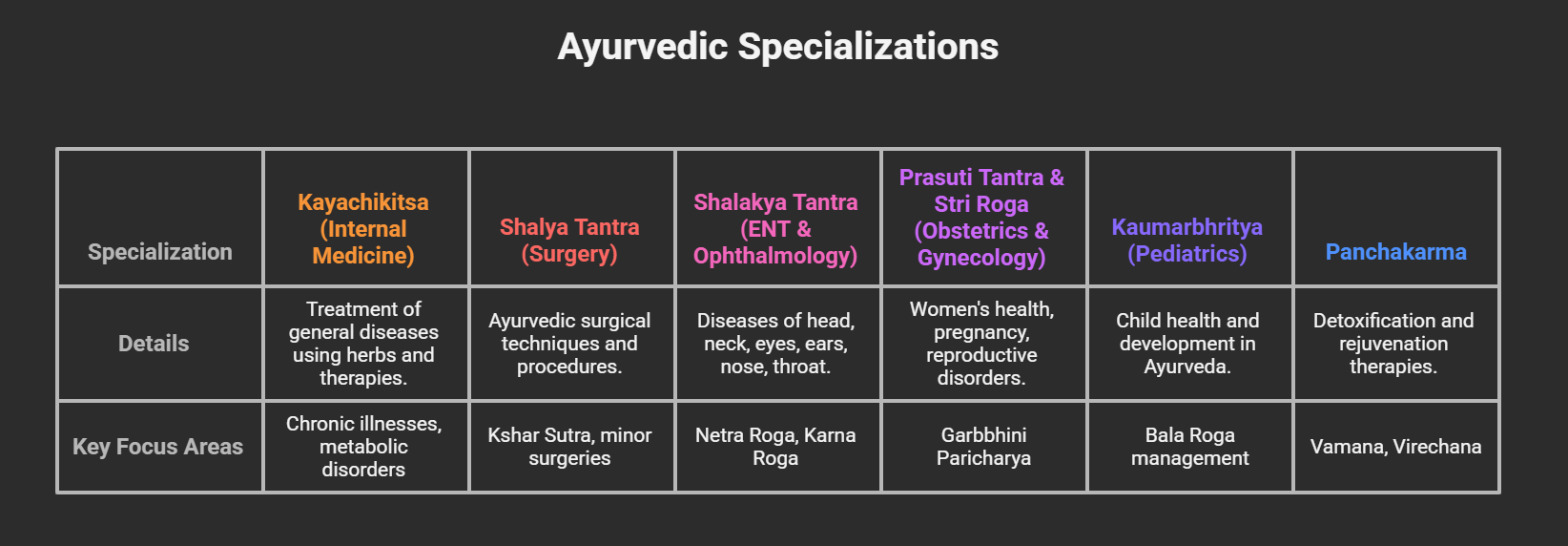
BAMS Specialisations
BAMS is a general undergraduate program, but students gain exposure to various Ayurvedic branches. Specializations are pursued at postgraduate level (MD/MS Ayurveda) in 16 areas, allowing focused expertise.
UG BAMS introduces all Ashtanga (8 branches); PG specializations enhance career in specific fields.
Entrance Exams for BAMS
Admission to BAMS in 2026 is primarily through national and state-level entrance exams testing biology, physics, chemistry.
NEET is mandatory for all BAMS seats; state exams like KEAM for additional eligibility in some states.
Bachelor of Ayurvedic Medicine and Surgery Admission Process
The admission process for Bachelor of Ayurvedic Medicine and Surgery (BAMS) in 2026 is centralized and merit-based, primarily through the National Eligibility cum Entrance Test (NEET-UG) scores. Managed by the National Commission for Indian System of Medicine (NCISM) and the Ayush Admissions Central Counseling Committee (AACCC), it ensures transparent allocation of seats across government, private, and deemed universities. With over 52,000 seats available nationwide, the process starts with NEET qualification and proceeds to counseling rounds.
The timeline for 2026 is expected to follow the 2025 pattern: NEET-UG in May, results in June, counseling from July to September. State-level variations exist, but NEET is mandatory for all seats, including management quota in some states. Private colleges may offer direct admissions based on NEET scores and 12th marks, but government institutions strictly follow counseling.
Step-by-Step BAMS Admission Process
Eligibility Check: Ensure 10+2 with PCB (50% general, 40% reserved), age 17-25 years.
Register and Appear for NEET-UG: Apply via nta.ac.in in February-March 2026; exam in May. Qualify with minimum percentile (50th general, 40th reserved).
NEET Results and Merit List: Declared in June; download scorecard from neet.nta.nic.in.
Register for Counseling: For All India Quota (15% seats), register on aaccc.gov.in. For state quota (85%), use state portals (e.g., cee.kerala.gov.in for Kerala).
Choice Filling and Locking: Select colleges and courses; multiple rounds allow modifications.
Seat Allotment: Based on NEET rank, preferences, and reservations; results online. Report to allotted college within deadline.
Document Verification and Fee Payment: Submit originals (NEET scorecard, 12th marksheet, category certificate) at college; pay fees (Rs. 50k-5L/year).
Special provisions: Stray vacancy rounds for unfilled seats; NRI quota in some colleges. Common challenges include high competition (1:10 ratio) and document discrepancies.
BAMS Syllabus
The Bachelor of Ayurvedic Medicine and Surgery (BAMS) syllabus, as prescribed by the National Commission for Indian System of Medicine (NCISM) for 2025 onwards, is structured over 4.5 years of academic study divided into four professional phases, followed by a mandatory one-year internship. This curriculum integrates classical Ayurvedic texts with modern medical sciences, emphasizing holistic health, preventive care, and therapeutic practices. It includes theoretical subjects, practical training, clinical exposure, and research methodology to develop competent Ayurvedic practitioners.
The syllabus is designed to cover foundational concepts in the early years and advance to clinical and specialized topics later. Total teaching hours exceed 4,000, with assessments through theory exams, practicals, viva-voce, and internal evaluations. Updates in 2025 incorporate contemporary elements like biomedical research and integrative medicine, aligning with global health standards.
BAMS First Year Syllabus
This phase focuses on building a strong foundation in Ayurvedic philosophy, basic sciences, and language skills essential for interpreting classical texts.
Subject
Key Topics
Hours (Theory/Practical)
Rachna Sharira (Anatomy)
Anatomical structure of the human body, bones, muscles, embryology, applied anatomy, marma points (vital points), srotas (channels), indriya sharira (sensory organs), and cadaver dissection techniques.
150/200
Sanskrit and Samhita
Essential Sanskrit language skills for understanding classical Ayurvedic literature, interpretation of ancient shlokas and manuscripts, grammar, vocabulary, and texts like Ashtanga Hridaya.
100/50
Kriya Sharira (Physiology)
Physiological concepts including doshas (Vata, Pitta, Kapha), dhatus (tissues), malas (wastes), srotas, agni (digestive fire), prakriti (constitution), and integration with modern physiology of systems like digestive, nervous, respiratory, cardiovascular, and endocrine.
150/150
Padartha Vigyana (Ayurvedic Philosophy)
Fundamentals of Ayurvedic philosophy, concepts of dravya (substance), guna (qualities), karma (actions), samanya-vishesha (similarity-dissimilarity), and panchamahabhuta (five elements) theory.
100/50
History of Ayurveda
Historical evolution of Ayurveda, contributions of sages like Charaka, Sushruta, Vagbhata, development of schools like Atreya and Dhanvantari, ancient texts, and the influence of Buddhism and Jainism on Ayurveda.
100/-
Practical components include dissections, physiological experiments, and Sanskrit recitation. Internal assessments and viva-voce are integral.
BAMS Second Year Syllabus
This phase introduces pathology, pharmacology, and classical texts, bridging foundational knowledge to disease understanding.
Subject
Key Topics
Hours (Theory/Practical)
Roga Nidan (Pathology)
Comprehensive knowledge of disease diagnosis, causes (nidana), symptoms (rupa), prognosis (upashaya), and Nidana Panchaka (five diagnostic tools), samprapti (pathogenesis), and laboratory investigations in Ayurveda.
Mineral-based medicines, alchemy processes, purification (shodhana) and incineration (marana) of metals to prepare bhasmas, safety precautions, formulation of powders (churna), oils (taila), ghritas, avalehas, and dosage forms, including storage and preservation.
Detailed pharmacognosy of Ayurvedic herbs, identification, classification, properties (rasa, guna, virya, vipaka), therapeutic actions, cultivation, collection, and adulteration detection.
150/200
Charaka Samhita – Purvardha
Study of the first half of Charaka Samhita, covering sutrasthana (fundamentals), nidanasthana (diagnosis), and vimanasthana (specifics of quantity and quality).
150/-
Practicals involve herbal identification, preparation of formulations, and pathological lab work.
BAMS Third Year Syllabus
This year emphasizes preventive medicine, specialized branches like pediatrics and gynecology, and community health.
Subject
Key Topics
Hours (Theory/Practical)
Swasthavritta (Preventive & Social Medicine)
Personal and public hygiene, seasonal regimens (ritucharya), daily routines (dinacharya), code of conduct (sadvritta), preventive healthcare, yoga practices (asanas, pranayama), and naturopathy (nisargopachara) like hydrotherapy, mud baths, and fasting.
150/100
Kaumarbhritya Parichaya (Ayurvedic Pediatrics)
Child nutrition, immunization, care during growth stages, common pediatric illnesses (balaroga) like measles, malnutrition, and Ayurvedic protocols for child care.
Reproductive physiology, antenatal/perinatal/postnatal care, labor management, gynecological disorders like leucorrhoea, menstrual issues, infertility, PCOD, and menopause.
150/100
Charaka Samhita – Uttarardha
Study of the latter half of Charaka Samhita, including chikitsasthana (treatment) and kalpasthana (pharmaceutics).
150/-
Practical training includes yoga demonstrations, community health surveys, and clinical case studies.
BAMS Fourth Year Syllabus
The final phase covers advanced clinical subjects, research, and specialized therapies.
Subject
Key Topics
Hours (Theory/Practical)
Panchkarma
Five detoxification procedures: Vamana (emesis), Virechana (purgation), Basti (enema), Nasya (nasal administration), Raktamokshana (bloodletting), and their applications in rejuvenation.
150/200
Medical Statistics and Research Methodology
Biomedical research, clinical trials, data analysis, hypothesis testing, medical statistics (Part A: 30 marks), and research ethics (Part B: 20 marks).
50/-
Shalya Tantra (Surgery)
Ayurvedic surgical principles, wound management, ulcers, abscesses, operative methods like Kshar Sutra for ano-rectal disorders, and integration with modern surgery.
150/100
Kayachikitsa (Internal Medicine)
Diagnosis and treatment of internal conditions like diabetes, hypertension, arthritis, neurological disorders, and allergies using Ayurvedic protocols.
150/100
Shalakya Tantra (ENT & Ophthalmology)
Diseases of head, neck, eyes (Netra Roga), ears, nose, throat (Shira-Karna-Nasa-Mukha Rogas), including sinusitis, dental caries, hearing loss, and use of examination tools.
150/100
Practicals involve panchakarma procedures, surgical demonstrations, and research projects.
Internship and Practical Training
After academic completion, a one-year compulsory rotating internship in Ayurvedic hospitals covers all departments: Kayachikitsa, Panchakarma, Shalya, Shalakya, Prasuti-Stri Roga, Kaumarbhritya, and emergency management. It includes hands-on patient care, case-taking, diagnosis, treatment planning, and community outreach. Minimum 500 hours of clinical exposure, with assessments through logbooks and viva-voce. This phase bridges theory and practice, ensuring graduates are ready for independent practice.
The syllabus promotes research-oriented learning, with mandatory projects in the final year. NCISM encourages integration with modern diagnostics for evidence-based Ayurveda.
Download BAMS Syllabus PDF
Below is the year-wise BAMS syllabus in downloadable PDFs for your reference.
India boasts over 400 BAMS colleges approved by the National Commission for Indian System of Medicine (NCISM), offering a blend of traditional Ayurvedic education and modern facilities. These institutions are categorized into government and private, with government colleges typically having lower fees, stronger infrastructure for research, and higher cut-offs due to prestige and subsidies. Private colleges often provide advanced amenities, industry collaborations, and flexible admissions but at higher costs. Cut-offs for 2026 are estimated based on NEET 2025 trends, influenced by exam difficulty, applicant numbers (over 20 lakh in 2025), and seat availability (around 52,000 total). General category scores are highlighted; reserved categories (SC/ST/OBC) have 100-150 marks relaxation. Fees vary by state and quota. NIRF rankings (2025) are included where applicable, focusing on AYUSH-specific metrics.
Government colleges, numbering around 250, prioritize merit and reservations, with annual fees ranging from Rs. 10,000 to Rs. 1 lakh. They emphasize clinical training in attached hospitals and research under AYUSH schemes. Top performers in NEET secure seats here, with cut-offs rising annually due to demand.
Top Government BAMS Colleges
College
Location
NIRF Rank (2025)
Expected NEET Cut-Off 2026 (General Score)
Annual Fees (Approx.)
Seats (Approx.)
Institute of Medical Sciences, Banaras Hindu University (BHU)
Varanasi, Uttar Pradesh
Within 100 (Overall)
620+
Rs. 50,000
100
National Institute of Ayurveda (NIA)
Jaipur, Rajasthan
Top 10 AYUSH
550+
Rs. 40,000
125
Gujarat Ayurved University
Jamnagar, Gujarat
Top 20
500+
Rs. 30,000
100
Government Ayurvedic College
Thiruvananthapuram, Kerala
State Top
520+
Rs. 20,000
70
Government Ayurvedic College
Bengaluru, Karnataka
State Top
480+
Rs. 25,000
100
Dr. BRKR Government Ayurvedic College
Hyderabad, Telangana
State Top
450+
Rs. 20,000
75
State Ayurvedic College and Hospital
Lucknow, Uttar Pradesh
Top 50
450-500
Rs. 35,000
100
Government Akhandanand Ayurved College
Ahmedabad, Gujarat
State Top
400-450
Rs. 25,000
75
Government Ayurvedic College
Patna, Bihar
State Top
430+
Rs. 15,000
100
Rajiv Gandhi Government Post Graduate Ayurvedic College
Paprola, Himachal Pradesh
Top 30
470+
Rs. 30,000
75
Private colleges, around 150 in number, offer more seats with modern facilities like digital libraries and international collaborations. Fees range Rs. 2-5 lakhs annually, with cut-offs 50-100 marks lower than government due to management quotas. They excel in wellness and tourism-oriented programs.
Top Private BAMS Colleges
College
Location
NIRF Rank (2025)
Expected NEET Cut-Off 2026 (General Score)
Annual Fees (Approx.)
Seats (Approx.)
Sri Sri College of Ayurvedic Science & Research
Bengaluru, Karnataka
Top 50 AYUSH
450-500
Rs. 3,00,000
100
KLE Ayurvedic College
Belgaum, Karnataka
Top 30
400-450
Rs. 2,50,000
100
Patanjali Ayurved College
Haridwar, Uttarakhand
State Top
350-400
Rs. 2,95,000
100
Sri Sai Nath PG Ayurvedic College
Farrukhabad, Uttar Pradesh
State Top
300-350
Rs. 3,20,000
60
RK Ayurvedic College
Azamgarh, Uttar Pradesh
State Top
300-350
Rs. 2,50,000
60
Guru Nanak Ayurvedic Medical College
Muktsar, Punjab
State Top
350-400
Rs. 2,00,000
60
Harmony Ayurvedic Medical College & Hospital
Firozpur, Punjab
State Top
300-350
Rs. 2,50,000
60
Sharda University (School of Ayurveda)
Greater Noida, Uttar Pradesh
Within 200
400-450
Rs. 3,50,000
100
Jamia Millia Islamia (Faculty of Ayurveda)
New Delhi
Top 100
450-500
Rs. 2,00,000
50
Amity Institute of Indian System of Medicine
Noida, Uttar Pradesh
Within 150
350-400
Rs. 3,00,000
60
These estimates are for Round 1 counseling; subsequent rounds have lower cut-offs. For precise data, refer to aaccc.gov.in post-NEET 2026. Government colleges prioritize local domicile, while private offer more flexibility.
Placement & Opportunities After BAMS
Bachelor of Ayurvedic Medicine and Surgery (BAMS) graduates are increasingly sought after in India’s burgeoning AYUSH sector, valued at over Rs. 1.5 lakh crore in 2025 and projected to grow at 15-20% annually. This expansion is driven by government initiatives like the AYUSH Ministry’s programs, rising demand for holistic healthcare post-COVID, and integration of Ayurveda into mainstream medicine. Fresh graduates typically start with salaries ranging from Rs. 3-6 lakhs per annum (LPA), but with experience, specialization, or entrepreneurship, earnings can escalate to Rs. 10-20 LPA or more.
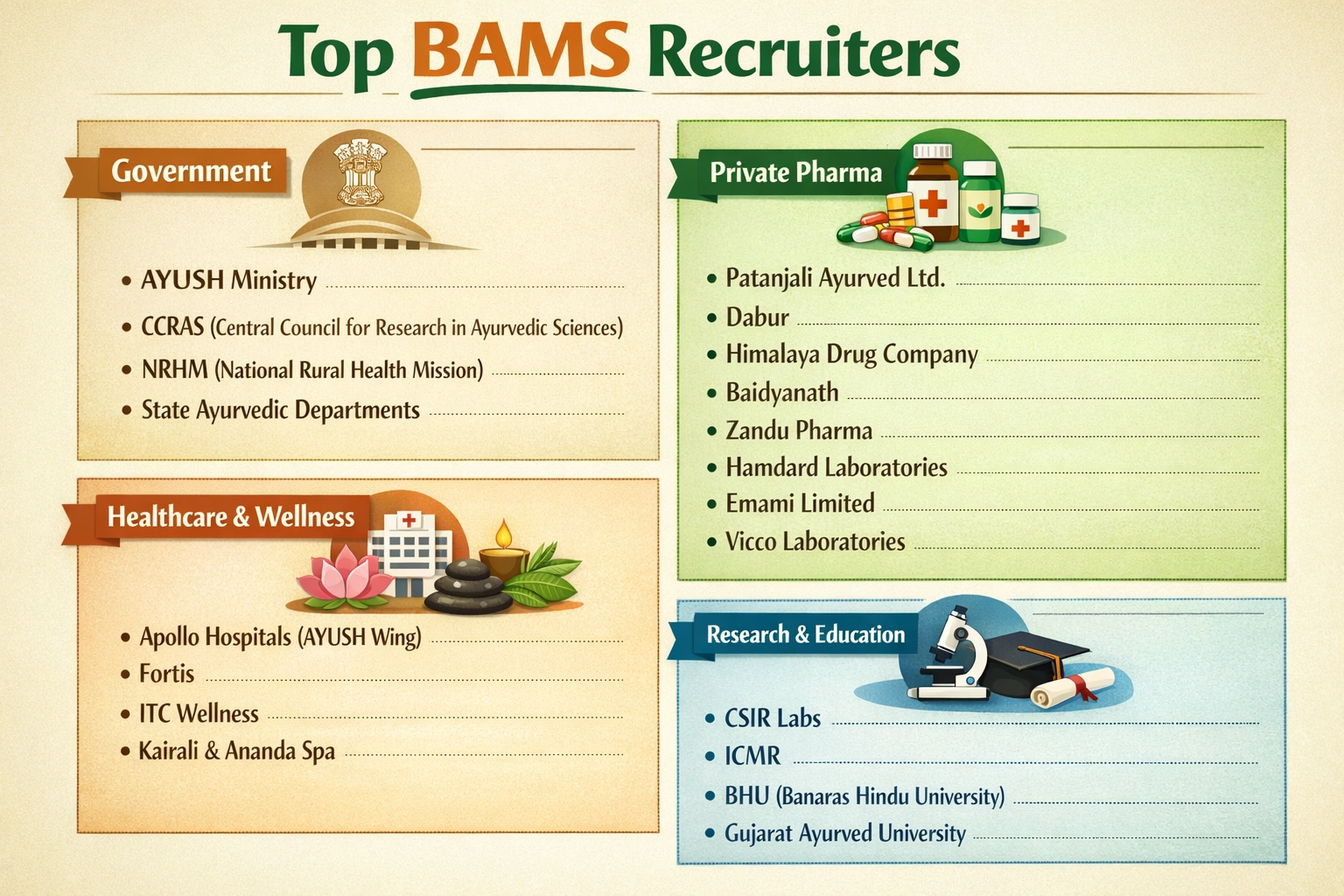
Placement rates in top colleges range from 70-90%, with opportunities spanning clinical practice, research, education, industry, and wellness tourism. Key recruiters include government bodies like AYUSH hospitals, private firms such as Patanjali and Dabur, and international wellness chains. The field offers not just financial rewards but also societal impact through preventive and natural healing.
BAMS Job Roles and Salaries
BAMS opens doors to a variety of roles, from direct patient care to administrative and research positions. Salaries vary based on location (urban areas pay 20-30% higher), experience, and sector (government vs. private). Freshers often start in entry-level roles, with increments through performance and additional qualifications. In 2025, average starting salaries for BAMS doctors ranged from Rs. 20,000-50,000 per month for freshers, with experienced professionals earning up to Rs. 1 lakh or more. Government jobs offer additional perks like housing and pensions.
Job Role
Description
Average Starting Salary (LPA)
Experienced Salary (LPA)
Top Recruiters
Ayurvedic Doctor/Physician
Provide consultations, prescribe herbal treatments, and manage clinics or hospitals.
3-4
6-10
AYUSH Hospitals, Patanjali, Private Clinics
Medical Officer
Work in government health programs, conduct check-ups, and implement AYUSH policies.
4-6
8-12
NRHM, AYUSH Ministry, State Health Departments
Research Scientist
Conduct clinical trials, develop new formulations, and publish on Ayurvedic efficacy.
3-5
7-15
CCRAS, CSIR Labs, Pharmaceutical R&D
Wellness Consultant/Nutritionist
Advise on diet, yoga, and lifestyle in spas, resorts, or corporate wellness programs.
3-4
5-8
Himalaya Wellness, Dabur, ITC Resorts
Lecturer/Academician
Teach in Ayurvedic colleges, mentor students, and contribute to curriculum development.
4-6
8-12
BHU, NIA Jaipur, Government Colleges
Drug Manufacturer/Quality Analyst
Oversee production, ensure compliance, and test herbal products.
3-5
6-10
Emami, Vicco Laboratories, Baidyanath
Clinical Research Associate
Manage Ayurvedic drug trials, data collection, and regulatory submissions.
3-5
6-10
Quintiles, Parexel, Ayurvedic Pharma Firms
Panchakarma Specialist
Administer detoxification therapies in specialized centers.
3-5
6-9
Ayurvedic Resorts, Wellness Centers
Medical Representative/Sales Executive
Promote Ayurvedic products to doctors and pharmacies.
2.5-4
5-8
Hamdard Laboratories, Zandu Pharma
Salaries in metropolitan areas like Delhi or Mumbai can be 20-50% higher, while rural postings under government schemes offer Rs. 25,000-40,000 monthly with incentives. Top colleges like BHU and NIA report average packages of Rs. 4-7 LPA for freshers.
BAMS Career Growth Projections
Career progression in Ayurveda is multifaceted, with opportunities for specialization, leadership, and entrepreneurship. Initial years involve building clinical experience, followed by advanced education or certifications. Growth is accelerated by pursuing MD/MS in Ayurveda (3 years) via AIAPGET, leading to roles like consultant or professor with salaries jumping to Rs. 8-15 LPA. PhD holders can enter research or academia, earning Rs. 10-20 LPA. Certifications in Yoga, Panchakarma, or Integrative Medicine enhance employability.
Typical growth path:
0-2 Years (Entry-Level): Junior doctor or assistant; focus on patient handling and networking.
3-5 Years (Mid-Level): Independent practice or hospital roles; salary Rs. 6-10 LPA; pursue PG for specialization.
6-10 Years (Senior-Level): Consultant, department head, or clinic owner; Rs. 10-15 LPA; leadership in AYUSH projects.
10+ Years (Expert-Level): Director, researcher, or entrepreneur; Rs. 15+ LPA; international collaborations or policy roles.
Government promotions under AYUSH can lead to Chief Medical Officer positions (Rs. 12-18 LPA). Entrepreneurship, like starting wellness centers, offers unlimited potential, with successful ventures generating Rs. 20-50 LPA. Continuous learning via CME (Continuing Medical Education) is mandatory for license renewal, fostering lifelong growth.
BAMS Placement Statistics and Top Recruiters
In 2025, top BAMS colleges reported robust placements, with average packages of Rs. 4-7 LPA and highest up to Rs. 12 LPA. For instance, BHU and NIA Jaipur achieved 80-90% placement rates, with students securing roles in government hospitals and pharma companies. AIIMS Delhi, CMC Vellore, PGIMER Chandigarh, and JIPMER Puducherry offer high packages for integrative roles, averaging Rs. 6-10 LPA.
Top BAMS Recruiters
Campus placements in colleges like BHU include packages from Rs. 3-8 LPA, with international offers from wellness chains in the Middle East.
Opportunities in Different Sectors
The Ayurveda field offers versatile sectors, each with unique growth prospects:
Clinical Practice: Private clinics or hospitals; 50% of graduates opt for this, with potential to earn Rs. 5-10 LPA through patient volume.
Government Jobs: Medical officers in AYUSH dispensaries or schemes like Ayushman Bharat; stable with salaries Rs. 5-8 LPA plus benefits.
Research & Development: In CCRAS or pharma R&D; focus on clinical trials, earning Rs. 4-7 LPA, with grants for innovative projects.
Wellness & Tourism: Consultants in spas or resorts; booming sector with Rs. 3-6 LPA, plus perks in tourist hotspots.
Pharmaceutical Industry: Product development or sales; Rs. 3-5 LPA entry, with incentives.
Education & Academia: Lecturers after PG; Rs. 4-7 LPA in colleges.
Non-Traditional Roles: Medical transcription, tourism, event management, journalism, photography in Ayurveda; emerging with Rs. 3-5 LPA.
Government initiatives like the National Ayush Mission create thousands of jobs annually.
Global Opportunities
Ayurveda’s global market is projected to reach $16 billion by 2026, offering BAMS graduates international avenues. In countries like the US, UAE, and Europe, roles in wellness centers or as consultants fetch Rs. 8-15 LPA equivalent. Export of Ayurvedic products creates jobs in quality control and marketing. Certifications like WHO’s traditional medicine modules enhance employability abroad. In 2025, Middle Eastern countries recruited BAMS doctors for spas, with packages including housing. Challenges include license recognition; many pursue additional qualifications for practice overseas.
BAMS Scholarships
Scholarships for BAMS students in India support meritorious and needy candidates, covering tuition, hostel, and stipends. In 2026, schemes from AYUSH Ministry, states, and private foundations are available via NSP or dedicated portals. Eligibility: Merit (NEET rank), income (< Rs. 2-8 lakhs), category (SC/ST/OBC/EWS).
Scholarship
Eligibility
Amount
Provider
AYUSH Scholarship Scheme
International students for UG/PG Ayurveda
Full tuition + stipend Rs. 43,500/month
ICCR/MEA
Post-Matric Scholarship
SC/ST/OBC/EWS, income < Rs. 2.5 lakhs
Full tuition + maintenance
Ministry of Social Justice
AIMSET Scholarship
Medical/Paramedical aspirants, entrance-based
Up to Rs. 50,000
AIMSET Foundation
AIPMST Secondary
Merit in test for MBBS/BAMS/BUMS
Scholarship + stipend
AIPMST
Swami Vivekananda Merit-cum-Means
Merit, minorities/general, 50%+ marks
Rs. 30,000/year
State Govts (e.g., WB)
Oasis Scholarship
SC/ST/OBC in WB, income criteria
Rs. 5,000-20,000
WB Backward Classes
All India Pre-Medical Scholarship Test
For MBBS/BDS/BAMS/BHMS/BUMS
Up to full fee
Private Foundation
Apply by December 2025 for 2026 session; e.g., ICCR AYUSH last date June 2025. State-specific like Suborno Jayanti for AYUSH courses. Over 10,000 scholarships awarded annually.
BAMS Vs Other Courses
BAMS, MBBS, and BHMS are all 5.5-year medical undergraduate programs, but they differ in philosophy, curriculum, career scope, and salary. BAMS focuses on holistic Ayurveda, MBBS on modern allopathy, and BHMS on homeopathy. Choosing depends on interest in traditional vs. conventional medicine.
Aspect
BAMS
MBBS
BHMS
Full Form
Bachelor of Ayurvedic Medicine and Surgery
Bachelor of Medicine, Bachelor of Surgery
Bachelor of Homeopathic Medicine and Surgery
Focus
Holistic, natural therapies, herbs, yoga, preventive care
Modern medicine, diagnostics, surgery, pharmaceuticals
Sanskrit, Ayurvedic texts, anatomy, pharmacology, surgery
Anatomy, physiology, pathology, surgery, medicine
Homeopathic principles, materia medica, repertory
Career Scope
Ayurvedic clinics, wellness centers, research, govt jobs
Hospitals, specialization, high demand globally
Homeopathic clinics, alternative medicine
Average Starting Salary
Rs. 3-6 lakhs per annum
Rs. 6-10 lakhs per annum
Rs. 3-5 lakhs per annum
Global Recognition
Growing, especially in wellness tourism
High, universally accepted
Moderate, in alternative medicine
Challenges
Limited emergency care scope
High stress, long hours
Skepticism in mainstream
BAMS suits those interested in natural healing, with growing integration in AYUSH ministry initiatives. MBBS offers broader clinical practice, while BHMS is for minimal intervention approaches. In 2025, BAMS demand rose due to post-COVID wellness focus.
FAQs
What is the BAMS course?
The Bachelor of Ayurvedic Medicine and Surgery (BAMS) is a 5.5-year undergraduate program that combines ancient Ayurvedic principles with modern medical knowledge. It covers holistic treatments using herbs, yoga, diet, and lifestyle changes. The course includes 4.5 years of academics and a one-year internship in Ayurvedic hospitals for practical training.
What are the eligibility criteria for BAMS?
To pursue BAMS, candidates must have completed 10+2 with Physics, Chemistry, and Biology, securing at least 50% aggregate marks for general category (40% for reserved). They need to qualify NEET-UG with the required percentile. The minimum age is 17 years, and the upper limit is 25 years, with relaxations for certain categories.
What specializations are available in BAMS?
BAMS offers exposure to eight branches of Ayurveda, with specializations pursued at postgraduate level. Key areas include Kayachikitsa (internal medicine), Shalya Tantra (surgery), Shalakya Tantra (ENT and ophthalmology), Prasuti Tantra (gynecology), Kaumarbhritya (pediatrics), and Panchakarma (detoxification). These enhance expertise in specific therapeutic domains.
Which entrance exams are required for BAMS?
The primary entrance exam for BAMS is NEET-UG, conducted by NTA, which is mandatory for all seats. Some states may have additional exams like KEAM in Kerala. For postgraduate specializations, AIAPGET is required. Qualifying NEET ensures eligibility for centralized counseling through AACCC.
What is the syllabus for BAMS?
The BAMS syllabus spans 4.5 years, covering Sanskrit, Ayurvedic philosophy, anatomy, physiology, pathology, pharmacology, toxicology, surgery, gynecology, pediatrics, and preventive medicine. It includes classical texts like Charaka Samhita and practical training in herbal identification, panchakarma therapies, and clinical case studies.
What is the admission process for BAMS?
BAMS admission involves qualifying NEET-UG, followed by registration for AACCC counseling for All India Quota seats or state counseling for 85% seats. Candidates fill choices, attend document verification, and receive allotments based on ranks. The process starts in June-July after NEET results.
What are the top BAMS colleges and their cut-offs?
Top colleges include BHU Varanasi (cut-off 620+), NIA Jaipur (550+), and Gujarat Ayurved University (500+). Government institutions have higher cut-offs due to prestige, while private ones range 350-500. Cut-offs vary by category and are based on NEET scores.
How does BAMS compare to MBBS?
BAMS emphasizes holistic Ayurveda with natural remedies, while MBBS focuses on allopathic modern medicine. Both are 5.5 years long and require NEET. BAMS suits those interested in preventive care and wellness, offering salaries of 3-6 LPA starting, compared to MBBS’s 6-10 LPA with broader clinical scope.
What are the placement opportunities after BAMS?
BAMS graduates find placements in AYUSH hospitals, private clinics, and pharma companies with starting salaries of 3-6 LPA. Top recruiters include Patanjali, Dabur, and government bodies. Placement rates reach 80-90% in premier colleges, with roles in clinical practice and research.
What scholarships are available for BAMS students?
Scholarships include AYUSH Scheme for international students covering full fees, post-matric for SC/ST with tuition waivers, and merit-based like AIMSET up to Rs. 50,000. State-specific aids like Swami Vivekananda offer Rs. 30,000 yearly. Applications are through NSP or state portals.
Can I pursue MD after completing BAMS?
Yes, after BAMS, you can pursue MD or MS in Ayurveda through AIAPGET entrance exam. Specializations last three years and enhance expertise in fields like Kayachikitsa or Shalya Tantra, leading to higher salaries and roles in teaching or advanced clinical practice.
What is the career scope after BAMS?
Career scope includes Ayurvedic doctor, researcher, wellness consultant, or academician with salaries starting at 3-6 LPA. Opportunities exist in government hospitals, pharma industries, and abroad in wellness tourism. Entrepreneurship in clinics or further studies like MD expand prospects significantly.
Abhijeet Chatterjee is a professional Content and Copy specialist with over five years of experience in crafting compelling content around the Edtech domain. His portfolio includes notable work for companies such as PhysicsWallah, Roar Media, Jagran Josh, etc. Academically, Abhijeet holds a Master's in Mass Communication, where he was awarded a gold medal for his outstanding performance. He has also qualified for the UGC NET in Mass Communication, demonstrating his expertise and a deep understanding of the field. His academic foundation is built on a Bachelor's degree in English Literature. Beyond his professional work, Abhijeet is an avid writer and a cinephile. His personal interests include scriptwriting, film criticism, and reading novels.