
Last Updated on December 4, 2025 by Simran
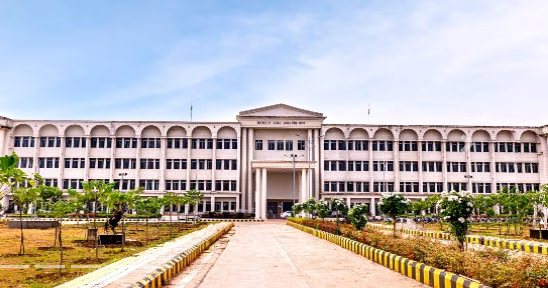
Rashtrasant Tukadoji Maharaj Nagpur University (RTMNU), formerly known as Nagpur University, offers a robust Bachelor of Design (B.Des) program through its affiliated institutes, focusing on creative disciplines like Jewellery Design, Interior Design, Textile Design, and Fashion Design. Established in 1923, RTMNU spans 373 acres across multiple campuses in Nagpur, Maharashtra, and is accredited ‘A’ by NAAC and recognized by UGC. This four-year undergraduate course emphasizes practical skills, industry exposure, and innovation, preparing students for dynamic careers in design sectors.
With over 800 affiliated colleges, RTMNU’s B.Des programs integrate traditional craftsmanship with modern tools, aligning with Maharashtra’s growing creative economy. Admission for 2026 is merit-cum-entrance based, ensuring a blend of academic rigor and artistic aptitude. This guide details the process, eligibility, exam patterns, fees, and placement opportunities, aiding prospective applicants in navigating the pathway to enrollment.
Key Highlights of RTMNU B.Des Program
RTMNU’s B.Des offerings cater to diverse design interests, with admissions managed centrally for affiliated institutes. The table below provides an overview of specializations, eligibility, fees, and key features for 2026 intake.
| Specialization | Duration | Eligibility | Annual Tuition Fee (INR) | Key Features |
| Jewellery Design | 4 years | 10+2 with 50% marks | 24,000 – 36,000 | Gemology, CAD modeling |
| Interior Design | 4 years | 10+2 with 50% marks | 24,000 – 36,000 | Spatial planning, sustainable materials |
| Textile Design | 4 years | 10+2 with 50% marks | 24,000 – 36,000 | Weaving techniques, print innovation |
| Fashion Design | 4 years | 10+2 with 50% marks | 24,000 – 36,000 | Pattern making, apparel technology |
| Accessory Design | 4 years | 10+2 with 50% marks | 24,000 – 36,000 | Product prototyping, market trends |
Eligibility Criteria for B.Des 2026
Candidates seeking admission to RTMNU’s B.Des program in 2026 must have passed Class 12 or equivalent from a recognized board with at least 50% aggregate marks (45% for SC/ST/OBC categories as per Maharashtra norms). This applies uniformly across all streams—Arts, Science, or Commerce—without mandatory subjects like Mathematics, broadening access for creative aspirants from varied backgrounds.
For international or NRI applicants, equivalence certificates from AIU are required, along with English proficiency scores like IELTS (5.5+) if applicable. Age relaxation follows state guidelines: up to five years for reserved categories. Additional merits include portfolios showcasing sketches, models, or digital works, though not compulsory at application stage.
Reservations adhere to Maharashtra policies: 13% SC, 7% ST, 19% OBC, 10% EWS, and 5% PwD supernumerary seats. Lateral entry for diploma holders in design fields is possible up to second year, subject to credit transfer evaluation. These criteria ensure a diverse cohort, fostering collaborative learning environments reflective of India’s multicultural design needs.
Prospective students should verify specifics via affiliated institutes, as some may impose minor variations like aptitude prerequisites. Meeting these sets a solid base for the competitive selection ahead.
Admission Process for B.Des 2026
The B.Des admission process at RTMNU for 2026 unfolds through a centralized online portal at nagpuruniversity.ac.in, opening tentatively in January 2026. Applicants register with basic details and pay INR 200-500 application fee via net banking or challan. The form requires uploading scanned documents: 10+2 marksheets, photo, signature, caste certificate (if applicable), and optional portfolio PDF.
Post-submission, shortlisting occurs based on 10+2 merit (50% weightage) and entrance scores (50%). Multiple rounds include CAP (Centralized Admission Process) managed by Maharashtra’s State CET Cell, with choice filling for affiliated colleges like Hislop School of Design. Interviews or studio tests may follow for top contenders, assessing ideation via briefs like “Design a sustainable accessory.”
Key dates: Applications close by April 30, 2026; merit lists release in May; counseling in June-July, with classes commencing August 2026. Spot rounds address vacancies. For NRI quota (15% seats), direct applications route through the international cell. Document verification at allotted institutes finalizes enrollment, with fee payment securing spots.
The process emphasizes transparency, with helplines (0712-2533452) for queries. Early registration aids in securing preferred specializations, especially high-demand ones like Fashion Design.
Entrance Exams and Exam Pattern for B.Des 2026
RTMNU accepts state and national entrances for B.Des 2026, with Maharashtra DAT (Design Aptitude Test) as primary, conducted in March-April. DAT is a 2-hour pen-paper exam worth 200 marks, comprising objective and subjective sections. No negative marking encourages comprehensive attempts.
Part A: Objective (100 marks, 60 questions)—covers visualization (20), observation (20), aesthetics (10), logic (10)—e.g., identifying patterns in motifs or critiquing layouts. Part B: Subjective (100 marks)—sketching tasks like “Illustrate a textile pattern inspired by Nagpur heritage” within 60 minutes, evaluated on creativity and proportion.
Alternatives: NID DAT (January prelims, April mains) or UCEED (January, IIT Bombay) for broader eligibility; scores above 150/200 typically qualify. Preparation involves practicing from past papers on cetcell.mahacet.org, focusing on speed and originality. Cutoffs vary: 120-140 for general, lower for reserved.
Post-exam, percentile-based merit lists integrate scores with 10+2 marks. Mock tests via coaching centers in Nagpur build confidence, aligning with the exam’s blend of analytical and artistic demands.
Fee Structure for B.Des 2026
Total B.Des fees at RTMNU-affiliated institutes for 2026 range from INR 96,000 to 1,44,000 over four years, with annual tuition at INR 24,000-36,000. This includes lab access, materials, and studio charges; one-time caution deposit (INR 5,000, refundable) applies at entry. Hostel fees add INR 20,000-30,000 yearly for shared rooms with mess.
Breakdown: First year ~INR 30,000 (tuition + deposit), subsequent ~INR 25,000 each. Affiliated colleges like Institute of Design Nagpur may vary slightly, with urban campuses charging 10% more. Payments in two installments per semester, via demand draft or online to university account.
Compared to private peers (INR 2-4 lakhs/year), RTMNU’s structure is affordable, reflecting state subsidies. Extras: Field trips (INR 5,000/year), software like Adobe (INR 2,000). Hikes limited to 5% annually; detailed schedules on admission portals ensure budgeting ease.
Scholarships and Financial Aid
RTMNU supports B.Des students via merit scholarships like Rashtrasant Tukadoji Maharaj Memorial Fellowship (up to 50% tuition for toppers) and Eklavya for tribal talents (full waiver). Need-based aid via Post-Matric Scheme covers SC/ST (100% fees + stipend INR 2,500/month), OBC reimbursement (75%).
Maharashtra govt. integrates via MahaDBT portal: applications post-admission with income proofs (
Over 40% students avail aid, reducing net costs to INR 10,000-15,000/year. Renewal requires 75% attendance and 7.0 CGPA. Contact scholarship cell (scholarships@nagpuruniversity.ac.in) for forms; corporate sponsors like Titan add jewellery design grants.
Campus Facilities and Student Life
RTMNU’s sprawling Nagpur campuses feature design studios with CAD labs, material libraries (1,000+ samples), and fabrication workshops equipped for prototyping. Digital hubs provide 50+ workstations with AutoCAD and Rhino software, supporting 24/7 access during projects.
Hostels offer single/double rooms with Wi-Fi, laundry, and cultural lounges; messes serve regional cuisines at INR 100/meal. Sports complexes include gyms and fields for cricket, balancing creative pursuits. Clubs like Design Forum organize workshops on sustainable textiles, while fests like Varun Vasant showcase portfolios to 2,000+ visitors.
Nagpur’s central location enables industry visits to textile mills in Solapur. Wellness centers provide counseling for stress management. This vibrant setup nurtures holistic development, blending academics with extracurriculars.
Placements and Career Opportunities
RTMNU’s placement cell reports 85% placement for B.Des graduates, with average packages at INR 3.5-5 lakhs annually; highest reaches INR 8 lakhs in metros. Recruiters include Tanishq for jewellery, Asian Paints for interiors, and Raymond for fashion, via campus drives in March.
Training includes resume workshops and portfolio critiques; internships (year 3, INR 8,000-12,000/month) at local firms like FabIndia convert 50% to full-time. Textile alumni join export houses in Surat; interior designers at Godrej Interio. Entrepreneurship cell incubates startups, like a Nagpur-based accessory brand funded at INR 2 lakhs.
Alumni networks on LinkedIn offer mentorship; mid-career salaries hit INR 10-15 lakhs. With Maharashtra’s design hub status, opportunities span freelancing on UrbanClap to global roles via exchanges.
Faculty and Curriculum Insights
RTMNU’s 200+ design faculty, including IIT/NID alumni, maintain 1:15 ratios for hands-on guidance. Experts like Prof. Sunita Joshi (textile specialist) lead studios on digital printing. Curriculum spans foundations (year 1: drawing, color theory) to advanced (year 4: capstones with industry briefs).
Core modules: Design process, ergonomics, software tools; electives in IP or entrepreneurship. Assessments: Projects (60%), exams (20%), vivas (20%). Updates for 2026 incorporate AI in patterning. Research via centers yields publications in Design India journal.
Guest lectures from P&D experts enrich learning, positioning RTMNU as a regional design leader.
Application Tips and Preparation Strategies
Applying to the B.Des program at RTMNU requires thoughtful planning, a strong creative foundation, and timely action. The following tips will help you prepare effectively for the 2026 admission cycle and present your best profile during the selection process:
- Start portfolio preparation early – Include 12–15 works such as sketches, product concepts, fabric patterns, interior layouts, or digital illustrations with clear process notes.
- Practice daily sketching – Focus on form, proportion, shading, and quick ideation to improve visual communication for DAT and studio tests.
- Study heritage-inspired themes – Explore Nagpur and Maharashtra’s cultural motifs; use them in design concepts to showcase contextual creativity.
- Solve previous DAT papers – Build speed, accuracy, and familiarity with objective and subjective question patterns.
- Join Nagpur-based design communities – Participate in mock tests, workshops, and feedback sessions to refine skills.
- Develop software basics – Familiarize yourself with tools like Photoshop, Illustrator, and AutoCAD to strengthen your application and interviews.
- Craft a strong SOP – Highlight your inspirations, design journey, and how RTMNU’s holistic ecosystem aligns with your career goals.
- Stay updated with CET Cell notifications – Track application dates, document requirements, and entrance schedules regularly.
- Visit affiliated campuses – Interact with faculty/students to understand facilities and expectations, helping you select the right specialization.
- Prepare for interviews/studio tests – Practice explaining your design thought process, material choices, and problem-solving steps confidently.
- Apply to multiple entrances – Take NID DAT, UCEED, or other design exams to maximize your chances of securing a seat.
- Stay consistent and patient – If not selected initially, reapply with an improved portfolio and deeper practice; many students succeed on their second attempt.
Conclusion: Embracing Design at RTMNU
RTMNU’s B.Des program unlocks creative potentials through accessible admissions and strong support, shaping innovators for Maharashtra’s design renaissance. With 2026 portals opening soon, apply at nagpuruniversity.ac.in—forge your path where tradition meets tomorrow.
FAQs
1. How can I prepare a strong portfolio for RTMNU B.Des admission?
Include diverse sketches, digital works, product ideas, and process notes showcasing creativity, originality, and problem-solving skills.
2. What are the best tips to crack the RTMNU DAT 2026 exam?
Practice sketching daily, solve past papers, improve visualization, and build speed in both objective and subjective sections.
3. How much time is needed to prepare for the RTMNU B.Des entrance test?
Three to six months of consistent sketching, aptitude practice, and portfolio development is ideal for strong exam performance.
4. Do I need coaching for RTMNU B.Des entrance preparation?
Coaching isn’t mandatory; regular practice, online resources, and mock tests can effectively prepare you.
5. What books are useful for RTMNU B.Des exam preparation?
Use “Design Drawing,” “Thinking with Type,” NID/UCEED guides, and basic art foundation books for improved conceptual clarity.
6. How do I improve my sketching for the RTMNU entrance exam?
Practice observational sketches, experiment with forms, study shadows, and complete timed exercises to build accuracy and speed.
7. Is a portfolio compulsory during the RTMNU B.Des application?
Portfolio submission is usually optional initially, but strongly recommended during interviews or studio tests for better evaluation.
8. What should I highlight in the RTMNU B.Des Statement of Purpose?
Explain inspirations, design experiences, skills, goals, and why RTMNU’s design ecosystem aligns with your creative aspirations.
9. How can I stay updated on RTMNU B.Des admission dates?
Regularly check CET Cell notifications, RTMNU’s website, and follow official admission updates for accurate timelines.
10. Can I apply for RTMNU B.Des if I’m not from a design background?
Yes, students from any stream can apply by showcasing creativity, interest in design, and a basic understanding of visual concepts.