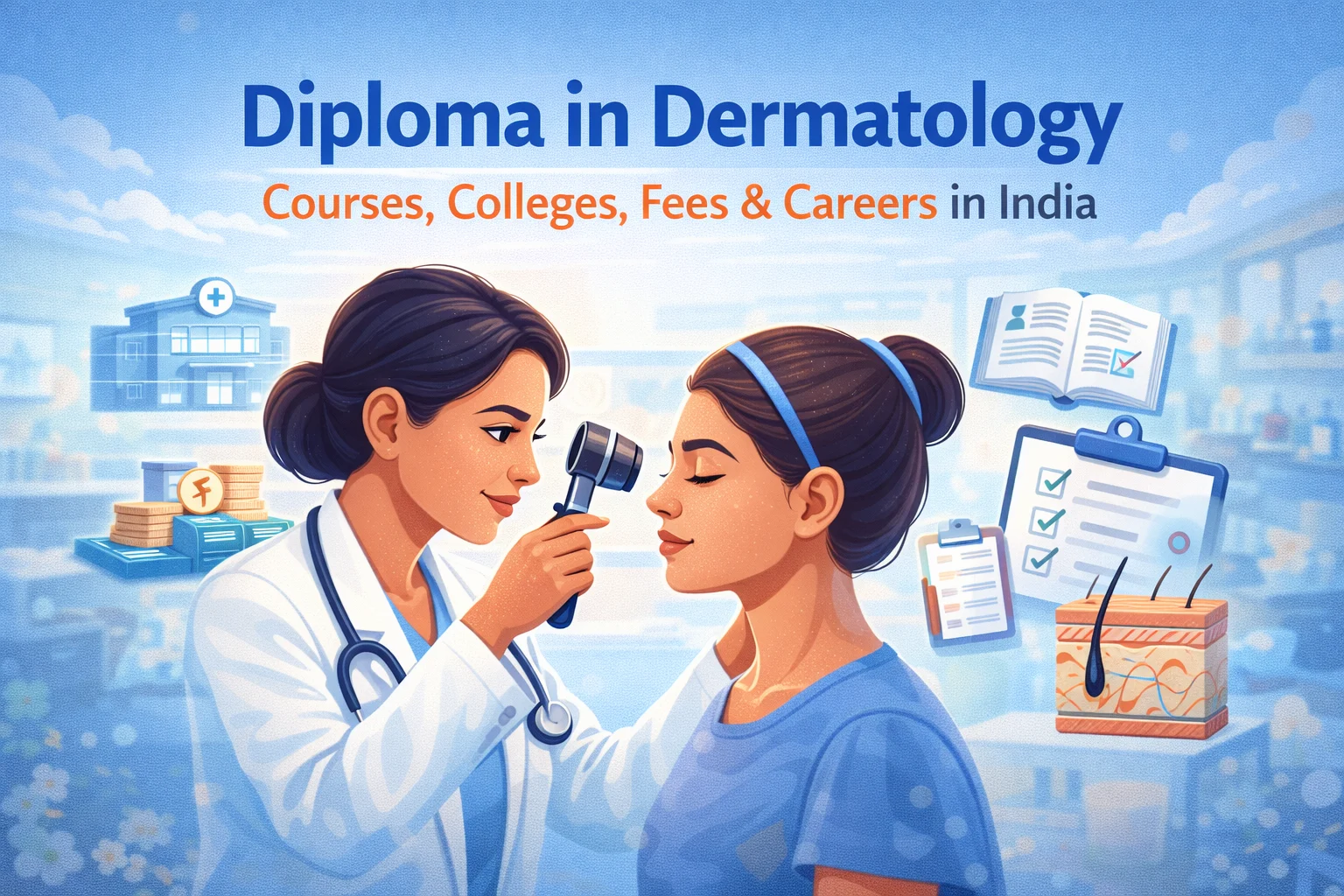
Diploma in Dermatology: Courses, Colleges, Fees, and Career Opportunities in India
Diploma in Dermatology is a postgraduate medical program focused on diagnosing and treating skin, hair, and nail disorders. The course covers clinical dermatology, cosmetology, and venereology, preparing graduates for hospital practice, private clinics, and aesthetic medicine careers in India.
A Diploma in Dermatology is gaining popularity in India due to the growing demand for skincare and cosmetic healthcare professionals. This typically 1–2 year programme focuses on skin, hair, and nail care, along with basic dermatological procedures and patient management. Eligibility usually requires completion of 10+2 with a science background or a relevant medical qualification, depending on the institute. Course fees generally range from INR 20,000 to INR 1,00,000 per year, making it a relatively affordable medical specialisation. Graduates can work as dermatology assistants, cosmetology technicians, clinical assistants, or skincare professionals, earning starting salaries of around INR 2–5 LPA. This guide covers course details, eligibility, colleges, fees, admission process, and career opportunities in dermatology.
Diploma in Dermatology Course Overview
A Diploma in Dermatology is a specialised medical or paramedical programme focused on the diagnosis, treatment, and management of skin, hair, and nail disorders. In India, diploma-level dermatology courses are offered in different formats depending on eligibility — medical diplomas (for MBBS graduates) and paramedical/cosmetology dermatology diplomas (after 10+2 Science or allied healthcare qualifications).
The programme typically spans 1–2 years and combines theoretical learning with clinical or practical training. Students study subjects such as dermatological anatomy, common skin diseases, cosmetology procedures, aesthetic treatments, and patient care practices. Admission is usually merit-based or entrance-based depending on the institute. Graduates can work in hospitals, dermatology clinics, cosmetic centres, and wellness industries.
| Particulars | Details |
|---|---|
| Course Name | Diploma in Dermatology |
| Course Level | Diploma / Postgraduate Diploma (varies by eligibility) |
| Course Duration | 1–2 Years |
| Eligibility | 10+2 Science (Paramedical Diploma) / MBBS (Medical Diploma) |
| Minimum Marks | 45%–50% aggregate (varies by institute) |
| Admission Process | Merit-based / Entrance Exam / Institutional Selection |
| Course Focus | Skin Diseases, Cosmetology, Aesthetic Procedures, Clinical Dermatology |
| Key Study Areas | Dermatology Basics, Cosmetology, Pharmacology, Skin Care Procedures |
| Average Course Fees | INR 20,000 – INR 1,50,000 per year |
| Training Type | Clinical Training + Practical Exposure |
| Top Government Institutes | Medical Colleges, Government Hospitals, Skill Health Institutes |
| Top Private Institutes | Medical Training Centres, Cosmetology & Aesthetic Academies |
| Employment Areas | Hospitals, Skin Clinics, Cosmetic Centres, Wellness Industry |
| Average Starting Salary | INR 2 – 5 LPA (higher with experience & certification) |
Diploma in Dermatology Eligibility Criteria
Eligibility criteria for a Diploma in Dermatology in India vary depending on whether the programme is a medical postgraduate diploma or a paramedical/cosmetology dermatology diploma. Medical diplomas are primarily meant for qualified doctors, while clinical cosmetology or dermatology assistant diplomas accept candidates from science or allied healthcare backgrounds.
Candidates must fulfil academic qualifications, internship requirements (where applicable), and regulatory registrations specified by the institution.
| Qualification | Minimum Marks | Mandatory Requirements | Eligibility Type |
|---|---|---|---|
| MBBS | Pass Degree | Completion of compulsory internship + State/NMC registration | Medical PG Diploma |
| BAMS | Pass Degree | Internship completion + CCIM registration | Allowed in some institutes |
| BHMS | Pass Degree | Internship completion + CCH registration | Allowed in selected institutes |
| BDS | Pass Degree | Internship completion + DCI registration | Accepted by some colleges |
| B.Sc. Life Sciences / Biology / Microbiology | 45%–50% | Science background preferred | Paramedical Dermatology Diploma |
| Diploma in Nursing / GNM | 45%–50% | Clinical exposure preferred | Clinical Assistant Courses |
| Medical Laboratory Technology (MLT) | 45%–50% | Healthcare experience preferred | Paramedical Diploma |
| 10+2 Science (PCB) | 45%–50% | Biology compulsory | Cosmetology / Skin Therapy Diploma |
Diploma in Dermatology Admission Process
Admission procedures differ across government medical colleges, private medical institutions, and cosmetology academies, but the overall process follows standard steps.
Step-by-Step Admission Process
- Verify eligibility based on qualification (MBBS / Allied Health / 10+2 Science).
- Select recognised institutes approved by medical or skill education authorities.
- Fill out the application form through the college website or admission portal.
- Upload required documents:
- Academic mark sheets
- Internship completion certificate (if applicable)
- Registration certificate (for medical graduates)
- ID proof and photographs
- Appear for entrance examination (if required):
- NEET PG – for medical postgraduate dermatology diplomas
- Institutional entrance tests/interviews – private institutes
- Participate in counselling or personal interview rounds.
- Receive provisional admission based on merit, entrance score, or interview performance.
- Pay programme fees to confirm the seat.
- Complete document verification and join orientation before course commencement.
Admission Modes in India
| Institute Type | Admission Basis | Entrance Exam Requirement |
|---|---|---|
| Government Medical Colleges | Centralised counselling | NEET PG mandatory |
| Deemed Universities | Entrance + Interview | May require NEET PG |
| Private Medical Institutes | Merit / Institutional Test | Depends on college |
| Cosmetology & Paramedical Institutes | Direct Admission / Merit | Usually not required |
Approximate Course Fees
- Government Institutes: INR 20,000 – 60,000 per year
- Private Medical Colleges: INR 80,000 – 3,00,000 per year
- Cosmetology/Clinical Diplomas: INR 20,000 – 1,50,000 per year
Admission to diploma programmes in dermatology is moderately competitive for medical seats but widely accessible through allied healthcare and cosmetology pathways. Increasing demand for skincare, aesthetic medicine, and dermatology services continues to expand admission opportunities across India.
Top Government Colleges for Diploma in Dermatology in India
Government medical colleges in India primarily offer Diploma in Dermatology, Venereology & Leprosy (DDVL) or equivalent postgraduate dermatology diploma programmes. These institutions are recognised by the National Medical Commission (NMC) and admit candidates mainly through NEET PG counselling. Fees in government institutions remain highly subsidised, making them the most affordable option for medical graduates pursuing dermatology specialization.
| College Name | City | Approx. Annual Fees | Admission Mode | NIRF Medical Rank |
|---|---|---|---|---|
| AIIMS New Delhi | New Delhi | INR 2,000 – 5,000 | INI-CET / NEET PG | 1 |
| PGIMER Chandigarh | Chandigarh | INR 20,000 | INI-CET | 2 |
| Madras Medical College | Chennai | INR 15,000 – 25,000 | NEET PG Counselling | Top Govt Institute |
| King George’s Medical University | Lucknow | INR 25,000 | NEET PG Counselling | Top Govt Institute |
| Government Medical College Mumbai (Grant Medical College/JJ Group) | Mumbai | INR 20,000 | NEET PG Counselling | Reputed State College |
| Bangalore Medical College & Research Institute | Bengaluru | INR 25,000 | NEET PG Counselling | Leading State Institute |
| Government Medical College Thiruvananthapuram | Thiruvananthapuram | INR 20,000 | NEET PG Counselling | Top Kerala Govt College |
| Andhra Medical College | Visakhapatnam | INR 30,000 | NEET PG Counselling | Established Govt College |
| Institute of Medical Sciences, BHU | Varanasi | INR 25,000 | NEET PG Counselling | Premier Central University |
| SMS Medical College | Jaipur | INR 20,000 | NEET PG Counselling | Leading Rajasthan Govt College |
Top Private Colleges for Diploma in Dermatology in India
Private and deemed medical universities offer dermatology diploma programmes, clinical dermatology courses, and aesthetic dermatology certifications. Admission may require NEET PG (for medical diplomas) or institutional selection processes for clinical cosmetology and dermatology training programmes.
| College Name | City | Approx. Annual Fees | Admission Mode | Specializations Offered |
|---|---|---|---|---|
| Christian Medical College (CMC) | Vellore | INR 80,000 – 1,50,000 | NEET PG + Institutional Process | Clinical Dermatology, Dermatosurgery |
| Kasturba Medical College (Manipal Academy of Higher Education) | Manipal/Mangalore | INR 2,00,000+ | NEET PG | Cosmetic Dermatology, Dermatopathology |
| SRM Medical College Hospital & Research Centre | Chennai | INR 1,50,000 – 3,00,000 | NEET PG / Institutional | Aesthetic Dermatology, Clinical Practice |
| Amrita Institute of Medical Sciences | Kochi | INR 1,00,000 – 2,50,000 | NEET PG | Dermatosurgery, Cosmetic Dermatology |
| D.Y. Patil Medical College | Pune | INR 2,00,000+ | NEET PG | Aesthetic Dermatology, Laser Procedures |
| Jawaharlal Nehru Medical College (KLE University) | Belagavi | INR 1,50,000 | NEET PG | Clinical Dermatology |
| M.S. Ramaiah Medical College | Bengaluru | INR 1,50,000 – 2,50,000 | NEET PG | Cosmetic Dermatology, Dermatoscopy |
| MGM Medical College | Navi Mumbai | INR 1,20,000 – 2,00,000 | NEET PG | Clinical & Aesthetic Dermatology |
| Saveetha Medical College | Chennai | INR 2,00,000+ | NEET PG | Dermatosurgery, Cosmetic Procedures |
| Bharati Vidyapeeth Medical College | Pune | INR 1,50,000+ | NEET PG | Clinical Dermatology, Cosmetic Medicine |
Diploma in Dermatology Subjects and Syllabus
The Diploma in Dermatology (commonly offered as DDVL – Diploma in Dermatology, Venereology & Leprosy) is a 2-year postgraduate medical diploma primarily pursued after MBBS. The programme combines clinical dermatology, cosmetology, venereology, and procedural dermatology training. The curriculum emphasises clinical exposure, OPD practice, minor procedures, and aesthetic dermatology skills.
Training structure may slightly differ across universities, but most follow a 4-semester clinical model integrating theory, ward duties, and procedural training.
Programme Highlights
- Duration: 2 Years (4 Semesters)
- Training Mode: Clinical + Practical + Research
- Total Credits: Approx. 80–100
- Focus Areas:
- Clinical Dermatology
- Venereology & Leprosy
- Cosmetic Dermatology
- Dermatosurgery
- Laser & Aesthetic Procedures
| Semester | Core Subjects | Clinical / Practical Training | Credit Load |
|---|---|---|---|
| Semester 1 | Anatomy & Physiology of Skin, Basic Dermatology, Microbiology of Skin, Diagnostic Dermatology | Skin examination, history taking, dermatoscopy basics, OPD training | ~20 |
| Semester 2 | Infectious Skin Diseases, Pharmacology in Dermatology, Venereology, Leprosy | Prescription writing, biopsy assistance, topical & systemic therapy | ~22 |
| Semester 3 | Cosmetology, Aesthetic Dermatology, Trichology, Pediatric Dermatology | Chemical peels, PRP basics, laser exposure, dermabrasion | ~24 |
| Semester 4 | Dermatosurgery, Skin Oncology, Dermatological Emergencies, Research Methodology | Skin biopsy, cryotherapy, electrocautery, minor procedures, dissertation | ~24 |
Check the Diploma in Dermatology here.
Dermatology Diploma Curriculum (For AYUSH / Allied Healthcare Streams*)
| Semester | Academic Focus | Practical Exposure |
|---|---|---|
| Semester 1 | Basics of Skin Science, Clinical Dermatology | Patient assessment, skin analysis |
| Semester 2 | Therapeutics & Cosmetology | Clinical procedures & therapy planning |
| Semester 3 | Aesthetic Dermatology & Trichology | Laser introduction, aesthetic treatments |
| Semester 4 | Clinical Practice & Case Management | Clinic posting, case presentations |
*Non-MBBS dermatology diplomas are skill-based cosmetology/clinical dermatology programmes, not specialist medical dermatology qualifications.
Electives & Academic Components
- Research Methodology
- Dermatopathology Introduction
- Cosmetic Procedures
- Clinical Case Discussions
- Dissertation / Logbook Submission
Diploma in Dermatology Fee Structure: Government vs Private Colleges in India
The fee structure for diploma in dermatology programs in India differs significantly between government and private colleges. Government colleges generally offer more affordable options, with average annual fees ranging from INR 15,000 to INR 30,000. Private colleges can charge considerably higher fees, ranging from INR 70,000 to INR 1,50,000 per year. Additional costs like hostel fees, examination fees, and other miscellaneous expenses can add up to INR 20,000 to INR 50,000 per year. Some colleges offer scholarships or financial aid to eligible students, which can help lower the program cost.
| College Type | Average Annual Fees | Hostel Fees | Other Expenses | Scholarship Availability |
|---|---|---|---|---|
| Government Medical College, Mumbai | INR 20,000 | INR 10,000 | INR 5,000 | Yes, for meritorious students |
| AIIMS, Delhi | INR 15,000 | INR 12,000 | INR 3,000 | Yes, for students with family income below INR 5 lakhs |
| Christian Medical College, Vellore | INR 80,000 | INR 25,000 | INR 10,000 | Yes, for students with excellent academic records |
| Manipal Academy of Higher Education, Manipal | INR 1,20,000 | INR 30,000 | INR 15,000 | Yes, for students with family income below INR 10 lakhs |
| Grant Medical College, Mumbai | INR 25,000 | INR 15,000 | INR 8,000 | No |
| Stanley Medical College, Chennai | INR 30,000 | INR 20,000 | INR 12,000 | Yes, for students with excellent academic records |
| Kasturba Medical College, Manipal | INR 1,00,000 | INR 35,000 | INR 20,000 | Yes, for students with family income below INR 15 lakhs |
| Lady Hardinge Medical College, Delhi | INR 20,000 | INR 18,000 | INR 10,000 | Yes, for meritorious students |
| Sri Ramachandra Medical College, Chennai | INR 1,20,000 | INR 40,000 | INR 25,000 | Yes, for students with excellent academic records |
| Government Medical College, Hyderabad | INR 25,000 | INR 22,000 | INR 15,000 | No |
Career Scope and Salary After Diploma in Dermatology in India
The dermatology sector in India is expanding rapidly due to growing awareness of skincare, cosmetic procedures, and lifestyle-related skin conditions. Diploma holders can work across clinical dermatology support roles, aesthetic medicine, and cosmetic healthcare industries.
Popular Job Roles
- Dermatology Assistant / Clinical Associate
- Clinical Dermatology Technician
- Cosmetologist / Aesthetic Therapist
- Laser Treatment Specialist
- Skin & Hair Consultant
- Dermatology OPD Medical Officer (MBBS holders)
- Cosmetic Clinic Executive
- Skincare Consultant
- Clinical Research Coordinator
- Medical Representative (Dermatology Pharma)
Employment Sectors
- Dermatology Clinics
- Multispecialty Hospitals
- Cosmetic & Aesthetic Centres
- Skin Laser Clinics
- Beauty & Wellness Chains
- Medical Spas & Cosmetic Studios
- Pharmaceutical & Skincare Companies
- Dermatology Research Organisations
- Independent/Freelance Practice
Salary Trends in India
| Experience Level | Average Salary |
|---|---|
| Entry Level (0–2 Years) | INR 2 – 4 LPA |
| 2–5 Years Experience | INR 4 – 7 LPA |
| Laser/Aesthetic Specialists | INR 6 – 10 LPA |
| Clinical Dermatology Practice (MBBS + Diploma) | INR 8 – 12 LPA |
| Senior Consultant / Clinic Owner | INR 15 LPA+ (variable income) |
Major Career Pathways
- Clinical Dermatology Practice
- Cosmetic & Aesthetic Dermatology
- Hair Restoration & Trichology
- Laser Therapy & Skin Rejuvenation
- Dermatology Research & Clinical Trials
- Pharmaceutical Dermatology Sales & Training
Higher Study & Certification Options
- MD/DNB Dermatology (for MBBS graduates)
- Fellowship in Aesthetic Medicine
- Advanced Diploma in Cosmetology
- Laser & Dermatosurgery Certification
- Trichology (Hair Science) Courses
- Healthcare Management / Hospital Administration
Industry Outlook
- Rising cosmetic awareness
- Growth of medical aesthetics industry
- Increasing prevalence of skin disorders
- Expansion of dermatology clinics in Tier-2 & Tier-3 cities
Overall, a Diploma in Dermatology provides stable healthcare employment, entrepreneurial opportunities, and strong income growth with experience and specialised skills.
Frequently Asked Questions (FAQs)
Q1. What is the duration of the diploma in dermatology course in India?
The diploma in dermatology course in India lasts for 2 years. It’s designed to give students a thorough understanding of dermatology and its uses, with a focus on both theory and practical skills.
Q2. What are the average fees for a diploma in dermatology in government and private colleges in India?
The average annual fees for a diploma in dermatology range from INR 15,000 to INR 30,000 in government colleges and from INR 70,000 to INR 1,50,000 in private colleges. These fees can change depending on the college and where it is located, so it’s always best to check with the specific college for the most current fee information.
Q3. What are the key subjects covered in the diploma in dermatology course in the first semester?
The first semester of the diploma in dermatology covers Anatomy and Physiology of Skin and Basic Dermatology. Students also receive practical training in Skin Examination Techniques, providing hands-on experience in dermatological procedures, which is essential for further studies.
Q4. What is the average salary range for a Dermatology Assistant in India after completing a diploma in dermatology?
A Dermatology Assistant in India with a diploma in dermatology can expect an average salary range of INR 2 – 3 LPA at the entry level. This can vary based on location, experience, and the employer. Salaries typically increase with experience.