Diploma in Labour Law: Courses, Colleges, Fees, Syllabus, and Career Opportunities in India
The diploma in labour law equips graduates with skills in employment regulations, industrial relations, and labour welfare, opening career opportunities in HR, legal advisory, and government roles.
As India’s economy grows, expertise in labour law is becoming increasingly crucial for organizations and legal professionals alike. A diploma in labour law, typically lasting one to two years depending on the institution, equips students with in-depth knowledge of employment laws, industrial relations, and social security regulations. Eligibility usually requires a bachelor’s degree or equivalent, and annual fees range between INR 50,000 and INR 1,00,000. Graduates can pursue careers in legal consultancy, human resources, compliance, and corporate law. Top government institutions offering this program include the Indian Law Institute, National Law School of India University, and Faculty of Law at Delhi University. This diploma provides a strong foundation for those seeking rewarding roles in both public and private sectors.
Diploma in Labour Law Overview
The diploma in labour law is a postgraduate program that focuses on the legal and regulatory framework governing employment, labour relations, and workplace compliance in India. Typically lasting one year, the course requires candidates to have a bachelor’s degree in law (LLB) or a related field, with a minimum of 50% marks. Annual fees range from INR 50,000 to INR 1,00,000 depending on the institution. Graduates can pursue careers as labour law consultants, human resources managers, or legal advisors. Several top institutions, including the Indian Law Institute, National Law School of India University, and Faculty of Law at Delhi University, offer this program. Some colleges also provide distance learning options for working professionals.
| Feature | Description | Details |
|---|---|---|
| Course Name | Diploma in Labour Law | Postgraduate diploma course |
| Duration | 1 year | Full-time course |
| Eligibility | Bachelor’s degree in law or related field | Minimum 50% marks |
| Average Fees | INR 50,000 – INR 1,00,000 per year | Varies between government and private colleges |
| Job Roles | Labour law consultant, human resources manager, legal advisor | Average salary: INR 4,00,000 – INR 8,00,000 per year |
| UGC/AICTE Approval | Mandatory for recognition and quality | Ensures compliance with national standards |
| Distance Learning Options | Available at some institutions | Flexible learning for working professionals |
| Top Colleges | Indian Law Institute, National Law School of India University, Faculty of Law, Delhi University | Reputed institutions with experienced faculty |
| Specializations | Labour law, employment law, industrial relations | Interdisciplinary approach integrating law, management, and social sciences |
| Career Prospects | Government agencies, private companies, non-profit organizations | Roles in labour departments, HR, and legal advisory |
| Further Education | Master’s degree in law or related field | Options for LLM, PhD, or other advanced degrees |
Diploma in Labour Law Eligibility Criteria in India
Eligibility criteria for a diploma in labour law vary by institution. Generally, candidates must have completed graduation in any discipline. Most regular colleges require a minimum of 50% aggregate marks in graduation, while open and distance learning universities, such as IGNOU, may have relaxed criteria. Some institutions may also require entrance exams, personal interviews, or age limits.
| Institution Type | Minimum Qualification | Minimum Percentage | Age Limit | Other Requirements |
|---|---|---|---|---|
| Regular Colleges | Graduation in any discipline | 50% aggregate | May apply | Valid entrance exam score |
| Distance Learning Institutions (IGNOU) | Graduation in any discipline | 45% aggregate | None | No entrance exam required |
| Private Institutions | Graduation in any discipline | 55% aggregate | May apply | Entrance exam score, personal interview |
| Annamalai University | Graduation in any discipline | 50% aggregate | May apply | Entrance exam score, personal interview |
| Government Colleges | Graduation in any discipline | 50% aggregate | May apply | Entrance exam score, domicile certificate |
| National Law Universities | Graduation in any discipline | 55% aggregate | May apply | Valid CLAT score, personal interview |
| State Universities | Graduation in any discipline | 50% aggregate | May apply | Entrance exam score, domicile certificate |
| Deemed Universities | Graduation in any discipline | 55% aggregate | May apply | Entrance exam score, personal interview |
| Open Universities | Graduation in any discipline | 45% aggregate | None | No entrance exam required |
Diploma in Labour Law Admission Process
The admission process for a diploma in labour law varies by institution and can be merit-based, entrance exam-based, or both. Top government colleges include the Indian Law Institute, National Law School of India University, and Faculty of Law, Delhi University. Private institutions, such as Symbiosis Centre for Distance Learning, also offer this diploma. Annual fees range from INR 50,000 to 1,00,000 for government colleges and INR 1,00,000 to 3,00,000 for private institutions.
-
Submit the application form along with required documents, such as mark sheets, graduation certificate, and valid ID proof, by the deadline.
-
Pay the application fee, typically ranging from INR 500 to 2,000.
-
Prepare for entrance exams if applicable, e.g., the Indian Law Institute entrance exam or CLAT for National Law Universities.
-
Selection is generally merit-based or entrance exam-based; shortlisted candidates may also undergo personal interviews.
-
Verify all original documents after selection.
-
Pay course fees to confirm admission and attend the orientation program.
-
Distance learning options, like IGNOU, require submission through merit-based application, with annual fees around INR 20,000.
-
Courses usually commence in July or August and have a typical duration of one year.
Admission to diploma programs in labour law is competitive. Candidates should carefully review eligibility criteria and follow the admission process to secure a seat in their preferred institution. Always check official college websites or contact admission offices for the latest updates.
Top Government Colleges for Diploma in Labour Law in India
The following government colleges in India offer a diploma in labour law or related programs. These institutions are recognized for their academic quality, experienced faculty, and structured curriculum. Annual fees range from INR 50,000 to 1,00,000. Admission is primarily merit-based, though some colleges require entrance exams. Certain colleges also provide distance learning options.
| College Name | City | Annual Fees (INR) | Admission Mode | NIRF Ranking | Distance Education Available |
|---|---|---|---|---|---|
| Indian Law Institute | New Delhi | 50,000-1,00,000 | Merit | – | No |
| National Law School of India University | Bangalore | 50,000-1,00,000 | Entrance Exam | 2 | Yes |
| Faculty of Law, Delhi University | Delhi | 50,000-1,00,000 | Merit | – | No |
| ILS Law College | Pune | 50,000-1,00,000 | Merit | – | No |
| Government Law College | Mumbai | 50,000-1,00,000 | Merit | – | No |
| Jawaharlal Nehru University | New Delhi | 50,000-1,00,000 | Entrance Exam | 6 | Yes |
| Banaras Hindu University | Varanasi | 50,000-1,00,000 | Merit | 10 | No |
| Aligarh Muslim University | Aligarh | 50,000-1,00,000 | Entrance Exam | 18 | Yes |
| University of Calcutta | Kolkata | 50,000-1,00,000 | Merit | – | No |
| Panjab University | Chandigarh | 50,000-1,00,000 | Merit | 34 | No |
| Osmania University | Hyderabad | 50,000-1,00,000 | Merit | – | No |
| University of Madras | Chennai | 50,000-1,00,000 | Merit | – | No |
| Mahatma Gandhi Labour Institute | Ahmedabad | 50,000-1,00,000 | Merit | – | No |
| V.V. Giri National Labour Institute | Noida | 50,000-1,00,000 | Entrance Exam | – | Yes |
| Dr. Ambedkar Institute of Productivity | Chennai | 50,000-1,00,000 | Merit | – | No |
Top Private Colleges for Diploma in Labour Law in India
Below is a list of notable private colleges offering a diploma in labour law. These institutions emphasize academic excellence, experienced faculty, and infrastructure. Annual fees range from INR 50,000 to 3,00,000. Admissions can be merit-based or entrance exam-based, and some colleges provide online or distance learning programs.
| College Name | City | Annual Fees (INR) | Admission Mode | Rankings | Distance/Online Education Available |
|---|---|---|---|---|---|
| Symbiosis Centre for Distance Learning | Pune | 50,000-1,00,000 | Merit | N/A | Yes |
| Amity University | Noida | 1,00,000-2,00,000 | Entrance | NIRF Rank #25 | Yes |
| ICFAI University | Hyderabad | 80,000-1,50,000 | Merit | NAAC A+ | Yes |
| Gitam University | Visakhapatnam | 60,000-1,20,000 | Entrance | NIRF Rank #67 | Yes |
| Jain University | Bangalore | 1,20,000-2,40,000 | Merit | NAAC A++ | Yes |
| Chandigarh University | Chandigarh | 80,000-1,60,000 | Entrance | NIRF Rank #77 | Yes |
| OP Jindal University | Sonepat | 1,00,000-2,00,000 | Merit | NBA Accredited | Yes |
| Apollo University | Chennai | 50,000-1,00,000 | Entrance | NAAC A | Yes |
| Shiv Nadar University | Greater Noida | 1,50,000-3,00,000 | Merit | NIRF Rank #56 | Yes |
| SRM University | Chennai | 1,00,000-2,00,000 | Entrance | NIRF Rank #35 | Yes |
Diploma in Labour Law Subjects and Syllabus
The diploma in labour law program provides full coverage of labour laws, industrial relations, and social security, combining core subjects, electives, and practical projects. The curriculum emphasizes real-world applications through internships, court visits, and research projects. Programs are typically structured across 1–2 years, divided into semesters. Optional advanced semesters may be available for specialized study.
| Core Subjects | Elective Subjects | Practical/Project Work | Credit Hours |
|---|---|---|---|
| Introduction to Labour Law, Labour Legislation, Industrial Relations | Labour History, Trade Unionism | Visit to Labour Courts, Research on Labour Laws | 20 |
| Labour Welfare, Social Security, Employment Laws | Collective Bargaining, Labour Market Regulations | Project on Labour Welfare Schemes, Case Study on Employment Laws | 22 |
| Industrial Disputes, Labour Tribunals, Labour Courts | Labour and Human Rights, Global Labour Standards | Internship at Labour Department, Research on Industrial Disputes | 20 |
| Labour Policy, Labour Administration, Labour Reforms | Labour and Economic Development, Labour and Social Justice | Dissertation on Labour Law Topic, Viva Voce | 25 |
| Labour Law, Industrial Relations, Labour Welfare | Labour Legislation, Trade Unionism, Collective Bargaining | Project on Labour Law Topic, Visit to Labour Courts | 40 |
| Employment Laws, Social Security, Labour Market Regulations | Labour History, Labour and Human Rights, Global Labour Standards | Internship at Labour Department, Research on Labour Laws | 45 |
| Specialized Labour Law Courses, Advanced Labour Legislation | Labour and Economic Development, Labour and Social Justice | Advanced Research on Labour Law Topic, Dissertation | 30 |
| Labour Policy, Labour Administration, Labour Reforms | Labour and Globalization, Labour and Technology | Project on Labour Law Topic, Viva Voce | 35 |
| Advanced Labour Law, Industrial Relations, Labour Welfare | Labour Legislation, Trade Unionism, Collective Bargaining | Advanced Project on Labour Law Topic, Visit to Labour Courts | 50 |
| Labour Market Regulations, Social Security, Employment Laws | Labour History, Labour and Human Rights, Global Labour Standards | Advanced Internship at Labour Department, Research on Labour Laws | 55 |
Diploma in Labour Law Fee Structure: Government vs Private Colleges in India
The fee structure varies significantly depending on the type of institution. Government colleges generally have lower fees, while private colleges charge higher fees for advanced facilities and infrastructure. Distance learning options like IGNOU offer more affordable programs. Some institutions provide scholarships or financial aid.
| College Type | Average Annual Fees (INR) |
|---|---|
| Government Colleges | 50,000-1,00,000 |
| Private Colleges | 1,00,000-3,00,000 |
| IGNOU | 20,000-35,000 |
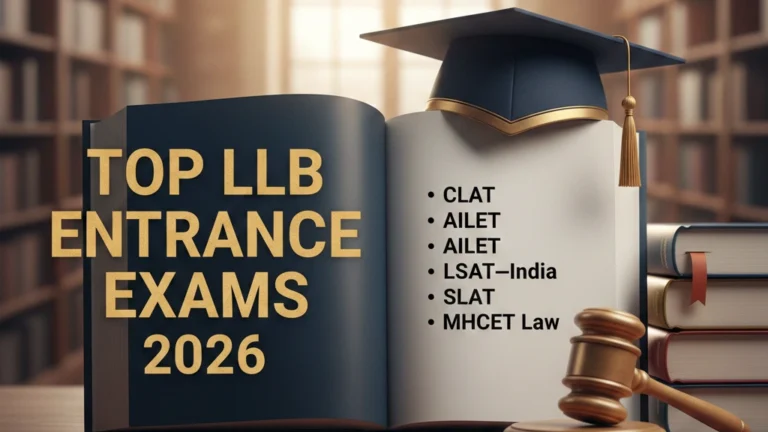
Entrance Exams for Diploma in Labour Law Admission in India
Admission to a diploma in labour law can be merit-based or entrance exam-based, depending on the college. Entrance exams evaluate knowledge in law, labour regulations, analytical skills, and reasoning.
| Exam Name | Conducting Body | Exam Type | Eligibility | Accepted By |
|---|---|---|---|---|
| CLAT | Consortium of National Law Universities | National-level | 10+2 with minimum 45% marks | National Law School of India University, Bangalore |
| AILET | National Law University, Delhi | University-level | 10+2 with minimum 50% marks | National Law University, Delhi |
| LSAT India | Law School Admission Council | National-level | 10+2 with minimum 45% marks | Various law colleges in India |
| Degree Admission Test | Indian Law Institute | College-level | Graduation with minimum 50% marks | Indian Law Institute, New Delhi |
| CUET | National Testing Agency | National-level | 10+2 with minimum 50% marks | Delhi University, Jawaharlal Nehru University |
| XAT | Xavier Labour Relations Institute | College-level | Graduation with minimum 50% marks | XLRI, Jamshedpur |
| MAT | All India Management Association | National-level | Graduation with minimum 50% marks | Various management colleges in India |
| CAT | Indian Institutes of Management | National-level | Graduation with minimum 50% marks | Indian Institutes of Management |
Career Prospects After Diploma in Labour Law
Graduates of the diploma in labour law program can explore opportunities in both public and private sectors. The demand for skilled professionals in labour law, compliance, and industrial relations is increasing in India. Career options include:
-
Labour Law Consultant – Advising companies on employment laws, labour regulations, and compliance.
-
Human Resources Manager – Managing employee relations, workplace policies, and labour welfare programs.
-
Legal Advisor/Corporate Lawyer – Handling employment contracts, industrial disputes, and legal compliance.
-
Industrial Relations Officer – Resolving labour disputes, negotiating with trade unions, and ensuring smooth workforce management.
-
Compliance Officer – Ensuring companies adhere to labour laws, safety regulations, and social security norms.
-
Government Roles – Labour department officers, labour inspectors, or policy advisors.
-
Non-Profit Sector – Working with NGOs on labour rights, employee welfare, and social justice initiatives.
Salary Range: INR 3,00,000 to 8,00,000 per annum, depending on role, experience, and organization.
Frequently Asked Questions (FAQs)
Q1. What is the average annual fee for a government college offering a diploma in labour law in India?
The average annual fee for a government college offering a diploma in labour law in India is INR 50,000-1,00,000. This applies to several government colleges, including Indian Law Institute, National Law School of India University, and Faculty of Law, Delhi University, though the fee structure may vary slightly.
Q2. Which private college in India offers a diploma in labour law, and what is its annual fee?
Symbiosis Centre for Distance Learning offers a diploma in labour law, with an annual fee of INR 50,000-1,00,000. This college is located in Pune and provides distance learning programs.
Q3. What is the fee structure for IGNOU’s diploma in labour law program in India?
IGNOU’s diploma in labour law program in India has annual fees of INR 20,000 and INR 25,000 for different programs, relatively lower than other government and private colleges.
Q4. What is the average annual fee for a private college offering a diploma in labour law in India?
The average annual fee for a private college offering a diploma in labour law in India is INR 1,00,000-3,00,000. This range provides a general idea of the cost, though some private colleges may have higher or lower fees.
Q5. Is the annual fee for government colleges offering a diploma in labour law uniform across all institutions in India?
No, the annual fee is not uniform. While many government colleges have an annual fee range of INR 50,000-1,00,000, some colleges may have slightly different fees, such as INR 60,000 per year.