Diploma in Medical Radio Diagnosis (DMRD): Course, Admission, Fees, Scope & Career
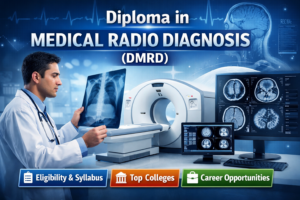
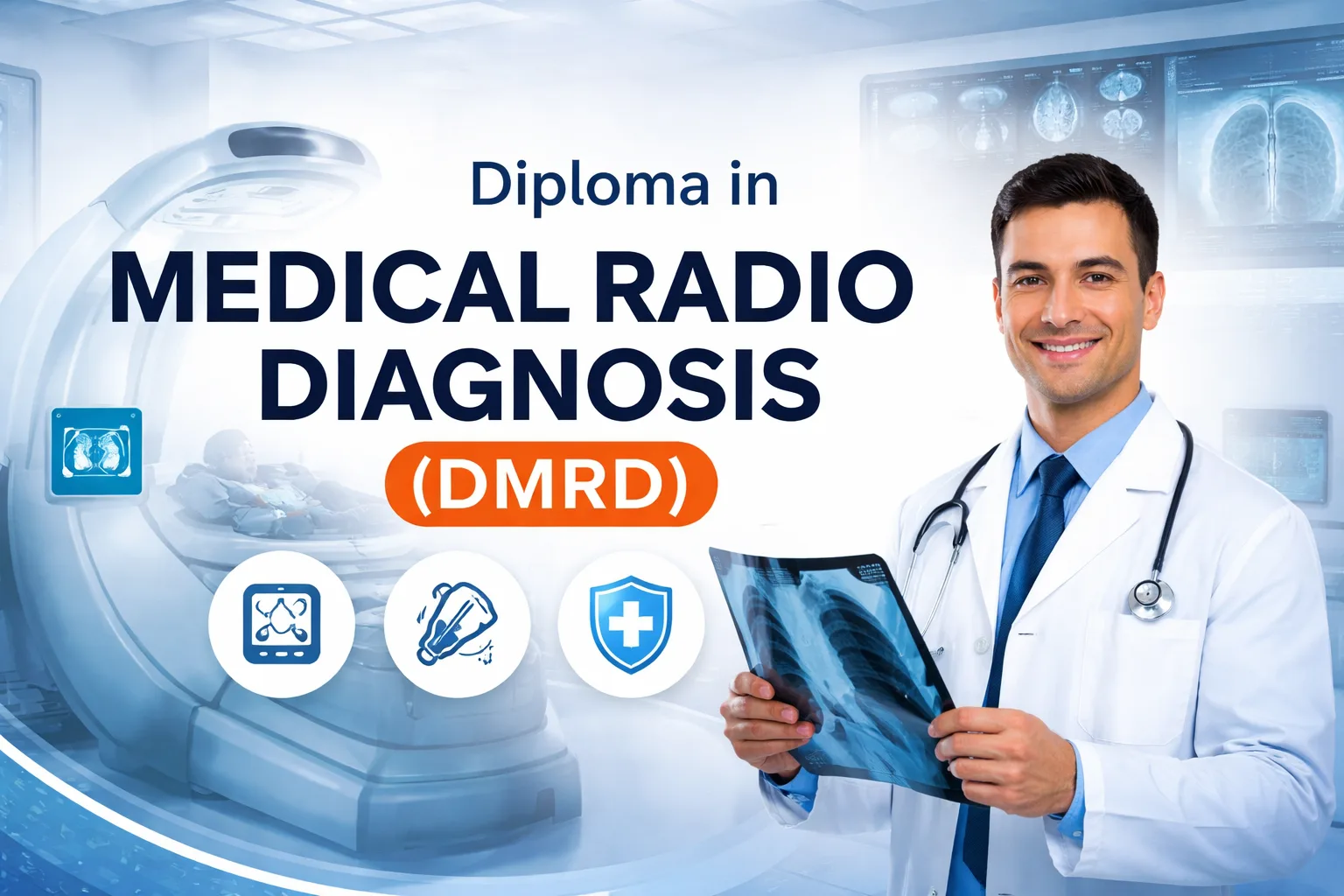
The Diploma in Medical Radio Diagnosis (DMRD) is a recognised postgraduate medical diploma programme centred on diagnostic radiology and medical imaging. It targets MBBS graduates interested in specialising in the interpretation and application of imaging techniques for disease detection and clinical decision-making.
Regulated and recognised by the National Medical Commission (NMC), the programme imparts essential competencies in clinical radiology, technical operation of imaging equipment, image interpretation, radiation safety principles, and patient care within the diagnostic imaging setting. Although its duration is shorter than the three-year MD Radiodiagnosis degree, the DMRD delivers full foundational exposure to core radiological procedures and practices.
Many DMRD holders utilise the qualification as a platform for further specialisation, career progression in diagnostic centres, hospitals, or academic institutions, or as an entry-level credential in the rapidly evolving field of medical imaging and radiology.
What Is DMRD?
DMRD, or Diploma in Medical Radio Diagnosis, constitutes a postgraduate diploma qualification in the field of diagnostic radiology. It is pursued by medical graduates following completion of their MBBS degree and is officially recognised by the National Medical Commission (NMC). The programme trains doctors to specialise in medical imaging techniques, image interpretation, and the provision of radiological insights that support accurate clinical diagnosis and patient management.
Medical imaging forms a cornerstone of contemporary healthcare delivery, enabling non-invasive visualisation of internal anatomical structures and pathological conditions to aid physicians in disease detection and treatment planning. The DMRD curriculum imparts essential practical competencies in diagnostic radiology, making qualified professionals suitable for employment across diverse healthcare environments. These include public sector hospitals, independent diagnostic laboratories, private multi-specialty hospitals, corporate healthcare networks, and emerging teleradiology platforms.
Core Focus Areas of the DMRD Course
The curriculum emphasises scientific understanding, clinical application, and safe use of imaging technologies:
-
Diagnostic Imaging Techniques:
Training in standard and advanced imaging modalities such as X-ray, fluoroscopy, ultrasound (USG), computed tomography (CT), and magnetic resonance imaging (MRI). These tools are essential in detecting fractures, tumours, organ pathologies, vascular abnormalities, and other intra-body conditions. -
Interpretation of Radiological Findings:
Candidates learn to read and analyse imaging results, differentiate normal from pathological anatomy, and generate accurate radiology reports that assist clinicians and surgeons in diagnosis and treatment planning. -
Radiation Safety and Imaging Protocols:
Understanding radiation physics, dose optimisation, and safety measures to protect patients and healthcare professionals. This includes managing radiation exposure and adhering to regulatory guidelines. -
Clinical Correlation with Medical & Surgical Conditions:
A key strength of the DMRD course is its emphasis on correlating imaging findings with clinical histories, laboratory tests, and surgical indications — a critical aspect of diagnostic radiology practice.
DMRD Course Highlights
The following table summarises the key features of the Diploma in Medical Radio Diagnosis:
| Aspect | Details |
|---|---|
| Course Name | Diploma in Medical Radio Diagnosis (DMRD) |
| Course Level | Postgraduate Diploma (Medical) |
| Duration | 2 years |
| Eligibility | MBBS degree with NMC/State Medical Council registration |
| Admission Mode | NEET-PG (National Eligibility cum Entrance Test – Postgraduate) & central/state counselling |
| Governing Body | National Medical Commission (NMC) |
| Focus Area | Diagnostic radiology & medical imaging, including X-ray, USG, CT, MRI |
| Practical Training | Hands-on clinical postings in radiology departments, imaging labs, case logbooks |
| Assessment | Theory exams, practical/OSCE assessments, viva voce, case evaluations |
| Career Level | Junior Radiologist, Imaging Consultant, Diagnostic Specialist |
DMRD Eligibility Criteria
To pursue a DMRD degree (Diploma in Medical Radio Diagnosis) in India, candidates must fulfil the eligibility norms prescribed by the National Medical Commission (NMC) and examination authorities:
-
MBBS Degree: Candidates must have completed an MBBS degree from a medical college recognised by the NMC (or MCI-recognised at the time of admission).
-
Medical Registration: Permanent or provisional registration with the NMC or a State Medical Council is mandatory at the time of admission.
-
Compulsory Internship: Successful completion of the one-year compulsory rotating internship on or before the cut-off date specified for NEET-PG.
-
Entrance Qualification: Candidates must qualify NEET-PG, as DMRD admission is centrally regulated through this examination.
-
Foreign Medical Graduates (FMGs): FMGs must clear the FMGE/NExT, complete internship in India, and obtain NMC registration before becoming eligible.
Eligibility requirements are uniform across most institutions, though minor procedural variations may exist at the state counselling level.
Read more: Diploma in Pharmacy (D.Pharma): Eligibility, Fees, Syllabus, Admission & Jobs
DMRD Admission Process
Admission to DMRD courses in India follows a structured, merit-based process:
Entrance Examination
-
NEET-PG (National Eligibility cum Entrance Test – Postgraduate) is the sole qualifying entrance exam for DMRD admission.
-
The exam evaluates candidates on clinical knowledge, diagnostic reasoning, and medical aptitude across MBBS subjects.
Counselling & Seat Allotment
-
Centralised counselling is conducted by:
-
MCC (Medical Counselling Committee) for All India Quota seats
-
State counselling authorities for state quota and private college seats
-
-
Seats are allotted based on:
-
NEET-PG rank
-
Reservation category
-
Institutional preferences
-
Seat availability
-
-
After allotment, candidates must complete document verification, fee payment, and college reporting within the stipulated timeline.
DMRD Seats in India & Cut-Off Trends
-
DMRD seats in India are limited, especially in government medical colleges, making admission highly competitive.
-
Seat availability varies significantly across states, with higher concentration in tertiary care teaching hospitals.
-
Cut-off ranks fluctuate each year depending on:
-
Total number of DMRD seats
-
Difficulty level of NEET-PG
-
Candidate performance trends
-
Reservation policies
-
All India Quota vs State Quota distribution
-
DMRD Syllabus Overview
The DMRD syllabus is structured to build strong diagnostic accuracy and clinical interpretation skills across all major imaging modalities used in routine medical practice. The curriculum balances theoretical foundations with hands-on exposure in hospital radiology departments.
Core Subjects Covered
-
Radiological Physics & Instrumentation: Fundamental principles of radiation, imaging equipment, image formation, and quality control.
-
X-ray Imaging & Fluoroscopy: Conventional radiography techniques, positioning, interpretation, and real-time fluoroscopic studies.
-
Ultrasonography (USG): Basics of ultrasound physics, abdominal, pelvic, obstetric, and Doppler imaging.
-
Computed Tomography (CT): Cross-sectional imaging, protocol planning, contrast-enhanced studies, and common pathologies.
-
Magnetic Resonance Imaging (MRI): MRI principles, sequences, safety considerations, and system-based imaging.
-
Contrast Studies & Angiography: Use of contrast agents, vascular imaging, and interventional basics.
-
Radiation Safety & Protection: Radiation hazards, dose optimisation, and legal safety guidelines.
-
System-Based Imaging: Diagnostic evaluation of CNS, thorax, abdomen, musculoskeletal system, and obstetrics.
Overall, the DMRD course focuses on practical diagnostic radiology skills essential for early-career radiologists and imaging consultants.
DMRD vs MD Radiology
| Feature | DMRD | MD Radiology |
|---|---|---|
| Degree Type | Diploma | Doctorate |
| Duration | 2 years | 3 years |
| Depth of Training | Basic to intermediate | Advanced and full |
| Career Scope | Diagnostic roles | Senior consultant & academic roles |
| Eligibility | MBBS | MBBS |
| Competition Level | Moderate | Very high |
While DMRD offers faster entry into radiology practice, MD Radiology provides broader opportunities in academics, interventional radiology, and leadership roles.
DMRD Fees in India
The DMRD fees in India vary widely depending on the ownership and status of the medical college. Government institutions offer highly subsidised education, while private and deemed universities charge significantly higher fees due to infrastructure, technology, and limited seat availability.
Fee Range Across Colleges and Universities
| College Type | Annual Fees (Approx.) |
|---|---|
| Government Medical Colleges | ₹20,000 – ₹1,50,000 |
| Semi-Government / State Quota (Private) | ₹1,50,000 – ₹5,00,000 |
| Private / Deemed Universities | ₹3,00,000 – ₹25,00,000+ |
Factors Affecting DMRD Fees
-
Type of institution (government vs private)
-
Seat category (AIQ / State quota / Management quota)
-
Availability of advanced imaging facilities (CT, MRI)
-
Patient load and clinical exposure
-
Location and institutional reputation
Top DMRD Colleges in India
DMRD is offered by select NMC-recognised medical colleges with adequate radiology infrastructure and teaching hospitals. Seat availability is limited and may change yearly based on regulatory approvals.
Government & Public Institutions
| College / Institute | Location |
|---|---|
| King George’s Medical University (KGMU) | Lucknow |
| Grant Medical College & JJ Hospital | Mumbai |
| Lokmanya Tilak Municipal Medical College (LTMMC) | Mumbai |
| Government Medical College | Thiruvananthapuram |
| Government Medical College | Kozhikode |
| Madras Medical College | Chennai |
| Government Medical College | Nagpur |
| AIIMS (select years / limited seats) | Various locations |
Private / Deemed Medical Colleges
| College | Location |
|---|---|
| Kasturba Medical College (KMC) | Manipal / Mangaluru |
| Sri Ramachandra Medical College | Chennai |
| Amrita Institute of Medical Sciences | Kochi |
| DY Patil Medical College | Navi Mumbai / Pune |
| SRM Medical College Hospital | Chennai |
| Vydehi Institute of Medical Sciences | Bengaluru |
Read more: Bachelor of Homeopathic Medicine and Surgery (BHMS): Admission, Eligibility, and Career Guide
Career Scope After DMRD
The scope of DMRD remains clinically strong and relevant, particularly in India’s rapidly expanding diagnostic and imaging sector. With rising dependence on imaging for early disease detection, trauma care, oncology screening, and preventive health check-ups, DMRD-qualified doctors continue to be in steady demand—especially in secondary hospitals, diagnostic centres, and tier-2/tier-3 cities.
While DMRD does not provide the same academic depth as MD Radiology, it enables MBBS graduates to enter radiology practice relatively quickly and build hands-on expertise in routine diagnostic imaging.
Career Options After DMRD
DMRD graduates can pursue the following roles:
-
Junior Radiologist in hospitals and imaging centres
-
Consultant in Diagnostic Imaging Centres (X-ray, USG, CT reporting)
-
Hospital Radiology Department Physician in secondary or district hospitals
-
Teleradiology Consultant, especially for night reporting and remote centres
-
Teaching Assistant / Tutor (with institutional experience)
-
Further Education, including MD/DNB Radiology or focused fellowships in CT, MRI, or ultrasound
Salary Prospects After DMRD (India)
| Career Stage | Approx. Annual Salary |
|---|---|
| Entry Level | ₹6 – 12 LPA |
| Mid Career (5–8 years) | ₹15 – 30 LPA |
| Experienced / Private Practice | ₹30 LPA+ (variable) |
DMRD Jobs & Work Settings
DMRD professionals are employed across a wide range of healthcare settings:
-
Government and district hospitals
-
Private hospitals and nursing homes
-
Standalone diagnostic imaging centres
-
Corporate healthcare chains
-
Teleradiology platforms and remote reporting services
-
Teaching hospitals (limited and experience-based roles)
Advantages & Limitations of DMRD
Advantages
-
Shorter duration compared to MD Radiology
-
Faster entry into radiology practice
-
Lower fees, especially in government colleges
-
Strong demand for imaging specialists
-
Suitable pathway for upgrading from MBBS to a diagnostic role
Limitations
-
Limited academic and teaching progression compared to MD/DNB
-
Fewer interventional radiology opportunities
-
Diploma recognition restrictions in some international healthcare systems
-
Higher dependency on experience and workload for income growth
Overall, DMRD offers a practical, clinically focused pathway into radiology, particularly for doctors seeking early entry into diagnostic practice or planning to pursue advanced radiology training later.
FAQs
Q1. What is DMRD in medical education?
DMRD is a postgraduate diploma in diagnostic radiology pursued after MBBS.
Q2. Is DMRD recognised by NMC?
Yes, DMRD is recognised by the National Medical Commission.
Q3. What is the duration of the DMRD course?
The course duration is 2 years.
Q4. What is the scope of DMRD in India?
DMRD offers strong clinical opportunities in diagnostic centres and hospitals.
Q5. Is DMRD better than MD Radiology?
DMRD is shorter, but MD Radiology offers wider academic and career scope.
Q6. What is the DMRD cut-off?
Cut-offs vary yearly and are higher in government colleges.
Q7. Can DMRD doctors do ultrasound and CT scans?
Yes, as per training and regulatory guidelines.
Q8. Can DMRD doctors upgrade to MD Radiology later?
Yes, through NEET-PG and fresh admission.