Diploma in Yoga: Eligibility, Colleges, Fees & Career Scope in India
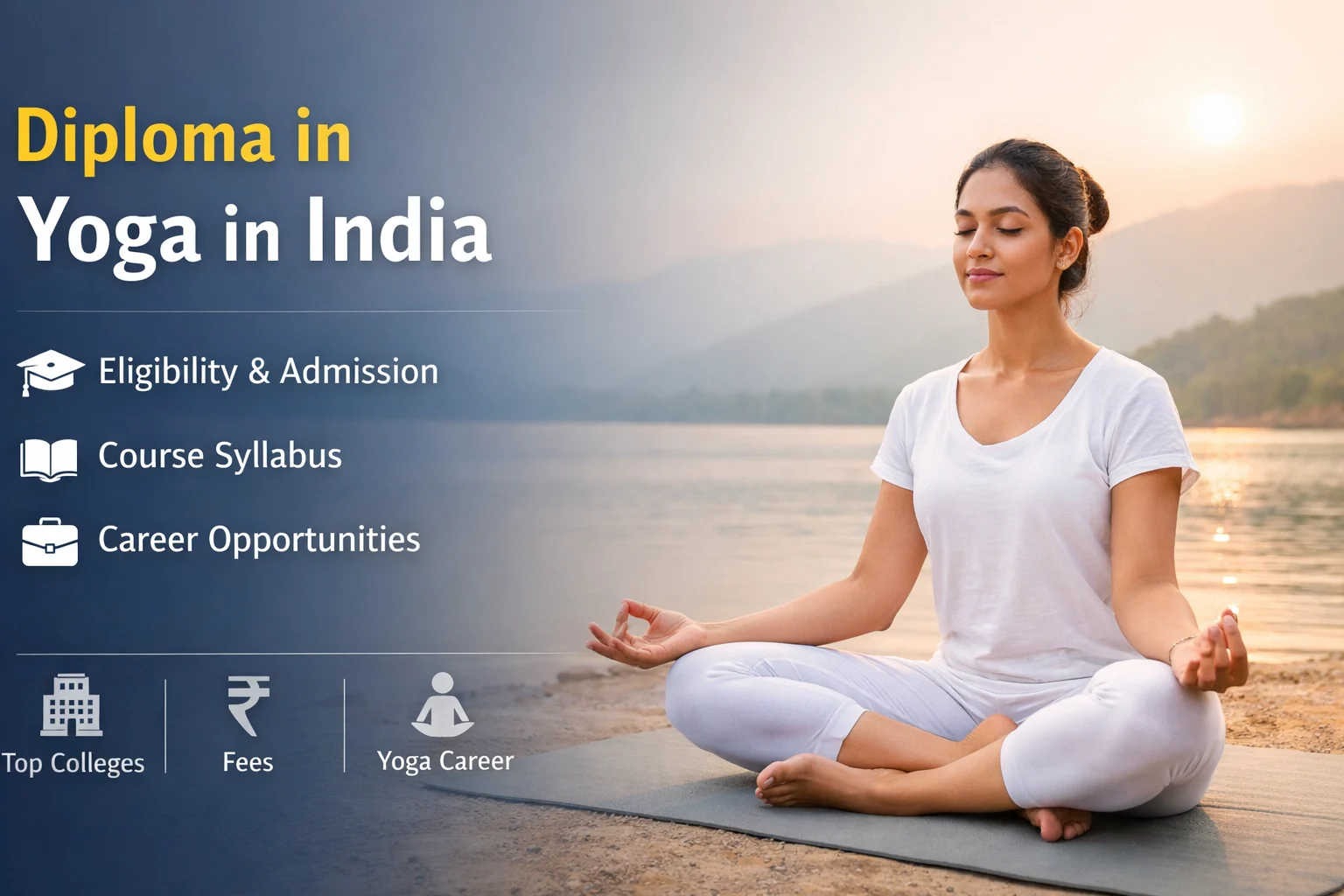
This article provides a complete guide to the Diploma in Yoga in India, including eligibility, admission, syllabus, fees, top colleges, and career prospects.
The Diploma in Yoga is a popular course in India as awareness of physical fitness, mental health, and holistic well-being continues to grow. This 1–2 year program focuses on yoga philosophy and practical training, including asanas, pranayama, meditation, and yogic lifestyle practices. Candidates who have completed 10+2 from a recognized board are generally eligible for admission. The course prepares students for careers as yoga instructors, yoga therapists, wellness trainers, and fitness professionals in studios, schools, hospitals, and wellness centres. With affordable fees and strong career demand, the Diploma in Yoga helps develop flexibility, stress management, communication skills, and overall wellness, making it an ideal choice for individuals pursuing a professional career in yoga.
Diploma in Yoga Course Overview
🔔 Admission Alerts 2026
- Application Open: MA Yoga & Naturopathy Distance Education at IMTS Institute.
- Deadline Nearing: MA Yoga & Naturopathy Distance Education application closes January 7, 2026.
- Apply Now: Subharti University MA Yoga & Naturopathy Distance Ed for 2026-27.
- Recruitment Open: Amethi District Yoga Trainer applications close April 22, 2026.
The Diploma in Yoga is a skill-oriented certification program designed to provide theoretical knowledge and practical training in yoga practices and holistic wellness. The course duration typically ranges from 1 to 2 years, depending on the institution and specialization. It covers core areas such as yoga philosophy, asanas, pranayama, meditation, anatomy, and yogic lifestyle management. Candidates who have completed 10+2 from a recognized board are generally eligible for admission.
The program prepares students for careers in the rapidly expanding wellness industry, including roles such as Yoga Instructor, Yoga Therapist, Wellness Coach, and Fitness Trainer. With affordable fees and increasing demand for certified yoga professionals, the diploma offers strong career prospects across healthcare, education, fitness, and wellness sectors.
| Feature | Description | Details |
|---|---|---|
| Course Level | Diploma | Short-term professional certification program |
| Course Duration | Program Length | 1–2 years (varies by institute) |
| Eligibility | Educational Requirement | 10+2 or equivalent from a recognized board |
| Average Fees | Tuition Fees | ₹5,000 – ₹50,000 per year (approx.) |
| Course Focus | Core Learning Areas | Asanas, Pranayama, Meditation, Yoga Philosophy, Anatomy |
| Specializations | Areas of Study | Yoga Teacher Training, Yoga Therapy, Yoga Science, Naturopathy & Meditation |
| Career Pathways | Employment Sectors | Healthcare, Fitness Centres, Schools, Wellness Institutes, Yoga Studios |
| Top Job Roles | Career Options | Yoga Instructor, Yoga Therapist, Wellness Coach, Yoga Trainer |
| Top Colleges | Leading Institutes | Morarji Desai National Institute of Yoga, Government Yoga Colleges, Yoga & Naturopathy Institutes |
| Average Salary | Salary Range | ₹2 LPA – ₹6 LPA (based on experience and location) |
| Program Benefits | Skill Development | Physical fitness, stress management, communication skills, holistic wellness training |
Why Choose a Diploma in Yoga?
- Growing demand for certified yoga and wellness professionals
- Affordable course fees compared to other professional programs
- Opportunities in both employment and self-practice/entrepreneurship
- Enhances personal health along with professional career development
- Suitable for careers in fitness, therapy, education, and holistic healing sectors
This diploma serves as an ideal foundation for individuals seeking a professional career in yoga, wellness coaching, or holistic health practices in India.
Diploma in Yoga Eligibility Criteria
Eligibility criteria for a Diploma in Yoga in India vary slightly across institutions; however, most colleges follow standard admission requirements. Candidates are generally required to have completed 10+2 or equivalent education from a recognized board. Some institutes also offer diploma programs after Class 10, while specialized yoga therapy or naturopathy diplomas may require a science background.
Institutions may prescribe a minimum age limit of 17–18 years, basic physical fitness, and an interest in yoga practice. Prior yoga experience is usually preferred but not mandatory. Candidates should always verify institute-specific requirements before applying.
| Course Type | Minimum Qualification | Age Limit | Specific Requirements | Accepted Boards |
|---|---|---|---|---|
| Diploma in Yoga | 10+2 or equivalent | 17+ years (approx.) | Passing certificate; some institutes require 45–50% marks | State Boards, CBSE, ICSE, or equivalent |
| Diploma in Yoga Teacher Training | 10+2 or equivalent | 17–18 years | Basic yoga knowledge or interest preferred | Recognized Indian boards |
| Diploma in Yoga Naturopathy | 10+2 with Science preferred | 17–18 years | PCB/Science background may be required | Recognized boards |
| Diploma in Naturopathy & Yogic Science | 10+2 (Science stream preferred) | 17–18 years | Minimum qualifying marks as per institute norms | Recognized boards |
| Diploma in Yoga Therapy | 10+2 or equivalent | 18+ years | Interest or certification in yoga beneficial | Recognized boards |
| Diploma in Yoga & Meditation | 10+2 or equivalent | 17+ years | Basic understanding of meditation/yoga preferred | Recognized boards |
| Diploma in Yoga Education | 10+2 or equivalent | 17+ years | Interest in teaching or education field | Recognized boards |
| Diploma in Yoga & Wellness | 10+2 or equivalent | 17+ years | Fitness/wellness inclination preferred | Recognized boards |
| Diploma in Yoga & Fitness | 10+2 or equivalent | 17+ years | Physical fitness and yoga interest recommended | Recognized boards |
Diploma in Yoga Admission Process
Admission to Diploma in Yoga programs in India is generally merit-based, though a few reputed institutes conduct entrance tests or interviews. The process is simple and accessible, making yoga education widely available across government and private institutions.
Step-by-Step Admission Process
- Research and Shortlist Colleges
Identify recognized institutes offering Diploma in Yoga programs based on fees, facilities, and certification value. - Check Eligibility Criteria
Ensure completion of 10+2 or equivalent qualification and fulfillment of minimum age requirements. - Fill Application Form
Apply online or offline through the institute’s official admission portal. - Submit Required Documents
- 10th and 12th mark sheets
- Identity proof
- Passport-size photographs
- Medical fitness certificate (if required)
- Entrance Exam / Merit Evaluation
- Some institutes conduct internal entrance tests.
- Many colleges provide direct merit-based admission.
- Interview or Counseling (If Applicable)
Selected candidates may attend personal interviews or counseling sessions. - Fee Payment
Admission fees generally range between ₹5,000 – ₹30,000 per year, depending on institution type. - Document Verification & Enrollment
Submit original documents and complete registration to confirm admission.
This structured admission pathway ensures that aspiring yoga professionals can easily enter the field and begin training for careers in wellness, therapy, and holistic health education.
Top Government Colleges for Diploma in Yoga in India
The table below highlights some of the leading government institutions and public universities in India offering Diploma in Yoga or related programs such as Yoga Science, Yoga Education, and Naturopathy. These institutes are recognized for structured training, qualified faculty, and affordable fee structures.
Admissions are generally merit-based, though some universities may conduct entrance tests or interviews. Fees are indicative and may vary depending on course duration, certification level, and institutional guidelines.
| College Name | City | Approx. Annual Fees (INR) | Admission Mode | Remarks |
|---|---|---|---|---|
| Morarji Desai National Institute of Yoga | New Delhi | 5,000 | Merit-based | Premier government yoga institute under Ministry of AYUSH |
| Indira Gandhi Institute of Physical Education and Sports Sciences | New Delhi | 4,000 | Merit-based | Yoga included under physical education programs |
| Andhra University | Visakhapatnam | 7,000 | Entrance/Merit | Offers yoga-related certificate and diploma programs |
| Kurukshetra University | Kurukshetra | 8,500 | Entrance/Merit | Yoga studies through physical education departments |
| Government Yoga Education College | Chandigarh | 3,000 | Merit-based | State-supported yoga training institute |
| Lala Lajpat Rai College | Mumbai | 6,000 | Entrance/Merit | Yoga programs offered under physical education streams |
| Dev Sanskriti Vishwavidyalaya | Haridwar | 12,000 | Merit-based | Yoga and Indian knowledge systems focus |
Top Private Colleges for Diploma in Yoga in India
The following institutions are among the well-known private yoga institutes, universities, and training centers offering Diploma in Yoga programs across India. These colleges emphasize practical training, therapeutic yoga, wellness education, and teacher training certifications.
Admission is usually merit-based, though some institutes conduct entrance assessments, interviews, or fitness evaluations.
| College Name | City | Approx. Annual Fees (INR) | Admission Mode | Specializations Offered |
|---|---|---|---|---|
| Kaivalyadhama Yoga Institute | Lonavala | 25,000 | Merit-based | Yoga Therapy, Yoga Education |
| Bihar School of Yoga | Munger | 15,000 | Entrance/Interview | Yoga Education, Traditional Yoga Studies |
| The Yoga Institute | Mumbai | 30,000 | Merit-based | Yoga Teacher Training, Wellness Yoga |
| Dev Sanskriti Vishwavidyalaya | Haridwar | 20,000 | Entrance/Merit | Yoga Science, Yogic Lifestyle Studies |
| Gujarat Ayurveda University | Jamnagar | 12,000 | Entrance Exam | Yoga and Ayurveda Integration |
| Bodhi School of Yoga | Rishikesh | 18,000 | Merit-based | Yoga Teacher Training, Wellness Yoga |
| YogKulam | Goa | 22,000 | Entrance/Interview | Yoga & Wellness Programs |
| Sivananda Yoga Vedanta Centres and Ashrams | Madurai | 8,000 | Merit-based | Yoga Philosophy, Traditional Hatha Yoga |
| Rishikul Yogshala | Rishikesh | 28,000 | Entrance/Interview | Yoga & Naturopathy, Teacher Training |
Diploma in Yoga Subjects and Syllabus
The Diploma in Yoga in India is generally offered as a 1-year (2 semesters) or 2-year (4 semesters) program, depending on the institute or university. The course combines theoretical knowledge, practical yoga training, teaching methodology, and therapeutic applications.
Students learn yoga philosophy, asanas, pranayama, meditation, anatomy, and lifestyle science while developing professional teaching skills. Practical sessions, workshops, and internships form an essential part of training.
Key Learning Areas
- Yoga philosophy and classical texts
- Asanas, pranayama, and meditation practices
- Human anatomy and physiology for yoga
- Yoga therapy and stress management
- Teaching methodology and practical training
| Semester | Subject Name | Subject Type | Description |
|---|---|---|---|
| Semester 1 | Introduction to Yoga Philosophy | Core | Fundamental concepts, history, and schools of yoga |
| Semester 1 | Basic Asanas and Pranayama | Practical/Core | Foundation postures, breathing techniques, and relaxation practices |
| Semester 1 | Anatomy and Physiology for Yoga | Core | Human body systems and their relation to yoga practice |
| Semester 2 | Yoga Sutras of Patanjali | Core | Study of classical yogic philosophy and ethical principles |
| Semester 2 | Advanced Asanas and Pranayama | Practical | Advanced postures, kriyas, and breath control techniques |
| Semester 2 | Yoga Therapy and Applications | Core | Therapeutic use of yoga for lifestyle and health disorders |
| Semester 3 | Yogic Diet and Lifestyle | Elective | Nutrition, sattvic diet, and yogic living principles |
| Semester 3 | Yoga and Stress Management | Elective | Meditation and relaxation techniques for mental wellness |
| Semester 4 | Yoga Teaching Methodology | Core | Lesson planning, class management, and teaching practice |
| Semester 4 | Yoga Research & Project Work / Internship | Practical | Teaching internship, research project, or community training |
Recommended Reference Books
- Light on Yoga — B. K. S. Iyengar
- The Yoga Sutras of Patanjali — Sri Swami Satchidananda
- The Bhagavad Gita (Commentary) — Eknath Easwaran
Diploma in Yoga Course Fees in India: Government vs Private Colleges
The course fees for a Diploma in Yoga vary significantly depending on whether the institution is government-funded or privately operated. Government institutes generally offer affordable programs, while private yoga institutes may charge higher fees due to advanced facilities, residential training, and international certifications.
Fee Influencing Factors
- Institutional reputation and accreditation
- Faculty expertise and infrastructure
- Practical training facilities and certification level
- Location and residential training options
| College Type / Institution | Minimum Fees | Maximum Fees | Average Fees | Key Factors |
|---|---|---|---|---|
| Government Colleges | ₹3,000 | ₹10,000 | ₹6,500 | Subsidized education, basic infrastructure |
| Private Colleges | ₹15,000 | ₹50,000+ | ₹32,500 | Facilities, certification value, global exposure |
| Morarji Desai National Institute of Yoga | ₹5,000 | ₹8,000 | ₹6,500 | Central government support |
| Kaivalyadhama Yoga Institute | ₹20,000 | ₹40,000 | ₹30,000 | International recognition, therapy training |
| Bihar School of Yoga | ₹15,000 | ₹30,000 | ₹22,500 | Residential yogic education |
| Indian Institute of Yoga and Naturopathy | ₹8,000 | ₹12,000 | ₹10,000 | Government-recognized programs |
| The Yoga Institute | ₹25,000 | ₹45,000 | ₹35,000 | Experienced faculty and diverse certifications |
| Dev Sanskriti Vishwavidyalaya | ₹18,000 | ₹35,000 | ₹26,500 | University-level yoga education |
| Government Yoga Education College | ₹3,000 | ₹6,000 | ₹4,500 | State government funding |
| Lala Lajpat Rai College | ₹6,000 | ₹10,000 | ₹8,000 | Public college infrastructure |
Career Scope, Jobs, and Salary Opportunities After a Diploma in Yoga
A Diploma in Yoga offers growing career opportunities in India due to rising awareness of preventive healthcare, fitness, and mental wellness. Graduates can work in healthcare institutions, wellness centers, educational institutions, fitness industries, and independent practice.
Career Advantages
- Increasing demand for certified yoga instructors
- Opportunities in healthcare and rehabilitation sectors
- Scope for entrepreneurship and freelance teaching
- International career prospects in wellness tourism
| Job Role | Average Salary | Job Description | Skills Required | Potential Employers |
|---|---|---|---|---|
| Yoga Instructor | ₹2–4 LPA | Conduct yoga classes and training sessions | Teaching skills, flexibility, certification | Yoga studios, gyms, schools |
| Yoga Therapist | ₹3–5 LPA | Use yoga for rehabilitation and health management | Therapy knowledge, anatomy understanding | Hospitals, rehab centres |
| Wellness Consultant | ₹2.5–4.5 LPA | Provide lifestyle and wellness guidance | Nutrition awareness, counselling skills | Wellness centres, spas |
| School Yoga Teacher | ₹2–3.5 LPA | Teach yoga in schools and educational institutions | Teaching ability, patience | Schools, academies |
| Naturopathy Practitioner | ₹3–6 LPA | Natural healing therapies and lifestyle management | BNYS or additional certification | Naturopathy clinics |
| Acupuncture Practitioner | ₹2.5–5 LPA | Pain and stress therapy using acupuncture | Certified acupuncture training | Clinics, wellness centres |
| Holistic Health Coach | ₹2–4 LPA | Lifestyle coaching and preventive health guidance | Communication, wellness expertise | Health startups, spas |
| Yoga Studio Manager | ₹2.5–5 LPA | Manage studio operations and marketing | Management and communication skills | Yoga studios |
| Yoga Retreat Organizer | ₹2–4 LPA | Plan yoga retreats and wellness events | Event management, yoga knowledge | Travel & wellness companies |
Frequently Asked Questions (FAQs)
Q1. What is the typical duration of a Diploma in Yoga program in India?
A Diploma in Yoga program in India typically lasts 1-2 years. The course focuses on yoga philosophy and practice, emphasizing asanas, pranayama, meditation, and yogic lifestyle.
Q2. What are the eligibility criteria for a Diploma in Yoga program in India?
To be eligible for a Diploma in Yoga program in India, you need a 10+2 or equivalent qualification from a recognized board. Some institutions may prefer a background in science or humanities. While there’s generally no age limit, some institutions may require a minimum age of 17 or 18.
Q3. What is the fee range for a Diploma in Yoga program in government and private colleges in India?
The minimum fee for a Diploma in Yoga program in government colleges in India is INR 3,000, while the minimum fee for private colleges is INR 15,000. For example, the Morarji Desai National Institute of Yoga in Delhi has an annual fee of INR 5,000, and the Kaivalyadhama Yoga Institute in Lonavala has an annual fee of INR 25,000.
Q4. What are the average salary ranges for different job roles after completing a Diploma in Yoga program in India?
After completing a Diploma in Yoga program in India, expect these average salary ranges: ₹2 LPA – ₹4 LPA for a Yoga Instructor, ₹3 LPA – ₹5 LPA for a Yoga Therapist, and ₹2.5 LPA – ₹4.5 LPA for a Wellness Coach. Your salary will depend on your experience, location, and employer.
Frequently Asked Questions (FAQs)
Q: What is the typical duration of a Diploma in Yoga program in India?
A Diploma in Yoga typically spans 1 to 2 years, depending on the institution and curriculum design. Some universities offer part-time options, extending the duration. It’s crucial to check the specific program details of your chosen college or university for accurate timelines.
Q: What are the approximate fees for a Diploma in Yoga in India for 2026?
For 2026, the approximate fees for a Diploma in Yoga in India can range from INR 15,000 to INR 80,000 per year in government institutions, and INR 50,000 to INR 2,00,000 per year in private colleges. This variation depends on the institution’s reputation, facilities, and location.
Q: Are there any entrance exams required for admission to a Diploma in Yoga?
Most institutions offering a Diploma in Yoga do not require a national-level entrance exam like NEET or JEE. Admissions are often based on merit from your 10+2 examinations. However, some prominent universities might conduct their own entrance tests or interviews. Always check the specific admission criteria of your target institution.
Q: What is the career scope after completing a Diploma in Yoga in India?
A Diploma in Yoga opens doors to various career paths in India. Graduates can work as certified Yoga instructors in studios, gyms, corporate wellness programs, and schools. Opportunities also exist in health resorts, rehabilitation centers, and as personal Yoga trainers. Entrepreneurship by starting your own Yoga studio is also a viable option.
Q: What is the expected average starting salary for a Diploma in Yoga graduate in India (2026)?
In 2026, a Diploma in Yoga graduate in India can expect an average starting salary ranging from INR 1.8 LPA to INR 3.5 LPA. This can vary significantly based on location, employer (e.g., private studio vs. corporate wellness), experience, and additional certifications. Experienced professionals can earn substantially more.
Q: Is there scope for a Diploma in Yoga graduate to work abroad?
Yes, there is significant scope for Diploma in Yoga graduates to work abroad, especially in countries with a growing interest in holistic wellness. Indian Yoga teachers are highly regarded globally. However, you might need to acquire additional international certifications (e.g., Yoga Alliance RYT) and fulfill specific visa and work permit requirements of the destination country.