DMRT Course Details: Eligibility, Colleges, Syllabus, and Career Scope in India
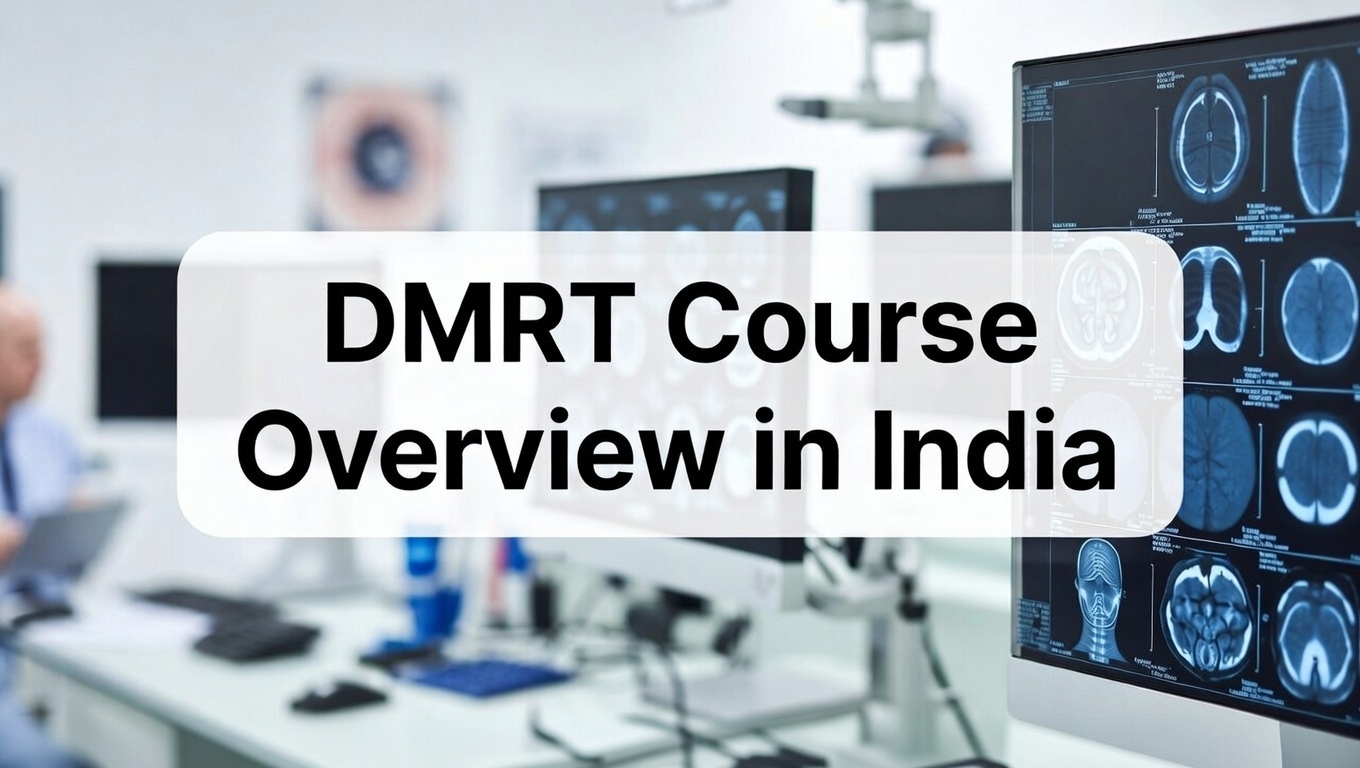
The Diploma in Medical Radio Therapy (DMRT) is a highly sought-after paramedical course in India, driven by the growing demand for skilled professionals in the rapidly evolving field of medical radiotherapy. This 2-year program equips students with the knowledge and skills to assist in radiotherapy treatments, covering radiation physics, treatment planning, and patient care. DMRT graduates can find rewarding career opportunities as radiation therapy technologists in hospitals, cancer treatment centers, and research institutions, with potential salaries ranging from ₹3 to ₹6 lakhs per annum. The DMRT course fee varies from ₹50,000 to ₹2 lakhs per year, depending on the institution and location.
🔔 DMRT Course Details Admission Alerts 2026
- NEET MDS 2026: Application Form Last Date Approaching.
- DTU Admission 2026-27: Last date for the admission process is March 25.
- JEE Main 2026: Session 2 city intimation slip is released.
- Times Higher Education (THE) Interdisciplinary Science Rankings 2026: DTU is among the top 100 Universities Globally.
This article offers an in-depth look at the DMRT course, covering eligibility, colleges, syllabus, career scope, and the admission process, to help aspiring students make informed decisions about their future in medical radiotherapy. By pursuing a DMRT course, students can gain a competitive edge and meet the increasing need for skilled radiotherapy professionals in India.
To be eligible for the DMRT course, candidates need to have completed their 10+2 or equivalent examination with a minimum of 45% to 50% marks in the science stream, preferably with physics, chemistry, and biology as main subjects.
DMRT Course Overview: Key Highlights for Indian Students
The Diploma in Medical Radio Therapy (DMRT) is a 2-year paramedical diploma program, focusing on training professionals to assist in radiotherapy treatments. The curriculum includes radiation physics, treatment planning, and patient care. Here is a quick overview of the course:
| Aspect | Details |
|---|---|
| Degree Full Form | Diploma in Medical Laboratory Technology (DMLT) |
| Degree Type | Diploma (Paramedical / Allied Health Sciences) |
| Typical Duration | 2 years |
| Eligibility (India) | Class 10 (or equivalent) with Science subjects; minimum 50% marks |
| Admission Process | Merit-based (on Class 10 marks) for most government colleges |
| Average Annual Fees (India) | Government colleges: ₹20,000–80,000; Private colleges: ₹1-2+ Lakhs |
| Career Options | Lab Technician, Medical Technologist, Research Assistant |
| Average Starting Salary (India) | INR 2–6 Lakhs per annum |
DMRT Eligibility Criteria: Detailed Requirements for Indian Admissions
To be eligible for Diploma in Medical Radio Therapy (DMRT) programs in India, candidates must have completed their 10+2 or equivalent examination with a minimum of 45% to 50% marks in the science stream, including Physics, Chemistry, and Biology. Candidates must be at least 17 years old as of December 31st of the admission year and medically fit. The following table provides a detailed overview of the eligibility criteria for DMRT programs in India:
| Parameter | Requirement Details |
|---|---|
| Educational Qualification | 10+2 or equivalent from a recognized board |
| Stream / Subjects | Science stream preferred (Physics, Chemistry, Biology – PCB); some accept Physics, Chemistry, Mathematics (PCM) or any stream in select institutes |
| Minimum Marks | 40% – 50% aggregate in qualifying examination (commonly 45-50%; varies by institution – e.g., 40% in some cancer institute programs, 50% in others) |
| Age Limit | Minimum 17 years (as of a specific date, e.g., December 31st or July 1st of the admission year; upper limit often 25-35 years in some colleges) |
| Medical Fitness | Candidates must be medically fit to undergo the course (often requires a fitness certificate) |
| Entrance Exam | Varies by institution (merit-based on 10+2 marks in many cases; some conduct institute-specific tests or accept NEET UG/state paramedical entrances) |
DMRT Admission Process
- Merit-Based (Most common): Admission is primarily based on marks obtained in Class 12 (10+2) qualifying examination, especially in the Science stream (Physics, Chemistry, Biology preferred). Candidates are ranked on aggregate percentage (often requiring 40-50% minimum), and seats are allotted via merit lists. This is widespread in private colleges, cancer institutes (e.g., Rajiv Gandhi Cancer Institute), and many state-affiliated paramedical programs.
- Entrance Exam-Based (Increasingly relevant): Some institutions conduct their own entrance tests, accept state-level paramedical entrance exams, or consider scores from national exams like NEET UG or AIIMS Paramedical Entrance Exam. Direct merit (Class 12 marks) remains an option in many places, but entrance routes are used for competitive or government seats.
Students must note that as per National Commission for Allied and Healthcare Professions’ (NCAHP) guidelines, NEET UG will be a mandatory requirement for admissions to many Allied and Healthcare undergraduate/diploma courses starting from the 2026-27 academic session. NEET UG exam is typically conducted every year in the month of May.
How to Apply for DMRT Course: A Step-by-Step Guide for Indian Applicants
To secure a seat in a DMRT program in India, applicants must follow these steps:
- Check Eligibility: Ensure you meet the minimum educational qualifications of 10+2 in the science stream with a minimum of 45-50% marks, and the age criteria of 17 years as of a specific date.
- Application Form: Obtain and complete the application form from the desired college or institution (online or offline). The application fee ranges from INR 500 to INR 2,000.
- Entrance Exam (if applicable): Prepare for and appear in any entrance exam conducted by the college, such as the AIIMS DMRT entrance exam, which tests knowledge in physics, chemistry, and biology.
- Merit List: Check the merit list published by the college, which ranks applicants based on entrance exam scores or 10+2 marks.
- Counseling: Attend the counseling session for seat allotment. Bring original documents and pay the admission fee, which can range from INR 5,000 to INR 80,000 per annum.
- Document Verification: Submit required documents for verification, including mark sheets, certificates, and identity proof.
- Fee Payment: Pay the admission fee to secure your seat. Payment modes include online payment, demand draft, or cash. This may include tuition fees, hostel fees, and other expenses.
- College Approval: Verify that the college is approved by the University Grants Commission (UGC) or the All India Council for Technical Education (AICTE) to ensure the degree is recognized and valid.
- Seat Allotment: Receive the seat allotment letter, which confirms admission to the DMRT program, and report to the college on the specified date and time.
- Reporting to College: Report to the college on the specified date and time, with all original documents and fees, to complete the admission formalities and begin the DMRT program.
Top Government Colleges for DMRT in India
The following table provides an overview of top government colleges in India offering DMRT programs. These colleges are recognized by the UGC and AICTE, and are known for their faculty and infrastructure, providing a full learning experience.
| College Name | Total Course Fees | Admission (Entrance/Merit) |
|---|---|---|
| All India Institute of Medical Sciences (AIIMS), New Delhi | INR 5,000 – 10,000 | Entrance-based (AIIMS Paramedical Entrance or aligned national process) |
| Postgraduate Institute of Medical Education and Research (PGIMER), Chandigarh | INR 6,000 – 20,000 | Entrance-based (PGIMER Paramedical Entrance Exam) |
| Srirama Chandra Bhanja Medical College (SCB), Cuttack | INR 20,000 – 60,000 | Merit-based via Odisha DMET counseling (state paramedical entrance/merit) |
| Kidwai Memorial Institute of Oncology, Bengaluru | INR 40,000 – 70,000 | Merit/Entrance-based (Karnataka state counseling or institute-specific) |
| King George’s Medical University (KGMU), Lucknow | INR 70,000 – 1,00,000 | Merit-based via UP state counseling or entrance |
| Institute of Post Graduate Medical Education and Research (IPGMER/SSKM Hospital), Kolkata | INR 30,000 – 60,000 | Merit-based via West Bengal state paramedical counseling |
| Indira Gandhi Institute of Medical Sciences (IGIMS), Patna | INR 30,000 – 80,000 | Merit/Entrance-based (Bihar state process or institute) |
| Bangalore Medical College and Research Institute (BMCRI), Bengaluru | INR 20,000 – 70,000 | Merit-based via Karnataka state counseling |
| Andhra Medical College, Visakhapatnam | INR 20,000 – 50,000 | Merit-based via Andhra Pradesh state paramedical counseling |
| Madurai Medical College, Madurai | INR 40,000 – 80,000 | Merit-based via Tamil Nadu state counseling |
| Tirunelveli Medical College, Tirunelveli | INR 30,000 – 70,000 | Merit-based via Tamil Nadu state counseling |
Top Private Colleges for DMRT in India
The following table provides an overview of top private colleges in India offering DMRT programs. The fees listed are subject to change and may not include additional costs such as admission fees, examination fees, and hostel fees. The colleges listed offer a 2-year DMRT program with a focus on practical training and patient care:
| College Name | Total Course Fees (Approx., Full 2 Years) | Admission (Entrance/Merit) |
|---|---|---|
| Christian Medical College (CMC), Vellore | INR 30,000 – 60,000 | Merit/Entrance-based (institute-specific test + merit on 10+2 + interview; very competitive) |
| Manipal Academy of Higher Education (MAHE), Manipal | INR 1,00,000 – 2,50,000 | Merit-based on 10+2 or institute entrance (MET/direct) |
| SRM Institute of Science and Technology, Chennai | INR 1,00,000 – 2,50,000 | Merit-based or entrance (institute test/SRMJEEE/direct) |
| NRI Medical College, Chinakakani (Guntur) | INR 80,000 – 1,80,000 | Merit-based via state counseling or direct admission |
| Om Sterling Global University (OSGU), Hisar | INR 1,00,000 – 1,50,000 | Merit-based or direct admission |
| NIILM University, Kaithal | INR 80,000 – 1,50,000 | Merit-based or entrance/direct |
| Centurion University of Technology and Management, Bhubaneswar | INR 80,000 – 1,50,000 | Merit-based or university entrance (CUEE/direct) |
| CMJ University, Shillong | INR 50,000 – 1,00,000 | Merit-based or direct admission |
| AIPH University, Bhubaneswar | INR 60,000 – 1,20,000 | Merit-based or institute-specific |
| Mahavir Cancer Institute and Research Centre, Phulwarisharif (Patna) | INR 50,000 – 1,20,000 | Merit/Entrance-based (institute or state process) |
DMRT Fee Structure: Government vs Private Colleges in India – A Comparison
The fee structure for DMRT (Diploma in Medical Radio Therapy / Diploma in Radiotherapy Technology) programs in India remains highly affordable in government colleges due to heavy subsidies, while private colleges charge significantly more. The table below compares key components:
| Fee Component | Government Colleges | Private Colleges | Details / Scholarship Availability |
|---|---|---|---|
| Tuition Fees | INR 2,000 – 20,000 | INR 40,000 – 1,25,000 | Annual tuition for core DMRT program; merit-based and need-based scholarships available. |
| Hostel Fees | INR 5,000 – 15,000 | INR 50,000 – 1,00,000 | Annual accommodation (optional); hostel fee waivers for deserving students in govt setups. |
| Examination Fees | INR 1,000 – 2,500 | INR 5,000 – 10,000 | Annual exam charges; no specific scholarships for this. |
| Other Charges | INR 1,000 – 5,000 | INR 3,000 – 10,000 | Miscellaneous (library, lab, etc.); no scholarships typically. |
| Total Annual Fees | INR 10,000 – 40,000 | INR 1,00,000 – 2,50,000 | Approximate total per year; merit-cum-means scholarships available for overall fees in both (higher in govt). |
| Admission Fee | INR 500 – 2,000 | INR 5,000 – 15,000 | One-time entry fee; no scholarships usually. |
| Library Fees | INR 500 – 1,500 | INR 2,000 – 5,000 | Annual access charges; no scholarships. |
| Lab Fees | INR 1,000 – 3,000 | INR 5,000 – 15,000 | Annual practical/lab usage; no scholarships. |
| Uniform and Equipment | INR 1,000 – 3,000 | INR 5,000 – 10,000 | One-time costs for kits/uniforms; no scholarships. |
DMRT Subjects and Syllabus: Year-wise Breakdown for Indian Curriculum
The DMRT syllabus in India provides students with a full understanding of radiation therapy and its applications. The course is divided into four semesters, each covering core and elective subjects. Practical training and internships are integral to the curriculum, providing hands-on experience in radiotherapy techniques and patient care. Here is a detailed breakdown:
| Year | Subjects | Type |
|---|---|---|
| Year 1 | Anatomy and Physiology | Theory + Practical |
| Radiation Physics | Theory + Practical | |
| Pathology, Microbiology & Basics of Oncology | Theory | |
| Radiation Protection and Safety | Theory + Practical | |
| Basic Electronics & Equipment Handling | Theory + Practical | |
| Year 2 | Radiotherapy Techniques & Imaging | Theory + Practical |
| Treatment Planning & Dosimetry | Theory + Practical | |
| Clinical Oncology & Radiobiology | Theory | |
| Patient Care, Positioning & Management | Theory + Practical | |
| Hospital Management, Ethics & Recent Advances | Theory |
Core Subjects Taught in DMRT
Take a look at the course subjects taught in this course:
| Subject Name | Subject Description (Easy to Read) |
|---|---|
| Anatomy and Physiology | Study of the human body’s structure (organs, systems) and functions, especially relevant to positioning patients and understanding radiation effects on tissues. |
| Radiation Physics | Basics of radiation (X-rays, gamma rays, particles) — essential for safe and accurate radiotherapy equipment use. |
| Radiation Protection and Safety | Rules and techniques to protect patients, staff, and self from unnecessary radiation exposure. |
| Pathology & Basics of Oncology | Understanding diseases, especially cancer types, how tumors grow/spread, and basic cancer biology. |
| Radiotherapy Techniques & Imaging | Practical methods of delivering radiation (external beam, brachytherapy), patient positioning, immobilization devices, and imaging for accurate targeting. |
| Treatment Planning & Dosimetry | Calculating and planning the right radiation dose and distribution using software/tools to maximize tumor control while minimizing damage to healthy tissues. |
| Clinical Oncology & Radiobiology | Overview of cancer management, how radiation affects cells/tissues (benefits, side effects), and principles of combining radiotherapy with other treatments. |
| Patient Care, Positioning & Management | Skills for caring for cancer patients — emotional support, pain management, infection control, proper positioning during treatment, and handling emergencies. |
Scope for Higher Studies After DMRT in India
After completing your DMRT (Diploma in Medical Radio Therapy / Diploma in Radiotherapy Technology), you can pursue higher education to upgrade skills, access senior roles (e.g., senior therapist, dosimetrist, or specialist), and boost salary potential in oncology and radiotherapy fields.
Here is a simplified table with the requested columns only:
| Course Option | Duration | Key Benefit | Approximate Fees (Total) |
|---|---|---|---|
| B.Sc. In Radiotherapy Technology (Lateral Entry) | 2 years | Converts diploma to full bachelor’s degree for better jobs, promotions, and higher pay | INR 1–4 Lakhs |
| B.Sc. In Radiology / Medical Imaging Technology (Lateral Entry) | 2 years | Broadens skills to diagnostic imaging (CT, MRI) alongside therapy; versatile career options | INR 80,000–3 Lakhs |
| M.Sc. In Radiation Therapy Technology / Radiotherapy | 2 years | Advanced specialization for senior clinical roles, research, and leadership in cancer care | INR 1.5–5 Lakhs |
| M.Sc. In Medical Physics / Radiation Physics | 2 years | Qualifies for medical physicist positions (dosimetry, planning); AERB-recognized for high-demand jobs | INR 1–4 Lakhs |
| Post Graduate Diploma in Radiation Therapy Technology / Advanced Radiotherapy | 1–2 years | Quick upgrade with focus on advanced techniques (IMRT, brachytherapy); enhances practical expertise | INR 50,000–2 Lakhs |
Top Job Roles After DMRT in India
Completing a DMRT opens doors to rewarding careers in oncology and radiotherapy. Fresh graduates can secure entry-level roles in hospitals and cancer centers, with salaries starting from ₹3–6 Lakhs annually depending on location and employer.
| Job Role | Role Description (Very Easy to Read) | Annual Salary (Approx) |
|---|---|---|
| Radiotherapy Technologist | Operate radiotherapy machines to deliver precise radiation doses to cancer patients as per doctor’s plan; handle patient positioning, equipment setup, and safety checks. | ₹3.5 – 6 Lakhs |
| Radiation Therapy Assistant | Support senior technologists in treatment delivery, patient preparation, monitoring side effects, and maintaining records in oncology units. | ₹3 – 5 Lakhs |
| Dosimetrist Assistant | Help calculate and plan radiation doses using software; assist in treatment simulations and quality checks for accurate therapy. | ₹3.5 – 6 Lakhs |
| Oncology Support Technician | Work in cancer centers to assist with radiotherapy procedures, patient care during sessions, and basic equipment handling. | ₹3 – 5.5 Lakhs |
| Radiation Safety Officer Assistant | Monitor radiation levels, ensure safety protocols (AERB guidelines), maintain protective gear, and help with staff/patient safety training. | ₹3.5 – 6 Lakhs |
| Junior Technical Officer (Radiation Oncology) | Entry role in hospitals (e.g., government/corporate) for operating linear accelerators, simulators, and supporting daily radiotherapy workflows. | ₹4 – 7 Lakhs (with perks and benefits) |
Course Comparison: DMRT vs Diploma in Radiography
DMRT and Diploma in Radiography are popular paramedical diplomas involving radiation, but they differ in focus: one treats cancer therapeutically, while the other diagnoses via imaging. Here’s a detailed side-by-side comparison
| Aspect | DMRT (Diploma in Medical Radio Therapy / Radiology Therapy) | Diploma in Radiography (Medical Radiography Technology) |
|---|---|---|
| Full Form & Primary Focus | Therapeutic use of radiation to treat diseases (mainly cancer) | Diagnostic imaging to detect and diagnose diseases |
| Main Purpose | Treatment-oriented: Deliver targeted radiation doses to kill cancer cells or shrink tumors | Diagnosis-oriented: Produce medical images (X-rays, etc.) for doctors to identify issues |
| Duration | Typically 2 years (post-10+2) | Typically 2 years |
| Eligibility | 10+2 in Science (PCB preferred); minimum 40–50% aggregate | 10+2 in Science (PCB/PCM); minimum 40–50% aggregate |
| Key Subjects | Radiation Physics (therapy focus), Treatment Planning & Dosimetry, Radiotherapy Techniques, Clinical Oncology, Radiobiology, Patient Care in Therapy, Radiation Protection (treatment context) | Radiation Physics (imaging focus), Radiographic Procedures, X-Ray/CT Techniques, Image Processing, Anatomy for Positioning, Darkroom/Digital Imaging, Radiation Protection (diagnostic context) |
| Core Skills Learned | Operating radiotherapy machines (linear accelerators, brachytherapy), dose calculation, patient positioning for treatment, side-effect management, oncology support | Operating X-ray/CT machines, patient positioning for scans, producing high-quality diagnostic images, contrast procedures, basic ultrasound/MRI intro in some programs |
| Equipment Handled | High-energy therapy devices (e.g., Linac, simulators, brachytherapy units) | Diagnostic imaging devices (X-ray, fluoroscopy, CT basics; sometimes digital radiography) |
| Work Setting | Oncology/Radiotherapy departments in cancer hospitals, specialized cancer centers (e.g., Tata Memorial, Kidwai) | Radiology/Imaging departments in general hospitals, diagnostic centers, clinics |
| Typical Job Roles | Radiotherapy Technologist, Radiation Therapy Assistant, Dosimetrist Assistant, Oncology Support Staff | X-Ray Technician, Radiographer, Diagnostic Radiographer, Imaging Technician |
| Average Starting Salary | ₹3–6 Lakhs per annum | ₹3–5.5 Lakhs per annum |
| Career Growth | Senior Therapist, Dosimetrist, Radiation Safety roles; higher studies in M.Sc. Radiotherapy/Medical Physics | Senior Radiographer, CT/MRI Specialist; higher studies in B.Sc. Radiology/Medical Imaging |
| Best For | Interest in cancer treatment, oncology, precise therapeutic radiation delivery | Interest in diagnostic imaging, general radiology, quick disease detection |
Entrance Exams for DMRT Admissions in India: Details and Eligibility
The following table provides an overview of the entrance exams for DMRT admissions in India, including the exam name, conducting body, exam type, eligibility criteria, and approximate exam dates. These exams are a crucial part of the admission process for DMRT programs in various institutions across the country. The eligibility criteria for these exams typically include a 10+2 qualification with PCB (Physics, Chemistry, and Biology) and a minimum percentage of marks. The approximate exam dates vary, with some exams taking place in May and others in June.
| Exam Name | Conducting Body | Exam Type | Eligibility Criteria | Tentative Exam Dates (2026) |
|---|---|---|---|---|
| AIIMS Paramedical Entrance Exam | All India Institute of Medical Sciences (AIIMS) | Institute Level | 10+2 with Physics, Chemistry, Biology/Mathematics; minimum 50% aggregate | May 30 or July 4 |
| JIPMER Paramedical Admission | Jawaharlal Institute of Postgraduate Medical Education & Research (JIPMER) | Institute/NEET-based | 10+2 with Physics, Chemistry, Biology; minimum 50% aggregate | Via NEET UG: May 3 (main); counseling follows |
| CMC Vellore Entrance Exam (for paramedical diplomas) | Christian Medical College (CMC), Vellore | Institute Level | 10+2 with Physics, Chemistry, Biology; minimum 50% aggregate; age 17+ | May/June |
| Manipal Entrance Test (MET) | Manipal Academy of Higher Education (MAHE) | University Level | 10+2 with Physics, Chemistry, Biology/Mathematics; minimum 50% aggregate | Phase 1: April 13-14; Phase 2: May 23-24 |
| SRM Joint Entrance Exam for Health Sciences (SRMJEEH) | SRM Institute of Science and Technology | University Level | 10+2 with Physics, Chemistry, Biology/Mathematics; minimum 50-60% | Multiple phases |
| GITAM Admission Test (GAT) | GITAM University | University Level | 10+2 with Physics, Chemistry, Biology/Mathematics; minimum 50-60% aggregate | May |
| Common Entrance Test (CET) / State Paramedical Admissions | Various State Government Bodies (e.g., DMET Odisha, KEA Karnataka) | State Level | 10+2 with Physics, Chemistry, Biology (PCB preferred); minimum 40-50% as per state norms | May/June |
Frequently Asked Questions (FAQs)
Q1. What is the duration of the DMRT course?
The DMRT course is a 2-year paramedical diploma program focused on training professionals to assist in radiotherapy treatments. It covers radiation physics, treatment planning, and patient care.
Q2. What are the educational qualifications required for DMRT admissions in India?
To be admitted to a DMRT program in India, you need a 10+2 or equivalent qualification, preferably in the science stream (Physics, Chemistry, Biology). Some colleges may accept students from other streams with relevant experience. The minimum marks required are 45% – 50% aggregate in the qualifying examination.
Q3. What is the annual fee for the DMRT course at government colleges in India?
The annual fee for the DMRT course at government colleges in India ranges from INR 3,000 to INR 30,000. Additional costs, such as admission, library, and exam fees, range from INR 1,000 to INR 3,000 per year
Q4. What are the core subjects covered in the DMRT syllabus?
The DMRT syllabus covers core subjects such as Anatomy and Physiology, Radiation Physics, Radiation Protection and Safety, Basic Electronics, Radiotherapy Techniques, Treatment Planning, Clinical Oncology, and Patient Care and Management. These subjects are spread across four semesters.
Q5. What are the entrance exams for DMRT admissions in India?
Entrance exams for DMRT admissions in India include the AIIMS Entrance Exam and the JIPMER Entrance Exam. These exams are conducted by AIIMS and JIPMER, respectively. The eligibility criteria for these exams include 10+2 with PCB, and the approximate exam dates are in May and June.
Q6. What is the scope of DMRT?
DMRT (Diploma in Medical Radio Therapy / Radiology Therapy) offers strong scope in India’s growing oncology sector. Graduates work as radiotherapy technologists in cancer hospitals, treatment centers, and oncology departments, with opportunities for higher studies (B.Sc./M.Sc.) and roles in advanced techniques like IMRT. Demand rises with increasing cancer cases and specialized care.
Q7. Is DMRT a good career?
Yes, DMRT is a solid career choice for those interested in cancer treatment and allied health. It provides stable jobs in hospitals/cancer institutes, hands-on patient impact, and growth through experience or further education. With rising oncology needs, it’s rewarding, secure, and in-demand, though it involves radiation safety responsibilities.
Q8.What is the salary of DMRT?
Fresh DMRT graduates earn ₹3–6 Lakhs per annum (entry-level) in India, averaging ₹3.5–5 Lakhs starting. With increasing experience, salaries rise to ₹6–10+ Lakhs in private/super-specialty hospitals or government setups with perks. Top earners reach higher in metros or specialized roles.
Q9. What is DMRT used for?
DMRT trains professionals to assist in radiotherapy for cancer treatment. It equips them to operate therapy machines, plan radiation doses, position patients, ensure safety, and support oncology teams in delivering targeted radiation to destroy tumors while minimizing damage to healthy tissues.
Q10. What does DMRT stand for?
DMRT stands for Diploma in Medical Radio Therapy (also commonly Diploma in Radiology Therapy or Diploma in Radiotherapy Technology). It is a 2-year diploma focused on therapeutic radiation applications, particularly in cancer care.
Q: What is the average DMRT Course Details fee in top Indian colleges for 2026?
The average DMRT Course Details fee in top Indian colleges for 2026 ranges from ₹50,000 to ₹2,50,000 per annum. Government colleges typically have lower fees, around ₹50,000-₹80,000, while private institutions might charge upwards of ₹1,50,000. This fee usually covers tuition, lab access, and basic study materials for the DMRT Course Details program.
Q: What are the eligibility criteria for DMRT Course Details in India for 2026 admissions?
To be eligible for DMRT Course Details in 2026, candidates must have completed 10+2 (or equivalent) with Physics, Chemistry, and Biology (PCB) as compulsory subjects. A minimum aggregate score of 50% in PCB is generally required, though some colleges might accept 45% for reserved categories. Age limits typically range from 17 to 35 years for DMRT Course Details admissions.
Q: Which are the top 5 colleges for DMRT Course Details in India in 2026?
For 2026, some of the top colleges offering DMRT Course Details in India include AIIMS (Delhi), Christian Medical College (Vellore), Post Graduate Institute of Medical Education and Research (Chandigarh), King George’s Medical University (Lucknow), and Manipal Academy of Higher Education (Manipal). These institutions are known for their excellent infrastructure, experienced faculty, and high placement rates for DMRT Course Details graduates.
Q: What is the career scope and average salary after DMRT Course Details in India in 2026?
After completing DMRT Course Details, graduates can work as Radiography Technicians, Radiation Therapy Technologists, or MRI Technicians. The average starting salary in India for DMRT Course Details graduates in 2026 is ₹2.5 LPA to ₹4.5 LPA. With 3-5 years of experience, this can increase to ₹6 LPA-₹8 LPA, especially in private hospitals or diagnostic centers.
Q: Are there any entrance exams for DMRT Course Details admission in India for 2026?
Yes, many prominent institutions conduct entrance exams for DMRT Course Details admissions in 2026. While some colleges offer direct admission based on 10+2 merit, others like AIIMS, JIPMER, and various state-level paramedical entrance exams (e.g., UP Combined Paramedical Entrance Exam) are common. These exams typically test knowledge in Physics, Chemistry, Biology, and General Aptitude, often with 100-150 multiple-choice questions.
Q: What are the options for studying DMRT Course Details abroad after completing it in India?
After completing DMRT Course Details in India, graduates can pursue higher studies or work abroad. Countries like the UK, Canada, Australia, and New Zealand offer advanced diplomas or bachelor’s degrees in Medical Imaging Technology. For instance, a 1-2 year bridging program might be required. Salaries for DMRT Course Details professionals abroad can start from approximately £25,000-£35,000 per annum in the UK, offering significantly higher earning potential.