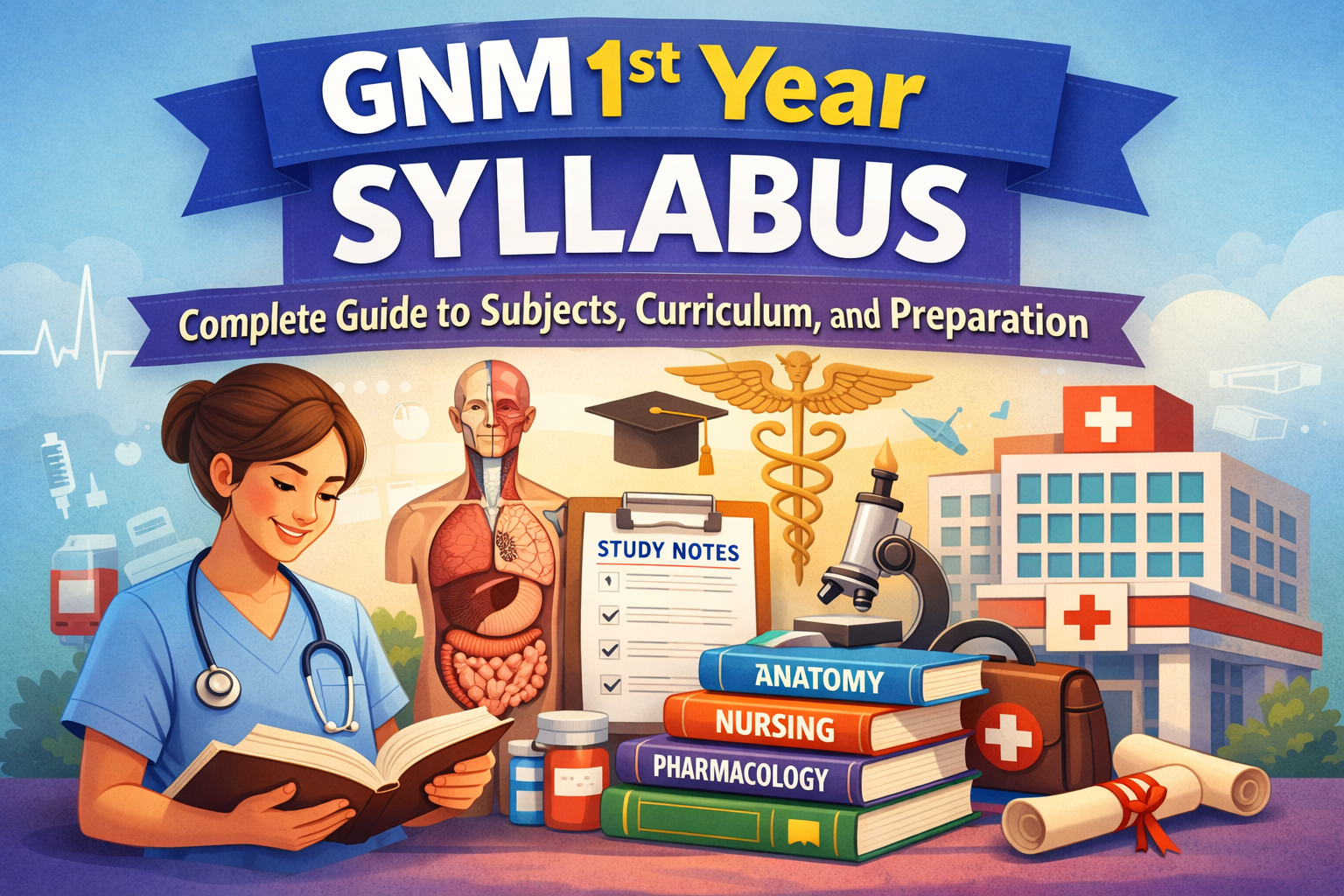
GNM 1st Year Syllabus: Complete Guide to Subjects, Curriculum, and Preparation
The GNM (General Nursing and Midwifery) 1st year syllabus forms the foundation of a nursing student’s professional journey. The first year introduces students to the basic concepts of nursing, human anatomy, physiology, and healthcare practices, which are essential for clinical training and patient care.
Understanding the GNM 1st year syllabus helps students prepare academically, manage practical training, and build the skills required for advanced nursing studies. This blog provides a detailed overview of GNM 1st year subjects, syllabus structure, preparation tips, and career relevance, making it a complete guide for nursing aspirants.
GNM 1st Year: Overview
The GNM 1st year is the initial academic phase of the 3.5-year General Nursing and Midwifery diploma course, including a mandatory internship. The first year mainly focuses on theoretical knowledge combined with basic clinical exposure.
During this year, students learn about the human body, fundamentals of nursing, nutrition, and behavioral sciences, which are essential for understanding patient care. The syllabus is designed as per Indian Nursing Council (INC) guidelines, though minor variations may exist across states and institutions.
GNM 1st Year Syllabus Overview
The GNM 1st year syllabus is designed to provide nursing students with strong theoretical knowledge and basic clinical skills. It focuses on understanding the human body, nursing fundamentals, nutrition, psychology, and social aspects of health, following guidelines prescribed by the Indian Nursing Council (INC).
The syllabus is divided into theory subjects and practical/clinical training, ensuring balanced academic and hands-on learning.
| Subject Name | Key Focus Areas | Nature of Subject |
| Anatomy & Physiology | Human body structure and functions | Theory |
| Microbiology | Microorganisms and infection control | Theory |
| Fundamentals of Nursing | Basic nursing care and procedures | Theory + Practical |
| Psychology | Human behavior and mental processes | Theory |
| Sociology | Society, culture, and health | Theory |
| Nutrition | Diet, nutrients, and patient care | Theory |
| Clinical Practice | Basic nursing skills in hospitals | Practical |
GNM 1st Year Subjects List
The GNM 1st year subjects are designed to build a strong foundation in nursing theory, patient care, and clinical skills. Below is the standard list of subjects taught in the first year of the General Nursing and Midwifery (GNM) course:
People Also Read
1. Anatomy and Physiology
Anatomy and Physiology is one of the most important subjects in the GNM 1st year syllabus. It helps students understand the structure of the human body (anatomy) and how different body systems function (physiology). A strong understanding of this subject is essential for safe and effective patient care and clinical practice.
- Introduction to Human Anatomy and Physiology – basic concepts, body organization, and levels of structure
- Cells and Tissues – structure of cells, types of tissues, and their functions
- Skeletal System – bones, joints, and functions of the skeleton
- Muscular System – types of muscles and muscle movements
- Cardiovascular System – heart, blood vessels, blood circulation
- Respiratory System – breathing process and gas exchange
- Digestive System – digestion, absorption, and nutrition
- Nervous System – brain, spinal cord, nerves, and coordination
- Endocrine System – hormones and gland functions
- Urinary System – kidney function and waste elimination
- Reproductive System – male and female reproductive organs
This subject forms the base for understanding diseases, treatments, and nursing interventions.
2. Microbiology
Microbiology focuses on microorganisms and their effects on human health. It helps nursing students understand how infections spread and how they can be prevented in healthcare settings.
- Introduction to Microbiology – scope and importance in nursing
- Types of Microorganisms – bacteria, viruses, fungi, and parasites
- Chain of Infection – sources, transmission, and prevention
- Sterilization and Disinfection Methods – physical and chemical methods
- Hospital-Acquired Infections (HAIs) – causes and prevention
- Immunity and Vaccines – body defense mechanisms
- Collection and Handling of Specimens – blood, urine, sputum, etc.
This subject is crucial for maintaining infection control and patient safety.
3. Fundamentals of Nursing
Fundamentals of Nursing is the core subject of the GNM 1st year. It introduces students to the basic principles, ethics, and skills of nursing practice required in hospitals and clinical settings.
- Introduction to Nursing – history, scope, and ethics of nursing
- Role and Responsibilities of a Nurse – professional conduct
- Personal Hygiene and Patient Comfort – daily patient care
- Bed Making and Patient Positioning – comfort and safety techniques
- Vital Signs – temperature, pulse, respiration, blood pressure
- Infection Control Practices – hand hygiene, isolation, waste management
- First Aid and Emergency Care – basic life-saving measures
- Care of Unconscious and Bedridden Patients
- Admission, Transfer, and Discharge Procedures
This subject prepares students for clinical duties and patient interaction.
4. Psychology
Psychology helps nursing students understand human behavior, emotions, and mental health, which is essential for providing compassionate and effective care.
- Introduction to Psychology – meaning and importance
- Growth and Development – physical, emotional, and mental development
- Intelligence and Personality – individual differences
- Learning and Memory – cognitive processes
- Emotions and Motivation – emotional responses and needs
- Stress, Frustration, and Coping Mechanisms
- Mental Health Awareness – basic concepts of mental wellbeing
This subject improves communication skills and emotional intelligence in nurses.
5. Sociology
Sociology explains how social and cultural factors influence health and illness. It helps nurses understand patients in the context of their family and community.
- Introduction to Sociology – society and social behavior
- Society, Culture, and Social Structure
- Family and Marriage Systems
- Social Problems – poverty, addiction, unemployment, illiteracy
- Community and Health – community health services
- Role of Nurses in Community Health
- Social Change and Health Programs
This subject supports community-based nursing and public health care.
6. Nutrition
Nutrition teaches the importance of proper diet and nutritional care for health maintenance and recovery from illness.
- Introduction to Nutrition – basic concepts
- Nutrients and Their Functions – carbohydrates, proteins, fats, vitamins, minerals
- Balanced Diet and Meal Planning
- Nutrition During Different Life Stages – infancy to old age
- Therapeutic Diets – diet during illness
- Nutrition in Illness and Recovery
- Food Hygiene and Safety
This subject helps nurses provide dietary guidance and nutritional support to patients.
| Subject | Focus / Importance | Detailed Syllabus Topics |
| Anatomy and Physiology | Helps students understand the structure and function of the human body; essential for safe and effective patient care. |
|
| Microbiology | Focuses on microorganisms and their effects on human health; crucial for infection control and patient safety. |
|
| Fundamentals of Nursing | Core nursing subject introducing principles, ethics, and skills for hospital and clinical settings. |
|
| Psychology | Helps understand human behavior, emotions, and mental health; improves communication and emotional intelligence. |
|
| Sociology | Explains social and cultural factors affecting health; supports community-based nursing and public health care. |
|
| Nutrition | Teaches proper diet and nutritional care for health maintenance and recovery. |
|
Download GNM 1st Year Syllabus PDF
Download PDF: GNM 1st Year Syllabus
GNM 1st Year Practical and Clinical Training
Along with theoretical learning, the GNM 1st year syllabus includes essential practical and clinical exposure to help students develop hands-on nursing skills. This practical training allows students to understand real hospital environments and apply classroom knowledge effectively.
Students are trained in:
- Basic nursing procedures such as bed making, monitoring vital signs, assisting with patient hygiene, and providing basic comfort care.
- Hospital ward routines, including maintaining cleanliness, following infection control protocols, assisting doctors and senior nurses, and managing daily ward activities.
- Patient observation and care, where students learn to monitor patients’ conditions, identify changes in health status, and provide appropriate nursing support.
- Maintaining records and reports, which includes documenting patient information, treatment details, and nursing care accurately and systematically.
These clinical postings help students apply theoretical knowledge in real healthcare settings, build professional confidence, and develop essential nursing skills required for future clinical responsibilities.
How to Prepare for GNM 1st Year Syllabus?
To perform well in the GNM 1st year syllabus, students should follow a planned and disciplined study approach along with regular practical training. Below are effective preparation tips to help nursing students succeed:
- Understand the GNM 1st year syllabus thoroughly and make a realistic study timetable
- Focus on concept clarity, especially in Anatomy, Physiology, and Fundamentals of Nursing
- Use diagrams and charts while studying anatomy for better retention
- Revise subjects like Microbiology and Nutrition regularly to avoid last-minute pressure
- Practice basic nursing procedures during lab and clinical sessions
- Maintain a practical notebook and revise procedures frequently
- Refer to standard nursing textbooks and notes recommended by instructors
- Attend clinical postings sincerely and observe senior nurses carefully
- Practice writing answers in simple and clear language for exams
- Solve previous years’ question papers to understand exam patterns
Consistent study, regular practice, and clinical exposure are key to mastering the GNM 1st year syllabus and building a strong nursing foundation.
FAQs
Q1. What subjects are included in the GNM 1st year syllabus?
The GNM 1st year syllabus includes Anatomy and Physiology, Microbiology, Fundamentals of Nursing, Psychology, Sociology, Nutrition, and mandatory practical and clinical training.
Q2. Is clinical training compulsory in GNM 1st year?
Yes, clinical training is compulsory in GNM 1st year, allowing students to apply theoretical knowledge in hospitals and develop essential nursing and patient-care skills.
Q3. Is the GNM 1st year syllabus the same across all colleges?
The GNM 1st year syllabus follows Indian Nursing Council guidelines, but minor variations may exist depending on state nursing councils and institutions.
Q4. Is Anatomy and Physiology difficult in GNM 1st year?
Anatomy and Physiology may seem challenging initially, but regular revision, diagram-based learning, and understanding concepts make it manageable for nursing students.
Q5. Can I download the GNM 1st year syllabus PDF online?
Yes, students can download the GNM 1st year syllabus PDF from official state nursing council websites or their college’s academic portal.
Q6. How should I prepare for GNM 1st year exams?
To prepare well, understand the syllabus, focus on fundamentals, attend clinical postings, revise regularly, and practice previous years’ question papers.
Q7. What is the importance of GNM 1st year syllabus?
The GNM 1st year syllabus builds core nursing knowledge, clinical skills, and professional discipline, forming a strong foundation for advanced nursing education and practice.