KSEAB Mandates Web-Streaming of II PU Practical Exams to Enhance Transparency
In a decisive move to strengthen transparency and accountability in the conduct of board examinations, the Karnataka School Examination and Assessment Board (KSEAB) has mandated web-streaming of all II Pre-University (PU) practical examinations across the state. The directive will apply to practical exams for science and vocational subjects conducted as part of the Class 12 board assessment process.
The decision is aimed at curbing malpractice, ensuring uniform evaluation standards, and restoring confidence in practical examination outcomes. According to board officials, live web-streaming will allow centralized monitoring of exams and ensure that prescribed guidelines are strictly followed at every examination centre.
Practical examinations form a critical component of the II PU evaluation system, particularly for subjects such as Physics, Chemistry, Biology, Computer Science, and Electronics. Over the years, concerns have been raised regarding inconsistencies between students’ practical and theory marks, with some candidates scoring exceptionally high in practicals while underperforming in written exams. The new monitoring mechanism seeks to address such discrepancies.
KSEAB 2026: How the Web-Streaming System Will Work?
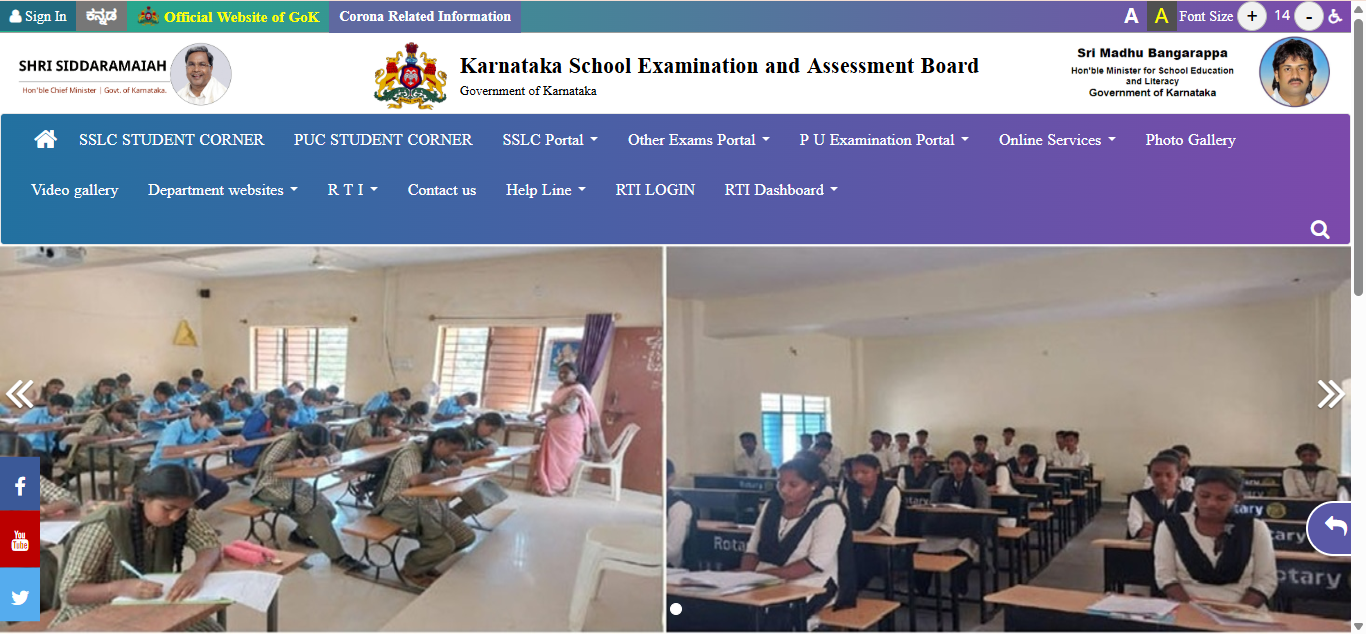
Official website: https://kseab.karnataka.gov.in/english
As per the guidelines issued by KSEAB, all colleges and institutions hosting II PU practical examinations must install cameras covering the entire laboratory or examination hall. The live feed will be streamed to a centralised digital platform accessible to authorised board officials and observers.
The cameras must capture students performing experiments, examiners conducting assessments, and the overall conduct of the exam. Institutions are required to ensure an uninterrupted power supply and stable internet connectivity during the examination period. Any centre failing to comply with the web-streaming requirement may face disciplinary action or disqualification from hosting practical exams.
The board has clarified that the streaming is meant solely for monitoring purposes and not for evaluating individual students’ performance in real time. However, recorded footage may be reviewed later in cases where irregularities or complaints are reported.
Objective Behind the Decision
KSEAB officials stated that the primary objective of web-streaming is to bring uniformity and fairness to practical assessments, which often rely heavily on internal and external examiners. By enabling real-time oversight, the board aims to prevent lenient marking, favouritism, or procedural lapses.
The move also aligns with broader efforts to digitise examination processes and adopt technology-driven solutions for quality assurance. Officials believe that increased transparency will benefit both students and institutions by ensuring that marks awarded genuinely reflect students’ skills and knowledge.
KSEAB Exam Online: Response from Students, Teachers, and Parents
The decision has generated mixed reactions among stakeholders.
Many students have welcomed the step, stating that it will reduce bias and ensure that sincere efforts in practical work are rewarded fairly. Some, however, expressed concern about increased pressure and nervousness due to constant camera monitoring during exams.
Teachers and examiners have largely acknowledged the intent behind the move but raised concerns about implementation challenges. Several educators pointed out that smaller colleges, especially in rural areas, may struggle with infrastructure requirements such as high-speed internet and adequate camera equipment. There are also apprehensions about technical disruptions affecting the smooth conduct of exams.
Parents, on the other hand, have broadly supported the initiative, viewing it as a necessary reform to protect merit and prevent inflated scoring. Many believe the move will enhance the credibility of II PU results, which play a crucial role in higher education admissions.
Implementation Challenges
Despite its potential benefits, the web-streaming mandate presents several challenges that will need careful handling.
Infrastructure gaps remain a major concern, particularly in remote areas where internet connectivity is unreliable. Institutions will need technical support and clear operational guidelines to ensure compliance without disrupting exam schedules.
Training of staff is another key requirement. Invigilators, lab assistants, and technical personnel must be adequately trained to manage equipment, troubleshoot issues, and ensure that streaming does not interfere with the examination process.
Data privacy and storage also require attention. With thousands of students appearing for practical exams, KSEAB will need strong protocols to safeguard video data, limit access to authorized personnel, and ensure recordings are used strictly for examination oversight.
A Step Toward Reforming Examination Practices
The web-streaming of II PU practical exams reflects a growing emphasis on accountability in public examinations. In recent years, education boards across the country have experimented with surveillance technologies, centralized monitoring, and digital verification to prevent malpractice and standardize evaluation.
KSEAB officials maintain that the new system is not intended to create fear among students but to reinforce fairness and professionalism in assessments. The board has indicated that feedback from institutions will be reviewed after the first phase of implementation to address operational concerns.







📰 More Education News
- NIOS April 2026 Exams Begin: Over 7,000 Centers Ready as Class 10 and 12 Theory Papers Kick OffApr 10, 2026 • Simran
- AP ICET Hall Ticket 2026 Releasing on April 15; Check Details HereApr 10, 2026 • Simran
- Anna University Extends TANCET 2026 Registration Deadline: Apply by April 15Apr 10, 2026 • Simran
- MP Board Ends “Supplementary” Stigma: Second Main Exam to Debut This MayApr 10, 2026 • Simran