Master of Fine Arts (MFA) 2026: Course, Colleges, Fees, Eligibility & Career Scope in India
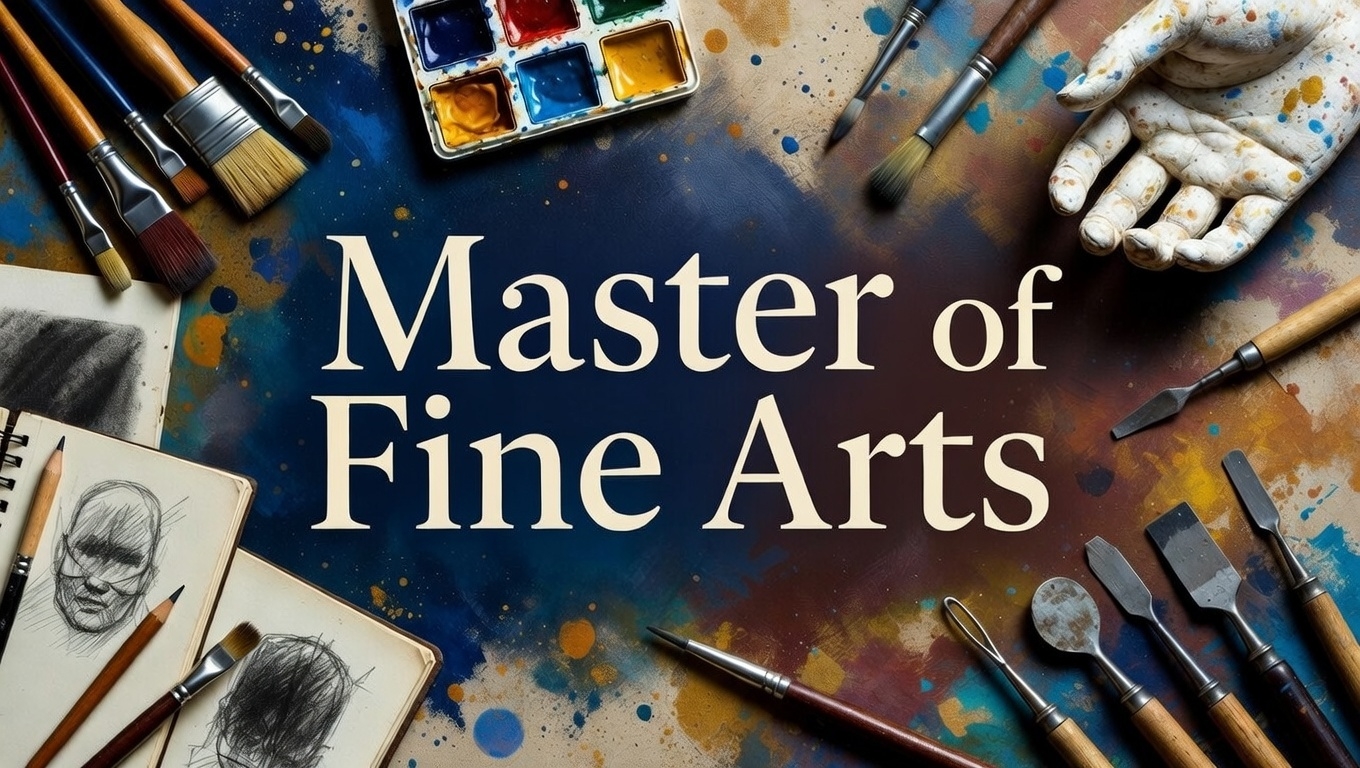
The Master of Fine Arts (MFA) is a professional postgraduate degree crafted for artists eager to refine their unique creative voice at an advanced level. Spanning disciplines like painting, sculpture, printmaking, photography, digital media, filmmaking, and applied arts, the MFA emphasizes intensive studio work, in-depth creative research, and the development of a standout professional portfolio.
🔔 Master of Fine Arts (MFA) 2026 Admission Alerts 2026
- Application Window: Many universities are currently accepting applications for MA Fine Arts Distance Education for the 2026-27 academic session.
- Course Duration: The Master of Fine Arts (MFA) is a two-year degree program.
- Eligibility: Students passionate about creativity, innovation, and cultural/artistic expression are best suited for the MFA.
- Career Scope: Research.com, a leading platform in the USA, provides fully updated options for MFA degree holders in 2026.
Before committing, aspiring artists often ask: Which institutions deliver the best value? What are the 2026 admission criteria? What are the realistic costs? And what career paths and earning potential await after graduation?
This full guide delivers straightforward, well-organized answers. Explore leading colleges in India, popular specializations, eligibility criteria, entrance exams, fee structures, detailed syllabus breakdowns, and the true professional scope of an MFA — both in India and internationally. If you’re ready to transform your passion for art into a viable career, keep reading — your professional journey starts here.
What is MFA?
A Master of Fine Arts (MFA) is a 2-year postgraduate degree focused on professional artistic practice in visual and performing arts. The program culminates in a thesis exhibition or performance that showcases expertise in a chosen specialization. MFA specializations include Painting, Sculpture, Applied Art, Printmaking, Photography, and Digital Art. Graduates can pursue careers as artists, curators, art directors, or educators. An MFA degree can provide a competitive edge in the growing Indian art market.
| Feature | Key Details |
|---|---|
| Degree Full Form | Master of Fine Arts |
| Degree Type | Postgraduate |
| Typical Duration | 2 years |
| Eligibility (India) | Bachelor’s degree in Fine Arts or related field |
| Common Entrance Exams (India) | University-specific entrance exams, Portfolio review |
| Average Annual Fees (India) | ₹1,000 to ₹14.7 Lakh (for MA, indicative for MFA) |
| Admission Process 2026 | Application, Entrance Exam, Portfolio Review, Interview |
| Career Options | Colleges, Art Academies, Cultural Departments, Museums, Digital Media, Creative Industries, Global Art Markets |
| Distance Education 2026 | Available for MA Fine Arts in 2026-27 |
| Ideal for | Students passionate about creativity, innovation, and cultural/artistic expression |
MFA Specialisations
Master of Fine Arts students can specialise in a range of subjects. Some of the common specialisation subjects are listed below along with descriptions:
| MFA Specializations |
|---|
| Painting: Exploring various techniques and mediums to create original artworks. |
| Sculpture: Creating three-dimensional artworks using materials like stone, metal, or wood. |
| Digital Art: Using computer software to create digital artworks, animations, or special effects. |
| Printmaking: Creating artworks using printing techniques like etching, lithography, or screen printing. |
| Photography: Capturing images using cameras, lighting, and composition techniques. |
| Applied Art: Applying artistic skills to commercial or practical purposes, like graphic design or illustration. |
| Filmmaking: Writing, directing, and producing films, including documentaries, shorts, or feature films. |
| Acting for Film: Training to become a professional actor for film, television, or theater. |
| Graphic Design: Creating visual communications using typography, color, and imagery. |
| Studio Art: Exploring various artistic mediums and techniques to create original artworks. |
MFA Eligibility
To be eligible for a Master of Fine Arts (MFA) program in India, candidates must satisfy the criteria laid by the respective university/ college. Some of the key eligibility criteria include:
- Bachelor’s Degree Requirement — A Bachelor of Fine Arts (BFA) degree or an equivalent undergraduate degree from a recognized university or institution. The degree should typically be in the relevant specialization for many programs.
- Minimum Marks/Aggregate — At least 50% aggregate marks (or equivalent grade) in the qualifying bachelor’s degree. Some institutions require 55%–60%, while reserved categories often get relaxations.
- Portfolio Submission — A strong portfolio of artwork demonstrating artistic skills, creativity, and aptitude is mandatory in most top institutions.
- Entrance Exam Qualification — Qualifying in relevant entrance exams such as CUET PG (for many central/state universities), university-specific tests (e.g., JMI Entrance Exam), or others, followed by portfolio review, practical test, and/or personal interview.
MFA Admission Process
Admission process for a Master of Fine Arts degree varies for every institutions. However, applicants typically go through the following stages:
Step 1: Check eligibility – Confirm you have a BFA or equivalent degree with the required minimum marks.
Step 2: Apply for the course – Visit the university/college website, fill out the application form, and upload/submit all required documents.
Step 3: Appear for entrance exam – Take and qualify in the relevant entrance test (CUET PG for many universities or the institution’s own entrance exam).
Step 4: Submit portfolio – Prepare and submit your artwork portfolio (digital upload or physical submission) showing your creative work and skills.
Step 5: Attend practical test / interview – Participate in the practical exam, viva-voce, or personal interview round as required by the institution.
Step 6: Check merit list – Wait for and view the shortlisted candidates list, which is prepared based on combined scores from entrance exam, portfolio, and interview.
Step 7: Complete admission formalities If selected, pay the admission fees, submit original documents, and confirm your seat to secure admission.
Popular Entrance Exams for MFA
Entrance exams like BHU PET and JNU, as well as university-specific exams, are a crucial part of the admission process. Some universities may also conduct interviews to assess your passion, dedication, and communication skills.
| MFA Entrance – Exam | Portfolio | Tentative Exam Dates |
|---|---|---|
| BHU – PET / CUET-PG (Banaras Hindu University) | Yes, typically aligns with CUET-PG portfolio requirements for MFA | Mid-March to Early April 2026 (tentative) |
| JNU (Jawaharlal Nehru University) – via CUET-PG | Yes, portfolio may be required as part of selection | 2nd to 4th week of March 2026 |
| University Specific Exams | Yes, portfolio required | Dates vary by university and are not centrally published for all programmes |
| TOEFL (Test of English as a Foreign Language) | Not applicable | Not a degree entrance date — ongoing test dates throughout the year |
| Portfolio Review (NYFA – New York Film Academy) | Yes | Portfolio review dates are individual and not publicly scheduled as a formal 2026 exam |
| Indiana State University MFA Application | Yes | N/A |
| University of Cincinnati | Yes | N/A |
| University of New Mexico | Yes | N/A |
Top Government MFA Colleges in India
Many government and private institutions in India offer Master of Fine Arts (MFA) programs. Top MFA colleges include MSU Baroda, Banaras Hindu University (BHU), Sir J. J. School of Art, Kala Bhavana, and Government College Chandigarh. These colleges offer specializations like Fine Arts, Painting, Sculpture, and Digital Art. Fees range from ₹10,000 per year at BHU to ₹1,50,000 per year at Amity University. Alumni from these colleges have achieved success as artists, writers, and filmmakers.
| Top Colleges – Fees | Specializations | Alumni |
|---|---|---|
| MSU Baroda – ₹15,000 per year | Fine Arts, Painting, Sculpture | Rasiklal Parikh, Bhupen Khakhar |
| Banaras Hindu University (BHU) – ₹10,000 per year | Fine Arts, Applied Arts | Satyajit Ray, Mrinal Sen |
| Sir J. J. School of Art – ₹20,000 per year | Fine Arts, Painting, Sculpture | Shankho Chaudhuri, Sudhir Patwardhan |
| Kala Bhavana – ₹25,000 per year | Fine Arts, Painting, Printmaking | Rabindranath Tagore, Nandalal Bose |
| Government College Chandigarh – ₹12,000 per year | Fine Arts, Applied Arts | Manjit Bawa, Arpana Caur |
| Amity University – ₹1,50,000 per year | Fine Arts, Digital Art, Filmmaking | Atul Bhalla, Anjali Monteiro |
| Lovely Professional University (LPU) – ₹1,20,000 per year | Fine Arts, Painting, Sculpture | Shiv Singh, Gurjeet Singh |
| Jamia Millia Islamia – ₹15,000 per year | Fine Arts, Applied Arts | MF Husain, SH Raza |
| College of Art, Delhi – ₹10,000 per year | Fine Arts, Painting, Sculpture | Ram Kumar, Jagdish Swaminathan |
| Faculty of Fine Arts, Mumbai – ₹20,000 per year | Fine Arts, Applied Arts | Tyeb Mehta, Akbar Padamsee |
MFA Syllabus
The MFA syllabus in India is divided into 2 years and 4 semesters. The program includes foundation courses in the first year and specialization and dissertation work in the second. Here is a year-wise and semester-wise breakdown of the MFA syllabus:
First Year (Semester 1&2)
| Semester 1 | Semester 2 |
|---|---|
| Advanced Studio Practice – I (Specialization-specific practical work, e.g., advanced painting, drawing, composition techniques) | Advanced Studio Practice – II (Deeper experimentation, developing personal style and series of artworks) |
| Art History & Aesthetics – I (Modern Indian & Western art movements, 19th–20th century) | Art History & Aesthetics – II (Post-modernism, global contemporary art, Indian modern masters) |
| Research Methodology in Visual Arts (Introduction to artistic research, documentation, critical analysis) | Critical Studies / Seminars (Group critiques, theory application to personal work) |
| Oriental / Indian Aesthetics – I (Indian art traditions, cultural influences) | Occidental / Comparative Aesthetics (Western aesthetics and cross-cultural comparisons) |
| Elective / Workshop – I (e.g., basic digital tools, printmaking introduction, or contemporary issues seminar) | Portfolio Preparation – I (Building mid-program portfolio, preliminary research proposal for thesis) |
Second Year (Semester 3&4)
| Semester 3 | Semester 4 |
|---|---|
| Advanced Studio Practice – III (Independent project development, thesis concept exploration in chosen medium/specialization) | Advanced Studio Practice – IV / Thesis Project (Major original body of artwork, final production and refinement) |
| Contemporary Art Issues / Theory (Seminars on current global/Indian art trends, society, culture, gender, politics in art) | Professional Practices (Gallery systems, art marketing, grants, residencies, copyright, ethics, career building) |
| Elective Specialization (Advanced topics like Installation Art, New Media, Photography, Curatorial Practices, Mural Design, or cross-disciplinary work) | Final Dissertation / Research Paper (Written thesis on artistic practice, context, influences, and methodology) |
| Research & Dissertation – I (Thesis proposal refinement, contextual research, preliminary writing linked to studio work) | Final Thesis Exhibition / Viva-Voce (Solo or group exhibition of thesis work + oral defense/interview with examiners) |
| Exhibition Preparation (Planning and organizing preview/group shows, curatorial aspects, documentation) | Portfolio Finalization (Professional portfolio compilation for jobs, galleries, PhD applications, or freelance) |
Subjects in MFA Course
MFA curriculum blends theoretical and practical courses, with 70% dedicated to studio practice, along with guest workshops and lectures. Here is a breakdown of the various theory, studio and research subjects taught in the course:
| Theory | Studio | Research |
|---|---|---|
| Art History and Appreciation | Painting, Sculpture, and Printmaking | Research Methodology and Dissertation |
| Aesthetics and Art Criticism | Graphic Design, Photography, and Digital Art | Thesis Preparation and Exhibition |
| Contemporary Art Trends | Ceramics, Textile Design, and Fashion | Art Education and Pedagogy |
| Indian Art and Culture | Exhibition Design and Curation | Art Conservation and Restoration |
| Western Art and Culture | Art Therapy and Counseling | Art Marketing and Promotion |
| Art and Architecture | Public Art and Sculpture | Art and Technology |
| Art and Literature | Printmaking and Book Arts | Art and Society |
| Art and Psychology | Ceramic Design and Pottery | Art and Culture |
| Art and Philosophy | Textile Design and Weaving | Art and History |
MFA Fees
MFA program fees vary depending on the specialization and institution. Government colleges typically charge between ₹10,000 to ₹30,000 per year (₹20,000 to ₹60,000 total), while private colleges can charge from ₹1 lakh to ₹3 lakhs per year. Material costs can range from ₹30,000 to ₹50,000 per year. Scholarships are available for meritorious students and those from SC/ST backgrounds through the MHRD or artist residencies.
- Government colleges: ₹10,000 to ₹30,000 per year
- Private colleges: ₹1 lakh to ₹3 lakhs per year
- Material costs: ₹30,000 to ₹50,000 per year
- Scholarships: Merit, SC/ST, MHRD, artist residencies
- MFA at KIIT: ₹14.91 lakhs
- MFA On Campus Program: ₹28.87 lakhs – ₹53.25 lakhs
- Stanford U M.F.A Art Practice: ₹28.87 lakhs
- Master program: ₹31.94 lakhs
Career & Job Roles After MFA
An MFA degree opens doors to various careers in the art industry, education, and media. MFA graduates can become professional artists, lecturers, art directors, and curators. Many also work as freelancers or start their own businesses. Career options include lecturer, art director, NFT artist, professor, ceramic designer, teacher, researcher, curator, and graphic designer. Each career requires specific skills and offers different salary ranges.
| Role/ Salary | Skills | Key Employers |
|---|---|---|
| Lecturer (₹5-12 LPA) | Teaching, Research, Communication, Subject Matter Expertise | Universities, Colleges |
| Art Director (₹8-20 LPA) | Creative Direction, Visual Communication, Leadership, Design Software Proficiency | Advertising Agencies, Design Firms, Publishing Houses |
| NFT Artist (Variable Income) | Digital Art Creation, Blockchain Technology, Marketing, Community Engagement | Online Marketplaces, Self-Employment |
| Professor (₹6-15 LPA) | Teaching, Research, Mentoring, Curriculum Development | Universities, Art Schools |
| Ceramic Designer (₹4-10 LPA) | Ceramic Art, Design, Technical Skills | Ceramic Studios, Art Galleries |
| Teacher (₹3-7 LPA) | Teaching, Art Techniques, Classroom Management | Schools, Other Educational Institutions |
| Researcher (₹4-8 LPA) | Research Methodologies, Data Analysis, Writing | Research Institutions, Universities |
| Curator (₹5-12 LPA) | Art History, Exhibition Design, Collection Management | Museums, Art Galleries |
| Graphic Designer (₹3-8 LPA) | Visual Communication, Design Software, Branding | Design Agencies, Marketing Departments |
MFA Salary
MFA salaries in India vary based on profession, experience, and industry. Starting salaries can range from ₹2.5-5L per annum. Here is a broad voaction-wise breakdown of salaries that MFA professionals can expect:
- Teachers: ₹5-12L per annum
- Art Directors: ₹8-20L per annum
- Freelance writers and designers: ₹20K-2L per project
- Graphic Designers: ₹3-6L per annum
- Ceramic Designers: ₹2-4L per annum
- Researchers: ₹4-8L per annum
- Writers: ₹2-5L per annum
Scope After MFA: PhD & Further Studies
After completing an MFA, a PhD in Fine Arts can lead to advanced career opportunities in academia, research, and professional practice. Universities like Jawaharlal Nehru University (JNU), Maharaja Sayajirao University of Baroda (MSU), and Banaras Hindu University (BHU) offer PhD programs in Fine Arts in India. The University Grants Commission (UGC) National Eligibility Test (NET) is mandatory for teaching positions. Artists can also apply for international residencies and fellowships such as the Inlaks Shivdasani Foundation, Fulbright, and Charles Wallace India Trust to further their practice and research.
| Further Options – PhD | Residencies | Fellowships |
|---|---|---|
| JNU PhD in Fine Arts | Khoj International Artist Residency | Inlaks Shivdasani Foundation Fellowship |
| MSU PhD in Fine Arts | Arthub Asia Residency | Fulbright Fellowship |
| BHU PhD in Fine Arts | Gasworks Residency | Charles Wallace India Trust Fellowship |
| UGC NET | Pro Helvetia Residency | University wide research fellowships |
| PhD in Studio Art | International Studio and Curatorial Program Residency | Ministry of Culture Fellowship |
| PhD in Art History | Camargo Foundation Residency | Lalit Kala Akademi Fellowship |
| PhD in Art Education | Rockefeller Foundation Bellagio Center Residency | India Foundation for the Arts Fellowship |
| PhD in Art Conservation | Asian Cultural Council Residency | Ravi Shankar Foundation Fellowship |
| PhD in Art Management | Japan Foundation Residency | Kiran Nadar Museum of Art Fellowship |
Course Comparison: MFA vs MVA
Master of Fine Arts (MFA) and Master of Visual Arts (MVA) are two prominent post-graduate courses for arts student. Here is a detailed side-by-side comparison between the two courses to help you make the right pick:
| Aspect | MFA (Master of Fine Arts) | MVA (Master of Visual Arts) |
|---|---|---|
| Full Form | Master of Fine Arts | Master of Visual Arts |
| Primary Focus | Advanced studio practice in fine/visual arts, creative production, personal artistic development | Advanced study in visual arts (painting, sculpture, applied arts, digital media, etc.), often with emphasis on visual culture and techniques |
| Scope | Typically includes fine arts (painting, sculpture, printmaking) along with applied arts, design, or broader creative fields | Strictly focused on visual arts disciplines (painting, sculpture, applied arts, photography, graphics, etc.) |
| Eligibility | BFA/BVA or equivalent in Fine/Visual Arts (min. 50% marks); entrance exam + portfolio/interview | BVA/BFA or equivalent in Visual/Fine Arts (min. 50% marks); entrance exam + portfolio/interview |
| Duration | 2 years (4 semesters) | 2 years (4 semesters) |
| Admission Process | Entrance-based (CUET PG/university test) with portfolio review & interview/practical test | Entrance-based (CUET PG/university test) with portfolio review & interview/practical test |
| Typical Specializations | Painting, Sculpture, Applied Arts, Printmaking, Graphics, Ceramics, Photography | Painting, Applied Arts, Sculpture, Graphic Design, Photography, Textile Design, Mural/Installation |
| Fees (Approx. In India) | Govt: ₹10,000–₹60,000
Private: ₹1–5 lakhs |
Govt: ₹10,000–₹60,000
Private: ₹1–5 lakhs |
| Career Paths | Professional artist, illustrator, art educator/lecturer, curator, designer, gallery professional, freelancer | Artist, designer, educator, curator, visual communicator, applied arts professional |
| Common Universities | BHU Varanasi, Jamia Millia Islamia, College of Art Delhi, Sir JJ School of Art | State universities like Bangalore University, MS University Baroda or SNDT, or specific branches like Applied Arts MVA |
Frequently Asked Questions (FAQs)
Q1. What is Master of Fine Art
Master of Fine Arts (MFA) is a 2-year postgraduate degree focused on advanced studio practice, artistic research, and professional development in visual arts specializations.
Q2. What are the specializations available in Master of Fine Arts?
The Master of Fine Arts specializations include Painting, Sculpture, Digital Art, Filmmaking, Acting for Film, Photography, Screenwriting, Ceramics, Graphic Design, Printmaking, and Studio Art.
Q3. What is the eligibility criteria for Master of Fine Arts admission?
To be eligible for Master of Fine Arts (MFA) admission in India, candidates need a BFA or equivalent degree with at least 50% marks, plus entrance exam qualification, portfolio submission, and interview.
Q4. What is the fee structure for Master of Fine Arts programs?
The Master of Fine Arts fees range from ₹1 Lakhs to ₹30+ Lakhs, with specific programs such as M.F.A Art Practice at Stanford University costing ₹28.87 Lakhs.
Q5. What are the potential career paths after completing a Master of Fine Arts degree?
After completing a Master of Fine Arts degree, potential career paths include Professor, Ceramic Designer, Teacher, Graphic Designer, Researcher, Filmmaker, Writer, Art Director and more.
Q6. What is the scope of MFA?
MFA degree holders can become professional artists, art educators/lecturers, curators, illustrators, designers, gallery professionals, freelancers, or pursue PhD and higher research in visual arts.
Q: What are the typical Master of Fine Arts (MFA) 2026 course fees in India for 2026 admissions?
The Master of Fine Arts (MFA) 2026 course fees in India vary significantly by institution. For government colleges, the annual fees can range from ₹30,000 to ₹1,00,000. Private universities, offering more specialized facilities, might charge between ₹1,50,000 and ₹4,00,000 per year. These figures are estimates for the 2026 academic year.
Q: What are the eligibility criteria and entrance exams for Master of Fine Arts (MFA) 2026 admissions in India?
To be eligible for Master of Fine Arts (MFA) 2026, candidates typically need a Bachelor’s degree in Fine Arts or a related field with a minimum of 50-55% aggregate marks. Many top colleges conduct their own entrance exams, often including a practical test, portfolio review, and an interview. Some universities might also consider national-level aptitude tests, though specific MFA exams are more common.
Q: Which are the top colleges for Master of Fine Arts (MFA) 2026 in India?
For Master of Fine Arts (MFA) 2026, some of the top colleges in India include Visva-Bharati University (Santiniketan), Faculty of Fine Arts (MSU Baroda), College of Art (Delhi University), and Sir J.J. School of Art (Mumbai). These institutions are renowned for their strong faculty, infrastructure, and historical legacy in fine arts education, attracting a high volume of applications annually.
Q: What is the career scope and average salary after Master of Fine Arts (MFA) 2026 in India in 2026?
The career scope after Master of Fine Arts (MFA) 2026 is diverse, including roles like professional artist, art curator, art restorer, art educator, graphic designer, or illustrator. The average starting salary for an MFA graduate in 2026 in India can range from ₹3.5 LPA to ₹7 LPA, depending on the specialization, portfolio strength, and the industry they enter.
Q: Can I pursue Master of Fine Arts (MFA) 2026 abroad after completing my bachelor’s in India?
Yes, pursuing Master of Fine Arts (MFA) 2026 abroad is a popular option for Indian students. Many international universities in countries like the USA, UK, Canada, and Germany offer excellent MFA programs. You’ll typically need a strong portfolio, letters of recommendation, a statement of purpose, and English proficiency test scores (e.g., IELTS 6.5+ or TOEFL 90+). Scholarships are available but competitive.
Q: What are the job roles and highest salary expectations for Master of Fine Arts (MFA) 2026 graduates in India?
Master of Fine Arts (MFA) 2026 graduates can secure roles such as Senior Graphic Designer, Art Director, Exhibition Designer, or even establish themselves as independent artists. While entry-level salaries average around ₹4 LPA, experienced professionals with a strong portfolio and network can command significantly higher. Top professionals in creative agencies or established artists can earn upwards of ₹15-20 LPA, especially after 5-7 years of experience.