Pursuing a medical degree in India is one of the most rewarding and respected career choices. India is home to some of the finest medical institutions known for their world-class education, experienced faculty, advanced research facilities, and exceptional clinical exposure.
These colleges offer a variety of programs, including MBBS, BDS, MD/MS, DM/MCh, and super-specialty courses. Choosing the right college is crucial as it shapes your medical career, determines your exposure to healthcare technologies, and opens global opportunities in medicine, research, and public health.
Top government medical colleges in India offer world-class medical education at highly affordable fees. The central or state government funds these institutions and provides excellent infrastructure, research opportunities, and clinical exposure.
College
Location
Total Fees (INR)
Average Placement / Internship Stipend (INR)
Top Recruiters / Hospitals
Entrance Exam
AIIMS Delhi
Delhi
₹7,640 (entire course)
₹25,000–₹30,000 per month
AIIMS Hospitals, Fortis, Apollo, NHS
NEET-UG
JIPMER Puducherry
Puducherry
₹1.5 lakh
₹22,000–₹28,000 per month
JIPMER, Apollo, CMC
NEET-UG
MAMC Delhi
Delhi
₹2,400 per year
₹25,000 per month
LNJP, AIIMS, Max Healthcare
NEET-UG
KGMU Lucknow
Lucknow, UP
₹2.8 lakh
₹20,000–₹25,000 per month
SGPGI, Medanta, AIIMS
NEET-UG
BJ Medical College
Ahmedabad
₹2 lakh
₹18,000–₹25,000 per month
Civil Hospital, Apollo
NEET-UG
Madras Medical College
Chennai
₹1.2 lakh
₹20,000–₹25,000 per month
Apollo, Stanley Medical College
NEET-UG
LHMC Delhi
Delhi
₹1.2 lakh
₹25,000 per month
AIIMS, Safdarjung
NEET-UG
Government Medical Colleges in India
Government medical colleges in India are prestigious institutions offering affordable education, strong faculty, modern hospitals, and exceptional patient exposure. These colleges produce top doctors and researchers every year.
College
Location
Total Fees (INR)
Courses Offered
Entrance Exam
AIIMS Delhi
Delhi
₹7,640
MBBS, MD/MS, MCh, DM
NEET-UG / INI-CET
JIPMER Puducherry
Puducherry
₹1.5 lakh
MBBS, MD/MS
NEET-UG
MAMC Delhi
Delhi
₹2,400 per year
MBBS, MD/MS
NEET-UG
KGMU Lucknow
Lucknow
₹2.8 lakh
MBBS, MD/MS, MDS
NEET-UG
BJ Medical College
Ahmedabad
₹2 lakh
MBBS, MD/MS
NEET-UG
Grant Medical College
Mumbai
₹4 lakh
MBBS, MD/MS
NEET-UG
LHMC Delhi
Delhi
₹1.2 lakh
MBBS, MD/MS
NEET-UG
Private Medical Colleges in India
Private medical colleges in India offer advanced infrastructure, modern laboratories, simulation centers, and global exposure. While the fees are higher, these colleges provide world-class training and high placement potential in India and abroad.
College
Location
Total Fees (INR)
Courses Offered
Entrance Exam
CMC Vellore
Tamil Nadu
₹1.6 lakh
MBBS, MD/MS, DM/MCh
NEET-UG
KMC Manipal
Karnataka
₹17–18 lakh
MBBS, MD/MS
NEET-UG
St. John’s Medical College
Bengaluru
₹6.3 lakh
MBBS, MD/MS
NEET-UG
Sri Ramachandra Institute of Higher Education
Chennai
₹25 lakh
MBBS, MD/MS, DM
NEET-UG
Amrita School of Medicine
Kochi, Kerala
₹20–22 lakh
MBBS, MD/MS
NEET-UG
DY Patil Medical College
Pune, Maharashtra
₹25–28 lakh
MBBS, MD/MS
NEET-UG
SRM Medical College
Kanchipuram, TN
₹22–25 lakh
MBBS, MD/MS
NEET-UG
Popular Medical Courses in India
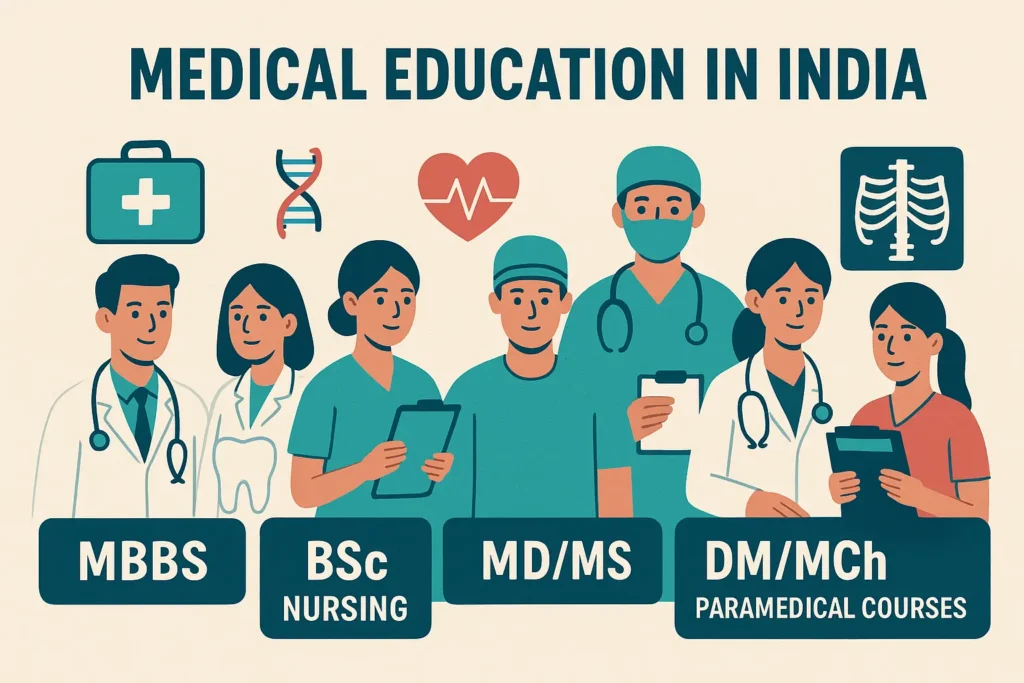
Medical education in India offers a wide range of undergraduate, postgraduate, and super-specialty programs, allowing students to choose based on their interests and career goals.
1. MBBS (Bachelor of Medicine and Bachelor of Surgery)
Duration: 5.5 years (including 1-year internship)
The foundational course for aspiring doctors covering anatomy, physiology, pathology, and clinical subjects.
2. BDS (Bachelor of Dental Surgery)
Duration: 5 years (including internship)
Focuses on dental science, oral health, and maxillofacial surgery.
3. BSc Nursing
Duration: 4 years
Prepares nurses for patient care, community health, and hospital administration.
4. MD/MS (Postgraduate Medical Programs)
Duration: 3 years
Specializations in Medicine, Surgery, Pediatrics, Dermatology, Radiology, etc.
5. DM/MCh (Super-Specialty Courses)
Duration: 3 years
Advanced courses after MD/MS in Neurology, Cardiology, Oncology, and more.
6. Paramedical Courses
Short-term courses in Medical Lab Technology, Radiography, Physiotherapy, etc.
Medical Entrance Exams in India
Admission to top medical colleges in India is based on national and institutional-level entrance exams. The most recognized ones include:
Exam
Description
Accepted By
NEET-UG (National Eligibility cum Entrance Test)
Mandatory for MBBS, BDS, and AYUSH courses across India.
All government & private medical colleges
NEET-PG
For postgraduate courses like MD, MS, and Diploma.
All medical colleges in India
INI-CET
Conducted by AIIMS for MD, MS, MCh, and DM admissions.
AIIMS, JIPMER, NIMHANS
AIIMS Nursing Entrance Exam
For BSc and MSc Nursing courses.
AIIMS campuses
AFMC Admission Process
Based on NEET-UG score + ToELR test and interview.
AFMC Pune
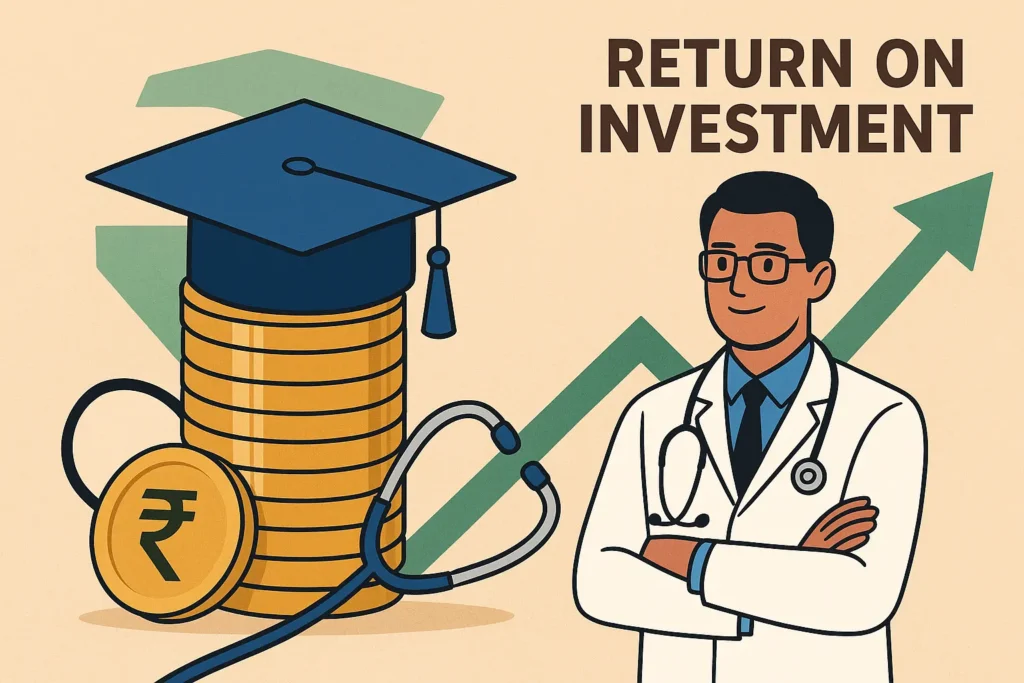
Medical Fees and ROI in India
Medical education costs vary widely between government and private institutions:
Government Colleges: ₹10,000 – ₹2 lakh (entire course)
Private Colleges: ₹15 – ₹50 lakh (entire course)
Deemed Universities: ₹30 – ₹1 crore (depending on specialization)
Return on Investment (ROI):
Despite high fees, MBBS and MD graduates earn significantly through residencies, hospital roles, or private practice.
Average starting salaries range between ₹10–25 LPA, and experienced specialists can earn ₹40 LPA+ in India or abroad.
Career Opportunities
After completing MBBS, students have a wide range of career paths to choose from.
The most common option is to pursue a postgraduate degree (MD or MS) in a chosen specialization such as Medicine, Surgery, Pediatrics, or Radiology. This helps doctors gain expertise and secure higher positions in hospitals or private practice.
Some MBBS graduates prefer working as Medical Officers or Junior Doctors in government or private hospitals to gain experience before pursuing further studies. Others choose careers in public health, medical research, or hospital administration, where they can work with healthcare organizations, NGOs, or research institutes.
In recent years, fields like medical writing, clinical trials, telemedicine, and healthcare technology have also opened new doors for MBBS graduates. Those interested in teaching can join medical colleges as lecturers after clearing the required exams.
Top Recruiters and Hospitals for Medical Graduates
MBBS graduates are in demand across top hospitals, healthcare chains, research institutions, and government sectors. Some of the most well-known recruiters for doctors in India include:
All India Institute of Medical Sciences (AIIMS)
Apollo Hospitals Group
Fortis Healthcare
Max Healthcare
Manipal Hospitals
Medanta – The Medicity
Tata Memorial Hospital
Narayana Health
Indian Armed Forces Medical Services
State and Central Government Hospitals
Apart from these, private clinics, diagnostic centers, and NGOs like the WHO and UNICEF also hire MBBS graduates for healthcare and community programs.
FAQs
1. What are the best career options after MBBS in India?
After MBBS, students can pursue MD/MS, work as medical officers, enter public health, research, hospital management, or prepare for exams like USMLE, PLAB, or UPSC CMS.
2. Can I get a government job after MBBS?
Yes, MBBS graduates can work as government doctors, medical officers, or in public health departments by clearing exams like UPSC CMS or state medical services.
3. Is it necessary to do an MD or an MS after MBBS?
No, it’s not compulsory. However, pursuing an MD or an MS helps in specialization, better career growth, and higher salaries in hospitals or private practice.
4. What are the highest-paying jobs after MBBS?
Specialist doctors, surgeons, radiologists, anesthesiologists, and doctors working abroad usually earn the highest salaries after MBBS, depending on experience and qualifications.
5. Can I work abroad after completing MBBS in India?
Yes, Indian MBBS graduates can work abroad after clearing exams like USMLE (USA), PLAB (UK), AMC (Australia), or MCCQE (Canada) for medical licenses.
6. What is the average salary of an MBBS doctor in India?
Fresh MBBS doctors earn around ₹6–12 lakh per year, while experienced specialists can earn ₹20–50 lakh annually, depending on hospital, location, and expertise.
7. Which government exams can I take after MBBS?
Popular exams include UPSC CMS, AIIMS PG, NEET PG, and state medical officer exams for positions in government hospitals and health departments.
8. What are non-clinical career options after MBBS?
MBBS graduates can explore careers in medical research, healthcare administration, medical writing, clinical data analysis, or teaching in medical colleges and universities.
9. Which are the top hospitals for MBBS graduates in India?
Top hospitals include AIIMS, Apollo, Fortis, Medanta, Max Healthcare, and Narayana Health, offering excellent training, experience, and salary packages for young doctors.
10. Can MBBS graduates start their own clinic?
Yes, MBBS graduates can open a private clinic after obtaining the necessary medical registration and local approvals from the respective state medical council.
Nishit Kumar is a senior EdTech industry leader with over a decade of experience in building and scaling education platforms. He was instrumental in building Collegedunia from the ground up, shaping its product, content, and growth strategy. At FindMyCollege, Nishit oversees content and editorial strategy, guiding topic selection, content frameworks to ensure accuracy, relevance, and student-first value across the website.