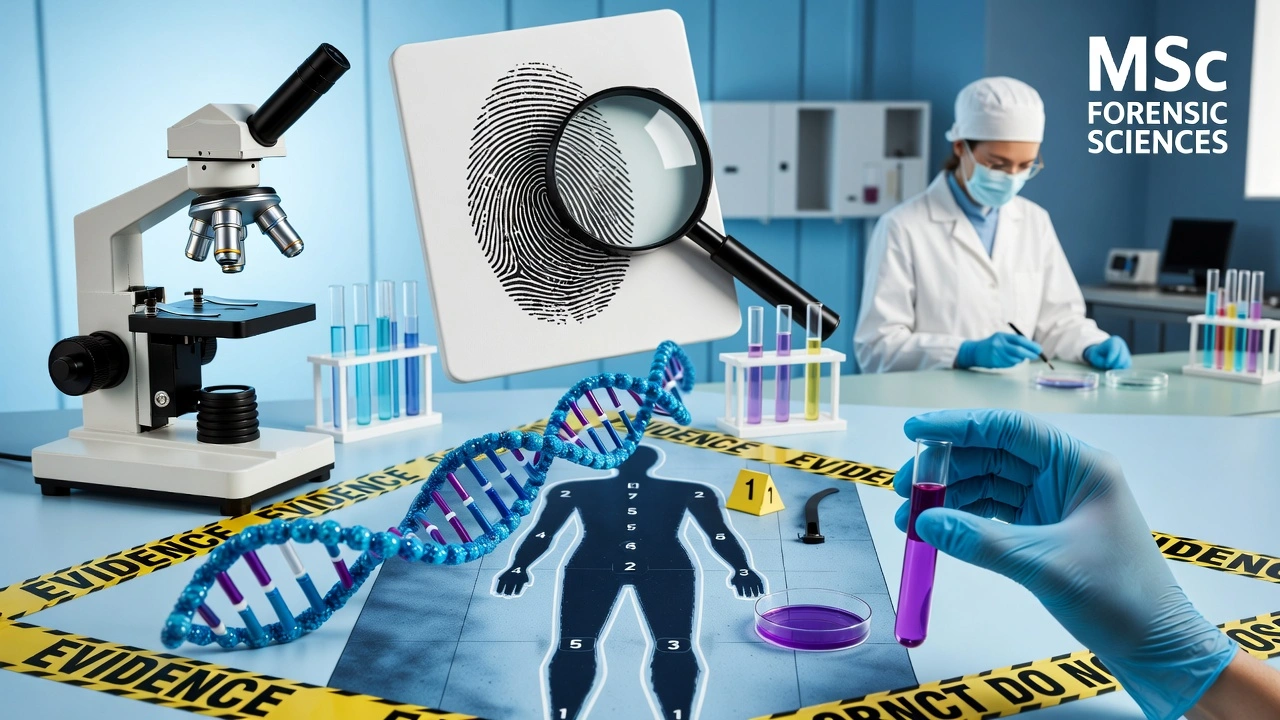
MSC Forensic Sciences 2026: Courses, Eligibility, Colleges, Career Paths
The global forensic science market is projected to experience significant growth by 2026. This growth is fueled by rising crime rates and technological advancements in DNA analysis and digital evidence recovery. An MSc in Forensic Sciences is becoming the standard qualification for professionals who want to use their scientific expertise to impact the justice system.
🔔 MSC Forensic Sciences 2026 Admission Alerts 2026
- Distance Education Deadline: NIILM University and Subharti University M.Sc Forensic Science online registration closes January 31, 2026.
- NFSU Gandhinagar Fees: M.Sc Forensic Science fees for 2026 range from ₹2 Lakhs – ₹3.6 Lakhs for the entire course duration.
- NFSU Gandhinagar Annual Fees: M.Sc Forensic Science annual fees at NFSU Gandhinagar are approximately ₹1 Lakh – ₹1.8 Lakhs per year for 2026.
- Distance Education Admissions Open: NIILM University and Subharti University M.Sc Forensic Science Distance Education admissions are ongoing as of January 20, 2026.
This postgraduate degree provides graduates with specialised skills in forensic biology, toxicology, digital forensics, and crime scene investigation. In these fields, precision is crucial and can determine guilt or innocence in courtrooms worldwide.
This article explores the landscape for 2026 aspirants. You’ll learn how specializations like forensic anthropology and ballistic analysis shape different career paths. You’ll also see why institutions from Michigan State to the University of Amsterdam emphasise practical laboratory training alongside theoretical knowledge.
Whether you’re a recent science graduate or a professional seeking a career change, understanding these pathways is essential for entering a field where scientific rigour meets societal accountability.
MSc Forensic Sciences Course Details
Forensic science is at the intersection of scientific inquiry and criminal justice. It is changing how India investigates and prosecutes crimes. As India deals with evolving criminal methods, such as cyber fraud and terrorism, the need for trained forensic professionals has increased.
An MSc in Forensic Sciences equips graduates with the analytical skills and technical expertise to:
- Serve as expert witnesses in Indian courts
- Support law enforcement agencies
- Advance the standards of evidence-based justice
This two-year postgraduate program is vital as India’s legal system recognises the role of scientific evidence in securing convictions and protecting the innocent.
The scope of an MSc in Forensic Sciences goes beyond traditional laboratory analysis. Indian institutions now offer diverse specializations that reflect current crime patterns.
Digital forensics is crucial, addressing India’s rising cybercrime, with over 65 lakh reported cases in 2024. Forensic biology remains foundational, training experts in DNA profiling for the National DNA Data Bank. Forensic chemistry prepares specialists to analyze narcotics, explosives, and toxic substances.
Other growing areas include:
- Forensic psychology (criminal profiling)
- Forensic anthropology (disaster victim identification)
- Forensic nursing (trauma-informed evidence collection)
These specializations allow graduates to align their expertise with specific sectors of India’s criminal justice system.
The core curriculum typically spans four semesters, integrating theory with hands-on laboratory training. You will master:
- Crime scene investigation protocols
- Evidence chain of custody procedures
- Advanced analytical techniques (spectroscopy, chromatography, and microscopy)
Programs at institutions like the National Forensic Sciences University in Gandhinagar and Amity University in Noida emphasize practical exposure through:
- Moot court simulations
- Internships with state forensic science laboratories
- Research projects aligned with real casework
The curriculum also addresses Indian legal frameworks, ensuring graduates understand the admissibility standards under the Bharatiya Sakshya Adhiniyam 2023 and can present findings effectively in judicial proceedings.
MSc Forensic Science Syllabus
MSc Forensic Science Eligibility 2026
To get admission to an MSc Forensic Science program in India, you need to meet specific eligibility requirements. These requirements are designed to identify students with strong scientific backgrounds.
Forensic science demands precision, analytical skills, and multidisciplinary knowledge. Admission committees evaluate these qualities through academic criteria.
Understanding these requirements allows you to prepare strategically. You can:
- Strengthen your undergraduate performance
- Select appropriate prerequisite courses
- Target specific entrance examinations
For Indian students considering programs at institutions like the National Forensic Sciences University in Gandhinagar or Amity University in Noida, meeting eligibility benchmarks is the first step toward a career in criminal investigation, laboratory analysis, or legal consultancy.
The main requirement is a relevant bachelor’s degree from a recognised institution. You need qualifications such as:
- BSc Forensic Science
- BSc Chemistry
- BSc Biology
- BSc Physics
- BSc Biochemistry
- BSc Zoology
- BSc Botany
- BSc Microbiology
- BPharmacy
Some institutions also accept graduates from BSc Biotechnology, BSc Life Sciences, and BSc Medical Laboratory Technology. The key is the inclusion of core science subjects, especially chemistry and biology, during undergraduate study. Programs like those at Panjab University in Chandigarh and Osmania University in Hyderabad require that you have studied chemistry as a principal subject for at least two years during your bachelor’s program.
The minimum percentage varies between institutions and reservation categories. Most central universities and premier institutes require a minimum of 50% aggregate marks or an equivalent CGPA. Competitive programs at institutions like Gujarat Forensic Sciences University often see cutoffs rise to 55% or higher for general category candidates.
The University Grants Commission guidelines ensure that reserved category candidates (Scheduled Castes, Scheduled Tribes, Other Backward Classes, Economically Weaker Sections, and Persons with Disabilities) receive a relaxation of 5% in the minimum qualifying marks. This means SC/ST candidates typically need 45% aggregate, while OBC-NCL and EWS candidates may qualify with 47.5%, depending on institutional norms.
MSc Forensic Science Entrance Exams
Entrance examinations are another important eligibility component. Most Indian universities conduct their own admission tests.
- The National Forensic Sciences University uses the NFSU Common Entrance Test (CET), held annually between April and June.
- Delhi University’s Department of Anthropology accepts scores from the Common University Entrance Test (CUET) PG.
- Anna University in Chennai conducts the TANCET for its MSc Forensic Science program.
Private universities, including Amity, Chandigarh University, and LPU, administer institutional entrance tests and personal interviews. You should monitor application windows carefully. Most 2026 admissions will open between December 2026 and March 2026, with entrance examinations scheduled for May-July 2026.
Beyond academic credentials, some programs have specific subject prerequisites and additional requirements. If you lack formal laboratory training, you may need to complete bridge courses in analytical techniques or instrumentation. Some institutions require submission of research proposals or statements of purpose outlining career objectives in forensic science. Physical fitness certificates are mandatory for programs emphasising crime scene investigation fieldwork.
International students must:
- Obtain equivalence certificates from the Association of Indian Universities
Demonstrate English proficiency through IELTS (minimum 6.0) or TOEFL (minimum 80) scores - Certain specialized tracks, such as forensic psychology or digital forensics, may prefer candidates with relevant work experience or certifications in psychology or information technology.
MSc Forensic Sciences Specialisations and Core Areas 2026
The MSc Forensic Sciences curriculum in 2026 offers diverse specialisations, each addressing different aspects of criminal investigation and legal proceedings. Selecting the right specialisation is important, as it shapes your career, earning potential, and professional satisfaction.
The field has evolved with technology, creating specialised domains that demand specific skills and knowledge. Digital Forensics is a high-growth area driven by cybercrime, while traditional disciplines like Forensic Biology and Forensic Chemistry remain the investigative backbone of crime laboratories.
You should evaluate your scientific aptitudes, technological comfort, and career aspirations when choosing a specialisation. Each specialisation opens pathways into:
- Government forensic laboratories
- Private investigation firms
- Research institutions
- Corporate security divisions
The table below lists the thirteen primary specialisations available within Indian MSc Forensic Sciences programs, detailing their characteristics and professional outcomes.
| Degree Full Form | Master of Science in Forensic Sciences |
| Degree Type | Postgraduate Degree |
| Typical Duration | 2 years |
| Eligibility (India) | B.Sc. in Forensic Science or related field (specifics vary by college) |
| Common Entrance Exams (India) | CUET 2026 (for JNU), NFSU Entrance Exam 2026 |
| Average Annual Fees (India) | ₹ 1 Lakh – ₹ 1.8 Lakhs |
| Average Starting Salary (India) | ₹ 3.5 – ₹ 6 LPA |
| Career Options | Forensic Scientist, DNA Analyst, Digital Forensic Investigator, Forensic Chemist |
| Admission Status 2026 | Ongoing (NIILM University, Subharti University) |
| Application Deadline 2026 | January 31, 2026 (for some distance education programs) |
The specialisation landscape for MSc Forensic Sciences in 2026 reflects investigative needs and technological demands. Digital Forensics and Forensic Biology have the strongest placement records and salary premiums, driven by cybercrime growth and the application of DNA databases.
If you are inclined toward laboratory precision, prioritise Forensic Chemistry or Toxicology. If you are drawn to field investigation, you may find fulfilment in Crime Scene Investigation or Bloodstain Pattern Analysis.
Examine the infrastructure, faculty expertise, and industry connections of your target institutions, as practical training quality varies across Indian universities. Alignment between personal aptitude and specialisation requirements determines long-term career sustainability in this profession.
Top MSc Forensic Science Colleges in India 2026
Selecting the right institution for your MSc Forensic Science degree is a crucial decision that shapes your career in this specialised field.
Faculty expertise is the foundation of quality education. Experienced forensic scientists and researchers bring real-world case experience into classrooms and laboratories.
You must evaluate research opportunities offered by universities. Hands-on involvement in forensic projects enhances employability and prepares graduates for complex criminal investigations.
Placement records indicate an institution’s industry connections and its ability to secure positions in:
- Central forensic laboratories
- Police departments
- Private detective agencies
- Corporate security divisions
Additional factors include:
- modern laboratory infrastructure
- Collaborations with law enforcement agencies
- Availability of specialised tracks (DNA analysis or cyber forensics)
- The institution’s reputation within India’s forensic science community
The following table presents India’s leading institutions offering MSc Forensic Science programs for 2026, with details on their programs, features, admission criteria, and fee structures.
| College Name | Location | Program Offered | Key Features | Admission Requirements | Fees |
|---|---|---|---|---|---|
| National Forensic Sciences University | Gandhinagar, Gujarat | MSc Forensic Science with specializations in DNA Profiling, Cyber Forensics, and Toxicology | Dedicated forensic university, 37 specialized laboratories, MOUs with CBI, NIA, and state police forces, integrated PhD pathways | BSc in relevant science discipline with minimum 55% marks, NFSU entrance examination, followed by personal interview | INR 1,50,000 per year |
| All India Institute of Medical Sciences | New Delhi, Delhi | MSc Forensic Science and Toxicology | Attached to premier medical hospital, extensive autopsy facilities, renowned forensic pathologists, active medico-legal case exposure | BSc degree with minimum 60% marks, AIIMS PG entrance examination, merit-based selection | INR 1,08,000 per year |
| Lok Nayak Jayaprakash Narayan National Institute of Criminology and Forensic Science | New Delhi, Delhi | MSc Forensic Science | Government-funded institute, direct training for police and judiciary, established 1972, strong government placement network | BSc in science stream with minimum 50% marks, institute-level entrance test, document verification | INR 45,000 per year |
| Punjab University | Chandigarh, Chandigarh | MSc Forensic Science and Criminology | NAAC A+ accredited, integrated criminology focus, collaboration with Punjab Police forensic labs, research-oriented curriculum | Bachelor’s degree in science with minimum 50% marks, PU-CET PG entrance examination | INR 62,000 per year |
| Osmania University | Hyderabad, Telangana | MSc Forensic Science | Oldest forensic science department in India (1955), strong alumni network in Telangana and Andhra Pradesh forensic labs, extensive field training | BSc with chemistry or forensic science, OUCET entrance examination, counseling process | INR 28,000 per year |
| Banaras Hindu University | Varanasi, Uttar Pradesh | MSc Forensic Science | Central university status, NIRF top 10 ranking, dedicated forensic museum, collaboration with Varanasi Police and courts | BSc degree with minimum 50% marks, BHU PET entrance examination, reservation as per norms | INR 35,000 per year |
| University of Madras | Chennai, Tamil Nadu | MSc Forensic Science | Sophisticated instrumentation centre, tie-ups with Tamil Nadu Forensic Sciences Department, coastal forensics research focus | BSc in relevant discipline, TANCET or university entrance test, merit-based admission | INR 42,000 per year |
| Gujarat Forensic Sciences University | Gandhinagar, Gujarat | MSc Digital Forensics and Information Security | Specialised cyber forensics infrastructure, collaboration with CERT-In and cybersecurity agencies, and industry certification programs | BSc in computer science or IT with minimum 55% marks, GFSU entrance examination | INR 1,75,000 per year |
| Savitribai Phule Pune University | Pune, Maharashtra | MSc Forensic Science | Proximity to Mumbai forensic laboratories, strong industry interface, focus on questioned document examination and fingerprint analysis | BSc degree with minimum 50% marks, SPPU entrance test, followed by group discussion | INR 55,000 per year |
| Amity University | Noida, Uttar Pradesh | MSc Forensic Science | Modern crime scene simulation laboratory, international faculty exchange programs, semester-long internships with private forensic agencies | BSc in science stream, Amity entrance test, personal interview, minimum 50% aggregate | INR 1,20,000 per year |
| Manipal Academy of Higher Education | Manipal, Karnataka | MSc Forensic Science | Deemed university status, advanced molecular biology labs, collaboration with Manipal Hospitals for clinical toxicology exposure | BSc degree with minimum 50% marks, MET entrance examination, merit-based selection | INR 2,10,000 per year |
| Dr. Harisingh Gour Vishwavidyalaya | Sagar, Madhya Pradesh | MSc Forensic Science | Central university with affordable education, forensic anthropology research centre, tribal and rural crime pattern studies | BSc in science discipline, university entrance examination, counseling | INR 18,000 per year |
| University of Kerala | Thiruvananthapuram, Kerala | MSc Forensic Science | Coastal and marine forensics specialization, collaboration with Kerala Police, tropical toxicology research focus | BSc with chemistry or biochemistry, KU CAT entrance examination, rank-based admission | INR 32,000 per year |
| Calcutta University | Kolkata, West Bengal | MSc Forensic Science | Historic institution with forensic science department since 1959, strong connect with West Bengal Forensic Science Laboratory, heritage conservation forensics | BSc degree with minimum 50% marks, CU CET entrance examination, interview | INR 25,000 per year |
Forensic science education in India offers diversity, from the National Forensic Sciences University with its government connections to affordable programs at central universities like Dr. Harisingh Gour Vishwavidyalaya.
If you prioritize research, target institutions with active PhD programs and publication records. If you seek immediate employment, consider NFSU, LNJN NICFS, or state university programs with established police department networks.
Fee structures vary from INR 18,000 to INR 2,10,000 annually, making education accessible across economic segments. You must align your specialization interests (DNA analysis, digital forensics, toxicology, or crime scene investigation) with institutional strengths and verify accreditation status before finalizing your choices for 2026 admissions.
MSc Forensic Science Career Prospects
Completing an MSc in Forensic Sciences in 2026 opens doors to career opportunities across India’s criminal justice system. With the modernisation of law enforcement agencies, the establishment of forensic laboratories in every state, and the integration of scientific evidence in judicial proceedings, the demand for forensic professionals has increased.
You can find employment in government sectors such as the Central Bureau of Investigation (CBI), state police departments, and forensic science laboratories. You can also find opportunities in private domains, including corporate fraud investigation, cybersecurity firms, and independent consulting.
The forensic science sector in India is projected to witness workforce expansion, driven by policy reforms emphasising scientific evidence collection and the digitisation of criminal records. Whether your specialisation is biological analysis, chemical examination, or digital evidence recovery, the career field offers stability and intellectual challenge for those committed to advancing justice through scientific rigour.
Below is a list of roles available to MSc Forensic Science graduates in India, detailing responsibilities, competencies, and compensation structures.
| Job Title | Description | Responsibilities | Required Skills | Salary Range |
|---|---|---|---|---|
| Forensic Scientist | Core laboratory professional who examines physical evidence from criminal cases using scientific methodologies to establish facts for legal proceedings. | Performing chemical and biological analyses on evidence samples; operating sophisticated instrumentation including GC-MS and FTIR spectrometers; maintaining chain of custody documentation; preparing detailed technical reports for court submission; presenting expert testimony in district and high courts. | Analytical chemistry, microscopy techniques, quality assurance protocols, statistical analysis, technical report writing, and courtroom presentation skills. | INR 6-10 LPA |
| Crime Scene Investigator | Field operative responsible for systematic documentation and collection of physical evidence at locations where criminal activities have occurred. | Photographing and sketching crime scene layouts; collecting fingerprints, DNA samples, and trace evidence; preserving biological specimens under proper refrigeration; reconstructing sequence of events; coordinating with forensic laboratory for evidence transfer. | Crime scene photography, latent fingerprint development, bloodstain pattern interpretation, evidence packaging protocols, attention to minute details, physical stamina for fieldwork. | INR 4.5-8 LPA |
| Forensic Analyst | Specialized technician focused on specific evidence categories such as toxicology, serology, or questioned documents within dedicated laboratory units. | Processing toxicological samples for drug and poison identification; analysing bodily fluids for DNA profiling; examining documents for forgery detection; calibrating and maintaining analytical instruments; participating in proficiency testing programs. | Chromatographic techniques, spectroscopic analysis, DNA extraction protocols, forensic software utilization, laboratory information management systems, method validation procedures. | INR 5.5-9 LPA |
| DNA Analyst | Molecular biology specialist who extracts, amplifies, and interprets genetic material to establish identity or biological relationships in criminal and civil cases. | Performing DNA extraction from blood, saliva, and tissue samples; conducting PCR amplification and capillary electrophoresis; analysing STR profiles against CODIS databases; calculating statistical significance of matches; drafting DNA examination reports for paternity and criminal identification cases. | Molecular biology techniques, PCR optimization, genetic analyzer operation, population genetics statistics, contamination prevention protocols, bioinformatics tools. | INR 7-12 LPA |
| Digital Forensic Investigator | Cybersecurity professional who recovers, preserves, and analyzes electronic evidence from computers, mobile devices, and network systems. | Creating forensic images of storage media without altering original data; recovering deleted files and browsing histories; analyzing malware and intrusion artifacts; documenting digital evidence handling procedures; assisting prosecution in cybercrime cases including financial fraud and data theft. | EnCase and FTK forensic suites, mobile device forensics, network packet analysis, cryptography fundamentals, chain of custody for digital evidence, Indian IT Act provisions. | INR 8-15 LPA |
| Toxicologist | Specialist in detecting and quantifying drugs, alcohol, and poisons in biological specimens to determine impairment or cause of death. | Processing blood and urine samples for ethanol and drug screening; performing confirmatory testing using LC-MS/MS; interpreting postmortem toxicology results; advising medical examiners on substance-related fatalities; maintaining controlled substance reference standards. | Analytical toxicology, pharmacokinetic principles, mass spectrometry interpretation, therapeutic versus toxic concentration differentiation, quality control procedures. | INR 6.5-11 LPA |
| Forensic Ballistics Expert | Firearms identification specialist who examines weapons, ammunition, and projectile evidence to link shooting incidents to specific firearms. | Test-firing submitted weapons for comparison microscopy; analyzing gunshot residue patterns on clothing and skin; determining shooting distances from powder tattooing; reconstructing bullet trajectories at crime scenes; presenting findings in armed robbery and homicide prosecutions. | Comparison microscopy, firearm classification systems, trajectory analysis software, ammunition identification, gunshot wound interpretation, 3D imaging technology. | INR 5.5-9.5 LPA |
| Forensic Document Examiner | Handwriting and document analysis expert who verifies authenticity of signatures, detects alterations, and identifies printing processes. | Comparing questioned signatures against known exemplars using stereomicroscopes; detecting chemically altered documents through infrared examination; analyzing ink formulations by thin-layer chromatography; determining sequence of intersecting strokes; dating documents through physical and chemical changes. | Handwriting identification principles, microscopy techniques, ink chemistry, paper fiber analysis, electrostatic detection apparatus operation, forensic photography. | INR 5-8.5 LPA |
| Forensic Anthropologist | Skeletal biologist who examines human remains to establish biological profile and assist in personal identification when soft tissue has decomposed. | Analyzing skeletal remains for age, sex, ancestry, and stature estimation; identifying antemortem trauma and perimortem injuries; collaborating with forensic odontologists for dental comparisons; estimating postmortem interval from bone degradation; participating in mass disaster victim identification operations. | Osteology, skeletal measurement techniques, forensic archaeology, taphonomic processes, facial reconstruction methods, statistical classification, CRM software for missing persons databases. | INR 6-10 LPA |
| Research Scientist | Academic or institutional researcher advancing forensic methodologies through empirical studies and technology development. | Designing experiments to validate new analytical techniques; publishing peer-reviewed research in journals like Forensic Science International; securing funding from DST and DBT grants; supervising postgraduate student research; collaborating with police laboratories for technology transfer. | Research methodology, grant writing, statistical experimental design, scientific publishing, mentorship capabilities, interdisciplinary collaboration, intellectual property management. | INR 7-14 LPA |
| Forensic Consultant | Independent expert providing specialized examination services and testimony for legal firms, insurance companies, and private investigations. | Reviewing case materials from retained legal counsel; conducting independent laboratory analyses outside government systems; preparing expert opinion reports for civil litigation; delivering deposition and trial testimony; advising on forensic evidence interpretation for defense and prosecution teams. | Case file management, independent laboratory operations, legal procedure knowledge, expert witness testimony techniques, conflict of interest management, business development for practice. | INR 10-25 LPA |
| Quality Control Officer | Compliance professional ensuring forensic laboratories meet accreditation standards and maintain analytical reliability. | Implementing ISO/IEC 17025 quality management systems; conducting internal audits of examination procedures; investigating analytical errors and implementing corrective actions; managing proficiency testing programs; preparing documentation for NABL accreditation assessments. | Quality management systems, audit techniques, statistical process control, root cause analysis, documentation control, laboratory safety regulations, metrology fundamentals. | INR 6-11 LPA |
| Forensic Odontologist | Dental specialist applying oral and maxillofacial knowledge to human identification and bite mark analysis. | Comparing postmortem dental radiographs with antemortem records for disaster victim identification; analyzing patterned injuries for human versus animal origin; age estimation from dental development in juvenile remains; presenting dental evidence in mass fatality incidents; maintaining dental identification databases. | Dental radiography interpretation, comparative dental anatomy, bite mark photography, 3D scanning technology, disaster victim identification protocols, forensic pathology collaboration. | INR 8-16 LPA |
| Wildlife Forensic Specialist | Conservation-focused scientist identifying illegally traded animal products and prosecuting wildlife crimes under Indian environmental laws. | Identifying species origin from seized bones, horns, and ivory using DNA barcoding; determining geographical source populations through isotope analysis; assisting forest departments in poaching investigations; preparing wildlife crime reports for National Tiger Conservation Authority; testifying in cases under Wildlife Protection Act. | Molecular taxonomy, species identification markers, CITES regulations, wildlife biology, conservation genetics, forensic entomology for carcass aging, environmental law familiarity. | INR 5.5-9 LPA |
| Forensic Psychologist | Mental health professional assessing criminal behavior, competency, and risk within legal and correctional contexts. | Conducting psychological evaluations for insanity defense determinations; performing violence risk assessments for parole hearings; interviewing suspects for criminal profiling; treating offenders in correctional facilities; providing expert testimony on mental state at time of offense. | Clinical psychological assessment, risk assessment instruments, criminal behavior theories, psychometric testing, correctional psychology, report writing for legal audiences, RCI registration. | INR 7-13 LPA |
The salary ranges reflect 2026 compensation standards across government forensic laboratories, central investigative agencies, and private sector employers in metropolitan centers like Delhi, Mumbai, and Bangalore.
Entry-level positions in state forensic science laboratories typically offer structured pay scales with regular increments. Specialized roles in digital forensics and independent consulting command premium compensation reflecting scarcity of qualified professionals.
You should align your specialization choices with emerging demand areas, specifically cybersecurity forensics and wildlife crime investigation, while maintaining flexibility to transition between sectors as career opportunities evolve.
MSc Forensic Science Abroad 2026
Indian students seeking to enhance their forensic science credentials are looking beyond domestic institutions to international universities that offer advanced technologies, innovative research facilities, and exposure to diverse criminal justice systems. The year 2026 presents opportunities for aspiring forensic scientists to gain global perspectives, with universities in the United Kingdom, United States, Canada, Australia, and Europe recruiting Indian talent.
These programs provide access to laboratory infrastructure and open pathways to international careers with organizations like Interpol, the United Nations Office on Drugs and Crime, and private forensic consultancies. For Indian students, overseas education translates to enhanced earning potential and expertise in fields such as digital forensics and forensic genomics.
The United Kingdom remains a popular destination for Indian forensic science students in 2026, offering one-year master’s programs that reduce time and financial investment. University College London charges international students approximately ₹34.5 lakh for its MSc Crime and Forensic Science program, while King’s College London charges ₹33.8 lakh.
The UK’s Graduate Route visa permits students to remain for two years post-study to seek employment. Visa requirements include:
* A confirmed place at a licensed sponsor institution
* Proof of financial capacity (roughly ₹12 lakh in maintenance funds)
* English language proficiency through IELTS or TOEFL
British universities excel in forensic anthropology and DNA analysis, with collaborations with Scotland Yard providing practical exposure.
The United States offers research opportunities, though at higher cost and longer duration. University of Florida and Michigan State University represent value at roughly ₹25-30 lakh annually for out-of-state students, with programs spanning two years.
The US F-1 student visa requires documentation including:
* SEVIS fee payment
* Financial proof covering tuition and living expenses
* Personal interviews at consulates
American institutions dominate in forensic chemistry, toxicology, and ballistics, with federal laboratory partnerships at the FBI and DEA offering internship possibilities. You must evaluate the Optional Practical Training limitations and H-1B visa uncertainties when planning career trajectories.
Australia and Canada have emerged as alternatives combining education with immigration policies. University of Technology Sydney charges nearly ₹26.5 lakh annually, while Griffith University in Brisbane costs ₹24.8 lakh. Canada’s University of Toronto ranges between ₹20-28 lakh for international science programs.
Both nations offer post-study work permits extending two to three years, with Canada providing pathways to permanent residency through its Express Entry system.
Scholarships are critical for Indian applicants, with options including:
- Commonwealth Scholarships: Full funding for UK master’s programs, covering tuition, living expenses, and airfare
- Australia Awards: Scholarships for Indian students demonstrating leadership potential
- Vanier Canada Graduate Scholarships: ₹10 lakh annually for doctoral-bound master’s students
- University-specific aid: Merit-based reductions ranging 10-50% at institutions like UCL and Michigan State
Beyond tuition, you must budget for living expenses, which vary by location. London demands close to ₹15-18 lakh annually for accommodation, while American cities like Gainesville, Florida require ₹10-12 lakh. Australian cities present costs at ₹12-14 lakh, though Sydney and Melbourne approach London pricing. Health insurance, mandatory for student visas, adds ₹80,000-2 lakh annually.
Frequently Asked Questions — MSC Forensic Sciences 2026 2026
Q: What is the average fees for MSC Forensic Sciences 2026 in India?
The average fees for MSC Forensic Sciences 2026 in India can range from ₹80,000 to ₹3,50,000 per annum, depending on the institution. Government universities generally have lower fees, around ₹80,000-₹1,50,000, while private colleges may charge upwards of ₹2,00,000.
Q: What are the top colleges for MSC Forensic Sciences 2026 in India?
Some of the top colleges for MSC Forensic Sciences 2026 in India include Gujarat Forensic Sciences University (GFSU), Amity University, and Lovely Professional University (LPU). These institutions are known for their advanced labs and offer a strong curriculum, often with a high placement rate of over 75%.
Q: What are the eligibility criteria for MSC Forensic Sciences 2026?
To be eligible for MSC Forensic Sciences 2026, candidates typically need a Bachelor’s degree in Science (B.Sc.) with at least 50-55% aggregate marks. Relevant subjects include Chemistry, Physics, Zoology, Botany, Biochemistry, Microbiology, or Forensic Science itself. Some universities may also require specific subject combinations.
Q: What is the average salary after MSC Forensic Sciences 2026 in India in 2026?
The average starting salary after MSC Forensic Sciences 2026 in India can range from 3.5 LPA to 7 LPA. Experienced professionals with 3-5 years of experience can command salaries upwards of 8-12 LPA, especially in specialized roles within government forensic labs or private investigation agencies.
Q: What are the career scope and job opportunities after MSC Forensic Sciences 2026?
MSC Forensic Sciences 2026 opens doors to diverse career opportunities. Graduates can work as Forensic Scientists, Crime Scene Investigators, Document Examiners, or Ballistic Experts. Job roles are available in government forensic labs, CBI, police departments, private detective agencies, and even in cyber security firms, with a projected growth of 15-20% in demand.
Q: Can I pursue MSC Forensic Sciences 2026 abroad after studying in India?
Yes, an MSC Forensic Sciences 2026 degree from India is recognized globally, allowing graduates to pursue further studies or employment abroad. Many Indian graduates opt for PhD programs or specialized certifications in countries like the UK, USA, or Canada, where the average salary for forensic scientists can exceed $60,000 annually.