Calcutta University reintroduces attendance marks for 2026-27 UG exams, changes grading system
In short
- Calcutta University announced revised undergraduate examination rules on October 8, 2026, for the 2026-27 academic session.
- Students will receive up to five marks for attendance in each paper per semester, effective from the 2026-27 academic session.
- The university has introduced a 10-point grading system for grade point calculation, aligning with the National Education Policy 2020.
- Each theory paper in the first six semesters will carry 75 marks, with 50 for written exams and 25 for college-level assessment.
- A minimum of 60% attendance is required to appear for semester-end examinations, with condonation fees for 60-74% attendance.
The University of Calcutta has revised its undergraduate examination rules for the 2026-27 academic session, reintroducing marks for attendance and altering internal assessment and grade-point calculation methods. These changes, announced through two official notifications dated October 8, 2026, will apply to students admitted to the first semester of undergraduate courses in the 2026–27 academic session, covering both three-year and four-year programmes.
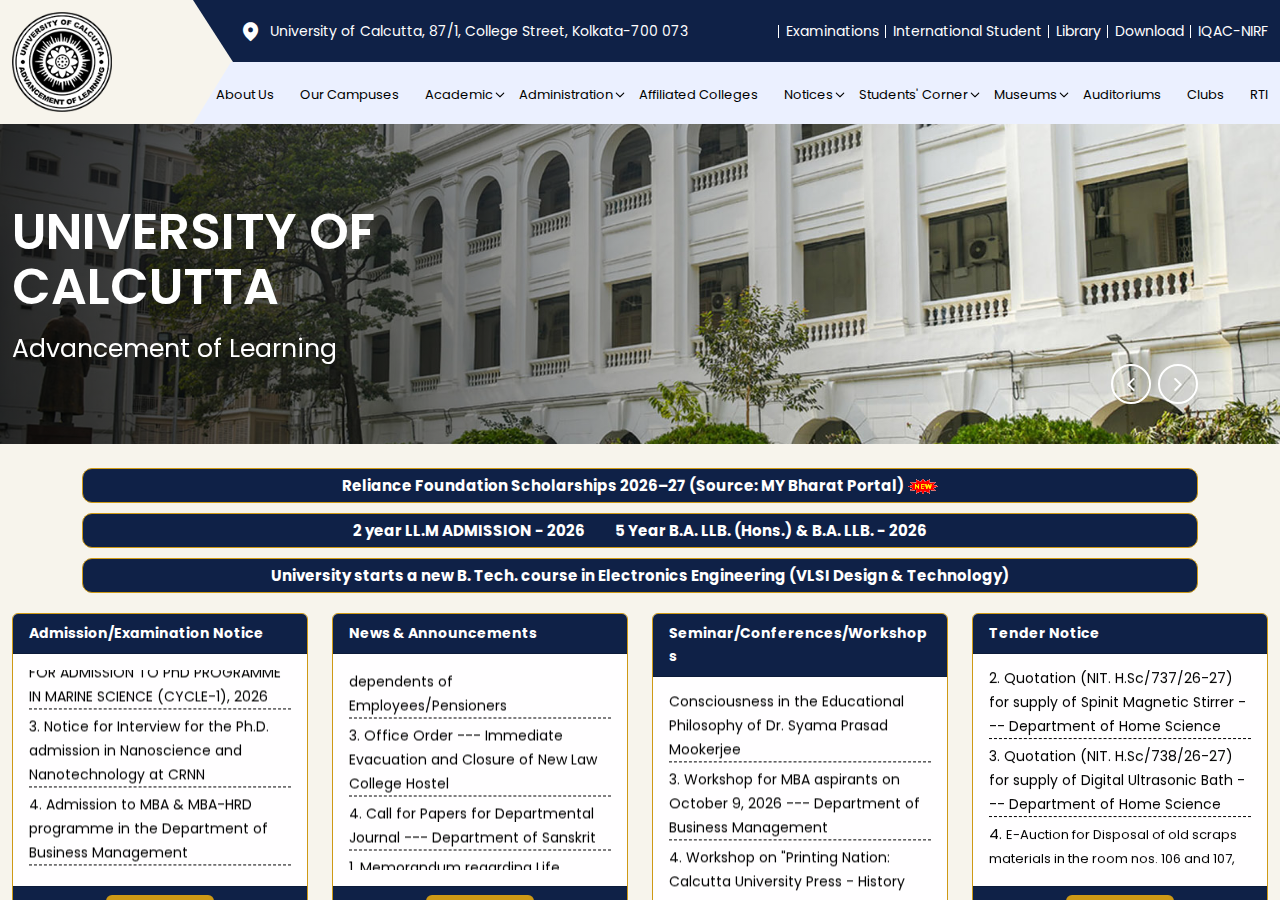
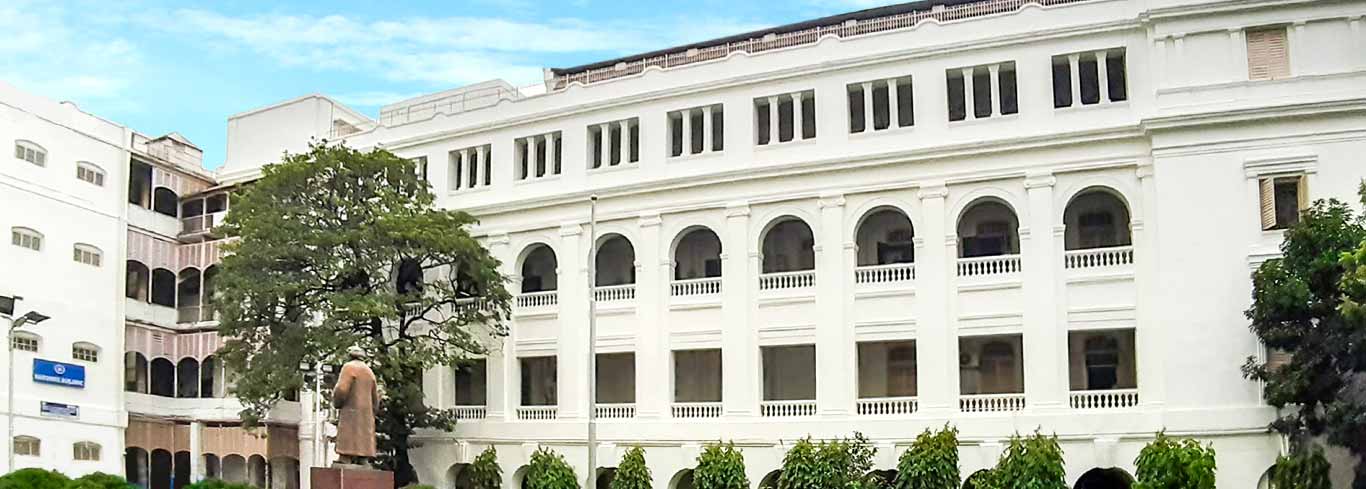
The revisions aim to align the university’s evaluation practices with the National Education Policy (NEP) 2020 and national-level standards, while also encouraging regular class attendance. The reintroduction of attendance marks follows their removal in 2023 with the introduction of the Curriculum and Credit Framework (CCF), a decision which, according to college principals, led to a decline in classroom attendance.
Reintroduction of Attendance Marks and Internal Assessment Structure
Under the revised rules, students can earn up to five marks for attendance in each paper per semester. This marks a return to an attendance-based evaluation system, which was previously in place under the Choice-Based Credit System (CBCS) where 10 marks were assigned for attendance before being abolished in 2023. The university’s syndicate, its highest decision-making body, unanimously approved this proposal.
For each theory paper in the first six semesters, a total of 75 marks will be allocated. The university will conduct a written examination worth 50 marks for each theory paper. The remaining 25 marks will be managed by the affiliated colleges through a combination of tutorial and internal assessment. Of these 25 marks, 20 will be for internal assessment and the remaining five will be specifically for attendance. Vice-Chancellor Asutosh Ghosh stated that syndicate members agreed students must return to classrooms and that the score will motivate regular attendance. College principals like Sonali Banerjee Jash and Manas Kabi also welcomed the move, noting that attendance had been a significant issue.
| Attendance Percentage | Marks Awarded |
|---|---|
| Above 90% | 5 marks |
| 80–89% | 4 marks |
| 75–79% | 3 marks |
| 60–74% | 2 marks |
| Below 60% | No marks |
Regarding eligibility for semester-end examinations, a student attending less than 60% of the total number of classes held will not be permitted to appear. Students with at least 75% attendance will be allowed to appear. Those attending at least 60% but less than 75% of classes may appear upon payment of prescribed condonation fees.
New Grading System and Grade Point Calculation
The University of Calcutta has introduced a 10-point grading system for grade point calculation, applicable to students admitted from the 2026–27 academic session. This new system aims to bring parity with national-level evaluation practices and provide a clearer understanding of academic performance, as stated by Vice-Chancellor Asutosh Ghosh. The multiplicative factor for calculating numerical Grade Points will be 0.10 for all grades.
| Marks Obtained | Grade | Grade Points | Performance Level |
|---|---|---|---|
| 90–100 | O | 10 | Outstanding |
| 80–89 | A+ | 9 | Excellent |
| 70–79 | A | 8 | Very Good |
| 60–69 | B+ | 7 | Good |
| 50–59 | B | 6 | Above Average |
| 40–49 | C | 5 | Average |
| 30–39 | P | 4 | Pass |
| Below 30 | F | 0 | Fail |
| Percentage of Marks | Grades | Numerical Grade Points |
|---|---|---|
| ≥ 90% to 100% | A++ | 9.0 – 10 |
| ≥ 80% but < 90% | A+ | 8.0 – 8.9 |
| ≥ 70% but < 80% | A | 7.0 – 7.9 |
| ≥ 60% but < 70% | B+ | 6.0 – 6.9 |
| ≥ 50% but < 60% | B | 5.0 – 5.9 |
| ≥ 40% but < 50% | C+ | 4.0 – 4.9 |
| ≥ 30% but < 40% | C | 3.0 – 3.9 |
| < 30% | F | 0 |
| Absent | Ab | 0 |
To earn the corresponding credit for any paper, a candidate must secure 30% marks separately in both the Theory and Practical/Tutorial components. Rumpa Das, Principal of Basanti Devi College, noted that this move provides a clear benchmark for students and parents, aligning the university with other national institutions. Sonali Banerjee Jash, Principal of Netaji Nagar Day College, added that Cumulative Grade Point Average (CGPA) would clarify performance and that attendance marks could bring positive changes.
Re-Examination and Review Provisions
The revised rules also specify provisions for re-examination and review of answer scripts. Re-examination or review is applicable only for non-MCQ theoretical papers or the theoretical component of papers in the Semester End examination. It is not permissible for IDC (Interdisciplinary Course), AEC (Ability Enhancement Course), CVAC (Common Value Added Course), Practical and Tutorial Examinations, or Project Work.
A candidate is eligible to apply for review if they appear at the concerned Semester End examination as a whole. In addition, a candidate is allowed to apply for re-examination or review of not more than two theoretical papers or components of papers in each Semester End examination. Students are advised to check the official notifications on caluniv.ac.in for detailed information applicable to their specific courses and to consult their respective colleges for any queries.

📰 More Education News
- JEE Main 2027: Karnataka candidates to have 16 expected exam citiesOct 14, 2026 • Nishit Kumar
- TNTET 2026 results for working teachers out; download certificates from 17 OctoberOct 14, 2026 • Nishit Kumar
- TS POLYCET 2027 eligibility criteria announced: registration opens February-MarchOct 13, 2026 • Nishit Kumar
- JEE Main 2027 exam centres in West Bengal: NTA to release official list soonOct 13, 2026 • Nishit Kumar