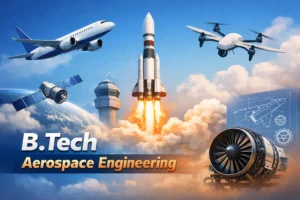
BTech Aeronautical Engineering: Complete Guide 2026
India’s aviation sector is projected to become the third-largest globally by 2026, driving significant demand for skilled professionals in aeronautical engineering. A B.Tech Aeronautical Engineering degree, typically a 4-year undergraduate program, equips students with specialized expertise in aircraft design, construction, and maintenance, opening doors to diverse roles across the rapidly expanding aerospace and defense industries.
| Parameter | Details |
|---|---|
| Course Name | B.Tech Aeronautical Engineering |
| Course Level | Undergraduate (UG) |
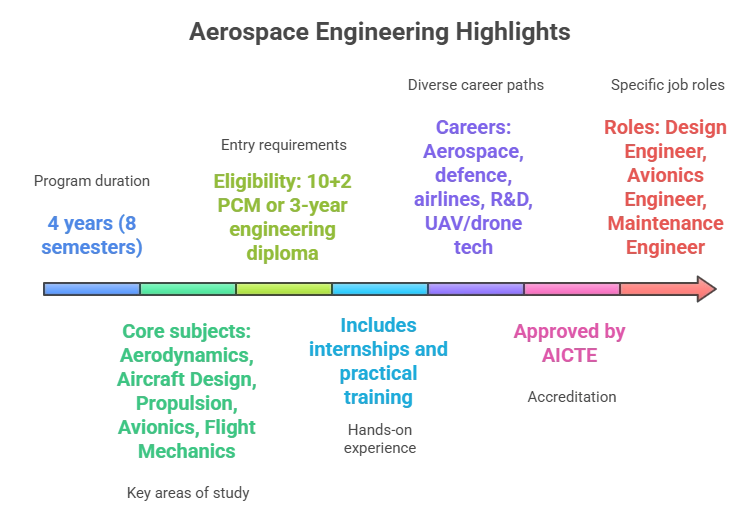
| Duration | 4 Years (8 semesters) |
| Primary Focus | Design, construction, operational testing, and maintenance of aircraft and related components operating within Earth’s atmo. |
| Distinction from Aerospace Engg. | Focuses on aircraft within Earth’s atmo; Aerospace Engineering combines Aeronautical and Astronautical (space) engineering. |
| Core Specializations | Aerodynamics, Propulsion, Thermodynamics, Avionics, Aerospace Materials, Celestial Mechanics. |
| General Eligibility (2026) | Class 12th with Physics, Chemistry, Mathematics (PCM) with 50-70% aggregate marks from a recognized board. |
| Admission Process | Entrance examinations (e.g., JEE Main, KCET, TNEA) followed by counseling, or merit-based admission. |
| Accreditation | All India Council for Technical Education (AICTE) approved. |
| Practical Training | Often includes one semester of industrial training in a live environment. |
| Learning Methodology | Case studies, problem-based learning, computer simulation, group discussions, technical seminars, and projects. |
| Key Industries for Graduates | Airlines, Avionics & Electronics, Research & Development, Defense, Space Agencies, Aviation Industry, Civil Aviation Department. |
| Common Job Profiles | Aeronautical Engineer, Aircraft Design Engineer, Maintenance Engineer, Propulsion Engineer, Avionics Engineer, Flight Test Engineer. |
| Higher Education Options | M.Tech Aeronautical Engineering, M.SC. In Aeronautics and Astronautics, PhD in Aerospace Engineering. |
| Number of Colleges in India (2026) | Over 180+ colleges (approx. 160+ privately owned, 15 government-owned). |
| Average Total Fees (4 Years) | ₹4 lakh – ₹25 lakh (approximate, varies by institution type for 2026-2027 academic session). |
| Average Starting Salary (Range) | ₹4-8 LPA (for fresh graduates, varies by role and company, 2025-2026 batch). |
B.Tech Aeronautical Engineering Key Statistics
This full overview highlights that B.Tech Aeronautical Engineering offers a curriculum and diverse career pathways, supported by a growing number of AICTE-approved institutions across India.
B.Tech Aeronautical Vs. Aerospace Engineering: Key Differences & Specializations
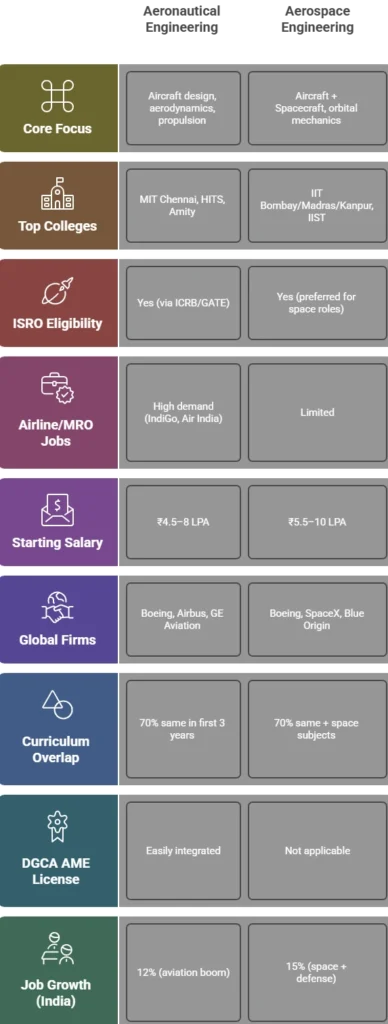
B.Tech Aeronautical Engineering focuses on aircraft operating within Earth’s atmo, while B.Tech Aerospace Engineering a broader scope including both atmospheric flight and space exploration. India offers over 180 B.Tech Aeronautical Engineering programs and 80+ B.Tech Aerospace Engineering courses for the 2026 academic session. The core distinctions between Aeronautical and Aerospace Engineering lie in their primary focus areas, scope, and the types of vehicles and systems they design. The table below highlights these key differences for students considering either B.Tech Aeronautical Engineering or B.Tech Aerospace Engineering.
| Feature | Aeronautical Engineering | Aerospace Engineering |
|---|---|---|
| Primary Focus Area | Design, development, testing, and maintenance of aircraft and their systems operating within Earth’s atmo. | Design, development, testing, and production of aircraft, spacecraft, satellites, and related systems operating within and outside Earth’s atmo. |
| Scope | Niche domain, specialization within aerospace engineering, focused on atmospheric flight. | Broader field, combines aeronautical and astronautical engineering, covers both atmospheric and space engineering. |
| Key Responsibilities/Designs | Designing aircraft including airplanes, helicopters, drones, and other flying vehicles. | Designing aircraft, spacecraft, missiles, satellites, defense systems, and other military/aviation technologies. |
| Educational Requirements (Entry-Level) | Bachelor’s degree in Aeronautical Engineering or a related field (e.g., Mechanical Engineering). | Bachelor’s degree in Aerospace Engineering or a related field (e.g., Mechanical Engineering, Aeronautical Engineering). |
| Specialized Coursework | Aircraft design, aerodynamics, propulsion systems, materials science. | Elements of both aeronautics and astronautics, including atmo and space engineering. |
| Career Opportunities | Aerodynamics Engineer, Avionics Engineer, Propulsion Engineer, Flight Test Engineer, Missile Systems Engineer, Aeronautical Research Scientist, Aircraft Design Engineer, Maintenance Engineer, Radar Operator. | Exciting career profiles in airline companies, government research organizations, multinational aircraft manufacturing companies, Indian Air Force, aeronautical laboratories, space agencies. |
| Industries/Employers | Aviation industry, civil aviation department, defense establishments, commercial airlines, aerospace, defense, space agencies. | Aerospace manufacturing companies, defense contractors, government agencies (e.g., NASA), research institutions, consulting firms, commercial spaceflight, electric aircraft sectors. |
| Job Growth (Projected) | Projected 6% growth from 2023 to 2033. | Projected 6% growth from 2023 to 2033. |
| Skills Required | Strong background in mathematics, physics, engineering mechanics, alertness & presence of mind. | Excellent mathematical and observational skills, speed, accuracy, manual, technical & mechanical aptitude. |
| Eligibility Criteria (Basic) | Class 12 board examination pass with Science stream (Physics, Chemistry, Mathematics) and 50-70% marks. | Class 12 board examination pass with PCM subjects and at least 60% marks. |
This comparison highlights that while Aeronautical Engineering is a specialized branch focusing on atmospheric flight, Aerospace Engineering offers a broader perspective encompassing both air and space vehicles. Both B.Tech Aeronautical and Aerospace Engineering programs offer diverse specializations, allowing students to focus on specific areas of interest within these dynamic fields. In Aeronautical Engineering, common specializations include Aerodynamics, Propulsion, Thermodynamics, Fluid Dynamics, Avionics, and Aerospace Materials. Students can also into Aircraft Maintenance, Aircraft Systems & Instruments, and Control Engineering. Aerospace Engineering specializations extend to Aircraft Design, Space Technology, Satellite Systems, Launch Vehicles, Space Missions, and Astronautical Engineering. Further areas of focus include Aerospace Structures, Machine Elements, and advanced Avionics, which combines electronics and aviation systems. For those interested in the electronic systems within aerospace vehicles, a B.Tech in Avionics Engineering is also available, mastering the fusion of electronics and aviation. For more details on related fields, students can explore a B.Tech in Electronics and Communication Engineering. Postgraduate specializations in both fields often include Aerodynamics Engineering, Aerospace Structures and Design, Propulsion Technology, and Defence Technology.
B.Tech Aeronautical Engineering in India 2026: Key Statistics & Industry
India offers B.Tech Aeronautical Engineering programs at over 180 colleges as of 2026, with more than 160 being privately owned and 15 government-funded institutions. This specialized four-year undergraduate degree focuses on the design, manufacturing, and maintenance of aircraft, preparing students for a dynamic industry.
| Metric | Value (2026) | Source/Context |
|---|---|---|
| Total B.Tech Aeronautical Engineering Colleges in India | 180+ | Across India (Source: Research Data) |
| Private B.Tech Aeronautical Engineering Colleges | 160+ | Across India (Source: Research Data) |
| Government B.Tech Aeronautical Engineering Colleges | 15 | Across India (Source: Research Data) |
| Total B.Tech Aerospace Engineering Colleges in India | 70-85+ | Across India (Source: Research Data) |
| General Eligibility for B.Tech Aeronautical Engineering | Class 12 pass with PCM, 50-70% marks | Minimum criteria for most institutions (Source: Research Data) |
| Typical Course Duration | 4 Years (Full-Time) | Standard undergraduate engineering degree |
| Major National Entrance Exams (UG) | JEE Main, KCET, MHT-CET, MET, COMEDK UGET, HITSEEE, AERO CET, AIE CET, BITSAT, TNEA | Commonly accepted for B.Tech admissions (Source: Research Data) |
| Primary Industry Sectors | Airlines, Defence, Space Agencies, R&D, Manufacturing, MRO | Key employment areas for graduates (Source: Research Data) |
| Key Industry Functions | Aircraft Design, Manufacturing, Testing, Maintenance, Research, Operations | Core responsibilities within the industry (Source: Research Data) |
| Top Hiring Organizations (Examples) | ISRO, DRDO, HAL, NAL, MROs, Commercial Airlines, Multinational Aircraft Manufacturers | Leading employers in the sector (Source: Research Data) |
Number of B.Tech Aeronautical & Aerospace Colleges (2026)
This data highlights the educational infrastructure for Aeronautical Engineering in India, catering to a growing demand for skilled professionals in the aviation and aerospace sectors. The industry is expanding, driven by advancements in aircraft technology and space exploration.
The Indian aeronautical industry is a niche but developing domain, offering significant career opportunities both domestically and internationally. Graduates are in demand across various sectors, including commercial airlines, government research organizations like ISRO and DRDO, and multinational aircraft manufacturing companies. Key areas of work involve aerodynamics, control systems, structures, and propulsion systems of aircraft, along with the design of aviation infrastructure. Students interested in specialized fields can also explore options like Electronics and Communication Engineering for avionics roles.
B.Tech Aeronautical Engineering Syllabus: Core Subjects & Electives
The B.Tech Aeronautical Engineering program is a full 4-year undergraduate degree, structured across 8 semesters, designed to impart in-depth knowledge of aircraft design, construction, and operational testing. The curriculum emphasizes practical training, including workshops, group projects, and industrial visits, ensuring students gain hands-on experience in a live environment. This rigorous academic framework prepares students for the dynamic aviation and aerospace sectors.
- Engineering Mechanics: This foundational subject covers principles of forces, motion, and material behavior, for understanding the structural integrity and stability of aircraft components. Students learn to analyze stress and strain on various parts.
- Aircraft Systems & Instruments: Students explore the intricate systems within an aircraft, including hydraulic, pneumatic, and electrical systems, along with the instrumentation vital for flight control and navigation. This includes understanding the operation of flight control surfaces and cockpit displays.
- Aerodynamics: A core discipline, aerodynamics focuses on the science of air movement and its interaction with aircraft, covering concepts like lift, drag, and stability. Many programs, such as at MIT Manipal, offer this as a minor specialization.
- Aero Engineering Thermodynamics: This subject applies principles of heat transfer and energy conversion to aircraft engines and systems, for optimizing fuel efficiency and engine performance. IT into the physics behind propulsion systems.
- Propulsion: Dedicated to the design, analysis, and performance of aircraft engines, including jet engines, turboprops, and rocket propulsion systems. Students study the mechanics of generating thrust for flight.
- Aircraft Materials: This course examines the properties and selection of materials used in aircraft construction, such as advanced composites, aluminum alloys, and titanium. Emphasis is placed on strength-to-weight ratio, fatigue resistance, and manufacturing processes.
- Control Engineering: Principles of automatic control systems for flight stability, navigation, and aircraft performance optimization are covered. This involves understanding electrical and mechanical feedback loops, similar to concepts in B.Tech Electrical Engineering.
- Aircraft Maintenance: Students learn the practical aspects of inspecting, troubleshooting, and repairing aircraft components to ensure airworthiness and safety standards. This includes documentation and regulatory compliance.
- Avionics: This elective specialization focuses on the electronic systems within aerospace vehicles, integrating electronics and aviation. Students gain expertise in areas also covered in B.Tech in Electronics and Communication Engineering, but with an aerospace context.
- Fluid Dynamics: An advanced study of fluid behavior, for understanding complex airflow phenomena around aircraft and internal flows within engine components. This builds upon foundational aerodynamics.
- Aerospace Structures: This subject involves the design and analysis of aircraft and spacecraft structural components, considering various loads, stresses, and environmental factors. IT ensures the structural integrity of flight vehicles.
- Computer-Aided Engineering & Graphics: Students develop practical skills in using specialized software for the design, simulation, and manufacturing of aeronautical components. This includes CAD/CAM tools and finite element analysis.
The B.Tech Aeronautical Engineering syllabus provides a balanced blend of theoretical knowledge and practical application, ensuring graduates are well-equipped for the technical demands of the aviation and aerospace industries. This full approach covers everything from fundamental mechanics to advanced aircraft systems and maintenance protocols.
People Also Read
-

-
Top B.Tech Colleges in India Engineering
Eligibility Criteria & Admission Process for B.Tech Aeronautical Engineering 2026
For B.Tech Aeronautical Engineering admissions in 2026, prospective students must typically have completed Class 12 with Physics, Chemistry, and Mathematics (PCM) as core subjects, securing a minimum of 50-70% marks. The admission process primarily involves national or state-level entrance examinations, though over 80 private engineering institutes also offer merit-based admissions. Understanding the specific eligibility and application timelines is for students aiming for a career in Aeronautical Engineering.
- Academic Qualification: Candidates must have passed Class 12 (or equivalent) from a recognized board, with Physics, Chemistry, and Mathematics as compulsory subjects. A minimum aggregate of 50-70% marks in these subjects is generally required, though specific colleges like IIT Bombay may require 75% for B.Tech Aerospace Engineering.
- Age Criteria: While general B.Tech Aeronautical Engineering programs do not always specify an age limit, certain entrance exams like AERO CET 2026 require candidates to be between 16 and 28 years old at the time of admission. For B.Tech Aerospace Engineering, some institutes specify an age range of 18 to 25 years.
- National Entrance Examinations: Admission to top institutions often requires qualifying in national-level exams such as JEE Main 2026 and JEE Advanced 2026. For instance, IITs use JEE Advanced scores, followed by JoSAA counselling for seat allocation. JEE Main Session 2 registration closes on February 25, 2026, with exams scheduled from April 2 to April 9, 2026.
- State-Level Entrance Exams: Several states conduct their own engineering entrance tests. Key exams include KCET 2026 (Karnataka), MHT-CET 2026 (Maharashtra), and TNEA (Tamil Nadu). KCET 2026 registration began on January 23, 2026, with an application deadline of February 16, 2026, without a late fee. MHT-CET 2026 applications close on February 12, 2026.
- University-Specific Entrance Tests: Many private and deemed universities conduct their own entrance examinations. Examples include MET (Manipal Entrance Test) for MIT Manipal, BITSAT for BITS Pilani, AERO CET 2026 (registration started August 1, 2025) for Puran Murti Group of Institutes, and RUAS AT 2026 for M. S. Ramaiah University of Applied Sciences, with an application deadline of April 5, 2026.
- Selection Process: The primary selection method is based on entrance exam scores, followed by a counselling process. For example, IITs use JoSAA counselling, while other colleges may conduct their own counselling rounds. Some private institutions also offer direct admission based on Class 12 merit, with over 80 colleges providing this option.
- Application Deadlines 2026: Key application deadlines for 2026 include February 25 for JEE Main Session 2, February 16 for KCET, and February 12 for MHT-CET. Amity University Noida has already opened admissions for its B.Tech Aeronautical Engineering program for 2026 as of November 28, 2025.
- Lateral Entry Admissions: For students holding an AICTE-approved 3-year engineering Diploma, lateral entry into the second year (third semester) of B.Tech Aeronautical Engineering programs is possible. M. S. Ramaiah University of Applied Sciences, for example, requires a minimum aggregate of 45% marks in the final year Diploma subjects for such admissions.
Meeting the specific eligibility criteria and adhering to the application deadlines for relevant entrance examinations are critical steps for securing admission to B.Tech Aeronautical Engineering programs in 2026. Students should consult official college websites for the most accurate and up-to-date admission details for their chosen institutions.
Popular Entrance Exams for B.Tech Aeronautical Engineering in India 2026
Students aiming for B.Tech Aeronautical Engineering in India for the 2026 academic session must clear competitive entrance examinations, with over 180 colleges offering this specialized program. Major national tests like JEE Main and state-level exams such as KCET are for admission, alongside institutional-specific tests.
| Exam Name | Accepting Colleges | Key Dates 2026 | Application Status |
|---|---|---|---|
| JEE Main | IITs, NITs, IIITs, and numerous state/private B.Tech Aeronautical Engineering colleges, including M. S. Ramaiah University of Applied Sciences. | Session 2 Registration Last Date: Feb 25, 2026; Exam Date: April 2-9, 2026 | Session 2 Registration Open |
| JEE Advanced | IIT Bombay, IIT Kanpur, IIT Madras, IIT Kharagpur (for Aerospace Engineering), and other IITs. | Registration: April 23 – May 2, 2026; Exam Date: May 17, 2026 | Registration Upcoming |
| KCET | Government and private B.Tech Aeronautical Engineering colleges in Karnataka, including MAHE Manipal and M. S. Ramaiah University of Applied Sciences. | Registration Start: Jan 23, 2026; Application Deadline: Feb 16, 2026 (without late fee) | Registration Open |
| MHT-CET | Government and private B.Tech Aeronautical Engineering colleges in Maharashtra. | Application Deadline: Feb 12, 2026; Exam Dates: April 11-19, 2026 (Session 1, tentative), May 14-17, 2026 (Session 2, tentative) | Registration Open |
| MET (Manipal Entrance Test) | Manipal Institute of Technology (MIT Manipal) for B.Tech Aeronautical Engineering. | Dates to be announced; typically held in multiple phases. | Application Open |
| AERO CET | Puran Murti Group of Institutes, Indian Institute for Aeronautical Engineering and Information Technology (IIAEIT Pune). | Registration Start: August 1, 2025 | Registration Open |
| AIE CET | Various colleges accepting national-level entrance examinations for B.Tech Aeronautical Engineering. | Phase II Registration Start: Feb 1, 2026 | Phase II Registration Open |
| RUAS AT (Ramaiah University of Applied Sciences Admission Test) | M. S. Ramaiah University of Applied Sciences for B.Tech Engineering admissions. | Application Deadline: April 5, 2026; Exam Date: April 6-12, 2026 | Registration Open |
Students aspiring for B.Tech Aeronautical Engineering must monitor these exam schedules closely, as application deadlines for major tests like JEE Main 2026 Session 2 and KCET 2026 are in February and March. These entrance exams are also pathways to other engineering disciplines, such as Electronics and Communication Engineering.
Top B.Tech Aeronautical Engineering Colleges in India 2026: Rankings & Fees
India offers over 180 institutions for B.Tech Aeronautical Engineering, with approximately 15 government-owned and 160+ privately-owned colleges. These institutions provide specialized undergraduate programs focusing on aircraft design, propulsion, and maintenance, preparing students for dynamic careers in the aviation and aerospace sectors.
| College Name | NIRF/QS Rank 2024-25 | Total Course Fees 2026 (INR) | Key Highlights |
|---|---|---|---|
| IIT Bombay (Indian Institute of Technology Bombay) | NIRF Engineering 2024 Rank #3, QS World University 2025 Rank #129 | – | Recognized as a top aerospace engineering college in India. |
| IIT Kanpur | – | – | Consistently ranked among India’s best aerospace engineering colleges. |
| IIT Madras | – | – | Known as one of India’s best aerospace engineering colleges. |
| IIT Kharagpur | – | – | A top-tier institution for Aerospace Engineering programs. |
| Manipal Institute of Technology (MIT Manipal) | – | ₹21.87 Lakhs (Indian) / ₹31.04 Lakhs (NRI) | Offers B.Tech Aeronautical Engineering with a Minor Specialization in Aerodynamics. |
| Indian Institute of Space Science and Technology (IIST Thiruvananthapuram) | – | – | Offers both B.Tech Aerospace Engineering and B.Tech Aeronautical Engineering programs. |
| BS Abdur Rahman Crescent Institute of Science and Technology, Chennai | NIRF Rank 42 | – | AICTE approved B.Tech Aeronautical Engineering program. |
| Vel Tech Rangarajan Dr Sagunthala R and D Institute of Science and Technology, Chennai | NIRF Rank 42 | – | AICTE approved B.Tech Aeronautical Engineering program with a four-year duration. |
| JAIN (Deemed-to-be University) Bangalore | – | – | B.Tech Aerospace Engineering program is NBA accredited (2022). |
| Indus University | – | – | Offers B.Tech Aeronautical Engineering in association with Western India Institute of Aeronautics (WIIA). |
| Indian Institute For Aeronautical Engineering & Information Technology (IIAEIT Pune) | – | – | Premier institute for Aeronautical and Aerospace Engineering with advanced laboratories. |
| Dayananda Sagar College Of Engineering, Bangalore | – | – | Recognized as a top Government Aeronautical Engineering college in India. |
Prospective students should carefully evaluate these institutions based on their specific program offerings, faculty expertise, and industry collaborations. For those interested in the electronic systems of aircraft, exploring B.Tech in Electronics and Communication Engineering can also provide a strong foundation for avionics careers.
B.Tech Aeronautical Engineering Placements 2025-2026: Highest Packages & Top Recruiters
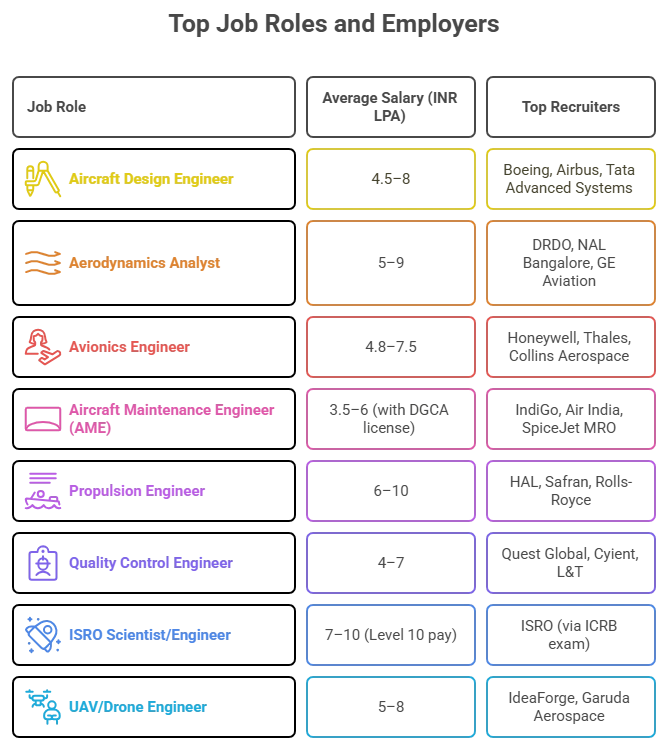
B.Tech Aeronautical Engineering graduates can expect average starting salaries ranging from ₹6-10 LPA in 2026, with top institutes reporting highest packages up to ₹1.48 crore. Leading recruiters in the sector include ISRO, HAL, Boeing, and Tata Advanced Systems, offering diverse roles in aircraft design, maintenance, and research.
Top institutions like IIT Bombay recorded a highest package of ₹1.48 crore for its Aerospace Engineering graduates in 2026 placements, while Vel Tech Rangarajan Dr Sagunthala R and D Institute of Science and Technology reported a highest package of ₹1.3 crore for B.Tech Aeronautical Engineering. BS Abdur Rahman Crescent Institute of Science and Technology also saw a highest package of ₹50 LPA. For students pursuing B.Tech Aeronautical Engineering, these figures highlight significant career potential.
The average package for B.Tech Aerospace Engineering at IIT Bombay was ₹20-25 LPA for the 2020-21 batch, and IIT Madras reported average packages ranging from ₹17.5-53.2 LPA for its B.Tech graduates in 2025. PEC Chandigarh’s Aeronautical Engineering program saw an average package of ₹7-8 LPA, with highest packages reaching ₹20-25 LPA. MIT Manipal’s B.Tech Aeronautical Engineering graduates secured an average package of ₹8-9 LPA.
Prominent recruiters for Aeronautical Engineering graduates include government organizations like ISRO, DRDO, and HAL, alongside private sector giants such as Boeing, Airbus, and Tata Advanced Systems. Other major companies like Microsoft, Google, Samsung, Jaguar, and Amazon also recruit from top engineering colleges, offering roles in related fields. Commercial airlines such as Indigo, Air India, Go Air, and Spicejet are key employers for aviation-focused roles.
The B.Tech Aeronautical Engineering sector in India offers placement opportunities with competitive salary packages, particularly from leading IITs and specialized aviation institutes. Students interested in related fields might also explore B.Tech Software Engineering for diverse career paths.
Career Scope, Job Roles & Salary Expectations after B.Tech Aeronautical Engineering
B.Tech Aeronautical Engineering graduates in India can expect entry-level salaries ranging from ₹6-8 LPA as of 2026, with the aviation industry projected to grow around 25% annually. The sector offers diverse roles across design, maintenance, and research, driven by orders for 1080 new aircraft and India’s position as the 3rd largest domestic aviation market. Students interested in a broader engineering perspective might also explore a B.Tech Electrical Engineering Guide for comparison. The career scope after B.Tech Aeronautical Engineering is expanding, with an estimated 6% employment increase for aeronautical engineers between 2016 and 2026. Government organizations like HAL and NAL also offer initial salaries ranging from ₹8,000 to ₹10,000 per month, excluding other allowances, for specific roles. Understanding the of Aeronautical Engineering is for aspiring professionals. Here are some prominent job roles and their salary expectations for B.Tech Aeronautical Engineering graduates in India:
- Aerospace Engineer: These engineers work on the aerodynamics, control systems, structures, and propulsion systems of aircraft and spacecraft. Entry-level salaries for fresh graduates typically range from ₹6-8 LPA, with major hiring companies including ISRO, DRDO, HAL, NASA, and various commercial airlines.
- Aircraft Design Engineer: Specializing in the conceptualization and development of new aircraft components and systems, these professionals ensure structural integrity and performance. Fresh college graduates in this role can expect starting salaries around ₹6 LPA, working for commercial airlines and aerospace organizations.
- Maintenance Engineer: Responsible for the inspection, repair, and overhaul of aircraft to ensure airworthiness and safety standards are met. These engineers are for commercial airlines, aerospace organizations, and space agencies, with salaries for experienced professionals reaching ₹10-12 LPA.
- Avionics Engineer: Focuses on the electronic systems of aircraft, including navigation, communication, and flight control systems. Fresh graduates typically start with salaries around ₹6 LPA, finding opportunities in avionics and electronics industries with companies like Honeywell and Accenture.
- Propulsion Engineer: Works on the design, development, and testing of aircraft engines and propulsion systems, optimizing for efficiency and power. Starting salaries for freshers are approximately ₹6 LPA, with roles available in defense establishments and multinational aircraft manufacturing companies.
- Flight Test Engineer: Evaluates the performance, stability, and control of new or modified aircraft during test flights. Entry-level professionals can command salaries around ₹6 LPA, working with government research organizations and aircraft manufacturers to ensure safety and compliance.
- Aeronautical Research Scientist: Conducts advanced research and development to innovate new technologies, materials, and methodologies in aviation and space. Fresh college graduates in this role can expect starting salaries of about ₹6 LPA in organizations like DRDO, NAL, and other aeronautical laboratories.
- Missile Systems Engineer: Specializes in the design, development, and integration of missile systems for defense and strategic applications. Fresh graduates in this specialized field also see starting salaries around ₹6 LPA, primarily with defense establishments and government research organizations.
The growth in India’s aviation sector, marked by significant aircraft orders and expanding domestic traffic, ensures a promising career trajectory for B.Tech Aeronautical Engineering graduates. Professionals can advance from entry-level positions to mid-career roles, where salaries typically increase to ₹10-15 LPA with several years of experience.
Emerging Trends & Future Scope in Aeronautical Engineering (2026 & Beyond)
India’s aviation sector is experiencing significant growth, with air passenger traffic increasing by approximately 25% and airlines ordering 1080 new aircraft. This expansion drives demand for Aeronautical Engineering graduates, who will contribute to advancements in aircraft design, manufacturing, and maintenance. The field is evolving rapidly with new technologies and educational pathways emerging for 2026 and beyond.
- Growth in Indian Aviation Market: India is currently the 3rd largest domestic aviation market globally, with a consistent 25% growth in air passenger traffic. This sustained expansion translates to a high demand for aeronautical engineers in aircraft design, maintenance, and operational roles across commercial airlines and aerospace organizations.
- Focus on Sustainable Aviation: The industry is increasingly prioritizing eco-friendly aircraft designs and alternative propulsion systems. Future B.Tech Aeronautical Engineering graduates will play a role in developing electric and hybrid aircraft, lightweight composite materials, and optimized aerodynamic solutions to achieve net-zero emission targets.
- Advancements in Drone Technology & UAVs: Unmanned Aerial Vehicles (UAVs) are rapidly integrating into various sectors, including logistics, agriculture, and defense. This trend creates new avenues for aeronautical engineers in designing, developing, and maintaining advanced drone systems, their control mechanisms, and regulatory frameworks.
- Space Exploration & Defense Sector Expansion: India’s space agencies like ISRO and defense organizations such as DRDO are actively pursuing ambitious projects in satellite technology, rocket science, and missile systems. This offers significant scope for B.Tech Aeronautical Engineering professionals in spacecraft design, propulsion engineering, and advanced aerospace research.
- Integration of AI, Data Analytics & Automation: Modern aircraft and aerospace systems increasingly rely on artificial intelligence for autonomous flight, predictive maintenance, and complex data analysis. Aeronautical engineers will need strong skills in data science, machine learning, and automation to develop and manage these intelligent systems for enhanced safety and efficiency.
- Flexible Learning Pathways for Working Professionals: AICTE initiatives for working professionals allow for B.Tech programs with credit transfers (up to 40% via MOOCs/SWAYAM) and specific intake limits (30-60 supernumerary seats per course for A/Y 2024-25). This provides opportunities for existing industry professionals to upskill or gain a formal degree in aeronautical engineering, building continuous learning.
The future of B.Tech Aeronautical Engineering in India is dynamic, driven by aviation growth, technological innovation, and evolving educational frameworks. Graduates entering this field in 2026 and beyond will find diverse opportunities, including those in related fields like Electrical Engineering for avionics systems.
Key Takeaways
- India’s aviation sector is projected to maintain strong growth, evidenced by a 25% increase in air passenger traffic and orders for 1080 new aircraft.
- Emerging trends in aeronautical engineering include sustainable aviation, advanced drone technology, and significant opportunities in space and defense sectors.
- Educational pathways are becoming more flexible, with AICTE allowing up to 40% credit transfer via MOOCs for working professionals pursuing B.Tech programs.
Students interested in these evolving areas should research specific B.Tech Aeronautical Engineering programs and their specialization offerings for the 2026-2027 academic session.
Frequently Asked Questions (FAQs)
What is the average starting salary for BTech Aeronautical engineers in India?
The average starting salary for BTech Aeronautical Engineering graduates in India ranges between ₹4-8 LPA as of 2025. Top recruiters like Airbus, Boeing, and ISRO offer packages up to ₹15 LPA for skilled candidates.
How much are the fees for BTech Aeronautical Engineering in top private colleges?
Fees for BTech Aeronautical Engineering in top private colleges range from ₹10-25 lakh for the full course. Institutions like Amity University Noida and MIT Manipal charge around ₹18.5 lakh and ₹22 lakh respectively.
What JEE Main rank is required for Aeronautical Engineering in NITs?
A JEE Main rank within 15,000 to 20,000 is generally required for BTech Aeronautical Engineering in top NITs like NIT Trichy and NIT Surathkal (as per 2025 cutoffs). Home state quota can lower the cutoff significantly.
Which are the best BTech Aeronautical colleges in India apart from IIT Bombay?
Top BTech Aeronautical colleges apart from IIT Bombay include IIT Kanpur, IIST Thiruvananthapuram, MIT Manipal, Amity University Noida, and SASTRA University. IIST offers specialized training with direct exposure to space research and ISRO internships.
What kind of job profiles can I get after BTech Aeronautical in ISRO or DRDO?
After BTech Aeronautical Engineering, you can apply for roles like Junior Research Fellow, Scientist Assistant, or Design Engineer in ISRO and DRDO. ISRO recruits through its own entrance exam and internship programs like YUVIKA.
Is BTech Aeronautical engineering a good career choice in India for the next 5 years?
Yes, BTech Aeronautical Engineering remains a good career choice in India due to growth in private aviation, drone technology, and government space missions. The sector is projected to grow at 12% CAGR through 2026.
What is the difference between Aeronautical and Aerospace Engineering BTech?
Aeronautical Engineering focuses on aircraft within Earth’s atmo, while Aerospace Engineering includes spacecraft and interplanetary systems. Aerospace Engineering covers both aeronautics and astronautics, as offered by IIST and IIT Kharagpur.
Disclaimer: The information provided in this article is sourced from official websites, NIRF rankings, and publicly available data. Fees, placement figures, and other details may vary. Please verify with the official institution website for the most current information.