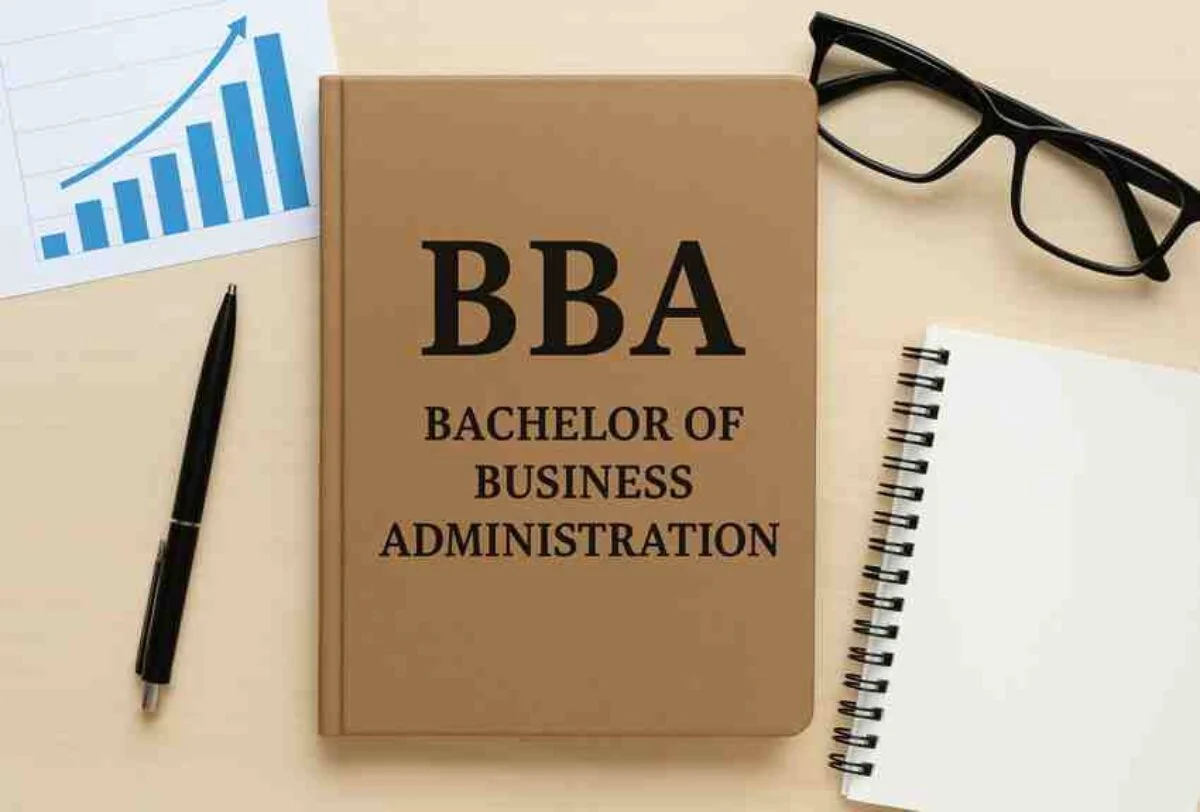
BBA 2026: Eligibility, Admission, Top Colleges, Fees & Career Options
The Bachelor of Business Administration (BBA) is a highly sought-after undergraduate management program in India. It provides students with a solid foundation in business, management, and leadership skills. Designed as a 3-year program (6 semesters), BBA prepares students for diverse roles in corporate organizations, startups, and entrepreneurial ventures. Many graduates also opt for an MBA afterward to specialize further.
With India’s rapidly expanding economy, growing industries, and startup ecosystem, a BBA degree opens doors to lucrative careers in finance, marketing, HR, operations, and international business. The program emphasizes practical exposure through internships, projects, and live industry interactions, bridging the gap between theory and practice.
This guide provides a complete roadmap for BBA aspirants in 2026, covering eligibility, entrance exams, admission processes, top colleges, fees, syllabus, career opportunities, and FAQs, ensuring students make well-informed decisions about their higher education in management.
BBA Course: Key Highlights
Here’s a quick snapshot of the key highlights of BBA programs in India:
| Aspect | Details |
|---|---|
| Full Form | Bachelor of Business Administration |
| Duration | 3 years (6 semesters); some integrated programs last 4-5 years |
| Eligibility | Class 12 pass with minimum 50% aggregate (varies by college) |
| Entrance Exams | CUET UG, IPMAT, NPAT, SET, IPU CET, UGAT, Christ University ET, others |
| Average Fees | INR 1-5 lakhs per year (government colleges: lower; private colleges: higher) |
| Average Starting Salary | INR 3-8 LPA |
| Top Specializations | Finance, Marketing, HR, International Business, Digital Marketing, Entrepreneurship |
| Regulatory Body | UGC/AICTE approved universities |
| Global Recognition | Widely accepted; provides a strong foundation for pursuing MBA abroad |
BBA programs focus on providing a balance of theoretical knowledge and practical skills. Students develop managerial, analytical, communication, and leadership skills that make them ready for corporate challenges.
Eligibility Criteria for BBA
Admission to BBA programs in India is relatively accessible, making it a popular choice for students from diverse streams. However, certain minimum requirements must be met:
1. Academic Qualification:
Students must have completed Class 12 or equivalent from a recognized board. Colleges accept candidates from Commerce, Science, or Arts streams. Some colleges may prefer commerce students for certain specializations like finance.
2. Minimum Marks:
Most colleges require a minimum aggregate of 50% in Class 12 (some reserved categories: 45%). English is often a compulsory subject. Top colleges sometimes have higher cut-offs or require entrance exam scores.
3. Age Limit:
Generally, applicants must be 17-25 years old at the time of admission. While there’s no strict upper age limit in most colleges, some private institutions and integrated programs may have restrictions.
4. Entrance Exam:
While merit-based admission is common in many colleges, top institutions like NMIMS, IIMs (IPMAT), and Symbiosis require national or university-level entrance exams.
5. Special Provisions:
Reserved categories (SC/ST/OBC/PwD) receive relaxation in eligibility criteria. NRI and foreign quota admissions are available in private universities.
6. Documents Required:
-
Class 10 & 12 mark sheets
-
Entrance exam scorecard (if applicable)
-
Valid ID proof
-
Category certificate (if applicable)
-
Passport-sized photographs
BBA eligibility is designed to be inclusive yet ensures students are academically prepared for rigorous management training.
BBA Specializations in India
The Bachelor of Business Administration (BBA) program in India offers a range of specializations, usually selected in the final year (Semesters 5-6). These allow students to deepen knowledge in specific business domains, aligning with career goals and industry demands. In 2025-2026, high-demand areas include analytics, digital marketing, and finance due to digital transformation, e-commerce growth, and fintech advancements.
Top colleges like NMIMS, Christ University, Symbiosis, SSCBS (DU), and Amity offer these specializations with practical components like internships and projects.
Popular BBA Specializations
Finance Focus: Corporate finance, investment banking, financial markets, risk management, taxation. Freshers Roles: Financial Analyst, Investment Banking Associate. Average Starting Salary: Rs 5-10 LPA. Demand: Strong in banking and fintech sectors.
Marketing Focus: Digital marketing, consumer behaviour, branding, sales management, market research. Freshers Roles: Marketing Executive, Brand Manager, Sales Coordinator. Average Starting Salary: Rs 4-8 LPA. Demand: High in FMCG, e-commerce, and advertising.
Human Resource Management (HRM) Focus: Recruitment, employee relations, performance appraisal, labour laws, organisational behaviour. Freshers Roles: HR Executive, Recruiter, Talent Acquisition Specialist. Average Starting Salary: Rs 4-7 LPA. Demand: Essential across all industries for talent management.
Business Analytics Focus: Data analysis, Python/R, big data tools, predictive modelling, business intelligence. Freshers Roles: Business Analyst, Data Analyst. Average Starting Salary: Rs 6-12 LPA. Demand: Booming with AI and data-driven decisions.
Digital Marketing Focus: SEO, social media marketing, content strategy, PPC advertising, analytics tools. Freshers Roles: Digital Marketing Specialist, Social Media Manager. Average Starting Salary: Rs 5-9 LPA. Demand: Explosive growth in online businesses.
International Business Focus: Global trade, export-import procedures, forex management, cross-cultural management. Freshers Roles: Export Manager, International Sales Executive. Average Starting Salary: Rs 5-10 LPA. Demand: Rising with India’s global trade.
Entrepreneurship Focus: Startup planning, venture funding, innovation, business plan development. Freshers Roles: Business Development Executive, Startup Consultant. Average Starting Salary: Rs 4-8 LPA (higher potential with own ventures). Demand: Supported by Startup India ecosystem.
Other options include Operations & Supply Chain Management, Banking & Insurance, Retail Management, and Hospitality Management.
Choose based on interests—analytical minds suit Analytics/Finance; creative ones prefer Marketing/Digital. Many pursue MBA in the same field for advanced roles and higher salaries (Rs 15-25 LPA post-MBA). Check college brochures for exact offerings and curriculum updates.
People Also Read

Admission Process for BBA
The Bachelor of Business Administration (BBA) admission process in India varies by institution. Most top colleges use entrance exams, while some offer merit-based or direct admission based on Class 12 marks. Admissions for the 2026 session typically start from December 2025 to June 2026. Popular pathways include national exams like CUET UG and university-specific tests.
Eligibility is generally common: Passed Class 12 (any stream) with 50% aggregate (45% for reserved categories). No upper age limit in most cases. Provisional admission is available for appearing candidates.
Step-by-Step General Admission Process
- Check eligibility and select target colleges/exams.
- Register and appear for the required entrance exam (if applicable).
- Apply separately to colleges (even for CUET, individual applications/counselling required).
- Participate in further rounds: PI, GD, WAT (if needed).
- Merit list release based on exam scores, Class 12 marks, and other criteria.
- Document verification and fee payment to confirm seat.
Key Entrance Exams and Processes
| Exam | Conducting Body | Key Dates (Tentative for 2026) | Application Process | Selection Criteria | Accepting Colleges/Programs |
|---|---|---|---|---|---|
| CUET UG | National Testing Agency (NTA) | Registration: Feb-Mar 2026 Exam: May-Jun 2026 Results: Jul 2026 | Online at cuet.nta.nic.in Fee: Rs 800-1500 | CUET score + Class 12 marks; university counselling | Delhi University (SSCBS, etc.), BHU, JMI, DTU, many central/state universities |
| IPMAT | IIM Indore/Rohtak | Registration: Feb-Mar 2026 Exam: May 4, 2026 (Indore) PI: Jun-Jul | Separate online at iimidr.ac.in (Indore) or iimrohtak.ac.in | Aptitude Test + PI | IIM Indore/Rohtak/Jammu/Bodh Gaya (5-year IPM: BBA+MBA) |
| NPAT | NMIMS University | Registration: Dec 2025-May 2026 Exam: Mar-May 2026 (multiple attempts) | Online at npat.nmims.edu Best of attempts considered | NPAT score only | NMIMS campuses (Mumbai, Bengaluru, etc.) BBA programs |
| SET | Symbiosis International University | Registration: Dec 2025-Apr 2026 Exam: May 2 & 10, 2026 | Online at set-test.org Fee: Rs 2250 + program fees | SET score + PI-WAT | SCMS Pune/Noida, other Symbiosis institutes |
| Christ University Entrance Test | Christ University | Registration: Dec 2025 onwards Multiple phases | Online at christuniversity.in | Entrance + Skill Assessment + PI | Christ University Bengaluru (BBA, BBA Hons) |
Documents Required (Common)
- Class 10 and 12 mark sheets/certificates
- Passport-size photographs
- ID proof (Aadhaar/PAN)
- Category certificate (if applicable)
- Migration/Transfer certificate
Top BBA Colleges in India 2026
The Bachelor of Business Administration (BBA) landscape in India continues to evolve, with increasing focus on integrated programs (like IPM leading to MBA), digital business, analytics, and entrepreneurship. Rankings for 2026 are projected based on 2025 trends from sources like NIRF Management (which includes undergraduate programs), India Today, Outlook, and other surveys. Top institutions include prestigious IIMs offering BBA/DBE/IPM, Delhi University colleges, and private universities known for strong placements and industry ties.
Key factors considered: Academic reputation, faculty, infrastructure, placements (average packages Rs 5-15 LPA for freshers), entrance exams (CUET, IPMAT, NPAT, SET), and ROI.
Top BBA Colleges Table (Projected for 2026)
| Rank | College/University | Location | Program Highlights | Entrance Exam | Approx. Annual Fees (Rs) | Average Placement (LPA) |
|---|---|---|---|---|---|---|
| 1 | Shaheed Sukhdev College of Business Studies (SSCBS), Delhi University | Delhi | BBA (Financial Investment Analysis), BMS | CUET UG | 25,000-35,000 | 8-12 |
| 2 | NMIMS Anil Surendra Modi School of Commerce | Mumbai | BBA, specializations in Branding, Marketing | NPAT | 3-4 lakh | 6-10 |
| 3 | Christ University | Bengaluru | BBA, BBA (Hons), Finance & IB | CUET/Christ ET | 2-3 lakh | 6-9 |
| 4 | Symbiosis Centre for Management Studies (SCMS) | Pune | BBA with global exposure, electives | SET | 3-4 lakh | 5-8 |
| 5 | Loyola College | Chennai | BBA, strong ethics and liberal arts focus | Merit/Interview | 50,000-1 lakh | 4-7 |
| 6 | IIM Indore | Indore | Integrated Programme in Management (IPM, 5-year BBA+MBA) | IPMAT | 4-5 lakh | 20+ (post-IPM) |
| 7 | IIM Rohtak | Rohtak | IPM (5-year) | IPMAT | 4-5 lakh | 15-20 (post-IPM) |
| 8 | IIM Ranchi | Ranchi | IPM | IPMAT/SAT | 4-5 lakh | 15+ |
| 9 | IIM Bangalore (BBA DBE) | Bengaluru | BBA in Digital Business & Entrepreneurship | JIPMAT/CUET | 4-5 lakh | 10-15 |
| 10 | Mount Carmel College | Bengaluru | BBA, women-focused, strong placements | Merit/Interview | 1-2 lakh | 4-7 |
Additional Notable Colleges
- Amity University, Noida: Flexible specializations, good campus placements (Rs 5-8 LPA).
- Madras Christian College (MCC), Chennai: Affordable, holistic education.
- KIIT School of Management, Bhubaneswar: Modern curriculum, high placement rates.
- SRM Institute of Science and Technology, Chennai: Industry-oriented, international ties.
- Jamia Millia Islamia, Delhi: Affordable government option with strong faculty.
BBA Syllabus
The Bachelor of Business Administration (BBA) is a three-year undergraduate program divided into six semesters. The syllabus varies slightly across universities (e.g., Delhi University, NMIMS, Christ University), but core subjects remain consistent, focusing on management principles, accounting, economics, marketing, finance, and practical skills. Many programs now align with NEP 2020, incorporating skill enhancement, environmental studies, and electives.
The curriculum builds foundational knowledge in the first year, functional areas in the second, and specialization/application in the third. Practical components include projects, internships, and case studies.
Semester-Wise Syllabus Overview
| Semester | Core Subjects | Key Topics Covered |
|---|---|---|
| Semester 1 | Principles of Management Financial Accounting Business Mathematics/Statistics Microeconomics Business Communication Computer Applications/IT for Business | Management functions (planning, organizing), basic accounting principles, ratios/probability, demand-supply, communication skills, MS Office basics |
| Semester 2 | Organizational Behaviour Macroeconomics Cost & Management Accounting Business Law Marketing Management Environmental Studies (NEP) | Individual/group behaviour, national income/inflation, cost classification/budgeting, contracts/companies act, marketing mix/consumer behaviour, sustainability |
| Semester 3 | Human Resource Management Business Statistics/Quantitative Techniques Financial Management Operations Management Business Environment Research Methodology | Recruitment/motivation, data analysis/forecasting, capital budgeting/working capital, production planning/quality control, economic/political factors, research basics |
| Semester 4 | Strategic Management International Business Entrepreneurship E-Commerce/Digital Marketing Management Information Systems Indian Financial System | Strategy formulation, global trade/FDI, startup planning, online business/SEO, MIS tools, banking/capital markets |
| Semester 5 | Consumer Behaviour Services Marketing/Retail Management Corporate Finance Project Management Electives (e.g., Business Analytics, Supply Chain) Internship/Project | Buyer decision process, service gaps, investment analysis, project planning/tools, data tools/logistics |
| Semester 6 | Business Ethics & Corporate Governance Strategic Financial Management International Marketing Major Project/Dissertation Electives (e.g., Brand Management, Risk Management) Viva Voce | Ethical issues/governance, mergers/valuation, export marketing, research project, branding/risk hedging |
Popular Specializations and Additional Electives
Many universities offer specializations in later semesters:
| Specialization | Key Elective Subjects |
|---|---|
| Finance | Security Analysis, Investment Management, Taxation, Banking |
| Marketing | Digital Marketing, Brand Management, Sales & Distribution |
| Human Resource | Training & Development, Labour Laws, Performance Management |
| International Business | Export-Import Procedures, Global HRM, Forex Management |
| Business Analytics | Data Visualization, Python for Business, Big Data |
| Entrepreneurship | Venture Capital, Innovation Management, Family Business |
BBA vs Other Courses
The Bachelor of Business Administration (BBA) is a three-year undergraduate program focused on management, marketing, finance, HR, operations, and entrepreneurship. It prepares students for corporate roles, leadership positions, and often serves as a foundation for an MBA. BBA graduates enter diverse sectors like consulting, banking, FMCG, IT, and startups.
In India (2025 trends), BBA competes with other popular undergraduate courses like B.Com (commerce-focused), BCA (IT-oriented), B.Tech (engineering), and BA Economics (theory-based). Choice depends on interests: management and business for BBA; accounting/finance for B.Com; programming/tech for BCA; core engineering for B.Tech; economic policy/research for BA Economics.
| Aspect | BBA | B.Com | BCA | B.Tech | BA Economics |
|---|---|---|---|---|---|
| Duration | 3 years | 3 years | 3 years | 4 years | 3 years |
| Primary Focus | Business management, leadership, marketing, finance | Accounting, finance, economics, taxation | Computer applications, programming, software development | Engineering, technology, specializations (CS, ME, etc.) | Economic theory, policy, statistics, research |
| Eligibility | 10+2 any stream (50%+ aggregate) | 10+2 Commerce preferred | 10+2 with Maths often required | 10+2 PCM + entrance (JEE) | 10+2 any stream (Maths preferred) |
| Admission | Merit/entrance (IPU CET, NPAT, etc.) | Mostly merit | Merit/entrance | Entrance exams mandatory | Merit/CUET |
| Average Fees (Annual) | Rs 1-5 lakh (private); lower in govt | Rs 10k-1 lakh | Rs 50k-2 lakh | Rs 1-10 lakh | Rs 10k-1 lakh |
| Fresher Salary (India, 2025) | Rs 4-7 LPA (top colleges: 8-10 LPA) | Rs 3-6 LPA | Rs 3-8 LPA | Rs 6-15 LPA (IITs: 15-20+ LPA) | Rs 4-7 LPA |
| Highest Package (Top Colleges) | Up to Rs 20-28 LPA | Rs 10-15 LPA | Rs 10-20 LPA | Rs 50+ LPA (IITs/NITs) | Rs 10-15 LPA |
| Key Roles | Marketing Executive, Business Analyst, HR, Finance Manager | Accountant, Tax Consultant, Banker | Software Developer, Web Designer, Data Analyst | Software Engineer, Core Engineer | Economist, Analyst, Policy Advisor |
| Best For | Management, entrepreneurship, corporate jobs | Accounting, finance, CA/CS prep | IT, software, tech roles | Technical innovation, high-pay tech/engineering | Research, policy, banking/economics |
| Further Studies | MBA (strong foundation) | M.Com, CA, CFA | MCA, MSc IT | M.Tech, MS | MA/MSc Economics, Civil Services |
Placement & Opportunities After BBA
The Bachelor of Business Administration (BBA) degree provides a strong foundation in management, marketing, finance, and operations. Graduates enter entry-level roles across sectors like IT, consulting, banking, e-commerce, FMCG, and startups. Many colleges offer campus placements with recruiters visiting for management trainee programs.
In 2025, demand remains high due to India’s growing economy, digital transformation, and startup ecosystem. Top-tier colleges report strong placement rates (60-90%), while average colleges see opportunities through off-campus drives.
Placement Highlights (2025 Trends)
| Parameter | Details |
|---|---|
| Average Package (Freshers) | Rs 4-7 LPA |
| Highest Package | Up to Rs 20-28 LPA (top colleges like SSCBS, NMIMS) |
| Common Starting Salary | Rs 3-6 LPA |
| Top Recruiters | Deloitte, KPMG, EY, Accenture, TCS, Amazon, HDFC Bank, ICICI Bank, Wipro, Infosys, Capgemini, Reliance |
| Placement Rate | 70-95% in reputed colleges |
Salaries are higher in metros (Mumbai, Delhi, Bengaluru) and for specializations like Finance, Digital Marketing, or Business Analytics.
Salary Progression
| Experience Level | Average Salary (LPA) | Range (LPA) |
|---|---|---|
| Fresher (0-1 year) | Rs 4-6 | Rs 3-10 |
| Mid-Level (3-5 years) | Rs 8-15 | Rs 6-20 |
| Senior (8+ years) | Rs 15-30+ | Up to Rs 50+ (managerial roles) |
Key Job Roles
BBA graduates start in trainee or executive positions, with quick growth into managerial roles.
| Role | Description | Average Starting Salary (LPA) |
|---|---|---|
| Marketing Executive | Campaign planning, market research, brand promotion | Rs 4-7 |
| Business Development Executive | Lead generation, client acquisition, sales strategy | Rs 4-8 |
| Financial Analyst | Budgeting, financial modelling, investment analysis | Rs 5-8 |
| Human Resources Executive | Recruitment, employee relations, training | Rs 4-6 |
| Digital Marketing Specialist | SEO, social media, content strategy | Rs 4-7 |
| Operations Executive | Process optimisation, supply chain coordination | Rs 4-6 |
| Sales Manager (Trainee) | Target achievement, team handling | Rs 5-8 |
Higher growth in roles like Investment Banking or Consulting with additional certifications.
Top Industries Hiring BBA Graduates
| Industry | Key Demand Areas | Top Employers |
|---|---|---|
| Consulting | Strategy, operations, advisory | Deloitte, KPMG, EY, PwC |
| IT/Tech | Business analysis, project coordination | TCS, Infosys, Wipro, Accenture |
| Banking/Finance | Retail banking, wealth management | HDFC, ICICI, Axis Bank |
| E-commerce/FMCG | Sales, marketing, operations | Amazon, Flipkart, ITC, HUL |
| Startups | Versatile roles in growth, marketing | Various unicorns and emerging firms |
Government opportunities exist through exams for roles in banks (PO), railways, or PSUs.
Many BBA graduates pursue MBA for better packages (average Rs 10-20 LPA post-MBA). Skills like data analytics, digital tools, or certifications (Google Analytics, CFA Level 1) boost employability.
For college-specific reports, check official placement brochures from institutions like NMIMS Mumbai, Christ University Bengaluru, or Shaheed Sukhdev College Delhi.
Humanities Important Links
FAQs
Q1: Is BBA a good course after Class 12?
Yes, BBA is an excellent choice for management aspirants. It builds strong foundations in business, leadership, and communication, while offering corporate exposure and preparing students for higher studies like MBA within three years.
Q2: What is the average BBA salary in India?
The average starting salary for BBA graduates ranges between INR 3–8 LPA. With experience, specialization, or an MBA degree, professionals can earn INR 10–20 LPA or higher in managerial roles.
Q3: Can I do BBA without Maths?
Yes, most BBA colleges do not mandate Mathematics in Class 12. However, basic quantitative subjects like statistics and business mathematics are included to develop analytical and decision-making skills.
Q4: How many BBA seats are there in India?
India offers thousands of BBA seats across more than 4,000 colleges and universities, including central, state, private, and deemed institutions, ensuring wide availability for management aspirants nationwide.
Q5: Is entrance exam compulsory for BBA?
Entrance exams are mandatory for top universities and reputed colleges. However, many private and regional institutions provide direct or merit-based BBA admissions based on Class 12 performance.
Q6: Can BBA graduates work abroad?
Yes, BBA is globally recognized. Graduates can pursue international job opportunities, specialized certifications, or MBA programs abroad, provided they meet country-specific eligibility and work visa requirements.
Q7: Which BBA specialization is best for high salary?
BBA specializations such as Finance, Digital Marketing, International Business, Business Analytics, and Supply Chain Management often offer higher starting salaries and faster career growth opportunities.
Q8: What is the difference between BBA and B.Com?
BBA emphasizes management, leadership, and strategic decision-making skills, while B.Com focuses more on accounting, taxation, economics, and finance, making BBA ideal for corporate and managerial roles.
Q9: Can a BBA student start a business?
Yes, BBA equips students with entrepreneurship skills, business planning knowledge, financial management basics, and marketing strategies, helping aspiring entrepreneurs confidently start and manage their own businesses.
Q10: Are internships compulsory in BBA?
Most BBA programs include mandatory internships, live projects, and industrial training to provide hands-on corporate exposure, enhance employability, and help students understand real-world business environments.

Simran is currently working as a Senior Content Writer at Findmycollege , where she creates engaging and research-driven learning resources for students. She has completed her Graduation in Journalism from Delhi University. With 4 years of experience in the EdTech industry, she has previously contributed to leading platforms like Leverage Edu and Aakash. Her expertise lies in simplifying Engineering and Medical entrance exam content to guide aspirants in their preparation journey. Beyond writing, Simran enjoys sketching, watching movies, and finding creative inspiration in everyday life.
View all posts →Related Articles

BBA in Marketing 2026: Course, Top Colleges, Fees, Eligibility & Career Scope India
Mar 13, 2026
BBA Entrepreneurship: Course Details, Colleges, Fees, and Career Paths in India
Mar 13, 2026
BBA in Hotel Management 2026: Top Colleges, Fees, Subjects & Salary in India
Mar 13, 2026
BBA in Aviation 2026: Course, Colleges, Fees, Eligibility, Syllabus & Career Scope India
Mar 13, 2026