B.Tech in Computer Science and Engineering (CSE) is one of the most sought-after engineering programs in India, combining the principles of computing, algorithms, and technology innovation. The digital economy is expanding across sectors. From AI and cloud computing to cybersecurity and data analytics. Therefore, CSE graduates are in high demand worldwide.
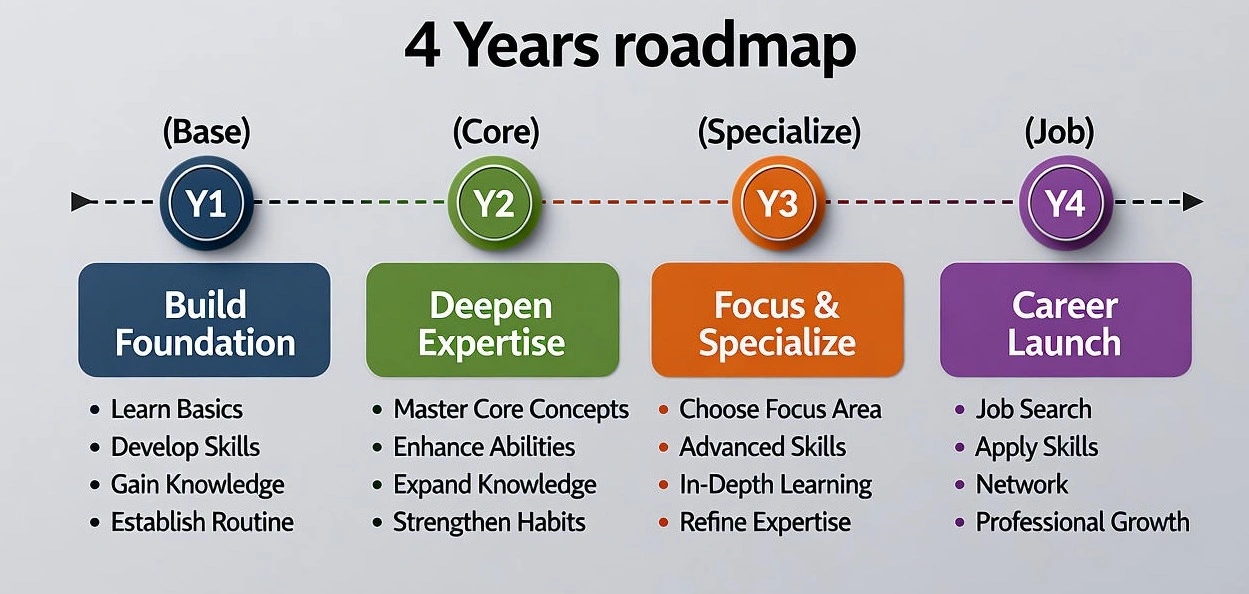
The program runs for 4 years (8 semesters) and blends theory with hands-on labs, coding projects, and internships. Students gain expertise in programming, software design, networks, databases, and emerging technologies like machine learning and cloud architecture. From building applications to securing networks and analysing data, a B.Tech in CSE opens the door to countless tech-driven careers in top companies such as Google, Amazon, Microsoft, and Infosys.
This guide provides a complete 4-year syllabus breakdown, detailing subjects, labs, projects, specialisation tracks, and the skills you’ll develop at every stage of your B.Tech journey.
Top Skills You’ll Learn in B.Tech Computer Science
A B.Tech in Computer Science doesn’t just teach coding; it builds a strong foundation in logical thinking, problem-solving, and system design. Over four years, students develop both technical and professional skills that prepare them for real-world tech roles in software development, data analysis, cloud computing, and artificial intelligence.
1. Core Technical Skills
From the first year itself, students start coding and working on small-scale projects. As the course progresses, they master tools and technologies used by leading IT firms. Key technical skills include:
Programming Languages: C, C++, Java, Python, and JavaScript.
Data Handling & Databases: SQL, MongoDB, and data analytics using Python.
Software Development: Object-Oriented Programming (OOP), Software Engineering, and Agile methodology.
Web & App Development: HTML, CSS, React, Node.js, and API integration.
Artificial Intelligence & Machine Learning: TensorFlow, Scikit-learn, Deep Learning, and Natural Language Processing (NLP).
Cloud & DevOps Tools: AWS, Azure, Docker, Kubernetes, and Git.
Cybersecurity Concepts: Cryptography, network protection, and ethical hacking fundamentals.
2. Analytical & Problem-Solving Skills
Computer Science engineering emphasises algorithmic thinking. The ability to break down complex problems into smaller, logical steps. Students learn to optimise code, analyse data structures. And design efficient software systems that perform well under real-world constraints.
3. Soft Skills and Professional Growth
Alongside technical learning, B.Tech CSE programs help students develop essential soft skills that employers value:
Effective communication and teamwork during group projects.
Critical thinking and adaptability to new technologies.
Leadership and project management through mini and major projects.
Ethical decision-making in software design and data handling.
By the end of the degree, graduates emerge as well-rounded professionals. They will be able to write efficient code, manage cloud environments, analyse data trends. And contribute to cutting-edge innovation.
Latest Technologies Covered in B.Tech CSESyllabus
As the tech landscape accelerates, the curriculum for a degree like Computer Science & Engineering (CSE) evolves to include not just classical computing topics but also emerging technologies. Here’s an overview of how the 2025-batch CSE syllabus reflects that change and what students can expect to learn.
Encourages product-based learning and portfolio projects
AR/VR & Computer Vision
7th Semester (Elective)
Object detection, 3D modelling, immersive experiences
Expanding roles in gaming, simulation, and digital design
Generative AI & NLP
7th–8th Semester
Chatbots, text summarisation, and AI-assisted design
Fast-growing innovation area shaping AI-driven applications
Quantum Computing (Introductory)
8th Semester (Optional Elective)
Qubits, quantum logic gates, and algorithm fundamentals
Exposure to frontier technologies for research-oriented students
Most universities in India (including IITs, NITs, and top private colleges) have integrated at least 3–4 of these domains into their updated B.Tech CSE syllabus under NEP 2020 guidelines. Taking elective projects or online certifications (like AWS, TensorFlow, or Google Data Analytics) helps students stay ahead of peers and boosts placement readiness.
FAQs
What is the B.Tech Computer Science syllabus structure?
The B.Tech CSE syllabus is a 4-year program divided into 8 semesters (160–170 credits). It includes core subjects like Programming, Data Structures, DBMS, Algorithms, and Operating Systems, along with labs, mini projects, and internships to build practical coding and problem-solving skills.
What are the specializations offered in B.Tech Computer Science?
From the 3rd year onwards, students can choose specializations such as Artificial Intelligence & Machine Learning, Cyber Security, Data Science, Cloud Computing, or Full Stack Development — each with distinct electives and project work tailored to industry needs.
Which subjects are taught in the first two years of B.Tech CSE?
The first two years (Semester 1–4) focus on fundamentals like C Programming, Data Structures, Algorithms, DBMS, Computer Networks, Operating Systems, and Object-Oriented Programming, along with supporting subjects like Mathematics, Physics, and Digital Logic.
What are the main skills gained from the B.Tech Computer Science syllabus?
Students develop expertise in coding (Python, Java, C++), software design, data analytics, AI/ML tools, cybersecurity, and cloud technologies like AWS, Azure, and Docker. Soft skills like teamwork, project management, and problem-solving are also emphasized.
What are the top career options after completing B.Tech CSE?
Graduates can pursue roles such as Software Engineer, AI/ML Engineer, Data Scientist, Cybersecurity Analyst, Cloud Architect, or Full Stack Developer. Leading recruiters include Google, Microsoft, Amazon, TCS, Deloitte, and Accenture, with average packages ranging from ₹8–20 LPA.
Are there any certifications that enhance career prospects in B.Tech CSE?
Yes, certifications like AWS Certified Solutions Architect, TensorFlow Developer, Google Data Analytics, and Certified Ethical Hacker (CEH) add strong value to resumes and align well with respective specialization tracks.https://articles.findmycollege.com/btech/computer-science/syllabus/
Nishit Kumar is a senior EdTech industry leader with over a decade of experience in building and scaling education platforms. He was instrumental in building Collegedunia from the ground up, shaping its product, content, and growth strategy. At FindMyCollege, Nishit oversees content and editorial strategy, guiding topic selection, content frameworks to ensure accuracy, relevance, and student-first value across the website.