CBSE Class 12 Hindi Board Examination Analysis 2026; Check Review and Students’ Reactions
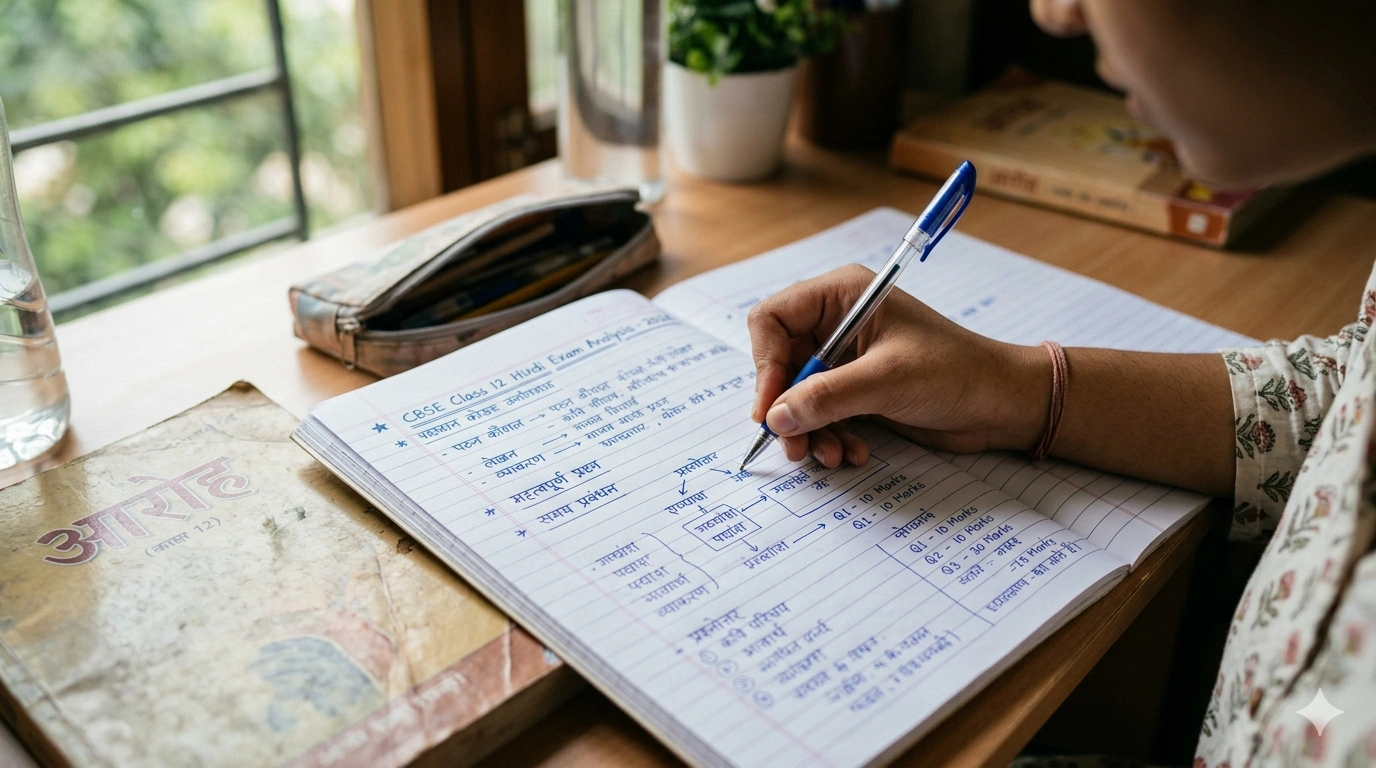
The Central Board of Secondary Education (CBSE) Class 12 Hindi Board Exam 2026 has concluded. Check the detailed paper analysis, difficulty level, question pattern, and students’ reactions.
The CBSE Class 12 Hindi Board Examination 2026 concluded earlier today, March 16, 2026, with the three-hour paper held from 10:30 AM to 1:30 PM across examination centres nationwide.
The initial feedback from students and expert reviews paints a largely positive picture. The paper was balanced, easy to moderate in difficulty, and closely aligned with the NCERT syllabus. The sample papers released by the Central Board of Secondary Education (CBSE) matched the pattern of the exam.
CBSE Class 12 Hindi Paper Structure and Section-Wise Insights
The question paper followed the familiar CBSE format, divided primarily into two broad sections:
- Section A (Objective/Reading Comprehension): This included unseen passages (gadyansh), poetry excerpts, and multiple-choice questions (MCQs). Experts emphasized the need for careful reading, advising students to go through passages at least twice to minimize misinterpretation. Most candidates found this section straightforward and scoring, with questions directly testing comprehension and basic literary understanding.
- Section B (Descriptive/Writing Skills): Focused on creative writing tasks such as essays, letters (formal/informal), and detailed/long-answer questions drawn from prescribed textbooks like Aaroh and Vitan. This portion assessed writing fluency, accuracy, grammar, and analytical depth. While manageable for well-prepared students, the descriptive nature demanded clear expression and time allocation.
Several reports noted that the overall length of the paper made time management a key factor, particularly in balancing the objective MCQs with the more elaborate writing responses. However, no section was described as unexpectedly tough or out of the syllabus.
Student and Expert Reactions
Students emerging from centres in cities like Delhi-NCR, including Faridabad and Gurugram, largely described the exam as “easy and manageable,” with many expressing confidence in completing the paper comfortably within the allotted time. Feedback compiled from various sources indicates that questions adhered closely to expected patterns, boosting morale amid the high-stakes board season.
Education experts echoed this sentiment, calling the paper “student-friendly” and well-balanced. One analysis highlighted its effectiveness in evaluating comprehension, analytical abilities, and language proficiency without introducing undue surprises. Teachers reviewing sets noted that thorough NCERT preparation would have sufficed for strong performance.
As evaluations begin under the new digital framework, students can look forward to timely results. Official question papers, unofficial answer keys, and detailed analyses are already circulating on educational portals, candidates are advised to cross-check with CBSE’s forthcoming official resources at cbse.gov.in.

Further reading
📰 More Education News
- IIM Udaipur DEM 2027 admissions open: apply for Cycle 1 by November 23Oct 23, 2026 • Nishit Kumar
- CA Foundation September 2026 result expected between October 23-26Oct 23, 2026 • Nishit Kumar
- GSSSB CCE 2026 result expected soon, final answer key nextOct 23, 2026 • Nishit Kumar
- NMMS: Telangana, Himachal candidates, download admit cards by Nov 1 examOct 23, 2026 • Nishit Kumar