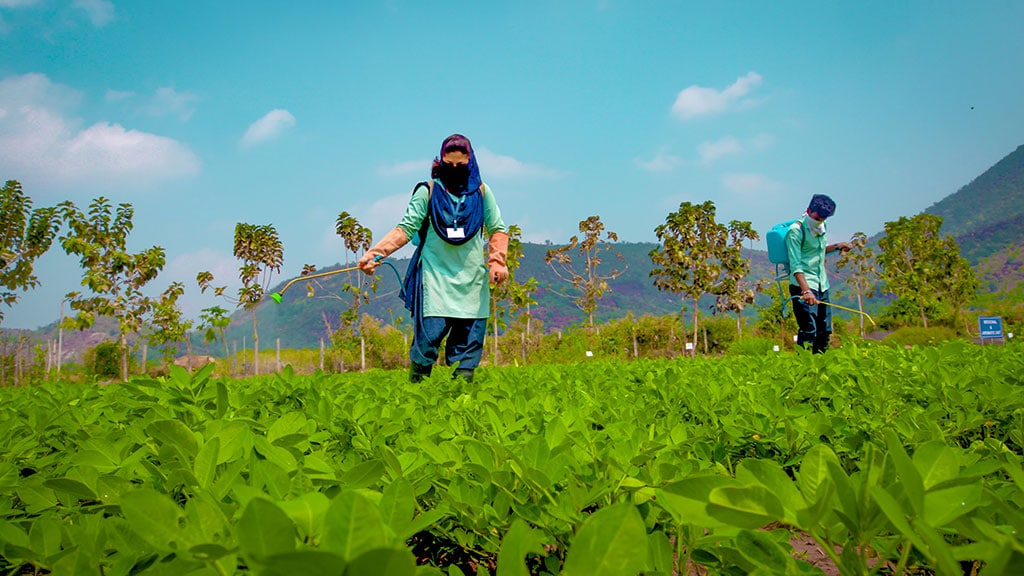
Bachelor of Science [B.Sc] (Agriculture) Complete Guide 2025-2026
The Bachelor of Science in Agriculture (B.Sc Agriculture) is a four-year undergraduate program designed to provide in-depth knowledge of agricultural sciences and modern farming practices. It covers key areas such as agronomy, soil science, crop production, plant breeding, horticulture, plant pathology, agricultural economics, entomology, and extension education.
This ICAR-aligned course emphasizes both theoretical understanding and practical training, including field work, internships, and the mandatory Rural Agricultural Work Experience (RAWE) program. Students learn to apply scientific principles to enhance crop yield, ensure soil health, manage pests sustainably, and adopt advanced technologies like precision farming and biotechnology.
In India, where agriculture contributes significantly to the economy and supports food security for a growing population, this degree is highly relevant. Graduates are equipped to address challenges like climate change, resource scarcity, and sustainable development through innovative solutions.
B.Sc Agriculture Course Highlights
B.Sc Agriculture is a 4-year full-time undergraduate program divided into 8 semesters. It follows the ICAR-recommended curriculum, blending theory, practicals, fieldwork, and internships.
| Aspect | Details |
| Duration | 4 years (8 semesters) |
| Course Type | Full-time, Undergraduate |
| Regulatory Body | Indian Council of Agricultural Research (ICAR) |
| Total Seats (Approx.) | Over 50,000 across India (government + private) |
| Average Fees | Government: ₹20,000 – ₹1 Lakh per year
Private: ₹50,000 – ₹3 Lakh per year |
| Average Starting Salary | ₹3 – ₹6 LPA (Freshers); Higher with experience or PG |
| Key Focus Areas | Agronomy, Soil Science, Horticulture, Plant Breeding, Agribusiness |
| Global Recognition | Yes, especially for higher studies abroad |
The program includes hands-on training like RAWE (Rural Agricultural Work Experience) and internships for real-world exposure.
Eligibility Criteria for B.Sc Agriculture
The B.Sc Agriculture (or B.Sc (Hons) Agriculture) is a four-year undergraduate program offered by agricultural universities and colleges across India. Eligibility criteria are largely standardized under ICAR guidelines but may vary slightly by institution, state, or admission mode (CUET UG for central/ICAR seats, state CETs, or merit-based).
Basic Educational Qualification
- Candidates must have passed Class 12 (10+2) or equivalent examination from a recognized board.
- Compulsory subjects: Physics and Chemistry, along with one of the following:
- Biology (preferred for most programs)
- Mathematics
- Agriculture (accepted by many universities)
- Streams accepted: Science (PCB/PCM/PCMB) or Agriculture vocational stream.
Minimum Marks Requirement
- General/OBC/EWS category: Minimum 50% aggregate marks in Class 12.
- SC/ST/PwD categories: Minimum 40-45% aggregate marks (relaxation of 5-10% as per institution or government norms).
- Some state universities or private colleges may require 55-60% for general category.
Age Limit
- Minimum age: 16-17 years as on August 31 or December 31 of the admission year (varies by university; ICAR recommends 16 years).
- Maximum age: No strict upper limit in most cases, but some universities (e.g., BHU) set 22-25 years. Many institutions have no upper age restriction.
Nationality and Other Requirements
- Candidates must be Indian citizens (for most seats; NRI/foreign quotas separate).
- Appearing candidates (those awaiting Class 12 results) are eligible to apply, subject to meeting criteria upon result declaration.
- Physical fitness may be required due to fieldwork components.
Admission-Specific Notes for 2025-2026
- For ICAR-allotted seats (15-100% depending on university): Admission through CUET UG scores. Candidates must select ICAR universities during CUET registration.
- State-level admissions: Through exams like MHT CET, KCET, KEAM, AP/TS EAMCET, etc., with domicile preferences in many states.
- Private universities: Often merit-based or own entrance tests, with direct admission options.
Candidates should check the specific university prospectus or official websites (e.g., ICAR, NTA CUET, state CET cells) for exact variations, as criteria can be updated annually. Reserved category benefits apply as per government rules, including seat reservations and fee relaxations.
| Category | Minimum Marks in Class 12 | NEET/CUET/ICAR Requirement |
| General | 50% | Qualifying score |
| SC/ST/OBC | 40-45% | Qualifying score + relaxation |
| PwD | 45% | As per category |
| NRI/Foreign | Varies by college | Merit or specific quotas |
Entrance Exams for B.Sc Agriculture
Admission to B.Sc Agriculture (or B.Sc (Hons) Agriculture) programs in India for the 2025-2026 academic year is primarily through entrance examinations. Since 2023, the ICAR AIEEA UG has been replaced by CUET UG for allocation of All India Quota seats (typically 15-100% depending on the university) in ICAR-accredited agricultural universities.
Many state agricultural universities conduct their own entrance tests or use state common entrance exams for the remaining seats, often giving preference to domicile candidates.
National-Level Entrance Exam
- CUET UG (Common University Entrance Test – Undergraduate) Conducted by: National Testing Agency (NTA) Relevance: Mandatory for admission to undergraduate agriculture programs in over 70 ICAR-accredited universities, including central and deemed universities. Subjects: Domain-specific Agriculture (Code 302) + Language + General Test (as per university requirements). Eligibility: 10+2 with Physics, Chemistry, and Biology/Mathematics/Agriculture. Application: Through NTA CUET portal; candidates must select ICAR-participating universities during registration. Counselling: Conducted by ICAR for seat allotment based on CUET scores.
Major State-Level Entrance Exams
The following table lists key state-level exams accepted for B.Sc Agriculture admissions:
| Exam Name | State/Region | Conducting Body | Key Details |
|---|---|---|---|
| TS EAMCET (Agriculture Stream) | Telangana | JNTU Hyderabad (on behalf of TSCHE) | For PJTSAU and affiliated colleges; PCB stream. |
| AP EAMCET (Agriculture Stream) | Andhra Pradesh | JNTU Kakinada (on behalf of APSCHE) | For ANGRAU and affiliated institutions. |
| MHT CET (PCB Group) | Maharashtra | State Common Entrance Test Cell | Mandatory for state quota seats in agricultural universities. |
| KCET | Karnataka | Karnataka Examinations Authority | For farm universities like UAS Bangalore, Dharwad. |
| KEAM | Kerala | Commissioner for Entrance Examinations | For Kerala Agricultural University and allied courses. |
| GUJCET | Gujarat | Gujarat Secondary & Higher Secondary Education Board | For admissions to AAU, JAU, NAU, SDAU. |
| OUAT Entrance Exam | Odisha | Odisha University of Agriculture and Technology | University-specific for OUAT campuses. |
| Rajasthan JET | Rajasthan | Agriculture University, Jodhpur | For state agricultural universities. |
| MP PAT | Madhya Pradesh | Madhya Pradesh Professional Examination Board | For RVSKVV and other state institutions. |
| CG PAT | Chhattisgarh | Chhattisgarh Professional Examination Board | For IGKV Raipur. |
| UPCATET | Uttar Pradesh | CSA University of Agriculture & Technology, Kanpur | For state agricultural universities. |
| PAU CET/MET | Punjab | Punjab Agricultural University | For PAU Ludhiana. |
University-Specific or Additional Exams
Some universities conduct their own tests or accept merit in addition to the above:
- Banaras Hindu University (BHU): Through CUET UG.
- Private universities (e.g., Lovely Professional University, VIT): LPUNEST, VITEEE, or direct merit-based admission.
Qualifying Marks & Cutoff Trends
Admission to B.Sc Agriculture programs involves qualifying the relevant entrance exam and meeting the cutoff ranks or scores set by universities or counselling authorities. There is no fixed minimum qualifying score in CUET UG itself for agriculture courses, as NTA does not prescribe one. However, universities and ICAR counselling use CUET scores to determine merit and cutoffs.
For state-level exams, qualifying marks are often specified (e.g., 25% of total marks in AP/TS EAMCET for general category).
Cutoffs vary annually based on factors like exam difficulty, number of applicants, seat availability, and category reservations. Below are details for major pathways in 2025-2026 admissions.
Qualifying Marks in Entrance Exams
- CUET UG (for ICAR All India Quota and central/deemed universities): No minimum qualifying marks prescribed by NTA. Eligibility for counselling requires valid CUET score in Agriculture domain + other required sections. Practical safe scores for merit list: 300+ out of 800 (normalized) for reserved categories; 400+ for general.
- State Exams:
- AP EAMCET/TS EAMCET: 25% of maximum marks (40 out of 160) for general/OBC; no minimum for SC/ST.
- MHT CET (PCB): No fixed minimum; merit based on percentile.
- KCET: No minimum qualifying marks; ranks based on scores.
- Other state tests (KEAM, Rajasthan JET, etc.): Generally no strict minimum, but merit lists start from higher scores.
ICAR CUET UG Cutoff Trends (All India Quota Seats)
ICAR counselling for 2025 used CUET UG scores. Mop-up round cutoffs were released in November 2025.
Expected safe scores for general category in top institutions: 450-550+ (normalized out of 800-1000 depending on sections).
| Category | Safe Score for Any Seat (Approx) | Safe Score for Top Universities (e.g., BHU, PAU, GBPUAT) |
|---|---|---|
| General/UR | 350-450 | 475-550+ |
| OBC/EWS | 340-420 | 450-520 |
| SC | 275-350 | 400-480 |
| ST | 245-320 | 350-450 |
Trends: Cutoffs rose slightly in 2025 due to increased applicants. For BHU B.Sc (Hons) Agriculture, general cutoff was around 499-526 marks.
Lower-ranked state agricultural universities accept scores as low as 300-350 for general.
State-Level Cutoff Trends (Closing Ranks Examples, 2024-2025)
Cutoffs are released as ranks. Lower rank = better.
| Exam/State | University/College Example | General Closing Rank (Approx 2024-2025) | OBC | SC/ST |
|---|---|---|---|---|
| AP EAMCET | ANGRAU Colleges | 2000-6000 | 3000-8000 | 8000+ |
| TS EAMCET | PJTSAU | 1500-5000 | 2500-7000 | 7000+ |
| MHT CET | Maharashtra State Agri Universities | 5000-15000 (percentile-based) | 8000-20000 | 15000+ |
| KCET | UAS Bangalore/Dharwad | 4000-10000 | 6000-12000 | 10000+ |
| KEAM | Kerala Agricultural University | 1000-5000 | 2000-7000 | 5000+ |
State quotas often favor domicile candidates, lowering effective cutoffs for locals. Private seats or management quota have higher fees but relaxed cutoffs.
Factors Influencing Cutoffs
- Increased competition in 2025 led to marginally higher cutoffs in popular states like Punjab, Tamil Nadu, and Uttar Pradesh.
- Reservation policies provide significant relaxation (10-100 points lower scores/ranks).
- Female candidates and farmer’s children get additional quotas in many states.
Candidates should check official counselling portals (ICAR: icarcounselling.samarth.ac.in; state CET sites) for exact 2025-2026 cutoffs, released post-results in rounds.
Aiming 50-100 ranks/marks above previous year trends improves chances in multiple rounds, including spot admissions.
The B.Sc (Hons) Agriculture is a four-year program structured into eight semesters, following the recommendations of the ICAR 5th Deans’ Committee (widely implemented across agricultural universities). The curriculum totals around 183-185 credits, including core courses, electives, remedial courses, and mandatory experiential learning modules like Rural Agricultural Work Experience (RAWE) and Experiential Learning Program (ELP).
The syllabus emphasizes foundational sciences in early semesters, core agricultural disciplines in middle semesters, and practical, hands-on training in later semesters. It incorporates emerging areas such as precision farming, organic agriculture, and watershed management.
Semester-Wise Course Structure
| Semester | Key Courses (Credits) | Major Focus Areas |
|---|---|---|
| I | Fundamentals of Agronomy (4), Fundamentals of Soil Science (3), Fundamentals of Horticulture (3), Rural Sociology & Educational Psychology (2), Comprehension & Communication Skills in English (2), Agricultural Heritage (1), Introductory Biology/Elementary Mathematics (2), NSS/NCC/Physical Education (1) | Basic sciences, introduction to agriculture, communication skills |
| II | Agronomy of Field Crops-I (3), Fundamentals of Genetics (3), Fundamentals of Crop Physiology (3), Fundamentals of Plant Biochemistry (3), Fundamentals of Agricultural Economics (2), Fundamentals of Entomology (3), Fundamentals of Agricultural Extension Education (3), Environmental Studies & Disaster Management (3) | Genetics, physiology, economics, entomology, extension |
| III | Crop Production/Agronomy of Field Crops-II (3), Fundamentals of Plant Breeding (3), Agricultural Microbiology (3), Fundamentals of Plant Pathology (3), Soil and Water Conservation Engineering (2), Farm Machinery and Power (2), Statistical Methods (2), Livestock and Poultry Management (4) | Crop production, breeding, microbiology, pathology, engineering basics |
| IV | Agricultural Finance and Cooperation (3), Agri-Informatics (2), Fundamentals of Seed Technology (3), Manures, Fertilizers and Soil Fertility Management (3), Irrigation Water Management (3), Weed Management (2), Pests of Crops and Stored Grain and their Management (3), Diseases of Field and Horticultural Crops and their Management (3) | Finance, informatics, seed technology, nutrient and pest management |
| V | Production Technology for Vegetables and Spices (3), Production Technology for Fruit and Plantation Crops (3), Farming System & Sustainable Agriculture (2), Principles of Integrated Pest and Disease Management (3), Farm Management, Production & Resource Economics (2), Protected Cultivation (2), Micro-propagation Technologies (2), Hi-tech Horticulture (3) | Horticulture production, sustainable systems, integrated management |
| VI | Rainfed Agriculture & Watershed Management (2), Principles of Organic Farming (2), Practical Crop Production (2), Renewable Energy and Green Technology (2), Production Technology for Ornamental Crops, MAP and Landscaping (3), Post-harvest Management and Value Addition of Fruits and Vegetables (2), Entrepreneurship Development (2) | Organic farming, renewable energy, post-harvest technology |
| VII | Rural Agricultural Work Experience (RAWE) (20 credits), including village attachment, agro-industrial attachment, project work | Hands-on rural exposure, field visits, farmer interactions, report preparation |
| VIII | Experiential Learning Program (ELP)/Hands-on Training (20 credits), modules such as Soil, Plant, Water and Seed Testing; Commercial Horticulture; Organic Farming; Food Processing; Agri-business Management | Skill-oriented modules for entrepreneurship and professional readiness |
- Total Credits: Approximately 183 (including 20 for RAWE and 20 for ELP in final year).
- Electives: Students can choose electives (around 10-15 credits) in areas like Biotechnology, Food Safety, Agribusiness, or Climate Change.
- Practical Emphasis: Over 40% of credits are practical-oriented, including field experiments, lab work, and internships.
- Non-Credit Courses: NSS/NCC, Physical Education, Educational Tour.
The curriculum is regularly updated to include modern topics like GIS in agriculture, nanotechnology, climate-resilient practices, and digital farming tools. Universities may have minor variations, but the core aligns with ICAR standards.
Students are advised to refer to their specific university prospectus or ICAR guidelines for the exact course codes and detailed outlines for the 2025-2026 session. This structure ensures graduates are well-prepared for diverse roles in research, extension, agribusiness, and farming.
Admission Process for B.Sc (Hons) Agriculture Course
Admission to B.Sc (Hons) Agriculture programs for the 2025-2026 academic session is conducted through a combination of national and state-level entrance examinations, followed by centralized counselling. The process varies depending on the university type: ICAR-accredited agricultural universities use CUET UG scores for All India Quota seats, while state agricultural universities primarily rely on state-specific entrance exams for state quota seats.
National-Level Admission (ICAR All India Quota)
The Indian Council of Agricultural Research (ICAR) allocates seats through CUET UG scores. This covers approximately 20% of seats in most agricultural universities (100% in select deemed universities like IARI New Delhi, NDRI Karnal).
Key steps:
- Appear for CUET UG conducted by NTA, selecting the Agriculture domain subject (Code 302) along with required language and general test sections.
- Register separately for ICAR counselling on the official portal after CUET results.
- Participate in online choice filling, seat allotment rounds (typically 4 rounds plus mop-up), document verification, and fee payment.
- Report to the allotted university for final admission.
For the 2025 cycle, ICAR counselling commenced in September 2025, with choice filling in October and seat allotments through November. Admissions are now largely complete, with classes underway.
State-Level Admission
Most seats (80% or more) in state agricultural universities are filled through state common entrance tests or merit, often with domicile preference.
Common process across states:
- Register and appear for the state-specific entrance exam.
- Check results and merit list.
- Participate in online/offline centralized counselling conducted by the state CET cell or university.
- Choice filling, seat allotment in multiple rounds, document verification, and admission confirmation.
Direct/Merit-Based Admission
Some private universities (e.g., Lovely Professional University, VIT, Amity) offer direct admission based on Class 12 marks or their own entrance tests (LPUNEST, VITEEE). A few institutions also consider CUET scores for non-ICAR seats.
Documents Required
Common documents for counselling/admission:
- Class 10 and 12 mark sheets and certificates
- Entrance exam scorecard and admit card
- Category certificate (if applicable)
- Domicile certificate (for state quota)
- Passport-size photographs
- Aadhaar card or ID proof
- Migration/transfer certificate
Top B.Sc Agriculture Colleges in India
India hosts numerous reputed institutions offering B.Sc (Hons) Agriculture programs, accredited by ICAR and ranked under the NIRF 2025 Agriculture and Allied Sectors category. These colleges provide strong theoretical foundations, practical training through RAWE and ELP modules, modern infrastructure, and excellent research facilities.
The top institutions are primarily government-funded agricultural universities, known for low fees, high academic standards, and strong placement records in agribusiness, research, and government sectors.
Top Government Colleges (Based on NIRF 2025 Rankings)
| Rank (NIRF 2025) | College/University | Location | Average Annual Fees (INR) | Key Highlights |
|---|---|---|---|---|
| 1 | ICAR – Indian Agricultural Research Institute (IARI) | New Delhi | 50,000 – 80,000 | Premier research institute; 100% ICAR seats; focus on advanced biotech and crop improvement |
| 2 | ICAR – National Dairy Research Institute (NDRI) | Karnal, Haryana | 20,000 – 50,000 | Specialized in dairy and animal sciences alongside agriculture |
| 3 | Punjab Agricultural University (PAU) | Ludhiana, Punjab | 70,000 – 1,00,000 | Pioneer in Green Revolution; excellent extension programs |
| 4 | Banaras Hindu University (Institute of Agricultural Sciences) | Varanasi, Uttar Pradesh | 20,000 – 40,000 | Integrated with central university; strong multidisciplinary approach |
| 5 | Indian Veterinary Research Institute (IVRI) | Izatnagar, Bareilly | 30,000 – 60,000 | Focus on livestock and veterinary integration with agriculture |
| 6 | Tamil Nadu Agricultural University (TNAU) | Coimbatore, Tamil Nadu | 40,000 – 70,000 | Leader in tropical agriculture and horticulture research |
| 7 | G.B. Pant University of Agriculture and Technology | Pantnagar, Uttarakhand | 50,000 – 80,000 | First agricultural university in India; vast campus and research farms |
| 8 | Chaudhary Charan Singh Haryana Agricultural University | Hisar, Haryana | 30,000 – 60,000 | Strong in arid zone farming and resource management |
| 9 | Acharya N.G. Ranga Agricultural University | Guntur, Andhra Pradesh | 20,000 – 50,000 | Extensive network of research stations across the state |
| 10 | Professor Jayashankar Telangana State Agricultural University | Hyderabad, Telangana | 30,000 – 60,000 | Focus on dryland agriculture and seed technology |
Notable Private Colleges
Private institutions offer modern facilities, industry partnerships, and higher placement packages, though fees are substantially higher.
| College/University | Location | Average Annual Fees (INR) | Key Highlights |
|---|---|---|---|
| Lovely Professional University (School of Agriculture) | Phagwara, Punjab | 1,50,000 – 2,50,000 | ICAR-accredited; strong industry ties and international exposure |
| Amity University (Amity Institute of Organic Agriculture) | Noida, Uttar Pradesh | 1,00,000 – 2,00,000 | Emphasis on organic farming and agribusiness management |
| VIT School of Agricultural Innovations | Vellore, Tamil Nadu | 1,50,000 – 2,00,000 | Tech-integrated curriculum with precision agriculture focus |
| Chandigarh University | Chandigarh | 1,20,000 – 1,80,000 | Modern labs and entrepreneurship support |
| Sharda University (School of Agricultural Sciences) | Greater Noida, Uttar Pradesh | 1,00,000 – 1,50,000 | Global collaborations and practical training |
B.Sc Agriculture Fees Structure
The fee structure for B.Sc (Hons) Agriculture varies significantly between government and private institutions. Government agricultural universities offer subsidized education with low tuition fees, while private colleges charge higher amounts for advanced facilities, industry exposure, and modern infrastructure.
Fees typically include tuition, examination, laboratory, library, and other charges. Hostel and mess fees are separate (approximately INR 20,000-50,000 per year). Additional one-time fees like caution deposits apply at admission.
Actual amounts vary by university, category (general/reserved), and annual revisions. Always check the official university prospectus or website for the latest 2025-2026 details.
Fees in Government Colleges
Government institutions provide the most affordable options, with annual fees ranging from INR 20,000 to INR 1,00,000. Reserved category students often receive concessions or full waivers under state schemes.
| University/College | Location | Approximate Annual Fees (INR) | Total for 4 Years (INR, Approx) |
|---|---|---|---|
| Punjab Agricultural University (PAU) | Ludhiana | 70,000 – 1,00,000 | 3,00,000 – 4,00,000 |
| Tamil Nadu Agricultural University (TNAU) | Coimbatore | 40,000 – 70,000 | 1,80,000 – 2,80,000 |
| Acharya NG Ranga Agricultural University (ANGRAU) | Guntur | 20,000 – 50,000 | 1,00,000 – 2,00,000 |
| Professor Jayashankar Telangana State Agricultural University (PJTSAU) | Hyderabad | 30,000 – 60,000 | 1,20,000 – 2,40,000 |
| Banaras Hindu University (BHU) | Varanasi | 20,000 – 40,000 | 80,000 – 1,60,000 |
| G.B. Pant University of Agriculture and Technology | Pantnagar | 50,000 – 80,000 | 2,00,000 – 3,20,000 |
| State Agricultural Universities (Average) | Various | 15,000 – 80,000 | 60,000 – 3,20,000 |
Government fees remain nominal due to state subsidies. ICAR quota seats in these universities follow similar structures.
Fees in Private Colleges
Private ICAR-accredited or deemed universities charge higher fees but often include better amenities and placement support.
| University/College | Location | Approximate Annual Fees (INR) | Total for 4 Years (INR, Approx) |
|---|---|---|---|
| Lovely Professional University (LPU) | Phagwara, Punjab | 1,50,000 – 2,50,000 | 6,00,000 – 10,00,000 |
| VIT School of Agricultural Sciences | Vellore | 1,50,000 – 2,00,000 | 6,00,000 – 8,00,000 |
| Amity University | Noida | 1,00,000 – 2,00,000 | 4,00,000 – 8,00,000 |
| Chandigarh University | Chandigarh | 1,20,000 – 1,80,000 | 4,80,000 – 7,20,000 |
| Sharda University | Greater Noida | 1,00,000 – 1,50,000 | 4,00,000 – 6,00,000 |
| Private Colleges (Average) | Various | 1,00,000 – 3,00,000 | 4,00,000 – 12,00,000 |
Many private colleges offer merit-based scholarships, reducing fees by 20-50% for high scorers.
Additional Cost Components
- Hostel & Mess — INR 20,000-60,000 per year (government); INR 50,000-1,00,000 (private).
- One-Time Fees — Caution deposit, admission fee: INR 5,000-20,000.
- Other Charges — Examination, lab, library, sports: Included in tuition or INR 5,000-15,000 extra per semester.
Career Options and Salary After B.Sc Agriculture
Graduates of B.Sc Agriculture have diverse career opportunities in government, private, research, and entrepreneurial sectors. The field benefits from India’s emphasis on food security, sustainable farming, and agri-tech advancements in 2025.
Roles span traditional farming management to modern areas like precision agriculture, agribusiness, and policy implementation. Higher education (M.Sc, MBA Agribusiness) or certifications enhance prospects and salaries.
Government Sector Careers
Government jobs offer stability, benefits, and opportunities to impact rural development. Common entry through exams like IBPS SO (AFO), NABARD Grade A, State PSCs, FCI, and ICAR.
| Job Role | Description | Average Starting Salary (INR LPA) | Key Exams/Recruiters |
|---|---|---|---|
| Agriculture Officer (AO/ADO) | Implement schemes, advise farmers, oversee extension services | 4.5 – 7 | IBPS AFO, State PSCs |
| Agriculture Field Officer (Banks) | Handle agri-loans, KCC, rural financing | 5 – 8 | IBPS SO, SBI/Other banks |
| Technical Officer/Assistant | Procurement, quality control, storage | 4 – 6 | FCI, NABARD |
| Research Scientist/JRF | Crop improvement, soil research | 5 – 9 | ICAR ARS, CSIR |
| Extension Officer | Farmer training, technology transfer | 4 – 6 | State Agriculture Depts |
| Forest/Horticulture Officer | Conservation, plantation management | 5 – 8 | UPSC IFS, State Forest Exams |
Government salaries include allowances (DA, HRA), reaching INR 50,000-90,000 monthly for entry-level with perks.
Private Sector Careers
Private roles focus on agribusiness, inputs (seeds/fertilizers), food processing, and agri-tech. Higher starting pay with incentives.
| Job Role | Description | Average Starting Salary (INR LPA) | Top Recruiters |
|---|---|---|---|
| Agronomist/Farm Manager | Crop planning, field operations | 3.5 – 6 | ITC, Godrej Agrovet |
| Sales/Marketing Executive | Promote seeds, pesticides, fertilizers | 4 – 7 | Bayer, Syngenta, UPL |
| Agri-Business Manager | Supply chain, market linkage | 5 – 8 | Nestle, Amul, HDFC Agri |
| Research Associate | Product development, trials | 4 – 6.5 | Monsanto, DuPont |
| Quality Assurance Officer | Food safety, testing | 4 – 7 | Food processing firms |
| Consultant/Entrepreneur | Advisory, startups (organic, hydroponics) | Variable (5+) | Agri-startups like DeHaat |
Top recruiters include Bayer CropScience, Syngenta, ITC Agri, UPL, Rallis India, IFFCO, KRIBHCO, Nestle, Amul, and startups.
Overall Salary Trends (2025)
Freshers earn INR 3.5 – 6 LPA on average. With 2-5 years experience, salaries rise to INR 6-10 LPA. Senior roles or with PG qualifications reach INR 10-15+ LPA.
Factors influencing salary:
- Location (higher in metros/states like Punjab, Maharashtra)
- Specialization (biotech, agribusiness pay more)
- Sector (private often higher starting; government better long-term benefits)
Higher studies boost earnings significantly (e.g., M.Sc + ICAR NET for scientist roles).
Emerging Opportunities
Agri-tech (precision farming, drones), sustainable/organic farming, export/supply chain, and climate resilience roles grow rapidly. Entrepreneurship supported by schemes like ACABC offers subsidies for ventures.
B.Sc Agriculture provides a strong foundation for impactful careers contributing to India’s agricultural growth and food security. Graduates with practical skills, digital knowledge, and communication excel in this evolving field.
FAQs
Q1: What is the duration of B.Sc Agriculture?
B.Sc Agriculture is a four-year undergraduate programme divided into eight semesters. The course includes classroom learning, laboratory practicals, fieldwork, rural agricultural training, and an internship to provide hands-on farming and agribusiness exposure.
Q2: Is NEET required for B.Sc Agriculture admission?
No, NEET is not required for B.Sc Agriculture. Admissions are mainly through CUET UG, ICAR AIEEA, and various state-level entrance exams. Some private colleges also offer admission based on Class 12 merit.
Q3: Can I pursue B.Sc Agriculture without Biology in Class 12?
Yes, some universities accept students with PCM or Agriculture-related subjects. However, most government colleges and ICAR-affiliated institutions prefer Physics, Chemistry, and Biology, making PCB the safest subject combination for admission.
Q4: What is the average salary after B.Sc Agriculture?
Fresh graduates typically earn between ₹3–6 LPA in entry-level roles. Salaries increase with experience, higher education, government positions, or careers in agribusiness, food processing, research, and agricultural consultancy sectors.
Q5: Are there government jobs after B.Sc Agriculture?
Yes, graduates can apply for government roles such as Agriculture Officer, Agricultural Extension Officer, and Field Officer. Recruitment is done through exams like IBPS AFO, state PSC, UPSC, and various agriculture department exams.
Q6: Is B.Sc Agriculture a good career option?
Yes, B.Sc Agriculture is a promising career due to rising demand for sustainable farming, food security, agri-technology, and rural development. The degree offers stable government jobs, private-sector roles, and entrepreneurial opportunities.
Q7: What is the eligibility for B.Sc Agriculture in India?
Candidates must pass Class 12 with Physics, Chemistry, and Biology or Agriculture-related subjects from a recognised board. A minimum of 50% marks is generally required, with relaxation for reserved categories as per government norms.
Q8: What subjects are taught in B.Sc Agriculture?
The syllabus includes Agronomy, Soil Science, Plant Breeding, Genetics, Agricultural Economics, Horticulture, Entomology, Plant Pathology, Agricultural Engineering, and Extension Education, along with extensive practical and field-based training.
Q9: Which are the top colleges for B.Sc Agriculture in India?
Top institutions include ICAR-affiliated agricultural universities, Tamil Nadu Agricultural University, Punjab Agricultural University, GB Pant University, and state agricultural colleges. Admission criteria, entrance exams, and cut-offs vary by institution.
Q10: Can I do higher studies after B.Sc Agriculture?
Yes, graduates can pursue M.Sc Agriculture, MBA in Agribusiness, PhD, or specialised diplomas. Competitive exams like ICAR AIEEA-PG, CUET-PG, and GATE are commonly used for postgraduate admissions.
Q11: Is B.Sc Agriculture suitable for self-employment or farming business?
Yes, the course equips students with scientific farming techniques, agribusiness knowledge, and government scheme awareness, making it ideal for starting farms, agri-startups, seed businesses, or food processing ventures.
Q12: Does B.Sc Agriculture include internship or field training?
Yes, most universities include Rural Agricultural Work Experience (RAWE) and internships. These practical components help students gain real-world exposure to farming systems, agribusiness operations, and agricultural extension activities.




![Bachelor of Education [B.Ed]: Complete Guide](https://articles.findmycollege.com/wp-content/plugins/fmc-linker-v2/assets/images/placeholder.svg)