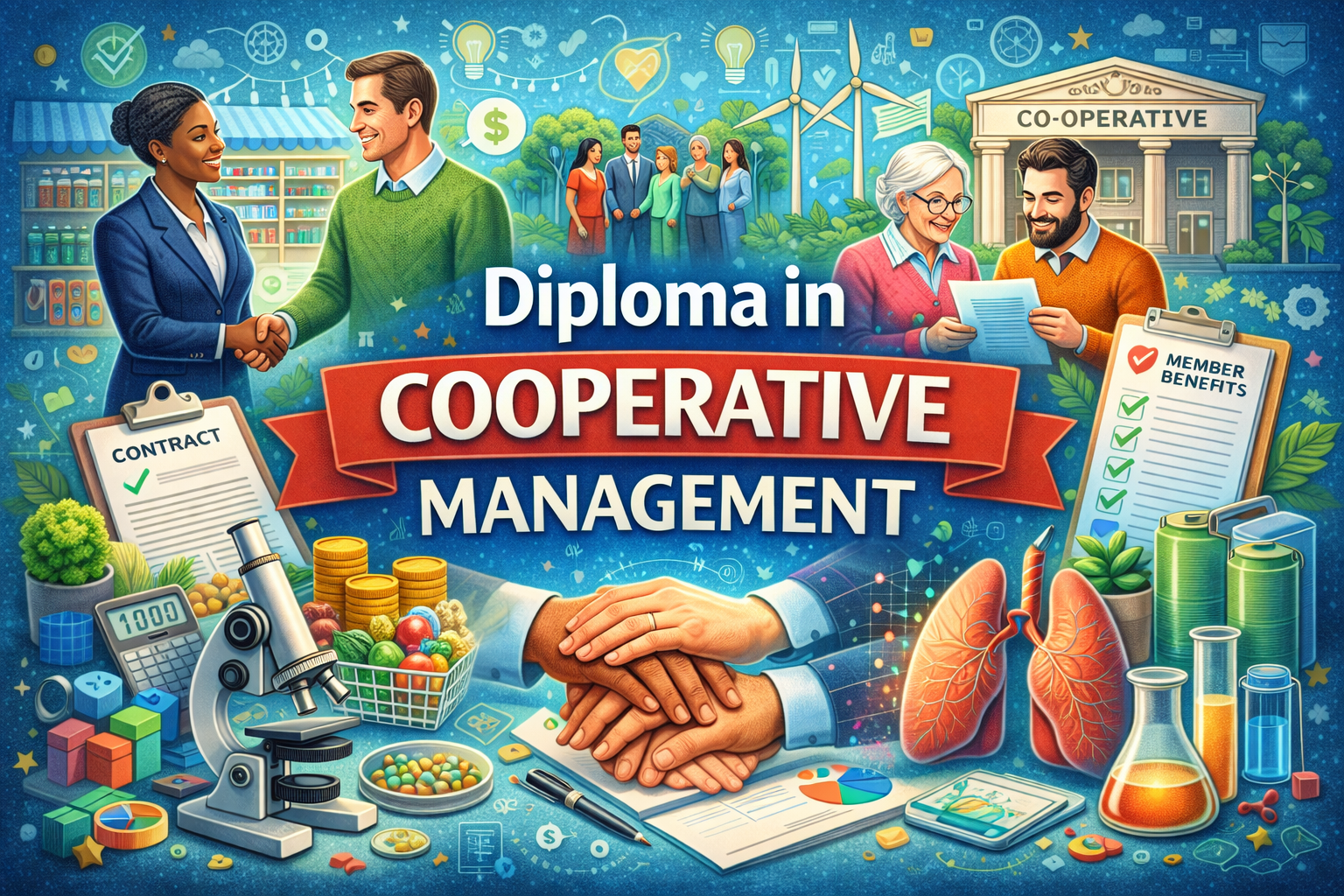
Diploma in Cooperative Management: Admission, Fees & Salary in India
The Diploma in Cooperative Management is a specialized course designed for students and working professionals who want to understand how cooperative institutions function. The course focuses on cooperative principles, management practices, accounting, rural development, and organizational skills.
In India, the cooperative sector matters for agriculture, banking, dairy production, and rural development. Because of this, trained professionals are required to manage cooperative societies effectively. This diploma course helps students gain practical knowledge about how cooperative organizations operate at local and national levels.
The program is commonly offered by cooperative training institutes and universities affiliated with organizations like National Council for Cooperative Training, which works under the Ministry of Cooperation to strengthen professional education in the cooperative sector.
What is Diploma in Cooperative Management?
🔔 Admission Alerts 2026
- Application Open: UP Cooperative Bank recruitment for 116 posts until April 15, 2026.
- Schedule Released: IGNOU June 2026 Term-End Exam dates and fee details out.
- Notification Out: DCET 2026 for Karnataka Diploma lateral entry admission.
- Launched: COAP 2026 by IIT Roorkee for M.Tech admissions via GATE.
Diploma in Cooperative Management is a short-term professional course that teaches students the structure, working system, and management of cooperative organizations. The course explains how cooperatives are formed, how members participate in decision-making, and how finances are managed.
The program mainly focuses on:
-
Cooperative laws and policies
-
Financial and accounting systems
-
Rural and agricultural development
-
Organizational management
-
Marketing in cooperative institutions
Unlike general management courses, this diploma specifically trains students for cooperative institutions such as cooperative banks, dairy cooperatives, credit societies, and farmer producer organizations.
Many cooperative institutions in India, including Amul and IFFCO, follow structured management systems that require trained professionals. This course prepares students for such roles.
Diploma in Cooperative Management: Key Highlights
| Particulars | Details |
|---|---|
| Course Name | Diploma in Cooperative Management |
| Course Level | Diploma |
| Course Duration | 6 months to 1 year |
| Eligibility | 10+2 from a recognized board (any stream) |
| Admission Process | Merit-based (some institutes may conduct interviews) |
| Course Focus | Cooperative management, accounting, banking, rural development |
| Average Fees | ₹8,000 to ₹60,000 per year |
| Job Roles | Cooperative Assistant, Field Officer, Accountant, Supervisor |
| Average Starting Salary | ₹2 LPA to ₹4 LPA |
| Higher Study Options | BBA, B.Com, MBA, PG Diploma in Management |
| Employment Areas | Cooperative banks, dairy cooperatives, credit societies, rural development organizations |
| Course Type | Classroom / Practical / Field Training |
Why Study Diploma in Cooperative Management?
The cooperative sector is growing steadily, especially in rural and semi-urban areas. Government initiatives supporting agriculture and rural finance are increasing the need for trained cooperative managers.
Here are some major reasons to choose this course:
Growing Importance of Cooperative Institutions
Cooperative societies are involved in banking, agriculture, dairy production, and housing. Their expansion creates employment opportunities for trained candidates.
Short Duration Course
Most diploma programs are completed within 6 months to 1 year, making it a quick professional qualification.
Career Opportunities in Rural Development
Students interested in rural development and social sector work can find meaningful careers through this course.
Government Sector Opportunities
Many cooperative institutions are linked with government programs and financial systems supported by organizations like National Bank for Agriculture and Rural Development.
Diploma in Cooperative Management Course Duration
The duration of the Diploma in Cooperative Management generally ranges between 6 months to 1 year, depending on the institute.
Some institutes divide the program into:
-
Classroom training
-
Practical sessions
-
Field visits to cooperative institutions
-
Project work
Short-term certificate formats are also available for working professionals already employed in cooperative societies.
Eligibility Criteria for Diploma in Cooperative Management
The eligibility criteria for this course are simple, making it accessible to a wide range of students.
Most institutes require candidates to complete 10+2 (Higher Secondary) from a recognized board. However, some institutes also allow graduates or employees working in cooperative institutions to apply.
Basic interest in management, accounting, or rural development is helpful for understanding the course topics.
| Criteria | Details |
|---|---|
| Educational Qualification | Must complete 10+2 (Higher Secondary) from a recognized board |
| Stream Required | Any stream (Commerce preferred but not mandatory) |
| Minimum Marks | Generally 40% to 50% aggregate (varies by institute) |
| Age Limit | Usually no strict age limit |
| Entrance Exam | Mostly not required; admission is merit-based |
| Work Experience | Some institutes prefer candidates working in cooperative societies |
| Preferred Skills | Basic knowledge of accounting, management, or rural development |
Admission Process for Diploma in Cooperative Management
Admission to Diploma in Cooperative Management is usually merit-based. Most institutes do not conduct entrance examinations for this program.
-
Fill out the application form online or offline.
-
Submit academic documents such as mark sheets and certificates.
-
Some institutes may conduct basic interviews.
-
Pay the course fee to confirm admission.
Government cooperative training institutes may also provide sponsored seats for candidates working in cooperative societies.
Diploma in Cooperative Management Syllabus
The syllabus is designed to provide both theoretical and practical knowledge of cooperative institutions.
Core Subjects Included
1. Principles of Cooperation
Students learn about the history, structure, and objectives of cooperative organizations.
2. Cooperative Laws and Acts
This subject explains legal regulations and registration procedures for cooperative societies.
3. Cooperative Accounting
Students understand financial management, bookkeeping, and auditing processes used in cooperative institutions.
4. Cooperative Banking
Focuses on the structure and functioning of cooperative banks and credit societies.
5. Rural Development Programs
Explains government schemes and development programs linked with cooperative sectors.
6. Marketing Management in Cooperatives
Students learn how cooperative institutions promote and sell products effectively.
7. Human Resource Management
Introduces staff management, leadership, and communication skills.
8. Field Training / Project Work
Many institutes include field visits to cooperative banks, dairy societies, and agricultural cooperatives.
Skills Developed in Diploma in Cooperative Management
This course helps students develop practical and managerial skills required in cooperative institutions.
Management Skills
Students learn organizational planning and decision-making methods used in cooperative societies.
Accounting Knowledge
Understanding financial records and auditing systems is an important skill developed during the course.
Communication Skills
Since cooperatives work on member participation, communication skills are essential.
Rural Development Understanding
Students gain knowledge about rural economy and agricultural systems.
Career Opportunities After Diploma in Cooperative Management
The cooperative sector offers various job roles for diploma holders. Students can work in both government-supported and private cooperative institutions.
Popular Job Roles
-
Cooperative Assistant
-
Office Supervisor
-
Field Officer
-
Cooperative Accountant
-
Sales and Marketing Assistant
-
Rural Development Assistant
These roles are available in:
-
Cooperative Banks
-
Dairy Cooperatives
-
Agricultural Credit Societies
-
Housing Cooperatives
-
Marketing Federations
Salary After Diploma in Cooperative Management
The starting salary after completing the diploma generally ranges between ₹1.8 lakh to ₹3.5 lakh per year, depending on job role, organization type, and experience.
Candidates working in government-supported cooperative institutions may receive additional benefits and job stability.
With experience and higher qualifications, salary growth improves significantly.
Higher Study Options After Diploma in Cooperative Management
Students who want to continue their education can choose advanced programs such as:
-
Bachelor of Business Administration (BBA)
-
Bachelor of Commerce (B.Com)
-
Master of Business Administration (MBA)
-
Post Graduate Diploma in Cooperative Management
Higher studies help candidates move into managerial and administrative positions.
Scope of Diploma in Cooperative Management in India
India has one of the largest cooperative networks in the world. Cooperative institutions support agriculture, dairy production, banking, and rural development.
Government initiatives promoting farmer producer organizations and rural finance are increasing the demand for trained cooperative professionals.
The expansion of digital banking and modern accounting systems is also creating new opportunities in cooperative institutions.
Advantages of Studying Diploma in Cooperative Management
-
Short-term professional course
-
Good opportunities in rural and agricultural sectors
-
Useful for government cooperative jobs
-
Practical and job-oriented syllabus
-
Suitable for both students and working professionals
This course is especially beneficial for candidates who want to work in community-based organizations or rural financial institutions.
Challenges in the Cooperative Sector
While the cooperative sector offers many opportunities, students should also understand certain challenges:
-
Limited awareness about cooperative careers
-
Salary may be lower at entry-level positions
-
Some institutions require additional qualifications for promotion
However, with experience and higher education, career growth becomes strong and stable.
Who Should Study Diploma in Cooperative Management?
This course is ideal for:
-
Students interested in management and rural development
-
Candidates planning to work in cooperative banks or societies
-
Employees already working in cooperative institutions
-
Students from commerce or agriculture background
Even students from other streams can pursue this course if they are interested in cooperative management systems.
Conclusion
The Diploma in Cooperative Management is a practical and career-oriented course that prepares students to work in cooperative institutions across India. With the growth of rural development programs and cooperative banking systems, the demand for trained professionals is steadily increasing.
The course offers strong foundational knowledge in cooperative laws, accounting, and management, making it a good option for students looking for quick employment or career growth in the cooperative sector.
Because cooperative organizations continue to play an important role in India’s economy, this diploma remains a valuable qualification for students interested in management, agriculture, and community development.
FAQs
1. What is Diploma in Cooperative Management?
The Diploma in Cooperative Management is a short term program that teaches cooperative principles, accounting, banking, administration, and rural development, preparing students to manage cooperative societies, credit institutions and effectively.
2. What is the eligibility for Diploma in Cooperative Management?
Eligibility for Diploma in Cooperative Management generally requires completion of 10+2 from a recognized board, although some institutes accept graduates or cooperative employees, with interest in management, accounting, banking and.
3. What is the duration of Diploma in Cooperative Management?
The duration of the Diploma in Cooperative Management usually ranges from six months to one year depending on institute structure including classroom training practical sessions field visits and project work.
4. How is admission done for Diploma in Cooperative Management?
Admission to Diploma in Cooperative Management is mostly merit based where candidates submit application forms academic documents and fees while some institutes conduct basic interviews or departmental screening for selection.
5. What subjects are included in Diploma in Cooperative Management syllabus?
The syllabus of Diploma in Cooperative Management includes cooperative principles accounting cooperative banking marketing management cooperative laws rural development human resource management auditing practices and field training for practical exposure.
6. What are the career opportunities after Diploma in Cooperative Management?
After completing Diploma in Cooperative Management graduates can work in cooperative banks dairy federations credit societies agricultural cooperatives marketing unions and rural development organizations in administrative accounting and field roles.
7. What is the salary after Diploma in Cooperative Management?
The average starting salary after Diploma in Cooperative Management ranges between two lakh and four lakh rupees per year depending on organization type job role skills experience and location factors.
8. What are the higher study options after Diploma in Cooperative Management?
Students after completing Diploma in Cooperative Management can pursue BBA BCom MBA or postgraduate diploma programs in management rural development banking or finance to improve career growth opportunities and knowledge.
9. What is the scope of Diploma in Cooperative Management in India?
The scope of Diploma in Cooperative Management in India is growing due to expansion of cooperative banking agricultural marketing dairy sectors and government rural development programs creating employment opportunities nationwide.
10. Can Diploma in Cooperative Management graduates work abroad?
Diploma in Cooperative Management holders can find opportunities abroad after gaining experience or higher qualifications especially in cooperative development projects microfinance institutions and international rural development organizations across different countries.
Q: What is the typical duration of a Diploma in Cooperative Management program in India?
Most Diploma in Cooperative Management programs in India are one year in duration, often spread across two semesters. Some institutions might offer a six-month certificate course or a two-year advanced diploma, but the standard is usually 12 months of academic study and practical training.
Q: What are the approximate fees for this diploma course in 2026?
For 2026, the fees for a Diploma in Cooperative Management can range from INR 15,000 to INR 60,000 per annum in government-aided institutions. Private colleges might charge higher, potentially up to INR 1,00,000. These figures are estimates and vary by institution and location across India.
Q: Are there any entrance exams required for admission to this diploma?
Generally, a Diploma in Cooperative Management does not require a national-level entrance exam like those conducted by NTA. Admissions are usually based on merit from your 10+2 examinations. Some institutes might conduct a basic aptitude test or an interview, but it’s less common for diploma programs.
Q: What is the career scope after completing a Diploma in Cooperative Management in India?
Graduates can find roles in cooperative banks, credit societies, marketing federations, dairy cooperatives, and consumer cooperatives. Positions include Cooperative Officer, Field Supervisor, Accountant, or Manager Trainee. Opportunities exist in both rural and urban cooperative sectors across India.
Q: What is the expected starting salary for a Diploma in Cooperative Management holder in India in 2026?
In 2026, a fresh graduate with a Diploma in Cooperative Management can expect an average starting salary ranging from INR 2.0 LPA to INR 3.5 LPA. This can vary based on the type of cooperative, location, and specific role. Experience and performance lead to significant salary growth.
Q: Is there any scope for pursuing a career abroad after this diploma?
While the Diploma in Cooperative Management is primarily tailored for the Indian cooperative sector, the foundational management principles are transferable. However, direct employment abroad might be challenging without further higher education (e.g., a Bachelor’s or Master’s degree) or specific international certifications in cooperative development.