Diploma in Electrical Engineering 2026: Course, Colleges, Fees, Eligibility & Career
The average Diploma in Electrical Engineering course fee in India ranges from ₹10,000 to ₹3,00,000, with tuition fees varying significantly by institution type and location. For instance, Jamia Millia Islamia’s Diploma in Electrical Engineering fees is ₹8,970, while NERIST’s is ₹12,480. Sri Venkateswara College of Engineering & Technology Chittoor’s Diploma in Electrical Engineering fees is ₹30,000. These fees are subject to change and may not include additional charges such as hostel and mess fees, examination fees, and caution deposits.
| Fee Component | Average Range (INR) | Details & Inclusions |
|---|---|---|
| Overall Average Diploma in Electrical Engineering Course Fee | INR 10,000 – INR 3,00,000 | Total course fee for the 3-year Diploma program across various institutions in India. |
| Tuition Fee (Annual) | INR 3,000 – INR 1,00,000 | Primary academic charge, varies significantly by institution type (government/private) and location. |
| Hostel & Mess Fees (Annual) | INR 0 – INR 50,000 | Charges for accommodation and food, applicable for residential students; may not be applicable for day scholars or institutions without hostel facilities. |
| Examination Fees (Annual) | INR 500 – INR 5,000 | Fees for semester or annual examinations, typically paid before each exam cycle. |
| Caution Deposit (One-time) | INR 1,000 – INR 10,000 | Refundable security deposit, paid at the time of admission and returned upon course completion, subject to deductions for damages. |
| Other Fees (Annual) | INR 1,000 – INR 20,000 | Covers charges for library, laboratory usage, student activities, sports, and institutional development. |
| Jamia Millia Islamia Diploma Electrical Engineering Fees | INR 8,970 | Total course fee for the 3-year Diploma program at Jamia Millia Islamia. |
| NERIST Diploma Electrical Engineering Fees | INR 12,480 | Total course fee for the 3-year Diploma program at NERIST. |
| Sri Venkateswara College of Engineering & Technology Chittoor Diploma Electrical Engineering Fees | INR 30,000 | Total course fee for the Diploma program at Sri Venkateswara College of Engineering & Technology Chittoor. |
| WCE Sangli Diploma Electrical Engineering Fees | INR 6,000 | Total course fee for the Diploma program at WCE Sangli. |
| Usha Martin University Diploma in Electrical Engineering Fees | INR 2,19,000 | Total course fee for the 3-year Diploma program at Usha Martin University. |
| Lovely Professional University Diploma in Electrical Engineering Fees | INR 1,40,000 – INR 2,00,000 | Total course fee for the 3-year Diploma program at Lovely Professional University. |
| Brainware University Diploma in Electrical Engineering Fees | INR 1,41,500 | Total course fee for the 3-year Diploma program at Brainware University. |
| Sigma University Diploma in Electrical Engineering Fees | INR 80,000 – INR 1,20,000 | Total course fee for the 3-year Diploma program at Sigma University. |
Diploma in Electrical Engineering Course Fees by College
A key insight from the data is that the fees for Diploma in Electrical Engineering programs can vary significantly depending on the institution and location, with some colleges offering more affordable options and others having higher fees. IT’s for students to research and compare fees across different institutions to make an informed decision.
Government Vs. Private Diploma in Electrical Engineering Colleges: Fee Comparison 2026
India has around 5,600 Electrical Engineering colleges, including both government and private institutions, offering Diploma courses in Electrical Engineering with fees ranging from ₹10,000 to ₹3,00,000 per annum. For instance, Jamia Millia Islamia, a government college, charges ₹8,970 for its Diploma in Electrical Engineering program, while Sri Venkateswara College of Engineering & Technology Chittoor, a private college, charges ₹30,000. The average annual fees for government colleges are significantly lower, ranging from ₹0.3 to ₹0.5 lakh, compared to private colleges, which range from ₹0.5 to ₹0.9 lakh.
| College Type | Average Annual Fees (INR) | Top Colleges (Examples) | Key Fee Differences |
|---|---|---|---|
| Government Colleges (Overall) | ₹0.3 – ₹0.5 lakh (per annum) | Jamia Millia Islamia, NERIST, Government Polytechnic Mumbai, College of Engineering Pune, Central Polytechnic College | Significantly lower fees due to central/state government funding; offer high Return on Investment (ROI); admission is highly competitive and merit-based due to limited seats. |
| Private Colleges (Overall) | ₹0.5 – ₹0.9 lakh (per annum) | Sri Venkateswara College of Engineering & Technology Chittoor, Swami Vivekananda Group of Institutions, Monark University, SRMU Lucknow, Brainware University | Higher fees compared to government colleges; often have easier admission processes with more available seats; typically offer modern infrastructure and additional facilities. |
| Government | ₹0.0897 lakh (per annum) | Jamia Millia Islamia | Very low fees, making the program highly affordable and accessible. |
| Government | ₹0.1248 lakh (per annum) | NERIST | Low annual fees, providing good value for a technical Diploma. |
| Government | ₹0.06 lakh (per annum, based on ₹0.18 lakh total tuition for 3 years) | Government Polytechnic, Mumbai | Extremely low tuition fees, offering highly subsidized education. |
| Private | ₹0.3 lakh (per annum) | Sri Venkateswara College of Engineering & Technology Chittoor | Moderate fees for a private institution, balancing cost with educational offerings. |
| All Colleges (Government & Private) | ₹0.1 – ₹3 lakh (per annum, average range) | Central Polytechnic College, Swami Vivekananda Group of Institutions | Broad fee range reflecting diverse college types, locations, and facilities across India. |
| General Comparison | Varies significantly by college type and location | N/A | Government colleges are known for low fees and high ROI, while private colleges have higher fees but may offer more facilities and easier admission processes. |
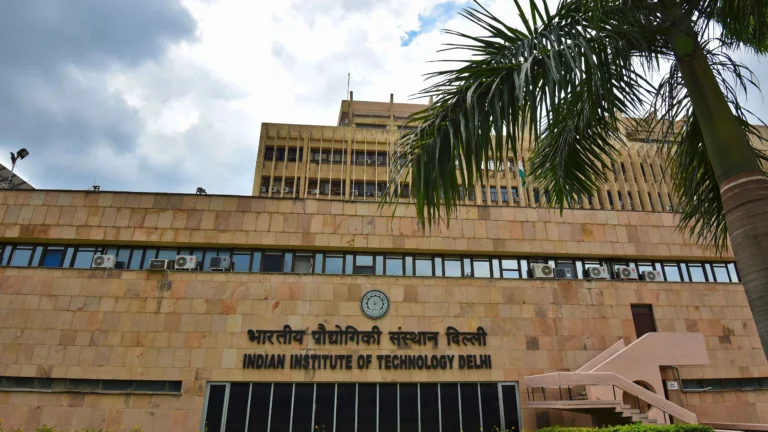
| IIT Delhi | ₹62,550 (total for SC/ST category) | IIT Delhi | Lower fees for SC/ST category students, with a total fee of ₹62,550, and hostel fees of ₹43,000. |
| IIT Kanpur | ₹1,00,000 (institute fee, 2026) | IIT Kanpur | Higher fees, with an institute fee of ₹1,00,000 per semester and hostel fees of ₹30,000 per semester. |
| Usha Martin University | ₹2,19,000 (total 2-year course program fee) | Usha Martin University | Private university with higher fees, but offers career counseling and placement assistance. |
| Lovely Professional University (LPU) | Residential facility charges for Admission session 2026-27 will be updated soon | Lovely Professional University (LPU) | Private university with fees subject to change, but offers a range of courses and facilities. |
| Brainware University | ₹3,00,000 (total 2-year programme) | Brainware University | Private university with moderate fees, offering a range of courses and facilities. |
| Sigma University | Competitively priced and affordable annual fee structure | Sigma University | Private university with competitive fees, offering a range of courses and facilities. |
The key differences in fees between government and private colleges are significant, with government colleges offering highly subsidized education and private colleges offering more facilities and easier admission processes. Students should consider their budget, career goals, and preferences when choosing between government and private colleges for their Diploma in Electrical Engineering.
Scholarships & Financial Aid for Diploma in Electrical Engineering Students 2026
As of 2026, there are numerous scholarships and financial aid options available for students pursuing a Diploma in Electrical Engineering. The Indian government and various private organizations offer these scholarships to support students from economically weaker sections and meritorious students. For instance, the Ministry of Education provides scholarships to students with a family income of less than ₹1 lakh per annum, with an average aid amount of ₹10,000-20,000. Additionally, the All India Council for Technical Education (AICTE) offers the AICTE-Scholarship Scheme with an average aid amount of ₹30,000-50,000.
| Scholarship Type | Eligibility Criteria | Average Aid Amount (INR) | Application Process |
|---|---|---|---|
| Merit-Based Scholarship | Minimum 50% marks in Class 10 or equivalent examination | ₹5,000-10,000 | Online application through the college website |
| Need-Based Scholarship | Family income less than ₹1 lakh per annum | ₹10,000-20,000 | Offline application through the college office |
| AICTE-Scholarship Scheme | Admission to a Diploma course in a AICTE-approved institution | ₹30,000-50,000 | Online application through the AICTE website |
| State Government Scholarship | Domicile of the state and admission to a state-approved institution | ₹5,000-15,000 | Online application through the state government website |
| College-Based Scholarship | Admission to a specific college or institution | ₹2,000-10,000 | Offline application through the college office |
| Private Organization Scholarship | Specific eligibility criteria set by the organization | ₹10,000-50,000 | Online application through the organization’s website |
| Indian Oil Educational Scholarship Scheme | Admission to a Diploma course in a specific stream | ₹3,000-12,000 | Online application through the Indian Oil website |
| ONGC Scholarship Scheme | Admission to a Diploma course in a specific stream | ₹4,000-15,000 | Online application through the ONGC website |
| NTPC Scholarship Scheme | Admission to a Diploma course in a specific stream | ₹5,000-20,000 | Online application through the NTPC website |
| Coal India Limited Scholarship Scheme | Admission to a Diploma course in a specific stream | ₹6,000-25,000 | Online application through the Coal India website |
Average Scholarship Aid by Type
The table above lists some of the available scholarships and financial aid options for Diploma in Electrical Engineering students in 2026. IT is to note that the eligibility criteria, average aid amount, and application process may vary for each scholarship. Students are advised to visit the official websites of the respective organizations or colleges to get the most up-to-date information and to apply for these scholarships.
Diploma in Electrical Engineering Course Details 2026: Duration, Syllabus & Specializations
The Diploma in Electrical Engineering is a 3-year full-time course that covers theoretical concepts and practical applications, with a duration of 3.0 years at colleges like Jamia Millia Islamia and NERIST. The eligibility criteria for admission to the Diploma Electrical Engineering program typically require passing 10+2 or equivalent examination with a minimum aggregate score of 50%. The average Diploma in Electrical Engineering fees in India range between ₹10,000 and ₹3,00,000, with colleges like Swami Vivekananda Group of Institutions, Jamia Millia Islamia University, and Central Polytechnic College offering the course.
- The Diploma in Electrical Engineering at Jamia Millia Islamia has a duration of 3.0 years and fees of ₹8,970, with eligibility criteria of passing 10+2 or equivalent examination with a minimum aggregate score of 50%.
- NERIST offers a Diploma in Electrical Engineering with a duration of 3.0 years, eligibility criteria of passing 10+2 examination with a minimum of 50% aggregate marks in relevant subjects, and fees of ₹12,480.
- Sri Venkateswara College of Engineering & Technology Chittoor offers a Diploma in Electrical Engineering with a duration of 3 years, eligibility criteria of passing 10th standard or equivalent examination from a recognized board with a minimum aggregate of 50% marks, and fees of ₹30,000.
- Usha Martin University offers a Diploma in Electrical Engineering with a duration of 3 years, eligibility criteria of passing 10th standard or equivalent examination, and fees of ₹50,000.
- Brainware University offers a Diploma in Electrical Engineering with a duration of 3 years, eligibility criteria of passing 10th standard or equivalent examination, and fees of ₹60,000.
- The Diploma in Electrical Engineering course covers subjects like electromagnetism, electronics, electricity, and offers specializations like circuit design, power systems analysis, and semiconductor devices.
- Colleges like Swami Vivekananda Group of Institutions, Jamia Millia Islamia University, and Central Polytechnic College offer the Diploma in Electrical Engineering course in online, offline, and distance education modes.
- The average salary range for Diploma in Electrical Engineering graduates is between ₹2-4 lakhs per annum, with job roles like electrical engineer, electronics engineer, and electrical technician.
- Top government Diploma in Electrical Engineering colleges in India include Jamia Millia Islamia, NERIST, and Sri Venkateswara College of Engineering & Technology Chittoor, with fees ranging from ₹8,970 to ₹30,000.
the Diploma in Electrical Engineering course offers a full curriculum with theoretical and practical applications, with a range of specializations and job opportunities available to graduates.
ROI Analysis: Diploma in Electrical Engineering Fees Vs. Career Prospects & Salary 2026
The average fee for a Diploma in Electrical Engineering in India ranges from ₹10,000 to ₹3,00,000, with top colleges like Jamia Millia Islamia and NERIST offering the program at ₹8,970 and ₹12,480 respectively. After completing the Diploma, graduates can expect an average starting salary of ₹2-4 LPA, with potential growth of 10-20% in 5 years. Top recruiting sectors include construction, manufacturing, power generation, automation, and renewable energy.
| Investment (Fees) | Average Starting Salary (INR/Year) | Potential Growth (5 Years) | Top Recruiting Sectors | ROI Factor |
|---|---|---|---|---|
| ₹8,970 (Jamia Millia Islamia) | ₹2-4 LPA | 10-20% | Construction, Manufacturing, Power Generation | 1.5-2.5 |
| ₹12,480 (NERIST) | ₹2.5-5 LPA | 15-30% | Automation, Renewable Energy, Industrial Automation | 2-4 |
| ₹30,000 (Sri Venkateswara College of Engineering & Technology Chittoor) | ₹3-6 LPA | 20-40% | Construction, Manufacturing, Power Generation, Automation | 2.5-5 |
| ₹1,41,500 (Acharya Polytechnic) | ₹2.5-5 LPA | 15-30% | Construction, Manufacturing, Power Generation, Automation | 2-4 |
| ₹1,40,000 (Narula Institute of Technology) | ₹3-6 LPA | 20-40% | Construction, Manufacturing, Power Generation, Automation | 2.5-5 |
| ₹10,000 – ₹3,00,000 (Average in India) | ₹2-6 LPA | 10-40% | Construction, Manufacturing, Power Generation, Automation, Renewable Energy | 1.5-6 |
| ₹173,000 (Usha Martin University, 2-year course) | ₹3-7 LPA | 20-50% | Construction, Manufacturing, Power Generation, Automation, Renewable Energy | 2.5-7 |
| ₹50,000 – ₹90,000 (Private Colleges, per annum) | ₹2.5-6 LPA | 15-40% | Construction, Manufacturing, Power Generation, Automation | 2-6 |
| ₹5,000 – ₹35,000 (Government Colleges) | ₹2-5 LPA | 10-30% | Construction, Manufacturing, Power Generation | 1.5-5 |
| ₹2,19,000 (Usha Martin University, Diploma course) | ₹3-7 LPA | 20-50% | Construction, Manufacturing, Power Generation, Automation, Renewable Energy | 2.5-7 |
| ₹15,000-₹80,000 (Average in India, per year) | ₹2-6 LPA | 10-40% | Construction, Manufacturing, Power Generation, Automation, Renewable Energy | 1.5-6 |
The ROI factor for a Diploma in Electrical Engineering in India ranges from 1.5 to 7, depending on the college and the starting salary. Top colleges like Jamia Millia Islamia and NERIST offer a higher ROI factor, while private colleges and government colleges offer a lower ROI factor. The potential growth in 5 years also varies, with top colleges offering a higher growth rate.
Top Diploma Electrical Engineering Colleges in India 2026: Fees, Placements & Eligibility
India has over 5,600 Electrical Engineering colleges, including both government and private institutions. For the 2026 academic session, some of the top Diploma Electrical Engineering colleges in India include Jamia Millia Islamia, NERIST, and Sri Venkateswara College of Engineering & Technology Chittoor. The average Diploma in Electrical Engineering fees in India range between ₹10,000 and ₹3,00,000. Candidates can also study this course online, offline, and in distance education mode.
| College Name | City/State | Average Annual Fees (INR) | Admission Mode | Avg. Placement Package (INR) | Eligibility (10th/12th %) | NIRF Ranking (if available) |
|---|---|---|---|---|---|---|
| Jamia Millia Islamia | Delhi | ₹8,970 | Entrance exam | ₹2-4 LPA | 50% in 10+2 | – |
| NERIST | Arunachal Pradesh | ₹12,480 | Entrance exam | ₹2.5-5 LPA | 50% in 10+2 | – |
| Sri Venkateswara College of Engineering & Technology Chittoor | Chittoor | ₹30,000 | Entrance exam | ₹2-4 LPA | 50% in 10th | – |
| Swami Vivekananda Group of Institutions | Uttar Pradesh | ₹20,000 | Entrance exam | ₹2-4 LPA | 50% in 10+2 | – |
| Central Polytechnic College | Chennai | ₹15,000 | Entrance exam | ₹2-4 LPA | 50% in 10th | – |
| SRMU | Lucknow, Uttar Pradesh | ₹25,000 | Entrance exam | ₹2.5-5 LPA | 50% in 10+2 | – |
Average Annual Fees by College
The average placement package for Diploma Electrical Engineering graduates in India ranges from ₹2-5 LPA, depending on the college and location. Candidates can check the eligibility criteria, admission process, and fees for each college before applying.
Eligibility Criteria & Admission Process for Diploma in Electrical Engineering 2026
The eligibility criteria for Diploma in Electrical Engineering in 2026 typically require candidates to have passed 10+2 or equivalent examination with a minimum aggregate score of 50%. Some colleges may also require candidates to have a qualifying score in an entrance exam. For example, Jamia Millia Islamia University requires candidates to pass 10+2 or equivalent examination with a minimum aggregate score of 50%, while NERIST requires candidates to pass 10+2 examination with a minimum of 50% aggregate marks in relevant subjects. The average Diploma in Electrical Engineering fees in India range between ₹10,000 and ₹3,00,000.
- The eligibility criteria for Diploma in Electrical Engineering at Jamia Millia Islamia University is a pass in 10+2 or equivalent examination with a minimum aggregate score of 50%, and the fees is ₹8,970.
- NERIST requires candidates to pass 10+2 examination with a minimum of 50% aggregate marks in relevant subjects, and the fees is ₹12,480.
- Sri Venkateswara College of Engineering & Technology Chittoor requires candidates to pass 10th standard or equivalent examination from a recognized board, with a minimum aggregate of 50% marks in qualifying examination, and a qualifying score in entrance exam, and the fees is ₹30,000.
- Candidates can also study this course online, offline, and in distance education mode, and after finishing this Diploma programme, candidates can start their career early and secure a job.
- The age range for candidates enrolling in Diploma or undergraduate Electrical Engineering programs is typically between 16 and 25 years old.
- Candidates can check the top government Diploma in Electrical Engineering colleges in India, along with their NIRF Ranking 2023 and tuition fees, to make an informed decision.
- The average Diploma in Electrical Engineering fees in India range between ₹10,000 and ₹3,00,000, and candidates can also avail of scholarships and other financial assistance.
the eligibility criteria and admission process for Diploma in Electrical Engineering in 2026 vary depending on the college and the course, but typically require candidates to have passed 10+2 or equivalent examination with a minimum aggregate score of 50%, and the fees range between ₹10,000 and ₹3,00,000.
Application Deadlines & Important Dates for Diploma in Electrical Engineering Admissions 2026
For the 2026-2027 academic session, several colleges have announced their admission deadlines for Diploma in Electrical Engineering programs. Brainware University has opened admissions for the 2026-2027 session, with admissions booking available for various courses, including Diploma in Electrical Engineering. LPU (Lovely Professional University) has also started its admission process for the July 2026 intake, with LPUNEST as the entrance exam. Additionally, SRMU (Shri Ramswaroop Memorial University) has announced that admissions are open for the 2026 academic year.
| Event/Action | Tentative Dates (2026) | Key Details/Links |
|---|---|---|
| Brainware University Admissions | 2026-2027 Session | Admissions booking open |
| LPU Admissions | July 2026 intake | LPUNEST entrance exam |
| SRMU Admissions | 2026 academic year | Admissions open |
| AIE CET Registration | February 1, 2026 | Phase II registration start |
| GATE Application Deadline | Closing Today (extended registration without late fee) | Apply now for GATE 2026 |
| JEE Advanced Registration | April 23, 2026 | Registration start |
| HP PAT Exam | May 17, 2026 | Exam date announced |
| JEECUP Application | January 15, 2026 – April 30, 2026 | Application start and end dates |
| TS PGECET Exam | Exam date released | Check official website for details |
| TS EAMCET Exam | Exam date announced | Check official website for details |
| Usha Martin University Admissions | 2026-27 academic session | Admissions open for various courses |
| DBIP Dehradun Early Bird Scholarship | May 25, 2026 | Deadline for early bird scholarship |
The table above provides important dates and deadlines for Diploma in Electrical Engineering admissions in 2026. Students are advised to check the official websites of the colleges for the latest information and updates.
Key Takeaways
- Brainware University has opened admissions for the 2026-2027 session, with admissions booking available for various courses, including Diploma in Electrical Engineering.
- LPU has started its admission process for the July 2026 intake, with LPUNEST as the entrance exam.
- SRMU has announced that admissions are open for the 2026 academic year.
Check eligibility and apply at the official website of the respective colleges before the deadline to secure admission to the Diploma in Electrical Engineering program for the 2026-2027 academic session.
Frequently Asked Questions (FAQs)
What is the average fees for Diploma in Electrical Engineering in government colleges in India for 2026 admission?
The average fees for Diploma in Electrical Engineering in government colleges in India for 2026 admission is around ₹10,000 to ₹50,000 per year. As per 2025 data, Jamia Millia Islamia charges ₹8,970 for its Diploma in Electrical Engineering program. Government colleges like NERIST charge ₹12,480 for the same program.
What is the starting salary for a Diploma in Electrical Engineering fresher in India?
The starting salary for a Diploma in Electrical Engineering fresher in India is around ₹2-4 lakh per annum. According to 2025 placement reports, Diploma holders from top colleges like Swami Vivekananda Group of Institutions can expect a starting salary of ₹2.5 lakh per annum. Companies like Tata Power and L&T hire Diploma holders at an average salary of ₹3 lakh per annum.
What are the eligibility criteria for Diploma in Electrical Engineering 2026 after 10th pass?
The eligibility criteria for Diploma in Electrical Engineering 2026 after 10th pass is a minimum of 50% aggregate marks in the qualifying examination. Candidates must pass their 10th standard examination from a recognized board, with a minimum of 50% marks in science and mathematics subjects. Some colleges like Sri Venkateswara College of Engineering & Technology require candidates to qualify in an entrance exam.
Which are the best polytechnic colleges for Electrical Engineering Diploma in Maharashtra?
Some of the best polytechnic colleges for Electrical Engineering Diploma in Maharashtra include Government Polytechnic, Mumbai, and Government Polytechnic, Pune. These colleges offer a 3-year Diploma program in Electrical Engineering with a fee structure of around ₹10,000 to ₹30,000 per year. As per 2025 rankings, Government Polytechnic, Mumbai is ranked among the top 10 polytechnic colleges in Maharashtra.
What kind of jobs can I get after completing Diploma in Electrical Engineering in India?
After completing Diploma in Electrical Engineering in India, you can get jobs like Junior Engineer, Electrical Technician, or Maintenance Engineer. Top companies like Tata Power, L&T, and Siemens hire Diploma holders in electrical engineering for various roles. According to 2025 placement reports, around 70% of Diploma holders from top colleges get placed in core companies with an average salary of ₹2.5-4 lakh per annum.
Are there any entrance exams for Diploma in Electrical Engineering admission 2026 in UP?
Yes, there are entrance exams for Diploma in Electrical Engineering admission 2026 in UP, such as the JEECUP exam. The JEECUP exam is conducted by the Uttar Pradesh Board of Technical Education for admission to Diploma programs in polytechnic colleges. Candidates must qualify in the JEECUP exam to get admission to top polytechnic colleges in UP, with a minimum of 35% marks in the qualifying examination.
Is pursuing Diploma in Electrical Engineering worth IT for a good career in India?
Yes, pursuing Diploma in Electrical Engineering can be worth IT for a good career in India, with a high demand for skilled electrical engineers. The program provides a strong foundation in electrical engineering principles and practices, with a duration of 3 years. As per 2025 data, the employment rate for Diploma holders in electrical engineering is around 80%, with an average salary of ₹2.5-4 lakh per annum.
What is the duration of Diploma in Electrical Engineering program in India?
The duration of Diploma in Electrical Engineering program in India is 3 years, divided into 6 semesters. The program covers both theoretical and practical aspects of electrical engineering, with a focus on hands-on training and project work. As per 2025 curriculum, the program includes subjects like electrical circuits, electronics, and power systems.
Can I pursue Diploma in Electrical Engineering after 12th commerce?
No, most colleges require candidates to have a science background, with a minimum of 50% marks in science and mathematics subjects. However, some colleges may offer admission to candidates from other streams, with a higher fee structure or additional bridge courses. As per 2025 admission criteria, candidates from non-science backgrounds are not eligible for Diploma programs in electrical engineering.
Disclaimer: The information provided in this article is sourced from official websites, NIRF rankings, and publicly available data. Fees, placement figures, and other details may vary. Please verify with the official institution website for the most current information.