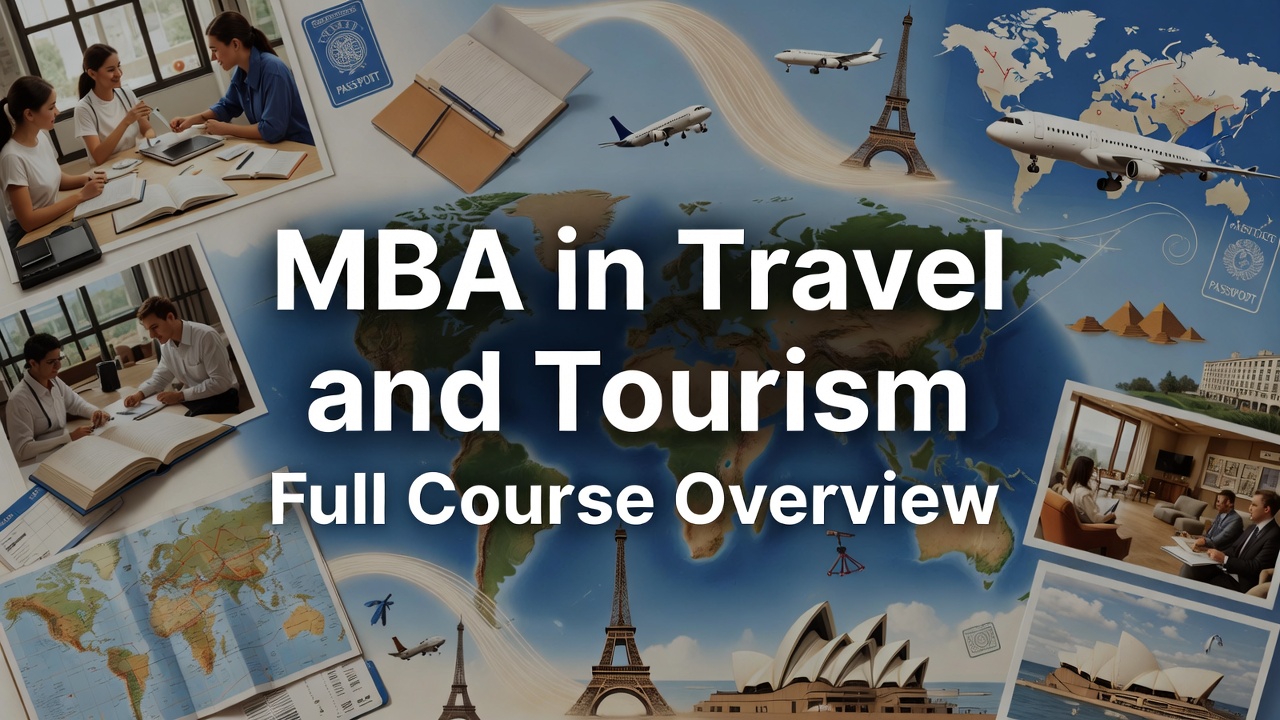
An MBA in Travel and Tourism offers job opportunities in hospitality, aviation, agency and other such setups. Read all about this 2 year programme, including top colleges, syllabus, salary expectations and more.
An MBA in Travel and Tourism is a two-year postgraduate program designed to equip students with the skills and knowledge needed for success in the rapidly growing travel and tourism industry. Graduates can expect average salaries ranging from INR 4 LPA to INR 8 LPA in roles such as tourism management, travel consulting, and event planning. Admission typically requires a bachelor’s degree with a minimum of 50% marks and a valid score on entrance exams like CAT, MAT, XAT, or CMAT. The curriculum focuses on tourism management, marketing, and operations, incorporating industry visits, case studies, and internships for practical experience. Tuition fees generally range from INR 2 lakhs to INR 10 lakhs per year.
This article provides an in-depth overview of this course. Read everything you need to know about MBA in Travel and Tourism, from top colleges to updated syllabus, job options to top recruiters and everything in between.
MBA in Travel and Tourism: Course Overview
The MBA in Travel and Tourism program provides a comprehensive understanding of tourism management, marketing, and operations through core subjects, electives, and practical training. Eligibility typically includes a bachelor’s degree with at least 50% marks and a valid score on entrance exams like CAT, MAT, XAT, or CMAT. Graduates can pursue careers in tourism management, travel consulting, and event planning, with average salaries ranging from INR 4 LPA to INR 8 LPA. The following table summarizes key aspects of the MBA in Travel and Tourism program in India.
Feature
Description
Details
Entrance Exams Accepted
CAT, MAT, XAT, CMAT
College-specific exams also accepted
Key Highlights
Focus on tourism management, marketing, and operations
Includes industry visits, case studies, and internships
Career Prospects
Tourism Manager, Travel Consultant, Event Planner
Opportunities in airlines, hotels, travel agencies, and tourism boards
Average Salary
Range
INR 4 LPA – INR 8 LPA (depending on experience and role)
Top Colleges
Indian Institute of Tourism and Travel Management (IITTM), Amity University, Lovely Professional University (LPU)
Located in Gwalior, Noida, and Phagwara respectively
MBA in Travel and Tourism Eligibility Criteria: Detailed Requirements for Indian Students
To be eligible for an MBA in Travel and Tourism in India, students generally need a bachelor’s degree from a recognized university with a minimum aggregate of 50%. Many colleges require a valid score on entrance exams like CAT, MAT, XAT, or CMAT. Work experience is often preferred. There is generally no age limit for MBA programs, but it’s best to confirm the specific requirements of each college. IGNOU also offers an MBA in Travel and Tourism with its own eligibility criteria.
The table below details the eligibility criteria for Indian students.
Parameter
Requirement
Details
Academic Qualification
Bachelor’s degree in any discipline
Recognized university, minimum 3 years duration
Minimum Percentage
50% aggregate
Some colleges may have higher cut-offs, check college website
Work Experience
Preferred but not mandatory
Some colleges give weightage to work experience, especially in the tourism industry
Entrance Exam
Valid score in CAT, MAT, XAT, CMAT
Check college-specific entrance exam requirements
Age Limit
No age limit
Check specific college requirements, some may have age restrictions
IGNOU Eligibility
Bachelor’s degree, minimum 50% aggregate
Check IGNOU website for specific eligibility criteria and admission process
Reservation
As per government norms
Check college website for reservation policy and eligibility
International Students
Equivalent bachelor’s degree, English proficiency
Check college website for international student admission process and eligibility
College-specific Requirements
Vary by college
Check college website for specific eligibility criteria, admission process, and requirements
MBA in Travel and Tourism Admission Process: Step-by-Step Guide for Indian Colleges
The admission process for an MBA in Travel and Tourism in Indian colleges includes applying for entrance exams, verifying college-specific eligibility, and participating in group discussions and personal interviews. Application fees typically range from INR 500 to INR 2,000. Follow these steps to apply:
Apply for entrance exams such as CAT, MAT, XAT, or CMAT (fees range from INR 1,000 to INR 2,000).
Verify college-specific eligibility criteria, including minimum marks and work experience.
Complete the application form for each desired college, attaching all required documents.
Attend the entrance exam and any group discussion/personal interview sessions, which may cover topics related to travel and tourism management.
Check the merit/selection list released by the college, based on entrance exam scores and other criteria.
Pay the admission fees (INR 50,000 to INR 4,00,000 per year, depending on the college).
Confirm your seat by submitting the necessary documents and fees by the deadline.
Be aware that some colleges may require additional tests or assessments, such as English proficiency or psychometric tests.
Understand that shortlisting criteria may include academic performance, work experience, and extracurricular activities.
Note that final selection is typically based on a combination of entrance exam score, group discussion, personal interview, and other factors.
Entrance Exams for MBA in Travel and Tourism in India: CAT, MAT, XAT, CUET
Several entrance exams are used for admission to MBA in Travel and Tourism programs in India. Some common ones are mentioned in the table below:
Exam Name
Key Colleges
Exam Pattern
Conducted During
CAT (Common Admission Test)
IIM Sirmaur (MBA Tourism/ TTHM), some private universities (e.g., Amity, Chandigarh if they accept)
Top Government Colleges for MBA in Travel and Tourism in India
Several government colleges in India offer MBA programs in Travel and Tourism or related fields. These institutions are known for their academic quality, infrastructure, and industry connections. Here is a comprehensive list:
College Name (City)
Total Course Fees (INR)
Admission Mode
Indian Institute of Tourism and Travel Management (IITTM), Gwalior
1,60,000
Entrance-based (IITTM Aptitude Test/CAT/MAT/CMAT)
Indian Institute of Tourism and Travel Management (IITTM), Noida
1,80,000
Entrance-based (IITTM Aptitude Test/CAT/MAT/CMAT)
Indian Institute of Tourism and Travel Management (IITTM), Bhubaneswar
1,40,000
Entrance-based (IITTM Aptitude Test/CAT/MAT/CMAT)
Jamia Millia Islamia, Department of Tourism and Hospitality (New Delhi)
1,20,000
Entrance-based (JMI Entrance Test/CUET PG)
Aligarh Muslim University (AMU), Department of Tourism and Hospitality (Aligarh)
1,10,000
Entrance-based (AMU Entrance Test/CUET PG)
Pondicherry University, Department of Tourism Studies (Puducherry)
1,50,000
Entrance-based (CUET PG)
Indian Institute of Management (IIM) Sirmaur (Sirmaur)
9,00,000
Entrance-based (CAT)
Central University of Jammu, Department of Tourism and Travel Management (Jammu)
1,70,000
Entrance-based (CUET PG)
Kerala Institute of Tourism and Travel Studies (KITTS) (Thiruvananthapuram)
1,82,000
Entrance-based (KITTS Entrance Test/MAT)
Top Private Colleges for MBA in Travel and Tourism in India
Several private colleges in India offer MBA programs in Travel and Tourism or related fields like Tourism and Travel Management. Here are the top choices:
College Name (City)
Total Course Fees (INR)
Admission Mode
Chandigarh University (Chandigarh)
4,00,000
Entrance-based (CUCET) or Merit
Amity University (Noida)
9,00,000
Entrance-based (Amity JEE/CAT/MAT) or Merit
Shoolini University (Solan)
6,00,000
Entrance-based (Shoolini Entrance Test/CAT/MAT)
GD Goenka University (Gurgaon)
4,90,000
Entrance-based (GD Goenka Aspire Test/CAT/MAT)
Galgotias University (Greater Noida)
4,00,000
Entrance-based (GUEE/CAT/MAT) or Merit
Parul University (Vadodara)
2,00,000
Entrance-based (PUET/CAT/MAT) or Merit
Lovely Professional University (LPU) (Jalandhar)
5,00,000
Entrance-based (LPUNEST/CAT/MAT)
ISBR Business School (Bangalore)
10,00,000
Entrance-based (ISBR Aptitude Test/CAT/MAT/CMAT)
Distance Learning Options for MBA in Travel and Tourism in India
Students looking to pursue distance learning for MBA in Travel and Tourism can explore the following options:
College Name (City)
Total Course Fees (INR)
Admission Mode
Study Mode
Indira Gandhi National Open University (IGNOU) (New Delhi)
15,000
Merit-based (Online Application)
Distance
Alagappa University (Karaikudi)
80,300
Merit-based
Distance
Chandigarh University Online (Chandigarh)
1,65,000
Merit-based
Online
Amity University Online (Noida)
1,50,000
Merit-based
Online
Delhi University School of Open Learning (DU SOL) (New Delhi)
1,00,000
Merit-based
Online
Desh Bhagat University ODL (Mandi Gobindgarh)
50,000
Merit-based
Distance
IMTS Institute (Noida)
1,00,000
Merit-based
Distance
MBA in Travel and Tourism Fee Structure: Government vs Private Colleges in India
The cost of an MBA in Travel and Tourism varies considerably between government and private colleges in India. Here is a side by side comparison of various fee elements:
Fee Element
Government Colleges (INR per annum)
Private Colleges (INR per annum)
Tuition Fees (per year)
40,000 – 1,50,000
2,00,000 – 6,00,000
Admission/Registration Fees
5,000 – 10,000
10,000 – 30,000
Examination Fees (per year)
2,000 – 5,000
5,000 – 15,000
Hostel Fees (per year)
20,000 – 50,000
80,000 – 1,50,000
Mess/Food Charges (per month)
2,000 – 4,000
4,000 – 7,000
Library & Lab Fees (per year)
2,000 – 5,000
5,000 – 15,000
Other Fees
5,000 – 10,000
10,000 – 30,000
Total Estimated Cost (2 years)
1,00,000 – 3,00,000
4,00,000 – 12,00,000
MBA in Travel and Tourism Syllabus: Year-wise Breakdown
The two-year MBA in Travel and Tourism program provides a comprehensive understanding of tourism management, marketing, and operations. The syllabus is divided into four semesters, with core and elective subjects.
Semester
Core Subjects
Elective Subjects
Credits
Description
Semester 1
Principles of Management; Tourism Concepts & Impacts; Organizational Behavior
–
18
Introduction to management, tourism fundamentals, and organizational behavior.
Semester 2
Tourism Marketing; Financial Accounting; Human Resource Management
–
18
Tourism marketing frameworks, accounting basics, and HR management.
Focuses on operations of travel agencies, tour packaging, itinerary planning, transportation coordination, and client services.
Tourism Marketing
Introduces marketing principles applied to tourism, including promotion, segmentation, destination branding, and consumer behavior.
Human Resource Management
Deals with HR practices in tourism/hospitality, including recruitment, training, motivation, and labor issues in service industries.
Accounting and Finance for Tourism / Basics of Accounting and Finance
Covers financial management, accounting basics, budgeting, cost control, and financial analysis tailored to tourism businesses.
Sustainable Tourism Development
Addresses principles of sustainability, eco-tourism, responsible practices, environmental impacts, and long-term tourism planning.
Aviation Management / Aviation Industry and Ticketing
Explores airline operations, ticketing systems, airfare structures, airport management, and air transport’s role in tourism.
Research Methodology / Business Research Methods
Teaches research tools, data collection, analysis, and application for tourism studies, projects, and decision-making.
Hospitality Management
Introduces hotel/accommodation operations, front office, housekeeping, food services, and guest experience management in tourism.
Destination Planning and Development
Focuses on strategies for developing, managing, and promoting tourism destinations sustainably and competitively.
Entrepreneurship and Business Plan Development
Covers starting tourism ventures, business planning, innovation, and entrepreneurial skills in the travel sector.
Top Job Roles with Salary Ranges After MBA in Travel and Tourism
Here are the top job roles to target after completing your MBA in Travel and Tourism:
Job Role
Job Description
Salary Range (INR LPA)
Tourism Manager / Travel Manager
Oversees tourism operations, destination planning, and team coordination in travel firms or tourism boards.
₹5 – ₹15 LPA
Operations Manager (Travel/Tourism)
Manages day-to-day operations of travel agencies, tour packages, logistics, and client services.
₹6 – ₹18 LPA
Airport Revenue Manager
Handles revenue optimization at airports through pricing, partnerships, and commercial strategies.
₹7 – ₹30 LPA
Airline Operations Manager
Coordinates airline ground handling, scheduling, and operational efficiency in aviation-tourism links.
₹6 – ₹25 LPA
Destination Marketing Manager
Promotes tourism destinations via campaigns, branding, and digital marketing for boards or agencies.
₹6 – ₹18 LPA
Hotel/Tourism General Manager
Leads overall hotel or resort operations, guest services, revenue, and staff management.
₹8 – ₹25 LPA
Sales & Marketing Executive/Manager (Travel)
Drives sales of tour packages, corporate travel, and marketing strategies in travel companies.
₹5 – ₹15 LPA
Event Manager (MICE/Tourism Events)
Plans and executes meetings, incentives, conferences, and tourism-related events.
₹5 – ₹15 LPA
Travel Consultant / Counsellor
Advises clients on customized itineraries, bookings, and travel solutions in agencies.
₹4 – ₹10 LPA
Guest Relations / Experience Manager
Manages guest satisfaction, feedback, and premium services in hotels or tour operations.
₹5 – ₹20 LPA
Tour Operations Manager
Designs, executes, and oversees tour packages, guides, and on-ground execution.
₹5 – ₹15 LPA
Top Recruiters After MBA in Travel and Tourism
The table below lists top recruiters to target for various sectors while seeking a job after this course:
Industry/Sector
Top Recruiters
Online Travel Aggregators / OTAs
MakeMyTrip, Yatra.com, Cleartrip, EaseMyTrip
Travel Agencies & Tour Operators
Thomas Cook, Cox & Kings, SOTC Travel, Veena World
Hospitality & Hotel Chains
Taj Group, Radisson Blu, Oberoi Hotels, ITC Hotels
Aviation & Airlines
IndiGo, Air India, SpiceJet, Jet Airways (legacy mentions)
Railways & Public Sector Tourism
IRCTC, India Tourism Development Corporation (ITDC), Madhya Pradesh Tourism Board
Corporate & MICE / Event Management
American Express Global Business Travel, Alpcord Network, Attitude Events, Club 7 Holidays
Adventure & Niche Tourism
Adventure Tours India, India Hikes, Return Journeys, Satguru Travel
Why Choose MBA in Travel and Tourism Over Others?
MBA offers multiple specialisations. However, here are a few reasons why travel and tourism makes for a rewarding choice:
Explosive Industry Growth and Job Creation
India’s tourism sector is booming, projected to contribute trillions to the economy and create millions of jobs by 2035—offering far greater job security and opportunities than many saturated fields.
Global Exposure and International Career Paths
The travel industry is inherently borderless, providing frequent international travel, cross-cultural experiences, and global job prospects that few other MBA specialisations naturally deliver.
Diverse and Dynamic Career Options
From airlines and hotels to OTAs, event management, sustainable tourism startups, and destination marketing, the field offers unmatched variety and the chance to switch roles without starting over.
Blend of Creativity, Strategy, and Real-World Impact
You combine business strategy with creative destination branding, experiential design, and sustainable practices—making work feel meaningful and far more engaging than purely corporate roles.
Rising Demand for Specialised Skills in Emerging Trends
With sustainability, digital transformation, and experiential travel on the rise, professionals skilled in eco-tourism, AI-driven marketing, and wellness travel command premium roles and faster career progression.
Industry Trends and Future Scope
The travel and tourism sector in India is experiencing robust post-pandemic recovery and accelerated growth as of 2026, positioning an MBA in Travel and Tourism as a highly future-oriented qualification. According to the World Travel & Tourism Council (WTTC), India’s Travel & Tourism sector is projected to contribute over ₹22 trillion to the economy in 2025, with continued momentum into 2026 and beyond—potentially reaching nearly ₹42 trillion by 2035 and generating millions of additional jobs (up to 64 million by 2035).
The industry is expected to grow at 12-15% annually in the near term, driven by surging domestic tourism, rebounding inbound international arrivals, and expanding outbound travel from India. Some key emerging trends include sustainable and responsible tourism, rapid digital transformation through AI, online bookings, and data analytics, wellness, adventure, and MICE travel.
Frequently Asked Questions (FAQs)
Q1. What is the duration of an MBA in Travel and Tourism course?
The MBA in Travel and Tourism is a full-time, 2-year program divided into 4 semesters. The curriculum includes core and elective subjects such as Principles of Management, Tourism Concepts and Impacts, Tourism Marketing, and Financial Accounting.
Q2. What are the average tuition fees for an MBA in Travel and Tourism in government and private colleges in India?
Government colleges in India charge an average of INR 50,000 to INR 1,50,000 for an MBA in Travel and Tourism, while private colleges charge INR 2,00,000 to INR 4,00,000. For example, the Indian Institute of Tourism and Travel Management (IITTM) has an annual fee of INR 80,000, and Amity University charges INR 3,50,000 annually.
Q3. What are the eligibility criteria for pursuing an MBA in Travel and Tourism in India?
Applicants need a Bachelor’s degree from a recognized university with at least 50% aggregate marks and a valid score on entrance exams like CAT, MAT, XAT, or CMAT. Some colleges may consider work experience.
Q4. What are the career prospects after completing an MBA in Travel and Tourism, and what is the average salary range?
Graduates can pursue careers as Tourism Managers, Travel Consultants, or Event Planners. The average salary ranges from INR 4 LPA to INR 8 LPA, depending on experience and the specific role, with opportunities in airlines, hotels, travel agencies, and tourism boards.
Aayush is a writer and content strategist who turns personal stories into brand narratives. With an experience spanning diverse industries, rely on his writing for simplifying complex subjects & get in-depth insights - always with sharp wit.
The Diploma in Computer Science 2026 is a popular technical course for students who want early entry into the IT and engineering sector after Class 10 or 12. This diploma focuses on core computing concepts such as programming, software development, networking, databases, and basic electronics. Offered mainly by polytechnic colleges across India, the course blends…
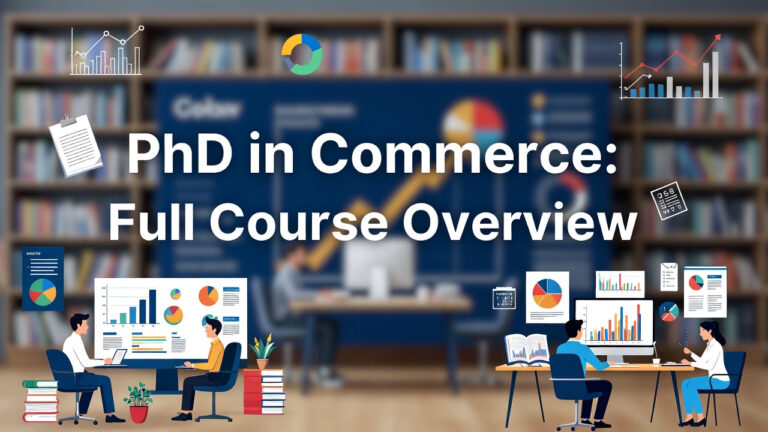
A PhD in Commerce established you as an expert in the field, opening up roles teaching, consultancy, analyst and other roles. Read about its fees, colleges, eligibility and more here. The PhD in Commerce is a highly sought-after degree in India for those seeking advanced research specializations in commerce and related fields. Typically spanning 3-6…
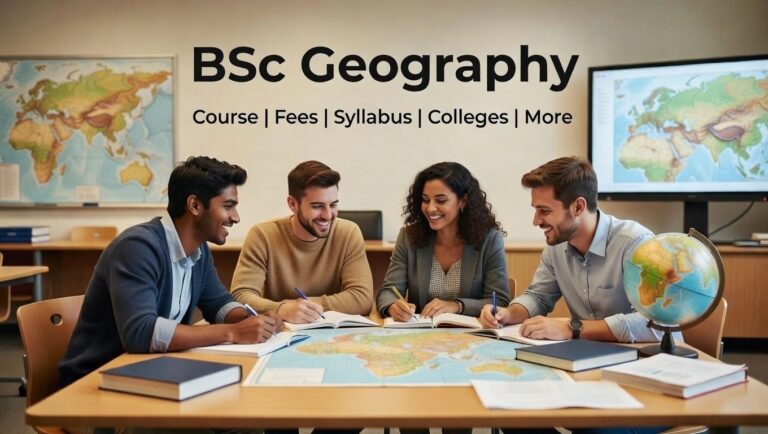
A BSc Geography is a science-based degree in Geography. It offers job roles in environmental, government and sustainability sectors. Read all its fees, syllabus, colleges, salary range and more here. A BSc Geography degree is an attractive option for students as the world faces challenges in climate change, environmental sustainability, and urban planning, creating a…
MSc Mathematics 2026 is a two-year postgraduate program designed for students who want to deepen their understanding of advanced mathematical concepts and pursue careers in academics, research, data science, finance, and technology. The course focuses on both pure and applied mathematics, covering subjects like algebra, analysis, statistics, and computational methods. Offered by top universities and…
An MBA in Entrepreneurship is a specialized postgraduate program designed to prepare students to launch, manage, and scale their own businesses. It equips students with business strategy, leadership, innovation, and management skills, making them ready for corporate, startup, or consulting roles. The program is suitable for students who want to start their own ventures, grow…
The Bachelor of Science (BSc) Honours constitutes a focused undergraduate degree programme tailored for students seeking comprehensive and in-depth academic training within a specific science subject. Unlike the general BSc programme, the BSc Honours variant places stronger emphasis on core disciplinary content, advanced theoretical principles, exposure to research methodologies, and development of strong analytical and…