Toxicology Salary in India 2026: Pay Scale and Job Roles
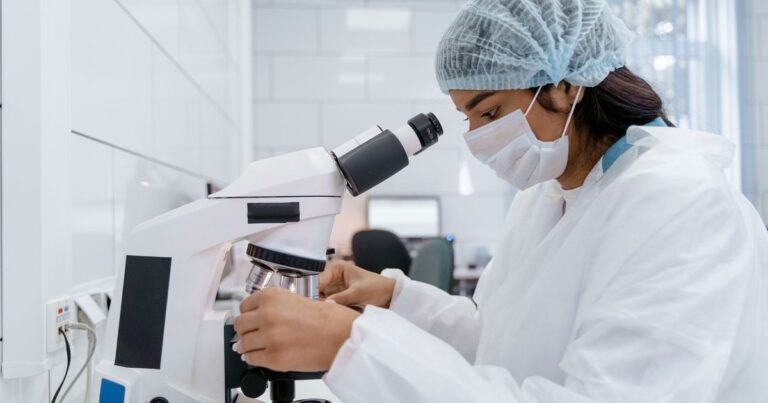
Toxicologists in India earn a median average placement package of 4.38 LPA upon completing their education, working standard 50 to 60 hour work weeks across clinical, forensic, environmental, and regulatory specialisations. Laboratory professionals analyze body fluids, animal tissues, and environmental compounds to diagnose poisoning and evaluate chemical risk factors.
Career details below outline job roles, work environments, educational costs across government and private institutions, top hiring sectors, and career advancement steps.
| Parameter | Details |
|---|---|
| Work Schedule | 9-hour regular shifts (50 to 60 hours per week) |
| Work Environment | Laboratory or office settings, with field travel for occupational roles |
| Primary Specialisations | Clinical, Forensic, Environmental, and Regulatory Toxicology |
| Key Job Roles | Analytical Toxicologist, Veterinary Toxicologist, Forensic Scientist, Clinical Toxicologist |
| Major Sectors | Government, Pharmaceuticals, Hospitals, Environmental Organisations |
Top Recruiters
Employment opportunities span healthcare facilities, government forensic laboratories, agricultural research bodies, and pharmaceutical organisations. Clinical toxicologists operate within hospital settings linked directly to clinical pharmacology departments to diagnose and treat poisoned patients. Occupational toxicologists work across diverse industrial workplaces to evaluate safety conditions and conduct site-specific risk assessments.
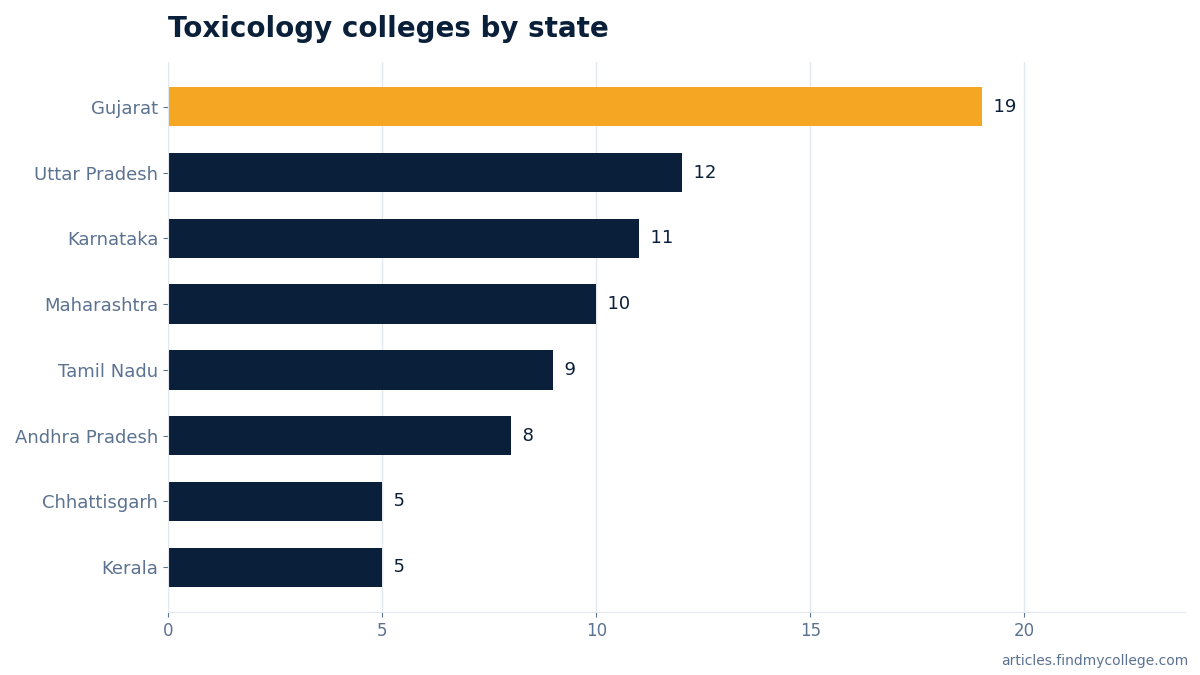
State-wise institutional presence highlights strong scientific training hubs across India: Gujarat hosts 19 colleges, Uttar Pradesh has 12, Karnataka has 11, Maharashtra features 10, Tamil Nadu has 9, and Andhra Pradesh offers 8.
How to Increase Toxicology Salary
- Build Advanced Analytical Expertise: Evaluate diagnostic tests, analyze complex body fluid samples, and implement new testing protocols.
- Specialise in Key Toxicology Domains: Gain targeted experience in forensic court testimony, clinical pharmacology in hospitals, or occupational safety risk assessments.
- Focus on Molecular and Biological Research: Investigate chemical structures, cellular responses, DNA, and molecular modifications of compounds.
Toxicologists can develop specialized career paths by building analytical skills in body fluid testing and risk assessment across clinical, forensic, or environmental fields. Conducting molecular research on cellular responses and chemical structures also expands expertise across scientific and hospital settings.
Work Environment and Schedule Expectations for Toxicologists
Toxicologists work primarily within laboratory settings, corporate offices, or clinical departments in hospitals. Standard schedules require 50 to 60 hours per week operating on 9-hour daily shifts.
| Work Parameter | Details | Impact on Schedule |
|---|---|---|
| Workplace Setting | Laboratory, office, or hospital clinical department | Full-time regular business hours |
| Weekly Hours | 50 to 60 hours per week | Requires moderate time-pressure management |
| Shift Structure | 9-hour standard shifts | May require overtime during lengthy test cycles |
Toxicology Colleges, Fees, and City Options
NIRF-ranked institutes present strong scientific academic framework for candidates pursuing toxicology specialisations.
| College | City | Total Course Fee | NIRF Rank |
|---|---|---|---|
| ShereKashmir University of Agricultural Sciences and Technology of Jammu | Jammu | ₹55,700 | 7 (Overall, 2025) |
| Govind Ballabh Pant University of Agriculture and Technology | Pantnagar | ₹93,366 | 9 (Overall, 2025) |
| Aligarh Muslim University | Aligarh | ₹62,655 | 10 (Overall, 2025) |
| Orissa University of Agriculture and Technology | Bhubaneswar | ₹52,962 | 19 (Overall, 2025) |
| Anand Agricultural University | Anand | ₹42,100 | 27 (Overall, 2025) |
| Guru Angad Dev Veterinary and Animal Sciences University | Ludhiana | ₹2.12 lakh | 30 (Overall, 2025) |
| Sri Venkateswara Veterinary University | Tirupati | ₹71,320 | 33 (Overall, 2024) |
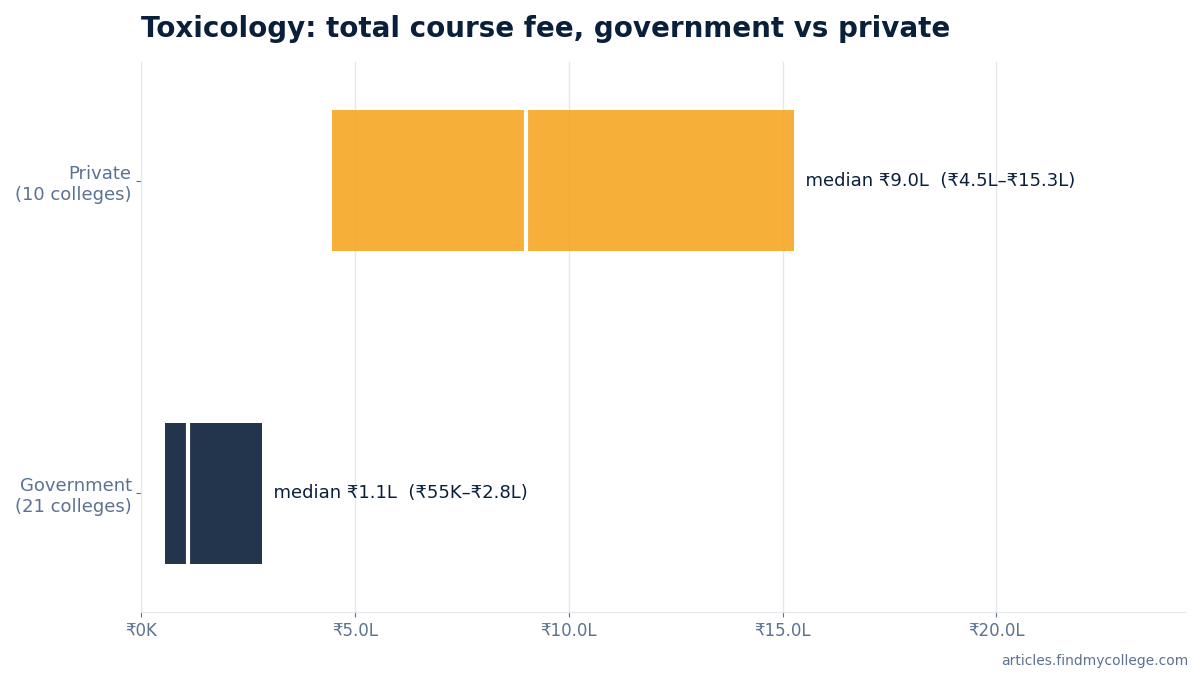
Government colleges offer low course fee options for toxicology students across various states.
| College | City | Ownership | Total Course Fee |
|---|---|---|---|
| Nalanda Medical College | Patna | Government | ₹15,000 |
| Anand Agricultural University | Anand | Government | ₹42,100 |
| College of Veterinary Science Tirupati | Tirupati | Government | ₹43,985 |
| Gujarat Technological University | Ahmedabad | Government | ₹50,000 |
| Gujarat University | Ahmedabad | Government | ₹54,000 |
| Burdwan Medical College & Hospital | Bundwan | Government | ₹56,150 |
| Tamil Nadu Veterinary and Animal Sciences University | Chennai | Government | ₹61,200 |
| Junagadh Agricultural University | Junagadh | Government | ₹63,100 |
| Patna Medical College | Patna | Government | ₹69,600 |
| All India Institute of Medical Sciences Rishikesh | Rishikesh | Government | ₹80,950 |
Private institutions provide dedicated laboratory infrastructure and specialized medical training pathways.
| College | City | Ownership | Total Course Fee |
|---|---|---|---|
| IQ City Medical College | Durgapur | Private | ₹9.88 lakh |
| Shri Shankaracharya Institute of Medical Sciences | Bhilai | Private | ₹31.62 lakh |
| Maharashtra Institute of Medical Education and Research | Pune | Private | ₹31.39 lakh |
| KMCH Institute of Allied Health Sciences | Coimbatore | Private | ₹9.00 lakh |
| Alvas Ayurvedic Medical College | Moodbidri | Private | ₹3.75 lakh |
| Nandha College and School of Nursing | Erode | Private | ₹9.00 lakh |
| Arunai Medical College and Hospital | Tiruvannamalai | Private | ₹9.00 lakh |
| Anand Homoeopathic Medical College & Research Institute | Anand | Private (aided) | ₹1.25 lakh |
| Swamy Vivekananda Medical College and Hospital and Research Institute | Namakkal | Private | ₹9.00 lakh |
| Government Medical College & Hospital | Akola | Private (aided) | ₹4.70 lakh |
City-level distribution highlights prominent educational locations offering toxicology programs across India.
| City | Colleges | Fee Range | Well-known Options |
|---|---|---|---|
| Anand | 5 | ₹42,100 – ₹7.50 lakh | Anand Agricultural University, Bhaikaka University |
| Chennai | 4 | ₹61,200 – ₹2.50 lakh | Sri Ramachandra Institute of Higher Education and Research, University of Madras |
| Patna | 4 | ₹15,000 – ₹69,600 | All India Institute of Medical Sciences Patna, Patna Medical College |
| Wayanad | 3 | ₹83,200 – ₹83,200 | Kerala Veterinary and Animal Sciences University Pookode, KVASU, College of Veterinary and Animal Sciences Pookot Pookot |
| Bangalore | 3 | ₹79,000 – ₹21.42 lakh | National Institute of Mental Health and Neuro Sciences, Rajiv Gandhi University of Health Sciences |
| Ahmedabad | 3 | ₹50,000 – ₹1.28 lakh | Gujarat University, Gujarat Technological University |
| Jammu | 2 | ₹55,700 – ₹55,700 | All India Institute of Medical Sciences Jammu, ShereKashmir University of Agricultural Sciences and Technology of Jammu |
| Bhilai | 2 | ₹31.62 lakh – ₹31.62 lakh | Shri Shankaracharya Institute of Medical Sciences, Shri Shankaracharya Group of Institutions |
How to Start Your Toxicology Journey: Step by Step
- Understand Toxic Effects: Study the harmful effects of chemicals, biological substances, and radiation on humans, animals, and the environment.
- Select Specialisation: Choose a career focus among clinical, forensic, environmental, regulatory, or veterinary toxicology.
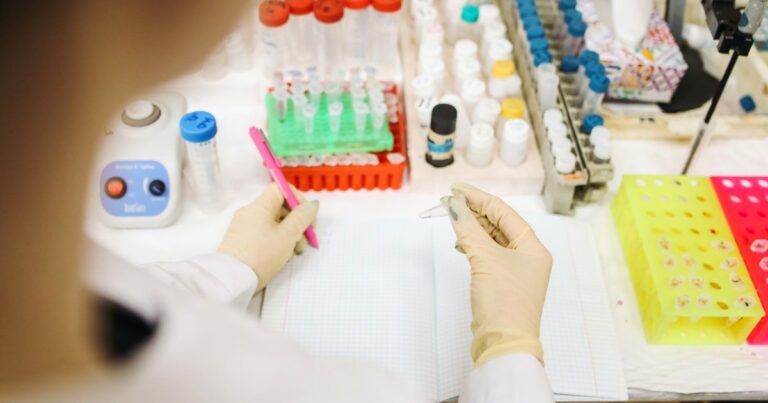
- Develop Testing Skills: Conduct laboratory analysis on tissue samples, blood, urine, faeces, and body fluids using analytical techniques and scientific equipment.
- Target Key Sectors: Pursue employment opportunities across government sectors, pharmaceutical firms, hospitals, and environmental organisations.
| What to do | Where | Link |
|---|---|---|
| Compare colleges, fees and cutoffs | Toxicology colleges in India | findmycollege.com |
Toxicologists evaluate safety risks across various specialisations to protect public health and ecosystems. Career opportunities are available across government, pharmaceutical, hospital, and environmental settings.
FAQs
What is a toxicologist?
A toxicologist is a science expert who studies how chemicals, toxins, biological substances, and radiation affect humans, animals, and the environment to ensure safety and prevent public health risks.
Are toxicologists in demand?
What does a forensic toxicologist do?
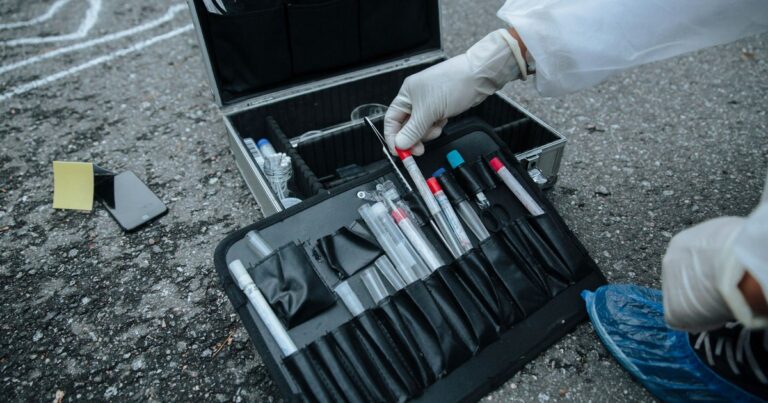
A forensic toxicologist analyses body fluids and tissue samples to detect drugs, poisons, or alcohol, and documents findings to present expert evidence during court proceedings.
What are the different types of toxicologists?
Key types include analytical toxicologists, veterinary toxicologists, clinical toxicologists, forensic toxicologists, and environmental/regulatory toxicologists.
Is a toxicologist considered a doctor?
Not all toxicologists are medical doctors; while clinical toxicologists work closely with clinical pharmacology departments in hospitals, toxicologists can also be research scientists, chemists, or biochemists.
Is environmental toxicology a good career?