NEET exam reforms: Nilekani task force consults Radhakrishnan panel chief on leak-proof system
In short
- The Nandan Nilekani-led task force on exam reforms met with K Radhakrishnan, who chaired a panel set up after the 2024 NEET paper leak.
- The task force, established in July 2026, is reviewing exam processes to recommend reforms for a secure and transparent system.
- The Radhakrishnan Committee, formed in June 2024, submitted 101 recommendations for enhanced security in October 2024.
- A NEET paper leak this year, despite ongoing implementation of earlier recommendations, led to widespread protests and a ministerial resignation.
- The Supreme Court has reprimanded the NTA and requested a report on the implementation status of the Radhakrishnan Committee's suggestions.
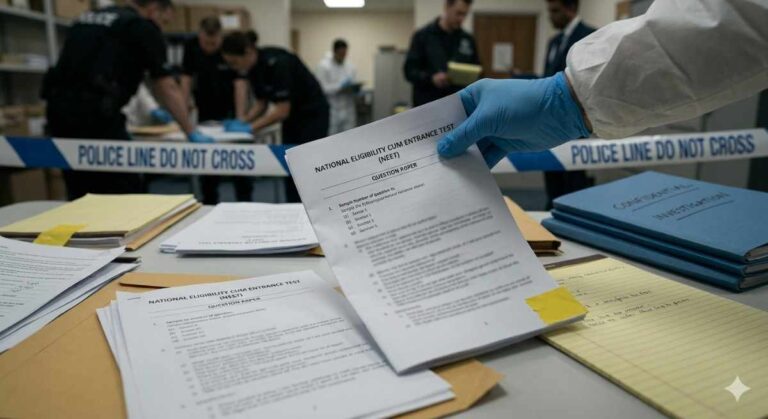
The Nandan Nilekani-led high-level task force on exam reforms today, September 29, 2026, consulted former ISRO chairman K Radhakrishnan in New Delhi. Radhakrishnan previously headed a panel established by the Centre following the 2024 NEET paper leak, tasked with recommending measures to make the examination system leakproof. This consultation is part of the task force’s mandate to recommend thorough reforms for examinations conducted by the National Testing Agency (NTA).
The current task force was constituted in July 2026, in the wake of a significant NEET paper leak this year. This incident triggered widespread protests and led to the resignation of former Union Education Minister Dharmendra Pradhan. The Supreme Court has also intervened, reprimanding the NTA and requesting a report on deploying previous recommendations.
Mandate of the Nilekani Task Force
The High-Powered Task Force (HPTF), chaired by Nandan Nilekani, former chairman of UIDAI, was announced by Prime Minister Narendra Modi a day after Pradhan’s resignation. Its primary mandate is to study and recommend complete reforms in examinations conducted by the National Testing Agency (NTA). The HPTF is reviewing existing exam processes to propose reforms aimed at creating a tough, secure, transparent, trustworthy, and future-ready examination system.
Per a senior official, the committee’s recommendations will be anchored in the use and using of the latest technologies. The task force has engaged in full discussions with various stakeholders, including the Director General of NTA and the Department of Higher Education. The HPTF has also consulted with K Radhakrishnan, who chairs the High Powered Steering Committee (HPSC) taking care of monitoring rolling out his earlier committee’s recommendations.
Radhakrishnan Committee’s Earlier Recommendations
The Radhakrishnan Committee was initially set up in June 2024 following a NEET paper leak that year. This seven-member committee submitted its recommendations in October 2024, focusing on reforms in the examination process, improvements in data security protocols, and the structure and functioning of the NTA. The panel made 101 recommendations for enhanced security controls across examination-critical systems.
These 101 recommendations covered various aspects of the examination lifecycle, including question paper systems, candidate registration, fee payment, admit card systems, computer-based testing platforms, OMR processing, normalisation engines, and result systems. The Radhakrishnan panel was of the opinion that NTA must restrict its scope strictly to higher education entrance exams while overhauling its governance, security, and digital infrastructure. The Ministry of Education was in the process of implementing these suggestions when another NEET paper leak occurred this year.
Current Status and Supreme Court Intervention
The paper leak this year led to widespread protests and the resignation of former Union Education Minister Dharmendra Pradhan. The Supreme Court reprimanded the NTA, stating that “it has not learnt its lessons.” The apex court also asked the Centre to submit a report on the status of implementation of the Radhakrishnan Committee’s recommendations. An official stated that the recommendations made by the previous panel are being studied by the new task force.
Besides Nandan Nilekani, the task force includes other members such as former ISRO chairman S Somanath, former director of Intelligence Bureau Tapan Deka, IIT Chennai Director V Kamakoti, former education secretary Anita Karwal, and logistics expert Amrit Lal Meena. The task force is currently consulting various stakeholders, including students, parents, teachers, academic institutions, subject matter experts, industry organisations, and exam-conducting bodies. The task force is yet to submit its report.
Further reading

📰 More Education News
- NEET exam reforms: Nilekani-led panel consults ex-ISRO chief Radhakrishnan on leakproof systemSep 29, 2026 • Nishit Kumar
- BSEB School Librarian Eligibility Test 2026 registration begins October 1, apply by October 21Sep 29, 2026 • Nishit Kumar
- DRDO internship 2026: apply for 30 paid opportunities by October 11Sep 29, 2026 • Nishit Kumar
- TOSS SSC/Inter: Download hall tickets by Oct 10 for Oct 11-17 examsSep 29, 2026 • Nishit Kumar