Bioengineering Courses: Degree Options, Eligibility and Career Scope
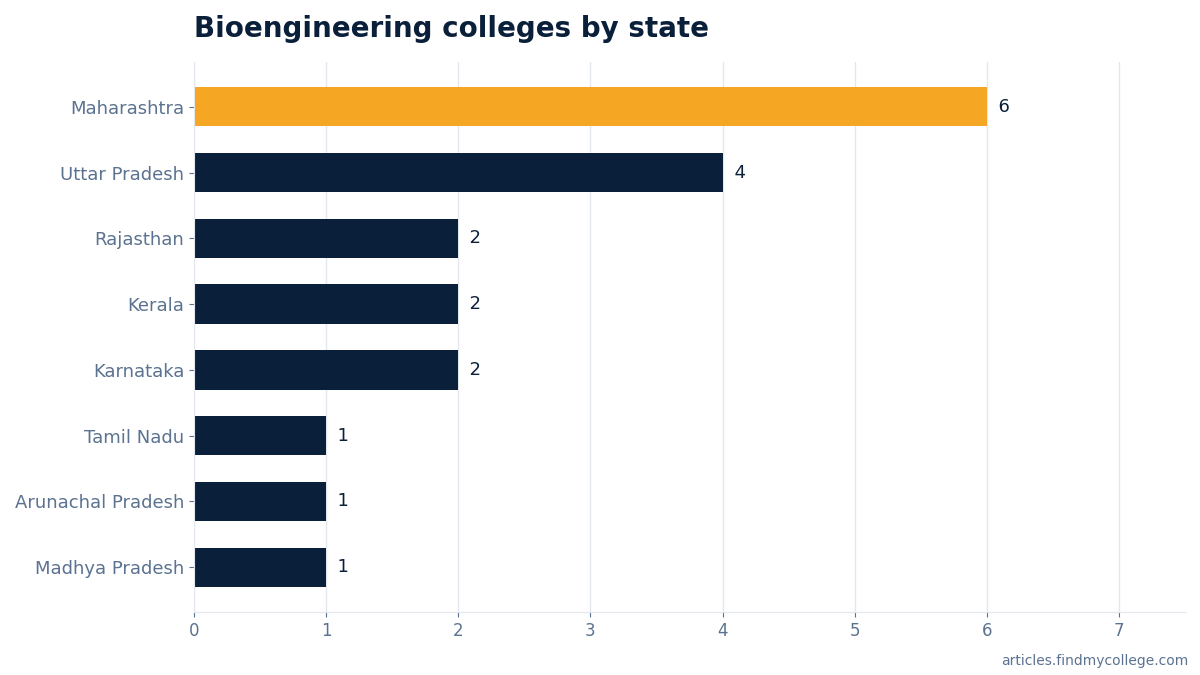
At least 25 colleges offer Bioengineering in India, including government and private institutions across states like Maharashtra, Uttar Pradesh, Rajasthan, Kerala, Karnataka, and Tamil Nadu.
Students interested in bioengineering can explore degree options, eligibility requirements, entrance exams, fee structures, top NIRF-ranked institutions, career options, and the step-by-step admission process for 2026.
| Parameter | Details |
|---|---|
| Degree Options | B.Tech, B.E., B.Tech M.Tech Integrated Course, B.Voc |
| National Entrance Exams | JEE Main, JEE Advanced |
| State Entrance Exams | MHT CET, WBJEE, AP EAMCET, TS EAMCET, KCET, GUJCET |
| University Entrance Exams | Chandigarh University CUCET |
| Allied Specialization Certifications | Clinical Research, Health Informatics, Medical Coding, Public Health |
Entrance Exams for Bioengineering Courses
Admissions to national, state, and private bioengineering institutes are conducted through standardized entrance examinations. Candidates must score valid ranks in these tests to qualify for counselling and seat allocation.
| Exam Name | Exam Level | Accepted Region / Institutions | Exam Category |
|---|---|---|---|
| JEE Main | National Level | Engineering Colleges across India | National Entrance Exam |
| MHT CET | State Level | Engineering Colleges in Maharashtra | State CET Exam |
| WBJEE | State Level | Engineering Institutions in West Bengal | State Entrance Exam |
| CUCET | University Level | Chandigarh University | University Entrance Test |
Fees
| College | City | Ownership | Total course fee |
|---|---|---|---|
| Indian Institute of Technology Varanasi | Varanasi | Government | ₹62,380 |
| Indian Institute of Technology Kanpur | Kanpur | Government | ₹84,040 |
| Indian Institute of Technology Bombay | Mumbai | Government | ₹98,000 |
| Indian Institute of Technology Guwahati | Guwahati | Government | ₹1.24 lakh |
| City | Colleges | Fee range | Well-known options |
|---|---|---|---|
| Pune | 5 | ₹3.23 lakh – ₹14.06 lakh | MIT World Peace University, MIT Art, Design and Technology University |
| Jodhpur | 1 | ₹1.47 lakh – ₹1.47 lakh | Indian Institute of Technology Jodhpur |
| Varanasi | 1 | ₹62,380 – ₹62,380 | Indian Institute of Technology Varanasi |
| Kanpur | 1 | ₹84,040 – ₹84,040 | Indian Institute of Technology Kanpur |
| Mumbai | 1 | ₹98,000 – ₹98,000 | Indian Institute of Technology Bombay |
| Thiruvananthapuram | 1 | ₹98,220 – ₹98,220 | Sree Chitra Tirunal Institute for Medical Sciences and Technology |
| Thanjavur | 1 | ₹6.00 lakh – ₹6.00 lakh | SASTRA University |
| Papum Pare | 1 | — | National Institute of Technology Papum Pare |
| College | City | Ownership | Total course fee | NIRF rank |
|---|---|---|---|---|
| Indian Institute of Technology Bombay | Mumbai | Government | ₹98,000 | 3 (Overall, 2024) |
| Indian Institute of Technology Kanpur | Kanpur | Government | ₹84,040 | 5 (Overall, 2025) |
| Indian Institute of Technology Guwahati | Guwahati | Government | ₹1.24 lakh | 11 (Overall, 2025) |
| SASTRA University | Thanjavur | — | ₹6.00 lakh | 29 (Overall, 2025) |
| Indian Institute of Technology Varanasi | Varanasi | Government | ₹62,380 | 31 (Overall, 2025) |
| National Institute of Technology Calicut | Calicut | — | ₹1.89 lakh | 45 (Overall, 2025) |
| Indian Institute of Technology Jodhpur | Jodhpur | — | ₹1.47 lakh | 66 (Overall, 2025) |
Course fees for bioengineering programs vary across Indian institutes. Among government institutes, IIT Varanasi charges ₹62,380, IIT Kanpur charges ₹84,040, IIT Bombay charges ₹98,000, and IIT Guwahati charges ₹1.24 lakh.
How to Choose
- Institution Options: Consider prominent institutions taking applications, including Parul University in Vadodara, Chandigarh University, and Shiv Nadar University Delhi NCR.
- Specialization Add-Ons: Complement your degree with specialized certifications in Clinical Research, Health Informatics, Medical Coding, or Public Health.
Selecting the right bioengineering path depends on individual academic goals, target entrance exams, and institution preferences. Reviewing degree options alongside professional certification opportunities helps candidates make an informed decision.
How to Apply for Bioengineering Admission in 2026: Step by Step
- Check eligibility: Verify core academic requirements in science subjects for engineering course eligibility.
- Register for entrance exams: Apply for national entrance exams like JEE Main and JEE Advanced, or state tests like MHT CET, WBJEE, AP EAMCET, or TS EAMCET.
- Apply to universities: Submit admission applications to colleges such as Parul University, Chandigarh University (via CUCET), or Shiv Nadar University Delhi NCR.
- Attend counselling: Participate in central, state, or university counseling based on entrance exam ranks and merit lists.
- Submit documents: Provide academic marksheets, identification, entrance scorecards, and certificates during document verification.
- Pay fees: Complete tuition fee payment at the allotted institution to confirm bioengineering admission.
| What to do | Where | Link |
|---|---|---|
| Compare colleges, fees and cutoffs | Bioengineering colleges in India | findmycollege.com |
FAQs
What degree options exist for bioengineering courses in India?
Students in India can choose undergraduate degrees like B.Tech and B.E., B.Tech M.Tech Integrated Courses, or vocational B.Voc programs. Specialized certifications in clinical research, health informatics, medical coding, and public health are also available.
Which entrance exams are accepted for bioengineering course admissions?
Is Bioengineering a Good Career Option in India?
Yes, bioengineering offers degree pathways focusing on core engineering and biological principles. Studies can be complemented by professional certifications in clinical research, health informatics, medical coding, and public health to support healthcare data and clinical workflows.
Which colleges accept applications for engineering and bioengineering programs?