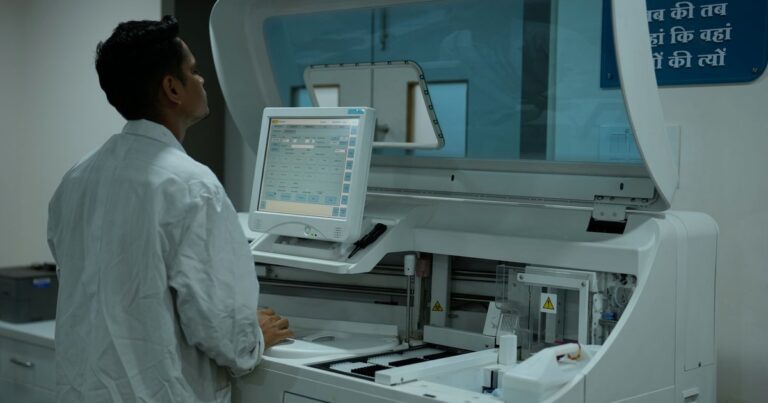
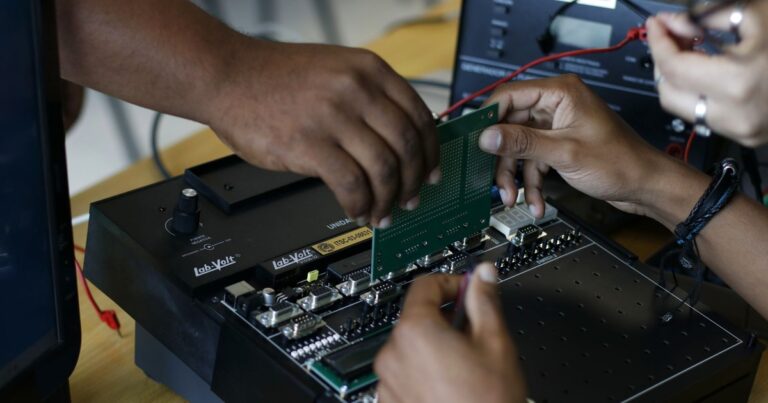
M.Tech Management (Engineering) India 2026: Overview
Nishit Kumar is a senior EdTech industry leader with over a decade of experience in building and scaling education platforms, shaping their product, content, and growth strategy. At…
Latest update: M.Tech Management 2026 admissions & dates updated. Read more ›
Welcome to the comprehensive overview of the M.Tech Management (Engineering) program in India for the academic year 2026. This page is designed to provide prospective students and parents with a detailed understanding of this unique postgraduate degree, bridging the gap between technical expertise and managerial acumen. If you’re an engineering graduate looking to lead technical teams, manage complex projects, or drive innovation, the M.Tech Management program offers a robust pathway.
What is M.Tech Management (Engineering)?
M.Tech Management (Engineering) is a specialized postgraduate program that integrates advanced engineering principles with core management concepts. It is designed for engineers who aspire to take on leadership roles, manage technical projects, optimize operational processes, and make strategic decisions within technology-driven organizations. Unlike an MBA, which is broader in scope, M.Tech Management focuses specifically on the management challenges inherent in engineering and technology sectors.
What is the eligibility criteria for M.Tech Management in India for 2026?
To be eligible for M.Tech Management in India for 2026, candidates typically need a Bachelor’s degree in Engineering or Technology (B.E./B.Tech) from a recognized university, often with a minimum aggregate score or CGPA, and a valid score in a national-level entrance examination like GATE or a university-specific test.
The specific eligibility requirements can vary slightly between institutions, but generally include:
- Educational Qualification: A B.E./B.Tech degree in any engineering discipline (e.g., Mechanical, Civil, Electrical, Computer Science, Electronics, Production, Industrial Engineering) or an equivalent degree (e.g., M.Sc. in relevant fields for some IITs).
- Minimum Marks: A minimum aggregate of 60% or a CGPA of 6.5-7.0 on a 10-point scale is commonly required. For SC/ST/PwD candidates, this might be relaxed to 55% or 6.0 CGPA.
- Entrance Examination: A valid score in the Graduate Aptitude Test in Engineering (GATE) is mandatory for admission to most IITs, NITs, and other centrally funded technical institutions. Some private universities or state universities might conduct their own entrance exams or accept scores from other national-level tests.
- Work Experience: While not always mandatory, some programs, particularly those with a stronger focus on industrial application, may prefer or require a few years of relevant work experience. This can sometimes exempt candidates from GATE for specific executive M.Tech programs.
What are the key specializations available in M.Tech Management?
M.Tech Management programs offer various specializations to cater to different industry needs, allowing students to focus on specific areas where engineering and management intersect. Common specializations include:
- Operations Management: Focuses on optimizing production processes, supply chain management, logistics, and quality control.
- Project Management: Emphasizes planning, executing, and closing projects, often with a focus on large-scale engineering or IT projects.
- Industrial Engineering & Management: Combines industrial engineering principles with management techniques to improve efficiency and productivity.
- Technology Management/Innovation Management: Deals with managing technological innovation, R&D, and the strategic deployment of technology.
- Manufacturing Management: Concentrates on the management of manufacturing systems, automation, and lean production.
- Construction Management: Specific to the construction industry, covering project planning, resource allocation, and risk management in construction.
How much does M.Tech Management cost in India (2026 fee ranges)?
The cost of an M.Tech Management program in India varies significantly based on the type of institution (government vs. private) and its prestige. Generally, government institutions offer more subsidized fees compared to private universities.
M.Tech Management Fee Ranges (Annual, 2026 Estimates)

| Institution Type | Annual Tuition Fee Range (INR) | Additional Costs (Hostel, Mess, etc.) |
|---|---|---|
| IITs / NITs / Central Govt. Funded | ₹50,000 – ₹2,00,000 | ₹30,000 – ₹80,000 per year |
| State Government Universities | ₹30,000 – ₹1,50,000 | ₹20,000 – ₹70,000 per year |
| Private Universities / Deemed Universities | ₹1,50,000 – ₹5,00,000+ | ₹50,000 – ₹1,50,000+ per year |
These figures are estimates for the 2026 academic year and can be subject to change. Scholarships and financial aid are often available, especially for GATE-qualified students in government institutions.
What is the admission process and key dates for 2026?
The admission process for M.Tech Management primarily involves appearing for a national-level entrance exam (like GATE), followed by an application to desired colleges, and then potentially interviews or group discussions.
Typical M.Tech Management Admission Timeline (2026)
| Stage | Approximate Month(s) | Details |
|---|---|---|
| GATE Application | August – September (2025) | Online application for GATE exam. |
| GATE Exam | February (2026) | Computer-based test across various engineering disciplines. |
| GATE Results | March (2026) | Declaration of GATE scores. |
| College Applications (IITs/NITs) | March – April (2026) | Apply to specific M.Tech programs via COAP (Common Offer Acceptance Portal) or individual college portals. |
| Interviews/GDs (if applicable) | May – June (2026) | Shortlisted candidates may be called for further rounds. |
| Admission Offers & Enrollment | June – July (2026) | Acceptance of offers and completion of admission formalities. |
| Session Commencement | July – August (2026) | Start of academic year. |
For private universities, the timeline might be slightly different, with applications opening earlier or later depending on their specific admission cycles.
Is M.Tech Management worth it for jobs and career prospects?
Yes, M.Tech Management is highly worth it for engineers aiming for leadership and managerial roles within technical domains. It equips graduates with a unique blend of technical depth and strategic business acumen, making them ideal candidates for positions that require both engineering understanding and management capabilities.
Graduates are well-suited for roles such as:
- Project Manager: Leading engineering or IT projects from conception to completion.
- Operations Manager: Optimizing production, logistics, and supply chain processes.
- Product Manager: Overseeing the development and lifecycle of technical products.
- Consultant (Technical/Management): Advising companies on improving efficiency, technology adoption, or project execution.
- R&D Manager: Managing research and development teams and innovation pipelines.
- Supply Chain Manager: Managing the flow of goods and services, from raw materials to final delivery.
- Business Analyst (Technical): Bridging the gap between business needs and technical solutions.
Average Salary Ranges for M.Tech Management Graduates (Entry to Mid-Level, Annual)
| Job Role | Average Annual Salary Range (INR) | Typical Employers |
|---|---|---|
| Project Engineer/Manager | ₹6,00,000 – ₹15,00,000 | IT, Manufacturing, Construction, Consulting |
| Operations Analyst/Manager | ₹5,50,000 – ₹12,00,000 | Manufacturing, E-commerce, Logistics, Consulting |
| Product Manager (Entry) | ₹7,00,000 – ₹18,00,000 | Software, Hardware, Tech Startups |
| Supply Chain Specialist | ₹5,00,000 – ₹10,00,000 | FMCG, Retail, Manufacturing |
| Management Consultant | ₹8,00,000 – ₹20,00,000+ | Big 4 Consulting Firms, Boutique Consultancies |
Salaries can vary significantly based on the institution, individual skills, location, and the company hiring. Graduates from top IITs and NITs often command higher packages.
M.Tech Management vs. MBA: Which is better for engineers?
The choice between M.Tech Management and an MBA depends entirely on an engineer’s career goals. Both are postgraduate management degrees, but they cater to different needs.
M.Tech Management vs. MBA Comparison
| Feature | M.Tech Management | MBA |
|---|---|---|
| Primary Focus | Management within technical/engineering domains. Deep dive into operations, project, technology management. | General business management across various sectors. Broader focus on finance, marketing, HR, strategy. |
| Target Audience | Engineers seeking to manage technical teams, projects, or operations. | Graduates from any discipline (often with work experience) aiming for general management roles. |
| Curriculum | Strong technical foundation with management courses. Often includes engineering electives. | Primarily management-focused, less technical depth. |
| Career Path | Project Manager, Operations Manager, Product Manager (technical), R&D Manager, Technical Consultant. | General Manager, Marketing Manager, Finance Manager, HR Manager, Strategy Consultant. |
| Prerequisite | B.E./B.Tech (often with GATE). | Any Bachelor’s degree (often with CAT/XAT/GMAT). Work experience often preferred/required. |
| Best For | Engineers who want to stay in technical industries but move into leadership. | Professionals looking for a career shift into general management or business leadership across industries. |
If your goal is to lead engineering projects, optimize technical operations, or manage product development in a tech company, M.Tech Management is likely a better fit. If you aim for broader business leadership, finance, marketing, or a complete career pivot, an MBA might be more suitable.
What are the top colleges offering M.Tech Management in India?
Several prestigious institutions in India offer M.Tech Management or similar programs, often under different department names like Industrial Engineering & Management, Engineering Management, or Operations Management.
- Indian Institutes of Technology (IITs): IIT Delhi (Industrial Engineering & Operations Research), IIT Bombay (Industrial Engineering & Operations Research), IIT Kharagpur (Industrial Engineering & Management), IIT Madras (Engineering Design with Management focus).
- National Institutes of Technology (NITs): Various NITs offer M.Tech in Industrial Engineering, Production Engineering & Management, etc.
- Indian Institute of Science (IISc) Bangalore: Offers M.Tech in Management Studies (though more MBA-like, it has a strong engineering foundation).
- Other Reputable Institutions: NITIE (now IIM Mumbai – focused on Supply Chain & Operations), Delhi Technological University (DTU), Vellore Institute of Technology (VIT), SRM Institute of Science and Technology.
It is advisable to check the specific program names and curriculum at each institution, as the nomenclature can vary.
Frequently Asked Questions
Is M.Tech Management a full-time or part-time program?
M.Tech Management is predominantly offered as a full-time, two-year postgraduate program. However, some institutions might offer part-time or executive M.Tech programs tailored for working professionals, often requiring significant work experience.
Are there any scholarships available for M.Tech Management students?
Yes, students admitted to M.Tech programs in IITs, NITs, and other government-funded institutions with a valid GATE score are typically eligible for a monthly stipend (currently around ₹12,400 per month). Additionally, many institutions offer their own merit-based scholarships, and external scholarships from government bodies or private organizations are also available.
What is the typical duration of the M.Tech Management program?
The standard duration for a full-time M.Tech Management program in India is two years, divided into four semesters. This includes coursework, practicals, and a significant master’s thesis or project in the final year.
Can non-GATE qualified students apply for M.Tech Management?
For admission to IITs and NITs, a valid GATE score is almost always mandatory for regular M.Tech programs. However, some private universities or state universities might offer admission based on their own entrance exams, undergraduate performance, or direct admission for sponsored candidates (with work experience) without a GATE score. Always check the specific college’s admission policy.
What kind of projects are typically undertaken in M.Tech Management?
M.Tech Management projects often involve real-world problem-solving in industrial settings. Examples include optimizing a manufacturing process, designing a new supply chain strategy, implementing lean management techniques, developing a project management framework for a specific industry, or analyzing the feasibility of new technology adoption.
Is work experience required for M.Tech Management?
While not strictly mandatory for all programs, especially for fresh graduates applying through GATE, some institutions or specific executive M.Tech Management programs may prefer or require a certain amount of relevant work experience (e.g., 1-3 years). Work experience can significantly enhance your application and provide practical context to your studies.
What is the scope of M.Tech Management abroad?
An M.Tech Management degree from a reputable Indian institution can open doors for further studies (Ph.D.) or career opportunities abroad, particularly in countries with strong manufacturing, technology, or consulting sectors. The blend of engineering and management skills is globally valued. However, specific recognition and visa requirements would need to be checked for each country.