Acharya Nagarjuna Distance Education (2026): Is It Valid & Worth It? Fees, Top Universities & Admission
All pages ▾
Acharya Nagarjuna University (ANU) is a UGC-recognised autonomous state university and is accredited A+ by NAAC with a 3.46 CGPA. For its distance education offerings, ANU’s Centre for Distance Education states that its UG and PG programmes are approved/permitted by the UGC Distance Education Bureau (DEB). The university is also recognised by the Association of Indian Universities (AIU) and Government of India.
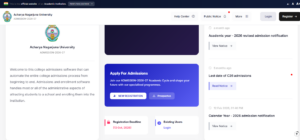
Direct Links to ANU Distance Education Info
Students can use the following direct links to access ANU CDE’s official website, admission portal and Self-Learning Materials.
| ANU Distance Education Information | Direct Link |
|---|---|
| ANU CDE Official Website | Click Here |
| ANU CDE Admission Portal | Click Here |
| ANU CDE Self-Learning Material – Year-wise | Click Here |
| ANU CDE Self-Learning Material – Semester-wise | Click Here |
ANU Distance Courses 2026: An Overview
| Category | Value |
|---|---|
| Total PG Programmes Offered (2026-27) | 26 |
| Total Library & Information Science Programmes Offered (2026-27) | 1 |
| Total Diploma Programmes Offered (2026-27) | 5 |
| Total Certificate Programmes Offered (2026-27) | 2 |
| Total Programmes Detailed/Listed in the PDF | 34 |
| PG Programme Fee Range | ₹6,530 to ₹26,550 |
| M.L.I.Sc. Fee | ₹10,675 |
| Diploma Programme Fee Range | ₹18,000 to ₹26,000 |
ANU Distance Courses with Fees & Eligibility (2026)
Here is an overview the distance courses offered by ANU in 2026 with fees and eligibility:
PG Science Programmes
| Programme Name | Eligibility Criteria | 1st Year Admission Fee (₹) | 2nd Year Admission Fee (₹) |
|---|---|---|---|
| M.Sc. – Botany | B.Sc. with Botany as a compulsory subject along with any two of Zoology, Chemistry, Forestry, Biotechnology, Food Technology, Medicinal Botany, Environmental Science or any two Life Science subjects | 15,200 | 16,450* |
| M.Sc. – Zoology | B.Sc. with Zoology / B.Sc. Fishery Science / Aquaculture / Industrial Fish and Fisheries / B.Sc. with all Life Sciences & Environmental Sciences | 15,200 | 16,450* |
| M.Sc. – Physics | B.Sc. with Physics & Mathematics | 15,200 | 16,450* |
| M.Sc. – Chemistry | B.Sc. with Chemistry | 15,200 | 17,000* |
| M.Sc. – Mathematics | B.A./B.Sc. with Mathematics as one of three equal subjects or as a Main Subject | 7,800 | 9,400* |
| M.Sc. – Statistics | B.A./B.Sc. with Mathematics and Statistics | 15,200 | 17,250* |
| M.Sc. – Computer Science | Bachelor’s Degree with B.Sc. Computer Science / B.Sc. IT / B.C.A. / B.Com. Computer Applications / B.A. Computer Applications, or relevant Computer Science/Applications background as specified by ANUCDE | 22,000 | 23,400* |
| MCA | Bachelor’s Degree with 50% aggregate (45% for BC, SC & ST), excluding BFA & BOL, with Mathematics at Intermediate or Degree level; pass in ANUCDE Entrance Test or AP ICET-2025 | 24,000 | 26,550* |
PG Arts Programmes
| Programme Name | Eligibility Criteria | 1st Year Admission Fee (₹) | 2nd Year Admission Fee (₹) |
|---|---|---|---|
| M.A. – English | Any Bachelor’s Degree with English | 6,730 | 8,550* |
| M.A. – Telugu | Any Bachelor’s Degree with Telugu | 6,730 | 8,550* |
| M.A. – Sanskrit | Any Bachelor’s Degree with Sanskrit / M.A. Telugu with at least one Sanskrit paper | 6,730 | 8,550* |
| M.A. – Hindi | Bachelor’s Degree with Hindi as second language / B.A. with Hindi as special subject / specified Hindi qualifications | 6,730 | 8,550* |
| M.A. – Economics | Any Bachelor’s Degree | 6,730 | 8,550* |
| M.A. – History | Any Bachelor’s Degree | 6,730 | 8,550* |
| M.A. – Political Science | Any Bachelor’s Degree | 6,530 | 8,550* |
| M.A. – Sociology | Any Bachelor’s Degree | 6,530 | 8,550* |
| MSW – Master of Social Work | Any Bachelor’s Degree | 10,030 | 12,650* |
| M.A. – Journalism & Mass Communication | Any Bachelor’s Degree | 7,730 | 9,550* |
| M.A. – Human Resources Management | Any Bachelor’s Degree | 8,930 | 11,350* |
PG Commerce & Management Programmes
| Programme Name | Eligibility Criteria | 1st Year Admission Fee (₹) | 2nd Year Admission Fee (₹) |
|---|---|---|---|
| M.Com – Accountancy | B.Com/BBM/BBA | 6,730 | 8,750* |
| M.Com – Banking | B.Com/BBM/BBA | 6,730 | 8,750* |
| M.B.A General (Two Specializations) | Bachelor’s Degree with 50% aggregate (45% for BC, SC & ST), excluding BFA & BOL, with Mathematics at 10th/Intermediate/Degree level; pass in ANUCDE Entrance Test or AP ICET-2025 | 23,000 | 24,700* |
| M.B.A (International Business) | Bachelor’s Degree with 50% aggregate (45% for BC, SC & ST), excluding BFA & BOL, with Mathematics at 10th/Intermediate/Degree level; pass in ANUCDE Entrance Test or AP ICET-2025 | 23,000 | 24,700* |
| M.B.A (Travel & Tourism Management) | Bachelor’s Degree with 50% aggregate (45% for BC, SC & ST), excluding BFA & BOL, with Mathematics at 10th/Intermediate/Degree level; pass in ANUCDE Entrance Test or AP ICET-2025 | 23,000 | 24,700* |
| M.B.A (Hospital Administration) | Bachelor’s Degree with 50% aggregate (45% for BC, SC & ST), excluding BFA & BOL, with Mathematics at 10th/Intermediate/Degree level; pass in ANUCDE Entrance Test or AP ICET-2025 | 23,000 | 24,700* |
| M.B.A (Human Resource Management) | Bachelor’s Degree with 50% aggregate (45% for BC, SC & ST), excluding BFA & BOL, with Mathematics at 10th/Intermediate/Degree level; pass in ANUCDE Entrance Test or AP ICET-2025 | 23,000 | 24,700* |
Library & Information Science Programme
| Programme Name | Eligibility Criteria | 1st Year Admission Fee (₹) | 2nd Year Admission Fee (₹) |
|---|---|---|---|
| M.L.I.Sc – Master of Library & Information Science | B.L.I.Sc | 10,675* | — |
Diploma Programmes
| Programme Name | Eligibility Criteria | 1st Year Admission Fee (₹) | 2nd Year Admission Fee (₹) |
|---|---|---|---|
| Diploma in Systems Design and Full-Stack Development | 10+2 Stream or Polytechnic Diploma with Mathematics at +2 level / Polytechnic Diploma | 18,000* | — |
| Diploma in Databases, Warehousing and ETL Pipelines | 10+2 Stream or Polytechnic Diploma with Mathematics at +2 level / Polytechnic Diploma | 24,000* | — |
| Diploma in Applications of Generative Artificial Intelligence | 10+2 Stream or Polytechnic Diploma with Mathematics at +2 level / Polytechnic Diploma | 26,000* | — |
| Diploma in Artificial Intelligence and Machine Learning | 10+2 Stream or Polytechnic Diploma with Mathematics at +2 level / Polytechnic Diploma | 26,000* | — |
| Diploma in Cloud Infrastructure Management & DevOps | Not specified | — | — |
How to Apply for Acharya Nagarjuna University Distance Education (2026)
Admissions for Acharya Nagarjuna University Distance Education for 2026 are currently open, with applications accepted until 10th October, 2026. Prospective students can apply through the official admission portal, following a clear, step-by-step process to secure their spot in various programs.
Steps to Apply:
- Visit the ANUCDE Samarth admission portal.
- Register using your email ID and mobile number.
- Select the desired programme and study centre.
- Fill in the personal and academic details.
- Upload the required documents and photograph.
- Pay the applicable admission fee and submit the application.
UGC-DEB Recognition and Approvals for ANU Distance Learning (2026)
Acharya Nagarjuna University’s distance education programs hold primary recognition from UGC-DEB, ensuring all undergraduate, postgraduate, diploma, and certificate offerings are fully approved. This section details the key accreditations and regulatory compliances for the university’s distance learning in 2026.
- Primary Recognition Body: UGC-DEB (University Grants Commission-Distance Education Bureau)
- Accreditations: UGC-DEB (Distance Education Bureau), NAAC with an “A+” Grade
- Other Approvals: UGC, AIU
- Program Approval Status: All acharya nagarjuna distance education programs are approved by UGC-DEB.
- Admission Rules and Regulations: As per UGC guidelines, subject to revision from time to time.
- University Establishment Year: 1976
ANU Distance vs ANU Regular Courses
Acharya Nagarjuna Distance Education (ANU Distance) offers flexible and affordable learning opportunities, holding UGC-DEB approval and NAAC A+ accreditation. This section provides a detailed overview of ANU Distance, comparing its degree courses with regular programs and highlighting key features.
| Aspect | Distance Degree | Regular Degree |
|---|---|---|
| Flexibility | High | Low |
| Cost | Affordable | Expensive |
| Attendance | Not mandatory | Mandatory |
| Recognition | Yes (UGC-approved) | Yes |
| Ideal For | Working professionals | Full-time students |
ANU CDE Self-Learning Material
ANU CDE official portal provides study material for both UG and PG programmes. Students can access both year-wise and semester-wise study material in the following ways:
- Visit ANU CDE Official Website
- Hover over the Study Material menu.
- Choose from Yearly or Semester-wise Study Material.
- Choose your course type.
- Choose the suitable course.
- Click on ‘Material’.
- View the available study material.
Why Choose UG/PG Degrees from ANU CDE (2026)
This section covers the benefits of pursuing UG/PG degrees from ANU CDE in 2026, with key figures and details from the latest verified sources.
- Digital SLM: Access self-learning materials online for flexible, self-paced study.
- Video Lectures: Supplement course material with online video lectures.
- Weekend PCP Classes: Attend Personal Contact Programme (PCP) classes on weekends for academic support.
- Self-Assessment: SLMs include exercises, self-assessment questions, summaries and sample papers.
- Previous Papers: Access previous years’ question papers for exam preparation.
- Online Exam Services: Check exam schedules, hall tickets and results online.
- Revaluation Facility: Apply for answer-script revaluation through the CDE system.
- Employment Guidance: ANU CDE provides employment guidance services to distance learners.
ANU Distance Education vs IGNOU Distance Education
ANU CDE and IGNOU both offer UGC-DEB-recognised distance-learning programmes, but they differ in programme range, fee structure, study support and student services.
| Feature | ANU CDE | IGNOU |
|---|---|---|
| Admission Sessions | January and July | January and July |
| UG Courses | UG programmes offered through ANUCDE; current 2026-27 PDF provided does not detail UG courses | Wide range of UG programmes including BA, B.Com, BCA, BBA, B.Sc. and others |
| PG Courses | M.A., M.Sc., M.Com., MBA, MCA, MSW and others | Wide range of Master’s programmes across arts, science, commerce, management, computer applications and other fields |
| Other Courses | M.L.I.Sc., 5 Diploma and 2 Certificate programmes listed in the 2026-27 ANUCDE PDF | PG Diploma, Diploma, Certificate and other programmes |
| PG Fee Range | ₹6,530–₹26,550 per year | ₹4,800–₹20,000 per year |
| M.L.I.Sc. Fee | ₹10,675 | ₹6,000–₹30,000 per year |
| Diploma Fee Range | ₹18,000–₹26,000 | ₹2,500–₹10,800 |
| Self-Learning Material | Digital/printed SLM with self-assessment questions, exercises, summaries and sample papers | Printed and digital SLM through IGNOU’s learning ecosystem |
| Video Learning | Video lectures available through the CDE website | Digital lectures and learning resources through eGyanKosh and other platforms |
| Academic Support | Weekend PCP classes through Learner Support Centres | Academic counselling through Regional Centres and Learner Support Centres |
| Previous Question Papers | Available online | Available through IGNOU’s student resources |
| Online Student Services | Exam notifications, hall tickets, results and revaluation services | Results, examinations, revaluation, assignments, study-material status and other student services |
| Employment Support | Employment guidance listed among CDE services | Placement and career-related support through IGNOU services |
Frequently Asked Questions
Is Acharya Nagarjuna University’s distance education valid and recognized for government jobs or further studies in 2026?
Yes, Acharya Nagarjuna University’s distance education programs are generally valid and recognized by the UGC-DEB (University Grants Commission – Distance Education Bureau) in 2026, making their degrees acceptable for most government job applications and higher education pursuits within India.
What are the typical fee ranges for distance education courses at Acharya Nagarjuna University in 2026?
ANU CDE fees vary by programme. For 2026-27, PG fees range from ₹6,530–₹26,550 annually, while MLISc costs ₹10,675 and diplomas ₹18,000–₹26,000.
How does the quality of study material and faculty support compare for distance learners at Acharya Nagarjuna University?
ANU CDE provides digital self-learning materials, video lectures, weekend PCP classes, self-assessment resources, previous question papers and employment guidance for distance learners.
Are there any specific advantages or disadvantages to choosing Acharya Nagarjuna University for distance learning over other options?
ANU CDE offers January and July admissions, multiple postgraduate programmes and online student services, while programme availability, fees and support facilities may differ from other universities.
What kind of career prospects can I expect after completing a distance education degree from Acharya Nagarjuna University in 2026?
Career prospects depend on the programme, skills and employer requirements. ANU CDE also provides employment guidance, while professional qualifications may offer field-specific career opportunities.