Anthropology Course Details: Eligibility, Duration and Jobs
Anthropology courses in India are offered at UG (3 years), PG (2 years), and PhD (3 years) levels, covering biological, cultural, linguistic, and archaeological branches.
An average starting salary of INR 4.5 LPA highlights the professional value of completing an anthropology degree in India. Students can explore detailed eligibility criteria, entrance examinations, fee breakdowns, top colleges, and career opportunities across all degree levels below.
| Parameter | Details |
|---|---|
| Course Levels | UG, PG, PhD |
| Duration | UG: 3 Years | PG: 2 Years | PhD: 3 Years |
| UG Eligibility | Class 12 with at least 50% marks in any stream (Arts, Science, or Commerce) |
| PG Eligibility | Bachelor’s degree (preferably BA) with minimum 50% aggregate |
| Entrance Exams | CUET, CUET PG, UGC NET |
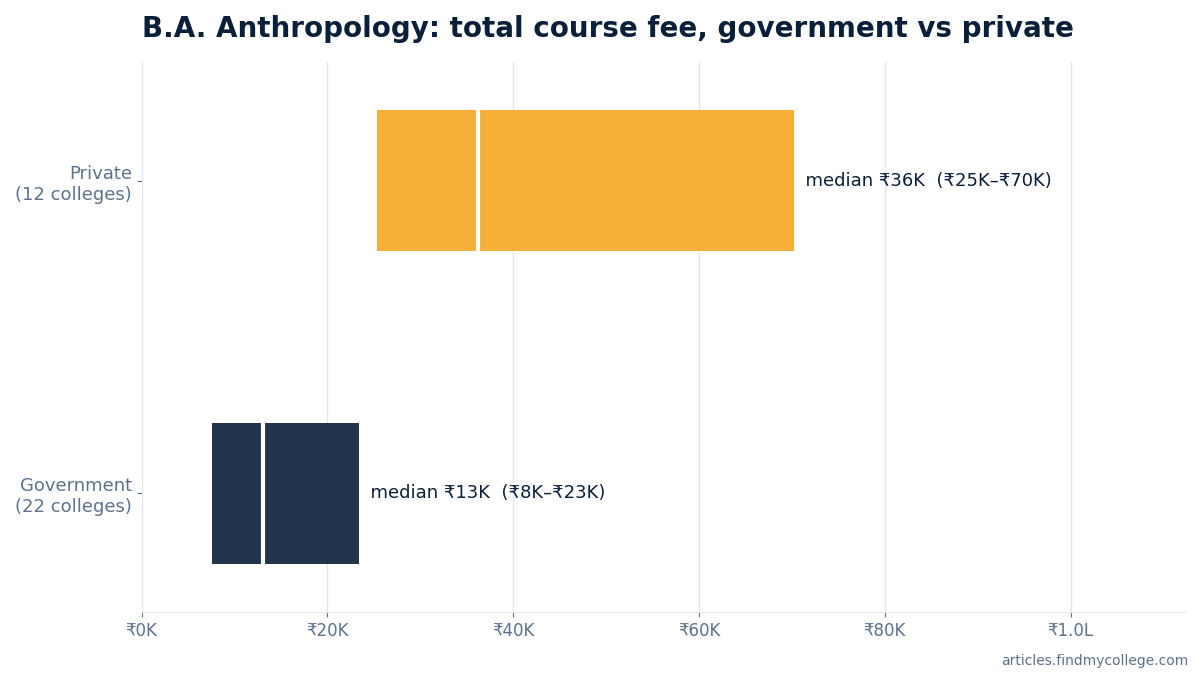
| Government Fees | INR 1,000 – INR 2.8 Lakh |
| Private Fees | INR 22,800 – INR 40.9 Lakh |
| Average Salary | INR 4.5 LPA |
B.A. Anthropology Eligibility
Admission to undergraduate anthropology programs is based on merit or entrance exams like CUET. Candidates must complete Class 12 from a recognized board in any stream with at least 50% aggregate marks.
Top Entrance Exams for Anthropology Admissions
- CUET
- CUET PG
- UGC NET
Anthropology admissions in India are conducted through merit-based evaluation and entrance examinations. Key entrance tests accepted for these programs include CUET, CUET PG, and UGC NET.
B.A. Anthropology Admission Process
Admission processes across higher education institutions combine merit-based criteria and entrance exam scores. Universities review Class 12 aggregate marks for undergraduate admissions or Bachelor’s degree results for postgraduate entry alongside standardized test rankings.
Documents required during the admission process include passport-sized photographs, caste certificate (if applicable), mark sheets, and ID proofs. Candidates must present these certificates for verification during institutional counselling rounds.
B.A. Anthropology Career Scope and Salary
Graduates with an anthropology background pursue careers in global development organizations, research institutes, museums, and educational bodies. Top recruiters for anthropology graduates include WHO, UNESCO, UNICEF, Museums, Anthropological Survey of India, and Archaeological Survey of India.
The average salary for anthropology graduates in India is INR 4.5 LPA, while the median average placement package across 5 reporting colleges is 2.54 LPA. Professionals work in diverse roles spanning cultural research, policy advice, social administration, and forensic evaluation.
| Category | Details |
|---|---|
| Popular Job Roles | Archaeologist, Cultural Anthropologist, Forensic Anthropologist, Assistant Professor, Social Worker, Political Consultant |
| Average Salary | INR 4.5 LPA |
| Top Recruiters | WHO, UNESCO, UNICEF, Museums, Anthropological Survey of India, Archaeological Survey of India |
How to Apply for B.A. Anthropology Admission in 2026: Step by Step
- Check Eligibility Criteria: Verify that you meet minimum qualification requirements (Class 12 with 50% for UG; relevant Bachelor’s degree with 50% for PG/MA; Master’s degree with 50% for PhD).
- Register for Entrance Exams: Apply and register for relevant national/university entrance examinations such as CUET (UG), CUET PG, or UGC NET depending on the level of course.
- Fill Application Form: Complete the official online registration on the portal of target universities (e.g. DU, LU, Amity, IGNOU), upload required documents, and pay the application fee.
- Verify Results and Ranks: Check declared entrance exam scorecards or wait for the institution to release merit rank lists or confirmation emails for shortlisted candidates.
- Attend Counselling & Submit Documents: Participate in university counselling sessions, verify documents (mark sheets, ID proofs, caste certificate if applicable, entrance scores), pay the admission fee, and remit anthropology association fees.
| What to do | Where | Link |
|---|---|---|
| Compare colleges, fees and cutoffs | B.A. Anthropology colleges in India | findmycollege.com |
FAQs
Which are the four fields of anthropology?
The four main fields of anthropology are Cultural Anthropology, Linguistic Anthropology, Biological Anthropology, and Archaeology. Medical Anthropology is also offered as a key branch.
Is there a Master’s degree in anthropology available in India?
Master’s degrees span 2 years, requiring a relevant bachelor’s degree with at least 50% aggregate marks for admission.
How many years does it take to study anthropology?
Undergraduate (UG) degrees require 3 years of study, postgraduate (PG) degrees take 2 years, and doctorate (PhD) programs take 3 years in Anthropology.
Which college is best for anthropology?
Prominent Indian institutions offering Anthropology programs include Delhi University, University of Lucknow, Amity University, Holy Cross College, and IGNOU.
What is the difference between anthropology and sociology?
Anthropology examines individual human behaviour, biological evolution, and cultural history across time, whereas sociology focuses on group behaviour and interactions within social structures.
What is the average salary after completing an anthropology course?
The average starting salary for anthropology graduates in India is INR 4.5 LPA, with career opportunities in organisations like WHO, UNESCO, UNICEF, and Archaeological Survey of India.