Bachelor of Prosthetics & Orthotics (BPO) Fees in India 2026
Nishit Kumar is a senior EdTech industry leader with over a decade of experience in building and scaling education platforms, shaping their product, content, and growth strategy. At…
Latest update: Bachelor of Prosthetics and Orthotics 2026 admissions & dates updated. Read more ›
Navigating the financial aspects of higher education is a critical step for aspiring students and their families. This comprehensive guide details the Bachelor of Prosthetics and Orthotics (BPO) fees in India for 2026, a vital paramedical course. We cover everything from tuition costs in government and private institutions to eligibility criteria, scholarship opportunities, and the potential return on investment (ROI) for this specialized healthcare profession.
What is Bachelor of Prosthetics and Orthotics (BPO)?
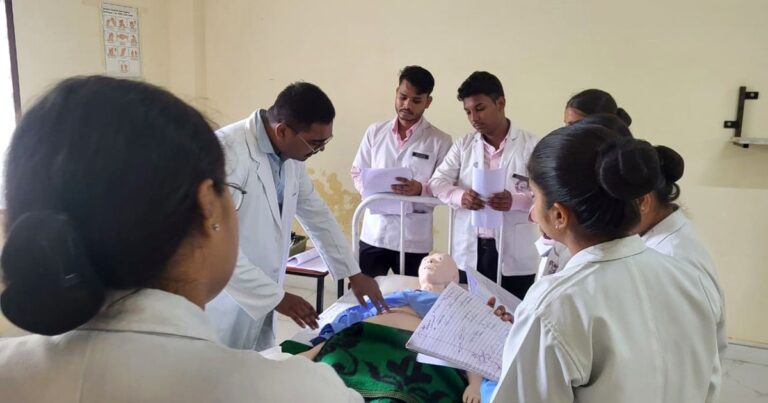
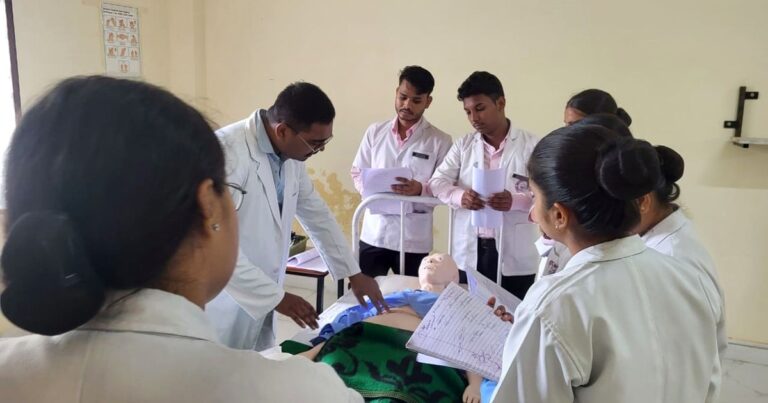
The Bachelor of Prosthetics and Orthotics (BPO) is an undergraduate paramedical program focused on the design, fabrication, and fitting of artificial limbs (prostheses) and supportive devices (orthoses). This 4.5-year course (4 years academic + 6 months internship) equips students with the scientific knowledge and practical skills to help individuals with physical disabilities regain mobility and improve their quality of life.
How much does Bachelor of Prosthetics and Orthotics (BPO) cost in India for 2026?
The cost of pursuing a Bachelor of Prosthetics and Orthotics (BPO) in India for 2026 varies significantly based on the type of institution (government vs. private), ranging from INR 30,000 to INR 2,50,000 per annum. Government colleges generally offer more affordable fees compared to private institutions, which often have higher tuition and additional charges.
BPO Fees in Government Colleges (2026)
Government colleges offering BPO programs typically have lower fee structures due to subsidies and public funding. The annual fees for BPO in government institutions can range from INR 30,000 to INR 90,000. These fees usually cover tuition, basic lab charges, and library access, making them a highly sought-after option for many students.
BPO Fees in Private Colleges (2026)
Private colleges, while often offering state-of-the-art facilities and potentially more industry exposure, come with a higher price tag. The annual fees for BPO in private institutions can range from INR 1,00,000 to INR 2,50,000 or more. These fees often include tuition, lab fees, examination fees, and sometimes even hostel or transport charges, depending on the college’s package.
Breakdown of BPO Fee Components (Common for 2026)
Understanding the various components that make up the total BPO fees is crucial. While the exact breakdown varies by college, common components include:
- Tuition Fee: The primary charge for academic instruction.
- Admission Fee: A one-time fee paid at the time of admission.
- Examination Fee: Charged per semester or annually for examinations.
- Laboratory/Practical Fee: Covers the cost of using specialized labs and equipment.
- Library Fee: For access to library resources.
- Development/Maintenance Fee: Contributes to college infrastructure and upkeep.
- Miscellaneous Charges: May include student welfare, sports, or cultural activity fees.
- Internship Fee: Some colleges might charge a nominal fee for the mandatory 6-month internship.
Here’s a general overview of BPO fee ranges across different college types for 2026:
| College Type | Annual Fee Range (INR) | Key Considerations |
|---|---|---|
| Government Colleges | 30,000 – 90,000 | Highly subsidized, competitive admission, good infrastructure. |
| Private Colleges | 1,00,000 – 2,50,000+ | Varying facilities, potentially more practical exposure, higher fees. |
| Deemed Universities | 1,50,000 – 3,00,000+ | Often excellent facilities, higher academic autonomy, premium fees. |
What is the eligibility for Bachelor of Prosthetics and Orthotics (BPO) in 2026?
To be eligible for the Bachelor of Prosthetics and Orthotics (BPO) program in 2026, candidates must have successfully completed their 10+2 (or equivalent) examination with Physics, Chemistry, and Biology (PCB) as compulsory subjects. A minimum aggregate score, typically ranging from 45% to 50%, is required, though this can vary by institution and state.
Detailed BPO Eligibility Criteria (2026)
- Educational Qualification: Must have passed 10+2 or equivalent from a recognized board.
- Compulsory Subjects: Physics, Chemistry, and Biology (PCB) are mandatory. Some colleges may also accept Physics, Chemistry, and Mathematics (PCM) with a strong Biology background.
- Minimum Marks: Generally, 45-50% aggregate marks in PCB for general category students. Reserved categories (SC/ST/OBC) may have a relaxation of 5%.
- Age Limit: Candidates must usually be at least 17 years old as of December 31st of the admission year. There is generally no upper age limit.
- Entrance Exams: Many colleges, especially government ones, require candidates to qualify in state-level or national-level entrance examinations.
Are there any scholarships or financial aid options for BPO students in India?
Yes, several scholarships and financial aid options are available for BPO students in India, offered by government bodies, private organizations, and individual institutions. These aim to support meritorious students and those from economically weaker sections.
Common Scholarship Categories for BPO Students:
- Merit-Based Scholarships: Awarded to students with excellent academic records in 10+2 and/or entrance exams.
- Need-Based Scholarships: Provided to students from low-income families who demonstrate financial need.
- Category-Specific Scholarships: For students belonging to SC/ST/OBC categories or those with disabilities.
- State Government Scholarships: Many state governments offer schemes for students pursuing paramedical courses within their state.
- College-Specific Scholarships: Individual institutions often have their own scholarship programs.
- National Scholarship Portal (NSP): A central platform for various government scholarships.
Students are advised to research specific scholarships relevant to their state and category, and apply well in advance of the deadlines.
Is Bachelor of Prosthetics and Orthotics (BPO) worth it for jobs and salary in India?
Yes, pursuing a Bachelor of Prosthetics and Orthotics (BPO) is generally considered a worthwhile investment for jobs and salary in India, given the growing demand for rehabilitation services and specialized healthcare professionals. Graduates can expect a stable career with good growth prospects and competitive salaries, especially with experience and specialization.
Career Prospects and Salary for BPO Graduates (2026)
BPO graduates can find employment in various settings, including government and private hospitals, rehabilitation centers, specialized clinics, NGOs, and even start their own practice. The demand for prosthetists and orthotists is on the rise due to increasing awareness, road accidents, congenital deformities, and an aging population.
| Job Role | Average Starting Salary (INR/annum) | Average Mid-Career Salary (INR/annum) |
|---|---|---|
| Prosthetist & Orthotist | 2,50,000 – 4,50,000 | 5,00,000 – 10,00,000+ |
| Clinical Prosthetist/Orthotist | 3,00,000 – 5,00,000 | 6,00,000 – 12,00,000+ |
| Rehabilitation Specialist | 3,50,000 – 6,00,000 | 7,00,000 – 15,00,000+ |
| Product Specialist (Medical Devices) | 3,00,000 – 5,50,000 | 6,00,000 – 11,00,000+ |
| Academician/Researcher | 3,00,000 – 5,00,000 | 5,00,000 – 10,00,000+ |
Note: Salaries are indicative and can vary based on experience, location, employer, and additional qualifications.
What are the top entrance exams for BPO admission in 2026?
Admission to Bachelor of Prosthetics and Orthotics (BPO) programs in 2026 often requires qualifying in specific entrance examinations, particularly for government colleges and some private institutions. These exams typically test knowledge in Physics, Chemistry, and Biology.
Key BPO Entrance Exams for 2026:
- NEET (National Eligibility cum Entrance Test): While primarily for MBBS/BDS, some states and deemed universities may consider NEET scores for paramedical courses like BPO.
- CET (Common Entrance Test): Various states conduct their own CETs for admission to paramedical and allied health sciences courses. Examples include MHT CET (Maharashtra), KCET (Karnataka), UP CNET (Uttar Pradesh).
- AIIMS Paramedical Entrance Exam: All India Institute of Medical Sciences (AIIMS) conducts its own entrance exam for paramedical courses, including BPO, in its various branches.
- JIPMER Paramedical Entrance Exam: Jawaharlal Institute of Postgraduate Medical Education and Research (JIPMER) also conducts an entrance exam for its paramedical programs.
- University/College Specific Entrance Exams: Many private universities and colleges conduct their own entrance tests for BPO admissions.
Typical Entrance Exam Pattern:
- Subjects: Physics, Chemistry, Biology (Botany & Zoology).
- Question Type: Multiple Choice Questions (MCQs).
- Duration: 2-3 hours.
- Marking Scheme: Usually +1 or +4 for correct answers, with negative marking in some exams.
It is crucial for aspiring students to check the specific admission requirements and accepted entrance exams for their target colleges well in advance of the 2026 admission cycle.
How do BPO fees compare to other paramedical courses in India?
BPO fees are generally comparable to or slightly higher than other specialized paramedical courses like Bachelor of Physiotherapy (BPT) or Bachelor of Occupational Therapy (BOT), but typically lower than MBBS or BDS. The specialized nature of prosthetics and orthotics, requiring specific lab infrastructure, often influences its fee structure.
Fee Comparison: BPO vs. Other Paramedical Courses (Annual Range, 2026)
| Course | Government College (INR) | Private College (INR) | Key Differentiator |
|---|---|---|---|
| BPO | 30,000 – 90,000 | 1,00,000 – 2,50,000+ | Highly specialized, focus on artificial limbs & supportive devices. |
| BPT (Physiotherapy) | 20,000 – 80,000 | 80,000 – 2,00,000+ | Focus on physical rehabilitation, exercise, and movement. |
| BOT (Occupational Therapy) | 25,000 – 85,000 | 90,000 – 2,20,000+ | Focus on enabling participation in daily activities through therapy. |
| B.Sc. Nursing | 15,000 – 70,000 | 70,000 – 1,80,000+ | Broader healthcare role, patient care, and administration. |
| BMLT (Medical Lab Tech) | 10,000 – 60,000 | 50,000 – 1,50,000+ | Diagnostic support, laboratory analysis. |
Explore more on FindMyCollege
Related pages for Bachelor of Prosthetics and Orthotics aspirants on findmycollege.com:
Frequently Asked Questions
What is the duration of the BPO course?
The Bachelor of Prosthetics and Orthotics (BPO) course has a total duration of 4.5 years, which includes 4 years of academic study and a mandatory 6-month (24-week) clinical internship.
Can I pursue BPO after 10th grade?
No, the Bachelor of Prosthetics and Orthotics (BPO) is an undergraduate degree program that requires completion of 10+2 (or equivalent) with Physics, Chemistry, and Biology as compulsory subjects. There are diploma courses in Prosthetics and Orthotics that may be accessible after 10th or 12th, but not the full bachelor’s degree.
Are there any hidden charges in BPO fees?
While most colleges provide a detailed fee structure, it’s advisable to inquire about potential additional costs such as hostel fees, mess charges, transport, uniform, study materials, project fees, or re-examination fees. Always ask for a comprehensive breakdown from the admissions office.
What is the admission process for BPO in 2026?
The admission process for BPO in 2026 typically involves applying to colleges, appearing for relevant entrance exams (state-level CETs, AIIMS Paramedical, or university-specific tests), followed by counseling based on merit, and then document verification and fee payment.
Is BPO a good career choice for women?
Yes, BPO is an excellent career choice for women. The profession requires empathy, precision, and strong communication skills, all of which are well-suited to women. There are no gender-specific limitations in this field, and many successful prosthetists and orthotists are women.
What are the higher study options after BPO?
After completing a BPO, graduates can pursue higher education such as a Master of Prosthetics and Orthotics (MPO), which allows for specialization and opens doors to research, teaching, and advanced clinical roles. They can also pursue PhD programs or specialized certifications.
Do BPO colleges offer hostel facilities?
Many government and private BPO colleges offer hostel facilities, either on-campus or affiliated. The hostel fees are usually separate from the academic fees and vary significantly based on the type of accommodation (single/shared room), amenities, and mess charges. It’s important to check with the individual college for details and availability.
What is the scope of BPO abroad?
The scope for prosthetists and orthotists is global, with many developed countries facing a shortage of these professionals. A BPO degree from India, especially from a well-recognized institution, can open doors for higher studies or employment abroad, though additional licensing exams or certifications may be required depending on the country.