B.Sc in Bioinformatics Duration (India 2026) – Science Stream
Nishit Kumar is a senior EdTech industry leader with over a decade of experience in building and scaling education platforms, shaping their product, content, and growth strategy. At…
Latest update: B.Sc in Bioinformatics 2026 admissions & dates updated. Read more ›
Welcome to the comprehensive guide on the B.Sc in Bioinformatics Duration in India for the academic year 2026. This page is designed for prospective students and their parents, providing in-depth information about the length, structure, and associated aspects of this cutting-edge science stream program.
What is the standard duration of a B.Sc in Bioinformatics program in India?
The standard duration for a Bachelor of Science (B.Sc) in Bioinformatics program in India is three years. This full-time undergraduate degree is typically divided into six semesters, with two semesters per academic year.
This three-year structure is consistent across most Indian universities and colleges offering the B.Sc degree, aligning with the general framework for undergraduate science programs. Students will cover a broad curriculum encompassing biology, computer science, mathematics, and statistics, with a strong emphasis on their interdisciplinary application to biological data.
What is the academic structure and semester breakdown of B.Sc Bioinformatics?
The B.Sc in Bioinformatics program is structured into six semesters, with each semester typically lasting between 4 to 6 months. This structure allows for a progressive learning curve, building foundational knowledge in the initial semesters and advancing to specialized topics and practical applications in later stages.
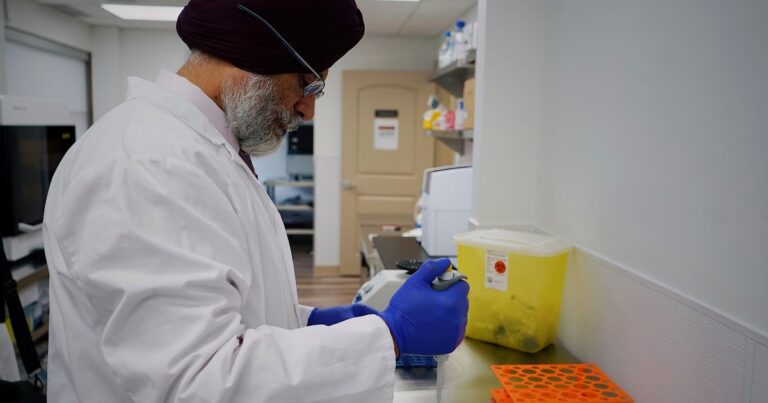
Each semester includes a mix of theoretical courses, practical laboratory sessions, and often project work. The curriculum is designed to provide a strong foundation in core subjects like molecular biology, genetics, programming (e.g., Python, R), algorithms, databases, and biostatistics.
Typical Semester-wise Subject Distribution
While specific subjects may vary slightly between institutions, the general progression is as follows:
- Year 1 (Semesters 1 & 2): Focus on foundational sciences (Biology, Chemistry, Physics/Math), basic programming, introduction to bioinformatics.
- Year 2 (Semesters 3 & 4): Deeper dive into molecular biology, genetics, advanced programming, data structures, algorithms, biostatistics, genomics, proteomics.
- Year 3 (Semesters 5 & 6): Specialised topics like drug discovery, structural bioinformatics, machine learning in biology, systems biology, big data analytics, and often a mandatory research project or internship.
Can the B.Sc in Bioinformatics duration be extended or shortened?
The standard three-year duration for a B.Sc in Bioinformatics is generally fixed for full-time students. However, the duration can be extended due to academic reasons such as failing subjects, requiring re-examinations, or taking a break from studies. Shortening the duration is typically not possible for a standard B.Sc program, as it requires completion of all credit hours and curriculum components.
Some universities might offer an ‘exit option’ after two years with a Diploma in Bioinformatics, but this is not common for the B.Sc degree itself. For students who need more time, universities usually have a maximum permissible duration (e.g., 5-6 years) to complete the 3-year degree, beyond which re-admission procedures might apply.
What are the eligibility criteria for B.Sc in Bioinformatics in India (2026)?
To be eligible for a B.Sc in Bioinformatics program in India for 2026, candidates must have successfully completed their 10+2 (or equivalent) examination with a science stream background. The primary subjects required are typically Physics, Chemistry, and Biology (PCB) or Physics, Chemistry, and Mathematics (PCM), or PCMB.
Most institutions require a minimum aggregate score, usually ranging from 45% to 60% in the qualifying examination. Some prestigious universities or competitive programs might also require specific entrance exam scores.
Key Eligibility Requirements (2026 Intake)
- Educational Qualification: 10+2 or equivalent from a recognized board.
- Required Subjects: Physics, Chemistry, and Biology (PCB) or Physics, Chemistry, and Mathematics (PCM) or PCMB.
- Minimum Marks: Typically 45% – 60% aggregate in 10+2, varies by institution.
- Age Limit: Generally no upper age limit, but some institutions might have specific criteria.
- Entrance Exams: Some universities may conduct their own entrance exams (e.g., BHU UET, DUET for specific colleges, or institutional-level tests).
How do B.Sc Bioinformatics fees compare between government and private colleges?
The tuition fees for a B.Sc in Bioinformatics program in India vary significantly between government and private institutions. Government colleges generally have lower fees due to subsidies, while private colleges typically charge higher fees, which can also vary based on their reputation, infrastructure, and facilities.
Estimated Annual Fee Ranges (2026)
| Institution Type | Annual Fee Range (INR) | Typical Total Course Fee (INR) |
|---|---|---|
| Government Colleges/Universities | ₹10,000 – ₹50,000 | ₹30,000 – ₹1,50,000 |
| Private Colleges/Universities | ₹50,000 – ₹2,50,000+ | ₹1,50,000 – ₹7,50,000+ |
These figures are indicative and do not include hostel fees, examination fees, or other miscellaneous charges, which can add substantially to the overall cost. Scholarships are often available, especially in government institutions, to help mitigate costs.
Is B.Sc in Bioinformatics worth it for jobs and career prospects after 3 years?
Yes, a B.Sc in Bioinformatics is increasingly worthwhile for jobs and career prospects, especially given the rapid advancements in biological data generation and the growing demand for professionals who can analyze and interpret this data. The interdisciplinary nature of the degree equips graduates with a unique skill set highly valued in various sectors.
After completing the 3-year program, graduates can find entry-level positions or pursue higher education. The job market for bioinformaticians is expanding in areas like pharmaceuticals, biotechnology, healthcare, agriculture, and academic research.
Career Paths & Average Entry-Level Salaries (Post B.Sc, India)
| Job Role | Description | Average Annual Salary Range (INR) |
|---|---|---|
| Bioinformatics Trainee/Analyst | Assists in data analysis, database management, and software usage. | ₹2,50,000 – ₹4,50,000 |
| Research Assistant | Supports research projects, conducts experiments, and analyzes biological data. | ₹2,00,000 – ₹4,00,000 |
| Junior Data Analyst (Life Sciences) | Focuses on processing and interpreting biological datasets. | ₹2,80,000 – ₹5,00,000 |
| Clinical Data Associate | Manages and organizes clinical trial data. | ₹2,20,000 – ₹4,20,000 |
| Lab Technician (Bioinformatics focus) | Performs lab work with an emphasis on computational tools for data. | ₹1,80,000 – ₹3,50,000 |
Many graduates also opt for further studies, such as an M.Sc in Bioinformatics, Biotechnology, or even an MBA, to enhance their career prospects and specialize further. A master’s degree significantly boosts earning potential and opens doors to more advanced roles like Senior Bioinformatician, Computational Biologist, or Data Scientist.
How does B.Sc Bioinformatics compare to B.Tech Bioinformatics in terms of duration and focus?
The primary difference in duration is that a B.Sc in Bioinformatics is a three-year undergraduate program, while a B.Tech in Bioinformatics is a four-year undergraduate engineering program. The focus also differs significantly, with B.Sc being more science-oriented and B.Tech being more engineering and application-focused.
B.Sc vs. B.Tech Bioinformatics Comparison
| Feature | B.Sc in Bioinformatics | B.Tech in Bioinformatics |
|---|---|---|
| Duration | 3 Years (6 Semesters) | 4 Years (8 Semesters) |
| Primary Focus | Theoretical understanding, biological principles, data analysis. | Engineering applications, tool development, system design, algorithms. |
| Eligibility (Typical) | 10+2 with PCB/PCM/PCMB | 10+2 with PCM (often requires JEE Main/Advanced or state engineering entrance exams) |
| Curriculum Emphasis | Biology, Chemistry, Math, Statistics, Programming, Data Interpretation. | Computer Science, Engineering Principles, Algorithm Design, Software Development, Biology. |
| Career Path | Research assistant, data analyst, further M.Sc/Ph.D in life sciences. | Bioinformatics engineer, software developer (bio-domain), R&D in pharma/biotech, further M.Tech/Ph.D in engineering. |
Students interested in a more research-oriented or academic path often prefer B.Sc, while those inclined towards developing computational tools, software, or working in industrial R&D might lean towards B.Tech.
What are the admission process and key dates for B.Sc Bioinformatics in 2026?
The admission process for B.Sc in Bioinformatics in 2026 typically involves applying directly to universities/colleges, followed by merit-based selection or an entrance examination. Key dates generally align with the academic calendar for undergraduate admissions in India.
General Admission Timeline (2026 Intake)
- Application Period: March to June 2026 (varies by institution, some may start earlier).
- Entrance Exams (if applicable): May to July 2026.
- Merit List/Results: June to August 2026.
- Counseling/Interviews: July to August 2026.
- Classes Commence: August to September 2026.
It is crucial for prospective students to regularly check the official websites of their target universities for precise dates, application forms, and specific admission guidelines for the 2026 academic year.
What are the typical exit opportunities or higher education options after a 3-year B.Sc in Bioinformatics?
After completing a 3-year B.Sc in Bioinformatics, graduates have diverse exit opportunities, including entry-level jobs in the biotech and pharma sectors, or pursuing higher education to specialize further and enhance career prospects. The most common higher education path is an M.Sc in Bioinformatics or related fields.
Higher Education Options:
- M.Sc in Bioinformatics: The most direct and popular choice, deepening knowledge and skills.
- M.Sc in Biotechnology/Genetics/Molecular Biology: Broadens biological understanding with a computational edge.
- M.Sc in Data Science/Artificial Intelligence: Leverages the computational skills gained, focusing on broader data applications.
- MBA: For those interested in management roles within the life sciences industry.
- Integrated Ph.D. programs: Some institutions offer direct entry to Ph.D. after B.Sc for exceptional students.
Job Market Readiness:
While a B.Sc provides a strong foundation, many students opt for an M.Sc to gain a competitive edge in the job market, as many specialized bioinformatics roles prefer or require a postgraduate degree. However, entry-level roles as data analysts, research assistants, or lab technicians are accessible directly after the B.Sc.
Explore more on FindMyCollege
Related pages for B.Sc in Bioinformatics aspirants on findmycollege.com:
Frequently Asked Questions
Is a B.Sc in Bioinformatics a good career choice for the future?
Yes, B.Sc in Bioinformatics is considered a strong career choice for the future. The field is rapidly growing due to advancements in genomics, personalized medicine, and big data in biology, creating a high demand for skilled professionals who can bridge the gap between biology and computer science.
Can I pursue B.Sc Bioinformatics if I only had Maths in 10+2, without Biology?
While most programs prefer or require Biology, some institutions may admit students with a strong PCM background, especially if they demonstrate a keen interest in biological applications and are willing to catch up on foundational biology concepts. It’s essential to check individual university eligibility criteria.
What are the practical components of the B.Sc Bioinformatics course?
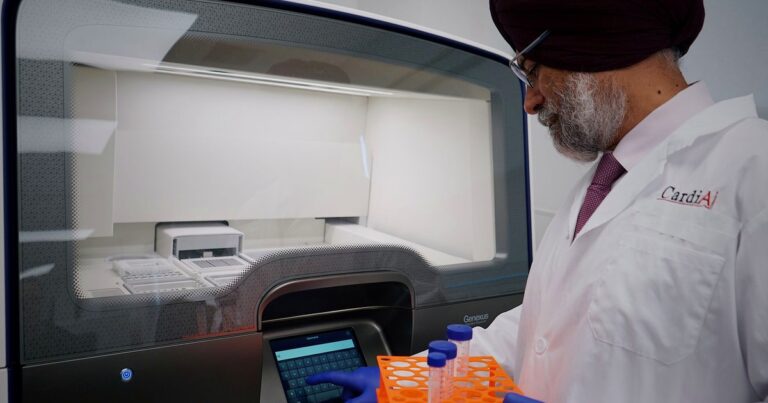
The practical components typically include extensive laboratory sessions for molecular biology techniques, computer lab sessions for programming (Python, R), using bioinformatics tools (BLAST, ClustalW), working with biological databases (NCBI, PDB), and undertaking a mandatory research project or internship in the final year.
Are there any entrance exams specifically for B.Sc Bioinformatics?
While there isn’t a single national entrance exam specifically for B.Sc Bioinformatics, some central universities (like BHU, DU for certain colleges) or state universities might conduct their own entrance tests. Many private colleges admit based on 10+2 merit. Always check the specific college’s admission policy.
What is the difference between Bioinformatics and Computational Biology?
Bioinformatics primarily focuses on the development and application of computational tools and statistical methods for analyzing biological data. Computational Biology is a broader field that uses computational approaches to solve biological problems, often involving the creation of theoretical models and simulations, and can encompass bioinformatics as a sub-discipline.
Can I do a B.Sc in Bioinformatics through distance learning or online mode?
While some universities offer diplomas or certificate courses in bioinformatics via distance learning, a full-fledged B.Sc in Bioinformatics is predominantly offered as a regular, full-time program due to the extensive practical laboratory work and hands-on computational training required. Verify with specific universities for any exceptions.
What kind of internships are available during or after B.Sc Bioinformatics?
Internships are available in various settings, including pharmaceutical companies, biotechnology firms, research institutes (e.g., CSIR labs, ICMR institutes), hospitals with research departments, and academic labs. These internships often involve data analysis, software development for biological applications, or assisting in research projects.