BASc (Hons) Electronics Syllabus India 2026 – Science Stream
Nishit Kumar is a senior EdTech industry leader with over a decade of experience in building and scaling education platforms, shaping their product, content, and growth strategy. At…
Latest update: Bachelor of Applied Sciences (Hons) in Electronics 2026 admissions & dates updated. Read more ›
The Bachelor of Applied Sciences (Hons) in Electronics (Science Stream) is a comprehensive undergraduate program designed to equip students with advanced theoretical knowledge and practical skills in the field of electronics. This syllabus reflects the latest industry trends and technological advancements anticipated for 2026 in India.
Course Overview: Bachelor of Applied Sciences (Hons) in Electronics (Science Stream)
This four-year undergraduate degree focuses on the scientific principles underpinning electronic systems, preparing graduates for research, development, and innovation roles. The curriculum integrates core electronics with foundational sciences like physics and mathematics, emphasizing analytical and problem-solving skills.
Program Structure and Duration
The program spans eight semesters over four academic years, with each semester typically lasting 15-18 weeks. It includes a blend of core courses, elective subjects, laboratory work, projects, and a mandatory industrial internship.
Eligibility Criteria (Expected for 2026 Admissions)
Prospective students must have successfully completed their 10+2 (or equivalent) examination with Physics, Chemistry, and Mathematics (PCM) as core subjects. A minimum aggregate score, typically ranging from 55% to 70%, is required, with specific cut-offs varying by institution.
Detailed Syllabus: Core Subjects and Electives
The curriculum is structured to provide a strong foundation in fundamental electronic concepts before progressing to specialized areas. Students will delve into subjects ranging from basic circuit theory to advanced embedded systems and communication technologies.
Year 1: Foundational Electronics and Sciences
The first year establishes a strong base in essential scientific principles and introductory electronics. Key subjects include basic electrical engineering, semiconductor devices, and advanced calculus.
- Semester I: Applied Physics, Engineering Mathematics-I, Basic Electrical Engineering, Electronic Devices and Circuits-I, C Programming, Engineering Graphics.
- Semester II: Applied Chemistry, Engineering Mathematics-II, Digital Electronics, Electronic Devices and Circuits-II, Data Structures, Environmental Science.
Year 2: Core Electronics and Systems
The second year deepens understanding of core electronic circuits, systems, and signal processing. Analog and digital communication principles are also introduced.
- Semester III: Analog Electronics, Linear Integrated Circuits, Network Analysis, Electromagnetic Theory, Signals and Systems, Object-Oriented Programming (C++).
- Semester IV: Microprocessors and Microcontrollers, Analog Communication, Digital Communication, Control Systems, Electronic Instrumentation, Probability and Statistics.
Year 3: Advanced Electronics and Specializations
The third year focuses on advanced topics, including embedded systems, VLSI design, and advanced communication techniques. Students begin to explore elective options.
- Semester V: Embedded Systems, VLSI Design, Digital Signal Processing, Power Electronics, Computer Networks, Elective-I.
- Semester VI: Optical Fiber Communication, Microwave Engineering, Internet of Things (IoT), Machine Learning for Electronics, Elective-II, Industrial Training/Mini Project.
Year 4: Project Work and Advanced Electives
The final year emphasizes project-based learning, research methodologies, and advanced elective choices. A major project is a cornerstone of this year, allowing students to apply their accumulated knowledge.
- Semester VII: Advanced Microcontrollers, Robotics and Automation, Artificial Intelligence in Electronics, Elective-III, Elective-IV, Major Project-I.
- Semester VIII: Wireless Sensor Networks, Biomedical Instrumentation, Project Management and Entrepreneurship, Elective-V, Major Project-II.
Elective Subject Examples (Vary by Institution)
Electives allow students to specialize in areas of interest, enhancing their career prospects in specific domains. Common elective streams include advanced communication, embedded systems, and power electronics.
- Advanced Digital Signal Processing
- Image Processing and Computer Vision
- Renewable Energy Systems
- MEMS and NEMS
- Satellite Communication
- Cyber-Physical Systems
- Automotive Electronics
- Quantum Computing Principles
Laboratory Work and Practical Experience
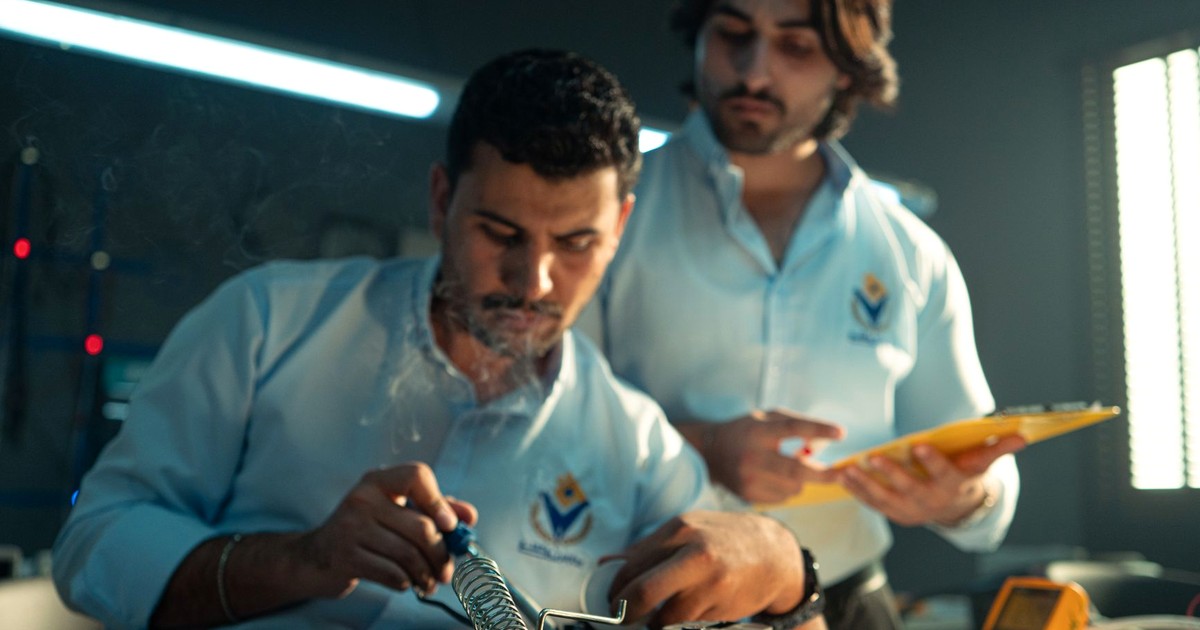
Practical laboratory sessions are integral to the Bachelor of Applied Sciences (Hons) in Electronics curriculum, providing hands-on experience with electronic components, circuits, and instruments. Students will gain proficiency in designing, testing, and troubleshooting electronic systems.
Career Prospects and Further Studies
Graduates with a Bachelor of Applied Sciences (Hons) in Electronics are highly sought after in various industries, including telecommunications, IT, manufacturing, and research. They can pursue roles as electronics engineers, design engineers, embedded systems developers, or opt for higher education.
Expected Salary Ranges (India, 2026, Entry-Level)
Entry-level salaries for BASc (Hons) Electronics graduates in India are projected to range significantly based on skills, location, and company. Graduates can expect competitive compensation packages.
| Role/Industry | Annual Salary (INR Lakhs) | Key Skills/Areas |
|---|---|---|
| Electronics Engineer (R&D) | 4.0 – 8.5 | Circuit Design, PCB Layout, Microcontrollers, DSP |
| Embedded Systems Developer | 4.5 – 9.0 | C/C++, RTOS, IoT Protocols, Firmware Development |
| Telecom Engineer | 3.5 – 7.0 | 5G, Optical Fiber, Network Protocols, RF Engineering |
| VLSI Design Engineer | 5.0 – 10.0 | Verilog/VHDL, ASIC/FPGA Design, Digital Logic |
| IoT Solutions Architect | 4.0 – 8.0 | Sensor Integration, Cloud Platforms, Data Analytics |
Higher Education Opportunities
Many graduates choose to pursue Master’s (M.Tech/MS) or Doctoral (Ph.D.) degrees in specialized fields. Popular choices include VLSI Design, Embedded Systems, Communication Engineering, and Robotics.
Admission Process and Key Dates (Tentative for 2026)
Admissions typically involve an entrance examination followed by counseling. Key dates for applications and examinations are usually announced in the first quarter of the year.
Entrance Examinations
Most institutions require candidates to clear national-level exams like JEE Main or state-level entrance tests. Some universities conduct their own entrance examinations.
Application Deadlines
Application periods generally run from January to April, with examinations conducted between April and June. Specific dates will be published by individual colleges and examination bodies.
Expected Course Fees (India, 2026)
The annual tuition fees for the Bachelor of Applied Sciences (Hons) in Electronics vary widely across institutions. Government colleges typically have lower fees compared to private universities.
| Institution Type | Annual Fees (INR Lakhs) | Additional Costs (Approx.) |
|---|---|---|
| Government/Public University | 0.5 – 2.0 | Hostel, Mess, Books (0.5 – 1.0 Lakhs) |
| Private University | 1.5 – 4.5 | Hostel, Mess, Books (0.7 – 1.5 Lakhs) |
Explore more on FindMyCollege
Related pages for Bachelor of Applied Sciences (Hons) in Electronics aspirants on findmycollege.com:
Frequently Asked Questions
Q: What is the difference between BASc (Hons) Electronics and B.Tech Electronics?
A: The Bachelor of Applied Sciences (Hons) in Electronics (Science Stream) often has a stronger emphasis on the scientific principles, theoretical foundations, and research aspects of electronics, preparing students for R&D and academic roles. B.Tech (Bachelor of Technology) in Electronics Engineering typically focuses more on the application, design, and practical implementation of electronic systems for industrial purposes.
Q: Are there good internship opportunities in this field?
A: Yes, the field of electronics offers numerous internship opportunities in companies across various sectors like telecommunications, consumer electronics, automotive, and IT. Many programs include mandatory industrial training to provide students with practical exposure and industry readiness.
Q: What kind of projects can I expect to work on during the course?
A: You can expect to work on a wide range of projects, from designing basic electronic circuits and embedded systems to developing IoT solutions, robotics prototypes, and digital signal processing applications. Final year projects often involve complex system design and implementation.
Q: Is mathematics a crucial subject for this course?
A: Yes, mathematics is extremely crucial for the Bachelor of Applied Sciences (Hons) in Electronics. Subjects like calculus, differential equations, linear algebra, and probability and statistics form the backbone for understanding circuit analysis, signal processing, control systems, and advanced electronic concepts.
Q: What are the emerging trends in electronics that this syllabus covers?
A: The 2026 syllabus is designed to incorporate emerging trends such as the Internet of Things (IoT), Artificial Intelligence (AI) and Machine Learning (ML) applications in electronics, advanced embedded systems, 5G communication, robotics, and sustainable electronics. Electives often provide deeper dives into these cutting-edge areas.