Cyber Law Course: Eligibility, Syllabus and Career Scope
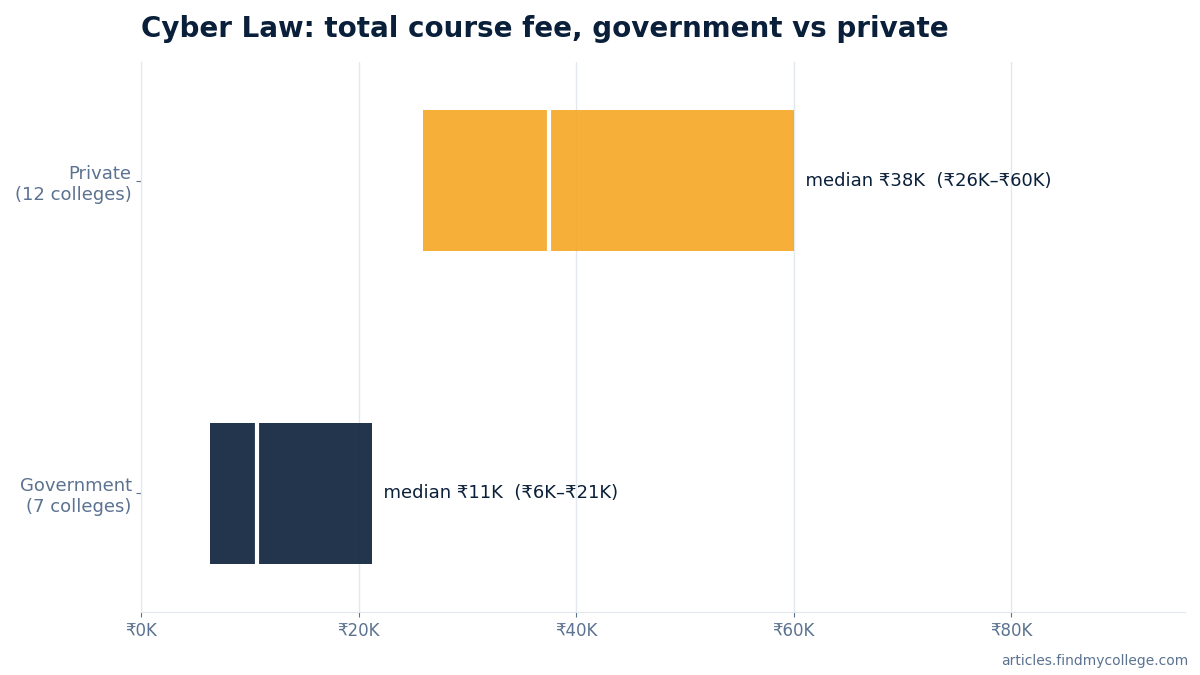
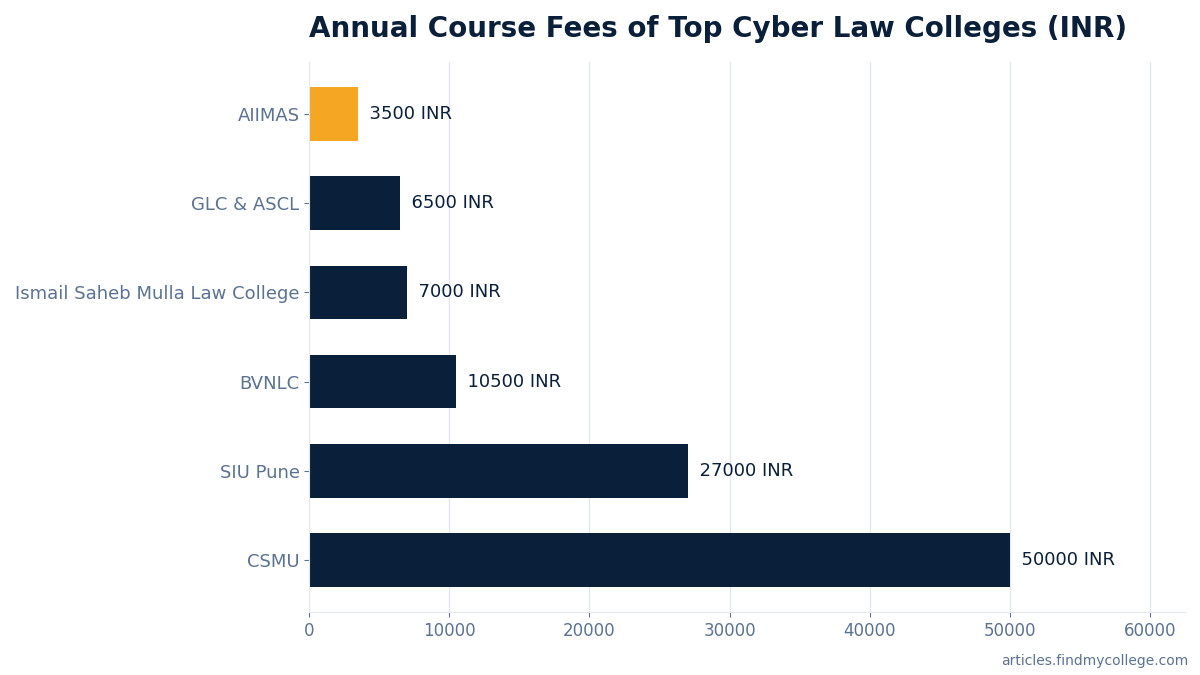
A Cyber Law course, such as the Diploma in Cyber Law, is a 6-month to 1-year program with fees ranging between INR 3,500 and INR 70,000 depending on the college. Graduates and 10+2 pass outs can secure job roles such as Legal Advisor and Cyber Lawyer with an average starting salary package of INR 4,00,000 to INR 5,00,000.
At least 167 colleges offer Cyber Law programs in India across government, private, and distance learning sectors.
| Parameter | Details |
|---|---|
| Course Duration | 6 months to 1 year |
| Eligibility | 10+2 from a recognized board (Science stream) with minimum 45% aggregate, or Bachelor’s degree, or completion of 3 years of a 5-year integrated LLB |
| Admission Process | Merit-based direct admission |
| Course Fee Range | INR 3,500 to INR 70,000 |
| Average Starting Salary | INR 4,00,000 to INR 5,00,000 |
| Course Modes | Online and Offline |
| Key Job Roles | Legal Advisor, Cyber Lawyer, Cyber Consultant, Research Assistant, Assistant Professor |
What is Cyber Law
- Course Duration: 6 months to 1 year
- Mode of Learning: Online and offline
- Eligibility: 10+2 (Science stream), Bachelor’s degree, or completion of 3 years of a 5-year LLB
- Key Roles: Legal advisor, cyber consultant, and research assistant
A Diploma in Cyber Law covers topics like electronic signatures, data privacy, cyber security, and computer source code protection.
Cyber Law Eligibility
Eligibility criteria for a Diploma in Cyber Law vary slightly depending on the institution and entry level, but generally accommodate both school graduates and higher education students. Most institutes offer direct entry based on qualifying examination scores.
- Completion of 10+2 from a recognized board (Science stream) with a minimum of 45% aggregate marks.
- A Bachelor’s degree in any discipline from a recognized university, or candidates appearing in their final year of graduation.
- Completion of 3 years of a 5-year integrated LLB degree program.
Cyber Law Admission Process
- Admission to the Diploma in Cyber Law is conducted on a merit basis as a direct admission process.
- Candidates are evaluated based on marks in 10+2 (minimum 45% aggregate), a Bachelor’s degree, or completion of 3 years of a 5-year integrated LLB degree.
- Students can apply for the diploma course through both online and offline modes.
- Information regarding application start and end dates, shortlisted candidate names, and batch details are published on the website and sent via email.
Students appearing in the final year of their graduation examination are also eligible to apply. Selection is based on academic merit achieved in the qualifying examinations.
Cyber Law Syllabus and Subjects
The curriculum of a Cyber Law diploma is typically divided across two semesters. It blends theoretical legal principles with technical understandings of computer networks, digital databases, and internet legislation.
| Semester I Core Topics | Semester II Core Topics |
|---|---|
| Introduction to Cyber Law | Information & Traffic Data |
| Understanding Computer Software | Basic legal terms and concepts |
| Electronic & Digital Signatures – Legal Issues | Digital Signatures – Technical Issues |
| Data Privacy & Confidentiality | Freedom of Speech |
| Judicial & Quasi-Judicial Framework | Investigative Framework |
| International Framework | Legislative Framework |
| Computer Databases & Law | Electronic Contracts |
| Violation of Privacy | Unauthorized Access |
| Cyber Pornography | Cyber Security |
| Semiconductor Layout & Design Law | Computer Source Code |
Top Cyber Law Colleges
At least 167 colleges in India offer Cyber Law education, including 10 government and 47 private institutions. Top law schools ranked by NIRF provide specialized Cyber Law diplomas alongside degree programs. Additionally, several prominent law schools offer online or distance education options to working professionals and university students.
| College | City | Total Course Fee | NIRF Rank |
|---|---|---|---|
| National Law School of India University | Bangalore | ₹50,500 | 1 (Law, 2025) |
| Delhi University | Delhi | ₹34,900 | 5 (Overall, 2025) |
| Chanakya National Law University | Patna | ₹15,000 | 17 (Law, 2025) |
| Dr. Ram Manohar Lohiya National Law University | Lucknow | ₹31,000 | 21 (Law, 2025) |
| Amity University Noida | Noida | ₹1.37 lakh | 22 (Overall, 2025) |
| Symbiosis International University Pune | Pune | ₹2.20 lakh | 24 (Overall, 2025) |
| National Law Institute University | Bhopal | ₹1.09 lakh | 27 (Law, 2025) |
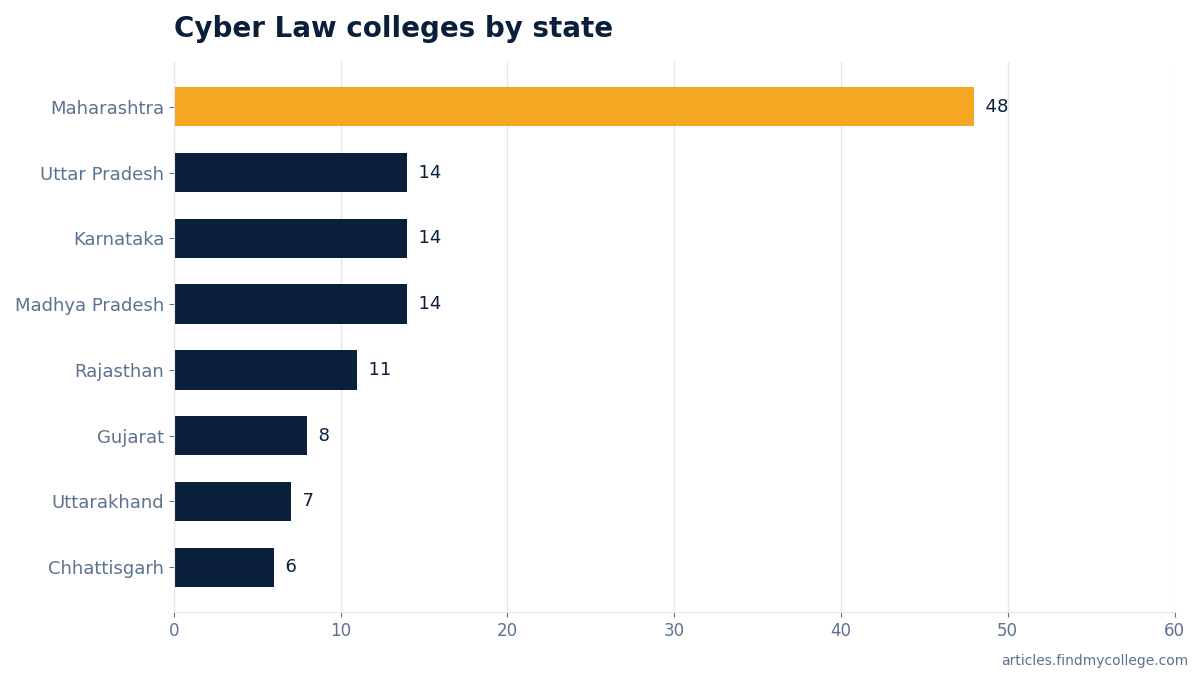
| City | Colleges | Fee Range | Well-Known Options |
|---|---|---|---|
| Pune | 17 | ₹12,000 – ₹3.83 lakh | Symbiosis International University Pune, Vishwakarma University |
| Mumbai | 13 | ₹6,197 – ₹15,000 | Government Law College Mumbai, Mumbai University |
| Bangalore | 9 | ₹34,200 – ₹6.40 lakh | National Law School of India University, RV University |
| Bhopal | 9 | ₹15,000 – ₹1.30 lakh | LNCT University, National Law Institute University |
| Delhi | 6 | ₹16,760 – ₹3.33 lakh | Delhi University, Indira Gandhi National Open University |
| Dehradun | 5 | ₹1.07 lakh – ₹3.95 lakh | ICFAI University Dehradun, UIHMT Group of Colleges |
| Lucknow | 4 | ₹31,000 – ₹84,000 | Dr. Ram Manohar Lohiya National Law University, Maharishi University of Information Technology Lucknow |
Cyber Law Career Scope and Salary
- Job Roles: Legal Advisor, Cyber Lawyer, Cyber Consultant, Research Assistant, Assistant Professor
- Average Starting Salary: INR 4,00,000 to INR 5,00,000
- Top Recruiters: Digital Vidya, Trilegal India, Reflik, Covent Informatics, Grow Up Technologies, S&R Associates, Atheva Services, Sapien HR, Contique Global, Force Technologies, TIGI HR Solution, Top Gear Consultants
Without a full LLB degree, candidates cannot enroll as practicing court lawyers. However, Cyber Law diploma holders can work as cyber consultants and legal advisors across IT firms, government organizations, and corporate sectors.
Recommended Reference Books for Cyber Law
Students pursuing Cyber Law courses can consult standard textbook literature covering Information Technology law, cyber crime frameworks, and internet legislation.
| Name of the Book | Author |
|---|---|
| Cyber Law of Information Technology & Internet | Anirudh Rastogi |
| Understanding Laws – Cyber Laws & Cyber Crimes | Garima Tiwari |
| Legal Framework on Cyber Crimes | Mani |
| Guide to Cyber Laws | Rodney D. Ryder |
How to Apply for Cyber Law Admission: Step by Step
- Check Eligibility Criteria: Verify that you have passed 10+2 from a recognized board (Science stream) with at least 45% aggregate, or hold a Bachelor’s degree, or have completed 3 years of a 5-year integrated LLB.
- Select Institute and Learning Mode: Choose between top government or private institutes offering Diploma in Cyber Law in online or offline mode.
- Submit Online/Offline Application Form: Fill out the registration application form on the official website or offline at the target college.
- Merit Evaluation and Shortlisting: Admissions are merit-based; colleges evaluate 10+2 or graduation marks and publish shortlisted candidate names on their portal.
- Document Verification and Fee Payment: Submit required academic transcripts and pay the course fee (ranging between INR 3,500 and INR 70,000) to confirm admission.
| What to do | Where | Link |
|---|---|---|
| Compare colleges, fees and cutoffs | Cyber Law colleges in India | findmycollege.com |