D.Sc Degree: Eligibility Criteria, Duration & Research Scope
The Doctor of Science (D.Sc / Sc.D) is the highest post-doctoral research degree awarded to scholars for exceptional independent research contributions after completing a Ph.D.
With average starting salaries ranging from ₹8,00,000 to ₹20,00,000 per annum, earning a D.Sc opens top-tier academic and R&D leadership roles. The following sections outline the eligibility criteria, admission evaluation steps, university fees, course structure, top colleges, and career prospects in India.
| Parameter | Details |
|---|---|
| Degree Level | Post-Doctoral Research Degree |
| Duration | 1 to 3 years (Up to 5 years Part-Time) |
| Eligibility | Ph.D. in a relevant field with 2 to 5 years of post-doctoral research experience and peer-reviewed publications |
| Admission Basis | No entrance exam; based on research proposal, published papers, and Expert Committee evaluation |
| Average Course Fee | ₹8,000 to ₹1,50,000 |
| Average Starting Salary | ₹8,00,000 to ₹20,00,000 per annum (up to ₹54.2 LPA for executive leadership roles) |
What is Doctor of Science (D.Sc)
The Doctor of Science (D.Sc or Sc.D) is the highest post-doctoral academic qualification awarded in science, engineering, and technology disciplines. It is conferred upon senior researchers who have published sustained, high-impact scientific work after obtaining their Ph.D. Unlike conventional degrees, a D.Sc recognizes advanced post-doctoral scholarship and original research contributions to a specific scientific field.
Honorary D.Sc degrees awarded without dissertation requirements cannot be used as accredited academic qualifications for scientific appointments or university faculty positions.
Doctor of Science (D.Sc) vs Doctor of Philosophy (Ph.D)
While a Ph.D. trains scholars in foundational academic research under a guide, a D.Sc evaluates established post-doctoral scholars on their independent scientific achievements. Candidates registering for a D.Sc work independently without mandatory classroom attendance or regular supervisory direction.
| Feature | Doctor of Philosophy (Ph.D.) | Doctor of Science (D.Sc.) |
|---|---|---|
| Academic Level | Doctoral Degree | Post-Doctoral Degree (Highest Award) |
| Entry Requirement | Master’s Degree in relevant field | Ph.D. Degree with post-doctoral research |
| Curriculum Structure | Coursework, exams, and guided thesis | No coursework; based purely on independent research work |
| Typical Duration | 3 to 5 Years | 1 to 3 Years (Part-Time options available) |
| Primary Objective | Training in original academic research | Recognition of sustained, distinguished scientific output |
Doctor of Science (D.Sc) Eligibility
Candidates applying for a D.Sc program must hold a Ph.D. degree from a recognized university in a relevant branch of science, engineering, or technology. Institutions mandate a minimum of 2 to 5 years of post-doctoral independent research experience following Ph.D. completion before allowing registration.
Institutional eligibility requirements vary across Indian universities:
- Srinivas University: Requires at least 10 research publications as first author in refereed journals published after Ph.D. completion.
The candidate’s research proposal and submitted thesis must directly relate to their post-Ph.D. published work. All submissions must contain original scientific findings that have not been previously submitted for any other degree or diploma.
Top Doctor of Science (D.Sc) Colleges
Several central, state, and private universities in India offer the D.Sc degree to qualified post-doctoral researchers. Prominent institutions include Banaras Hindu University, Savitribai Phule Pune University, University of Mumbai, University of Madras, Assam University, Apex Professional University, Sri Ramachandra Institute of Higher Education and Research, and Srinivas University.
Doctor of Science (D.Sc) Career Scope and Salary
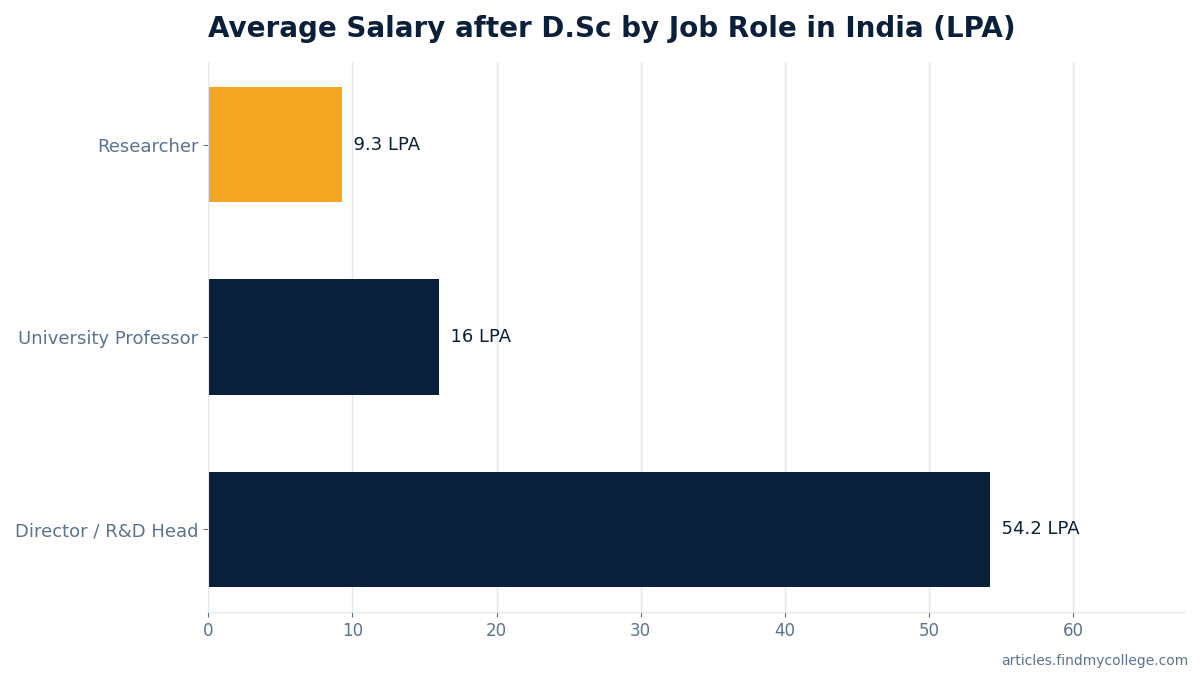
D.Sc degree holders earn an average starting salary between ₹8 LPA and ₹20 LPA in academic and industrial sectors.
How to Apply for Doctor of Science (D.Sc) Admission in 2026: Step by Step
- Check Eligibility Criteria: Verify that you hold an accredited Ph.D. in a relevant discipline and meet institutional research experience requirements (typically 2 to 5 years post-Ph.D.).
- Register on University Portal: Access the research admission portal of the target university (e.g., Srinivas University or BHU) and complete applicant registration.
- Fill Application Form and Pay Application Fee: Fill details regarding your educational qualification, Ph.D. thesis title, and research field, then pay the required processing fee online.
- Submit Research Proposal & Publications List: Upload a research summary (1000+ words), list of published peer-reviewed papers (minimum 10 first-author papers at universities like Srinivas), and post-doctoral research proof.
- Expert Committee Evaluation & Confirmation: An Expert Board reviews the application, published research impact, and originality. Candidates with approved proposals receive confirmation for thesis submission and registration.
- Thesis Submission & Course Fee Payment: Submit the final D.Sc research thesis within the designated timeframe (1 to 3 years) and complete fee payment (₹8,000 to ₹1,50,000).
| What to do | Where | Link |
|---|---|---|
| Compare colleges, fees and cutoffs | Doctor of Science (D.Sc) colleges in India | findmycollege.com |