Product Design Courses: Eligibility, Duration and Career Scope
- 17 Sep 2026PF Wage Ceiling Increase Regulates Statutory Design Costs
Provident fund contributions for statutory add-ons in product designer hiring were capped following the wage ceiling adjustment on 17 September 2026. - 16 Oct 2025BITS Design School Opened B.Des Admissions
Applications for the 4-year B.Des (Honours) program opened on 16 October 2025 and closed on 1 February 2026.
Product design courses in India are available across 4-year undergraduate B.Des degrees, 2-year postgraduate M.Des programs, 1 to 2-year diplomas, and 3 to 6-month short-term certificates. Tuition fees range from ₹1.06 lakh per annum at premier government institutes like IIT Indore to ₹8.49 lakh per annum at top private design universities, with starting salaries for graduates ranging between ₹3 LPA and ₹12 LPA.
With at least 190 colleges across India offering this stream and entry-level salaries reaching up to ₹12 LPA in tech firms, selecting the right college requires careful comparison. Below, you will find details on eligibility criteria, entrance exams, syllabus subjects, tuition fee structures, top-ranked colleges, and career opportunities.
| Parameter | Details |
|---|---|
| Course Duration | 4 Years (B.Des), 2 Years (M.Des), 1–2 Years (Diploma), 3–6 Months (Certificate) |
| Eligibility Criteria | 10+2 pass in any stream with minimum 45%–50% aggregate (Science & Maths required for IIT Indore B.Des) |
| Major Entrance Exams | NID DAT, UCEED, CEED, MITID DAT, U-DAT, SMEAT, UID-DAT, AIEED, WUDAT, BUDAT |
| Annual Fee Range | ₹1.06 Lakh to ₹8.49 Lakh per annum (Hostel charges extra) |
| Core Tools Learned | AutoCAD, SketchUp, V-Ray, Figma, Rhino, Adobe Creative Suite, 3D Printing |
What is Product Design
Product design is a multidisciplinary discipline combining physical and digital product creation, user research, ergonomics, material exploration, and technical prototyping. Courses in product design train students to solve complex real-world problems by synthesizing aesthetics, manufacturing processes, functional hardware, and digital interface interactions.
Depending on educational goals, candidates can pursue a 4-year Bachelor of Design (B.Des), a 2-year Master of Design (M.Des), 1 to 2-year diplomas, or 3 to 6-month specialized short-term certificates. Core software tools integrated into the curriculum include AutoCAD, SketchUp, V-Ray, Rhino, Figma, and Adobe Creative Suite. Facilities like the Exo-Lab Network and Fabrication Lab at institutes such as The Design Village (TDV) Noida, accredited by Fab Foundation (MIT Center for Bits and Atoms), provide practical hands-on execution environments.
Types and Specialisations of Product Design Courses
Product design education caters to diverse career outcomes through distinct academic specialisations and program formats. Students can align their learning with hardware manufacturing, digital tech products, or practical vocational training.
| Course Type | Duration | Focus Areas | Key Tools & Skills |
|---|---|---|---|
| B.Des / M.Des in Product Design | 4 Years (UG) / 2 Years (PG) | Physical & digital product creation, ergonomics, user research, technical prototyping | AutoCAD, SketchUp, V-Ray, Rhino, Figma, Adobe Creative Suite |
| B.Des in Industrial Design | 4 Years | Mass-manufactured physical products, materials, ergonomics, production processes | Rhino, CAD modeling, mock-up building, material exploration |
| B.Des in UI/UX Design | 4 Years | Digital interface interactions, software apps, usability testing, wireframing | Figma, prototyping, usability testing, digital interface design |
| Diploma in Product Design | 1 to 2 Years | Hands-on practical skills, CAD modeling, mock-up building, material handling | CAD tools, physical prototyping, material exploration |
| Certificate Courses | 3 to 6 Months | Short-term skill building in specialized tools like Figma or UI design | Figma, UI design tools, digital prototyping |
For international credit validation, certifications like the UX Diploma (20 ECTS) and UI Certificate (6 ECTS) from the UX Design Institute are credit-rated by Glasgow Caledonian University.
Product Design Eligibility
Eligibility criteria for product design courses vary based on the degree level and the specific institution offering the program. For undergraduate B.Des degrees, candidates must complete Class 12 (10+2 pattern) in any stream—Science, Commerce, or Arts—from a recognized central or state board with an aggregate score of 45% to 50%. However, specialized technical programs like the 4-year B.Des at IIT Indore School of Innovation require Science and Mathematics subjects specifically in Class 12.
Admitted candidates must satisfy entrance test cutoffs alongside minimum qualifying marks.
Product Design Fees
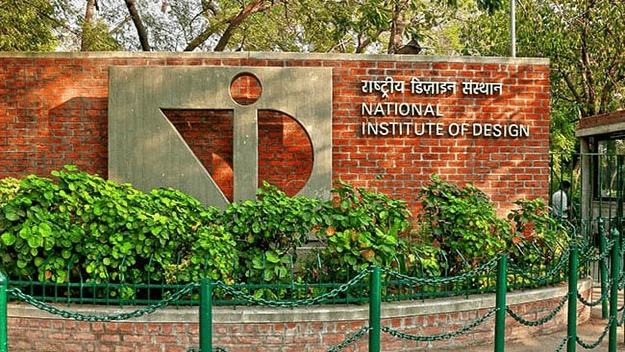
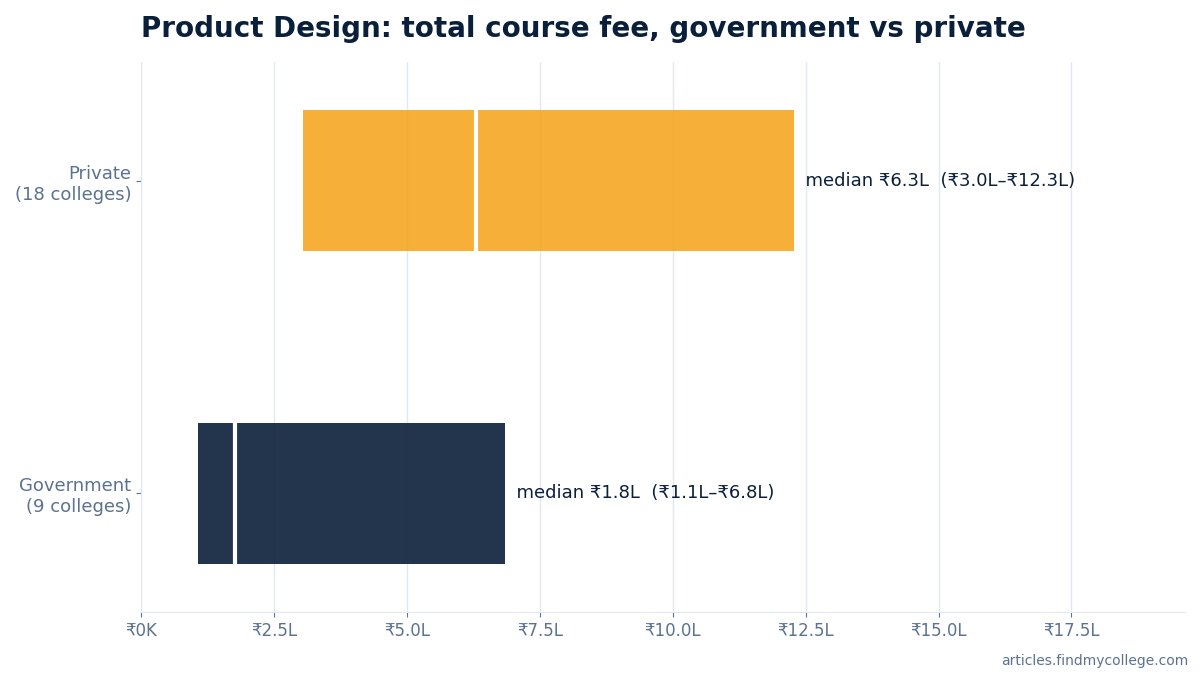
Product design course fees in India differ significantly between public government institutions and private design universities. Across at least 9 government colleges with fee data, the median total course fee is ₹1.77 lakh, with the middle half ranging between ₹1.07 lakh and ₹6.83 lakh. IIT Indore School of Innovation offers an annual fee of ₹1,06,300 for UR/EWS/OBC candidates and ₹6,300 for SC/ST/PwD candidates based on UCEED scores. National Institute of Design (NID) Ahmedabad charges ₹4.51 lakh per annum for B.Des in Product Design and ₹5.25 lakh per annum for M.Des.
Fees at top private institutions range from ₹3.50 lakh per annum at ARCH College Jaipur up to ₹10.85 lakh for the first year (comprising ₹7.70 lakh tuition fee plus ₹3.15 lakh hostel fee) at BITS Design School.
| College | City | Ownership | Total course fee |
|---|---|---|---|
| Indian Institute of Technology Kanpur | Kanpur | Government | ₹84,040 |
| Anna University | Chennai | Government | ₹96,660 |
| National Institute of Fashion Technology Navi Mumbai | Navi Mumbai | Government | ₹1.18 lakh |
| Indian Institute of Technology Guwahati | Guwahati | Government | ₹1.24 lakh |
| Visvesvaraya Technological University | Belgaum | Government | ₹1.77 lakh |
| Delhi Technological University | Delhi | Government | ₹4.84 lakh |
| Footwear Design and Development Institute Kolkata | Kolkata | Government | ₹6.77 lakh |
| Gujarat University | Ahmedabad | Government | ₹6.90 lakh |
| Footwear Design and Development Institute Hyderabad | Hyderabad | Government | ₹8.90 lakh |
| Category | Representative College | Entrance Exam | Annual Tuition Fee | Key Advantage |
|---|---|---|---|---|
| Government / Institute of National Importance | IIT Indore (School of Innovation) | UCEED | ₹1,06,300 per annum | Lowest fee, highly recognized technical infrastructure |
| Autonomous Public Institute | NID Ahmedabad | NID DAT | ₹4.51 Lakh – ₹5.25 Lakh per annum | Legacy design network, Institute of National Importance |
| Established Private University | UDIT Gurugram | U-DAT | ₹5.95 Lakh per annum | Immersive studio model, strong NCR location |
| Private Autonomous University | MIT ADT University Pune | MITID DAT | ₹6.52 Lakh – ₹8.49 Lakh per annum | 125-acre campus, extensive corporate relations cell |
| Premium Private Institution | BITS Design School | NID DAT / UCEED / BITSDAT | ₹10.85 Lakh per annum (with hostel) | Interdisciplinary tech-design focus, high packages |
People Also Read


Top Product Design Colleges
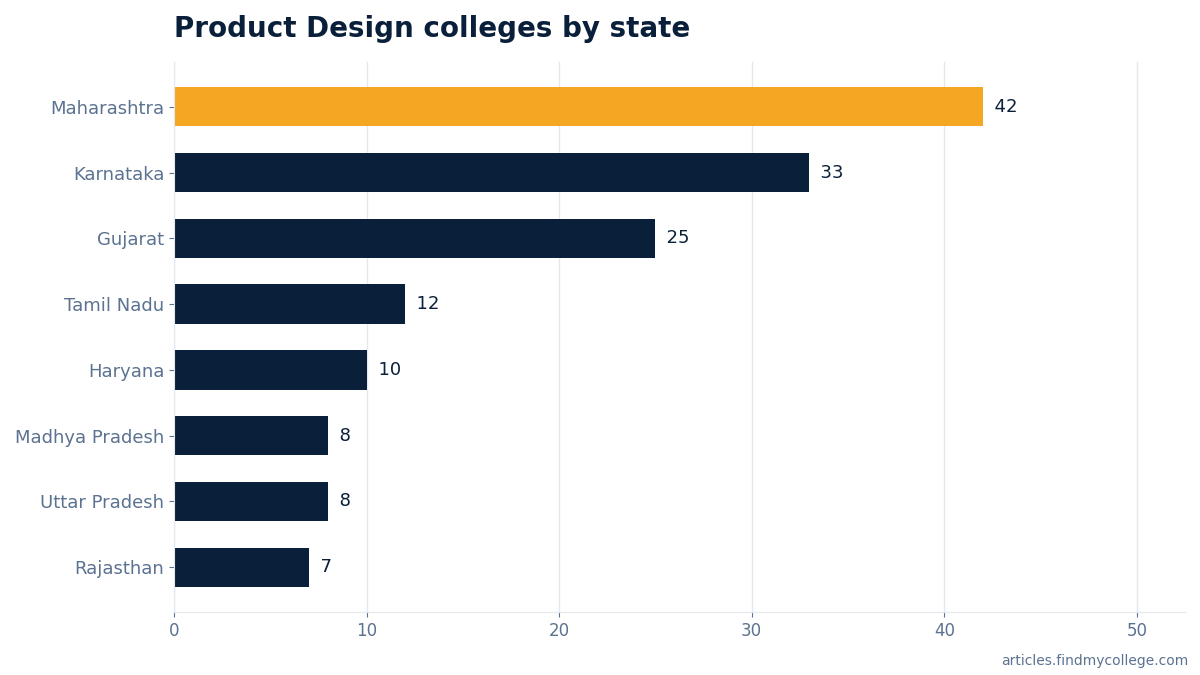
At least 190 colleges offer Product Design programs in India, including at least 9 government colleges and at least 33 private colleges. Leading institutes include NIRF-ranked universities, autonomous national institutes, and specialized private design institutions.
| College | City | Ownership | Total course fee | NIRF rank |
|---|---|---|---|---|
| Indian Institute of Technology Kanpur | Kanpur | Government | ₹84,040 | 5 (Overall, 2025) |
| Indian Institute of Technology Guwahati | Guwahati | Government | ₹1.24 lakh | 11 (Overall, 2025) |
| Kalinga Institute of Industrial Technology | Bhubaneswar | — | ₹14.91 lakh | 17 (Overall, 2025) |
| Chandigarh University | Chandigarh | Private | ₹8.77 lakh | 19 (Overall, 2025) |
| Anna University | Chennai | Government | ₹96,660 | 20 (Overall, 2025) |
| Amity University Noida | Noida | — | ₹7.92 lakh | 22 (Overall, 2025) |
Additional prominent options for product design include Srishti Manipal Institute of Art, Design and Technology Bengaluru (charging ₹4.32 lakh to ₹7.36 lakh per annum), World University of Design Sonepat (charging ₹3.68 lakh to ₹4.02 lakh per annum), and ARCH College of Design and Business Jaipur (charging ₹3.50 lakh to ₹4.35 lakh per annum via AIEED).
| City | Colleges | Fee range | Well-known options |
|---|---|---|---|
| Bangalore | 26 | ₹2.17 lakh – ₹26.00 lakh | Alliance University, Indian Institute of Science |
| Pune | 17 | ₹2.20 lakh – ₹19.40 lakh | Dr. DY Patil Vidyapeeth, MIT World Peace University |
| Mumbai | 12 | ₹12.20 lakh – ₹34.41 lakh | ATLAS SkillTech University, Somaiya Vidyavihar University |
| Ahmedabad | 11 | ₹2.40 lakh – ₹12.72 lakh | Gujarat University, Indus University |
| Gurgaon | 7 | ₹6.12 lakh – ₹16.48 lakh | Amity University Gurgaon, G D Goenka University |
| Chennai | 7 | ₹96,660 – ₹12.48 lakh | Saveetha Institute of Medical and Technical Sciences, Anna University |
| Hyderabad | 6 | ₹2.01 lakh – ₹12.00 lakh | Indian Institute of Technology Hyderabad, International Institute of Information Technology Hyderabad |
| Jaipur | 6 | ₹2.00 lakh – ₹7.60 lakh | Poornima University, University of Technology |
| College | City | Ownership | Total course fee | Average package |
|---|---|---|---|---|
| DKTE Society’s Textile and Engineering Institute | Kolhapur | Private | — | 4.01 LPA |
| MIT Academy of Engineering | Pune | Private | ₹3.74 lakh | 3 LPA |
| Sri Siddhartha Institute of Technology | Tumkur | Private | — | 2.55 LPA |
Product Design vs Industrial Design vs UI/UX Design
| Parameters | Product Design | Industrial Design | UI/UX Design |
|---|---|---|---|
| Primary Ecosystem | Combines physical hardware and digital product ecosystems | Mass-manufactured physical products and hardware | Digital software apps, web platforms, and user interfaces |
| Core Focus | User research, ergonomics, and technical prototyping | Materials, ergonomics, and production processes | Interface interactions, usability testing, and wireframing |
| Key Software Tools | AutoCAD, SketchUp, V-Ray, Rhino, Figma, Adobe Creative Suite | CAD modeling and mock-up building tools | Figma, wireframing, and digital prototyping tools |
| Entry Salary Range | ₹7 LPA average (BITS Design School) | ₹3 LPA to ₹8 LPA | ₹5 LPA to ₹12 LPA |
B.Des in Product Design combines both physical and digital creation, while Industrial Design targets physical manufacturing and UI/UX focuses on digital app interfaces. Choosing among them depends on whether a student prefers working on physical products, digital interactions, or holistic product strategy.
How to Choose the Right Product Design College
Selecting an optimal product design institute requires evaluating multiple infrastructural and placement parameters:
- Faculty & Studio Infrastructure: Look for colleges featuring dedicated fabrication labs, material handling workshops, Exo-Lab networks, and 3D rapid prototyping equipment.
- Placement Record: Evaluate verified institutional placements; top private schools like BITS Design School report average packages around ₹7 LPA, with top salary offers reaching ₹18 to ₹25 LPA. The median average placement package across reporting colleges stands at 5.0 LPA.
- Accreditation & Status: Verify whether public institutes carry Institute of National Importance status (such as NID Ahmedabad) or if private programs offer UGC-recognized degree validations.
- Location Ecosystem: Institutes located in major industrial clusters like Delhi NCR, Pune, or Bengaluru provide stronger studio internships and live corporate projects.
Product Design Career Scope and Salary
Product design offers extensive career opportunities across hardware manufacturing, automotive design, digital tech enterprises, and multidisciplinary design consultancies. Entry-level salaries for Industrial Designers in manufacturing and automotive sectors range from ₹3 LPA to ₹8 LPA, whereas entry-level salaries for UI/UX product design roles range between ₹5 LPA and ₹12 LPA in tech firms and digital startups.
According to Wisemonk data, product designers in India earn $9,500 to $10,400 annually at 1-3 years of experience and up to $18,200 to $20,100 annually at 6-9 years of experience.
How to Apply for Product Design Admission in 2026: Step by Step
- Check Eligibility Criteria: Verify 10+2 completion from any recognised board with 45%-50% aggregate marks (Science and Maths required specifically for IIT Indore B.Des).
- Register for Entrance Exams: Apply for national or university-level entrance exams such as NID DAT, UCEED, MITID DAT, U-DAT, SMEAT, UID-DAT, or AIEED during active application windows.
- Appear for Design Aptitude Written Test: Take the written Aptitude Test evaluating design thinking, creative reasoning, visual perception, sketching skills, and problem-solving.
- Participate in Studio Test & Personal Interview: Shortlisted candidates complete a practical Studio Test / Situation Test (3D model making, material handling) and a personal interview with faculty.
- Present Design Portfolio: Submit a curated design portfolio demonstrating original sketches, CAD models, physical mock-ups, or digital project prototypes.
- Confirm Admission & Pay Fees: Upon receiving the provisional offer letter or seat allotment, verify original Class 10/12 mark sheets and pay the initial semester tuition fee.
| What to do | Where | Link |
|---|---|---|
| Compare colleges, fees and cutoffs | Product Design colleges in India | findmycollege.com |
FAQs
What is course product design?
Product design is a multidisciplinary course that teaches students how to create functional, aesthetically appealing physical products and digital user experiences by combining user research, ergonomics, material science, 3D prototyping, and CAD software tools.
Which entrance exams are required for product design courses after 12th?
Key entrance exams for product design courses in India include UCEED (for IITs), NID DAT (for National Institute of Design), MITID DAT, U-DAT (for UDIT), SMEAT (Srishti Manipal), UID-DAT, AIEED, and WUDAT.
What is B design salary in India?
Entry-level salaries for UI/UX product design roles range between ₹5 LPA and ₹12 LPA, while industrial design roles start between ₹3 LPA and ₹8 LPA. BITS Design School reports average packages around ₹7 LPA and top offers reaching ₹18 to ₹25 LPA.
What are the best colleges for product design in Pune?
MIT ADT University (MIT Institute of Design) in Rajbaug Loni Kalbhor, Pune is among the leading design institutes in Pune, offering B.Des and M.Des programs in Product Design with fees ranging from ₹6.52 lakh to ₹8.49 lakh per annum.
Why is NID Ahmedabad significant for product design?
National Institute of Design (NID) Ahmedabad is recognized as an ‘Institute of National Importance’ by the Parliament of India and offers B.Des and M.Des programs with a strong legacy in design education.
What is the difference between Product Design, Industrial Design, and UI/UX Design?
Product Design spans both physical and digital product ecosystems. Industrial Design focuses specifically on physical, mass-manufactured hardware and ergonomics, while UI/UX Design focuses exclusively on digital app and web interfaces.