Diploma in Medical Lab Technician Entrance Exams 2026
Nishit Kumar is a senior EdTech industry leader with over a decade of experience in building and scaling education platforms, shaping their product, content, and growth strategy. At…
Latest update: Diploma in Medical Lab Technician 2026 admissions & dates updated. Read more ›
Aspiring medical lab technicians in India seeking admission to the Diploma in Medical Lab Technician (DMLT) program for the 2026 academic year will typically need to clear an entrance examination. These exams assess fundamental scientific knowledge and aptitude, serving as a crucial gateway to this paramedical course. This comprehensive guide covers everything you need to know about DMLT entrance exams, from eligibility and application processes to exam patterns, key dates, and career outcomes.
What is the Diploma in Medical Lab Technician (DMLT) Course?
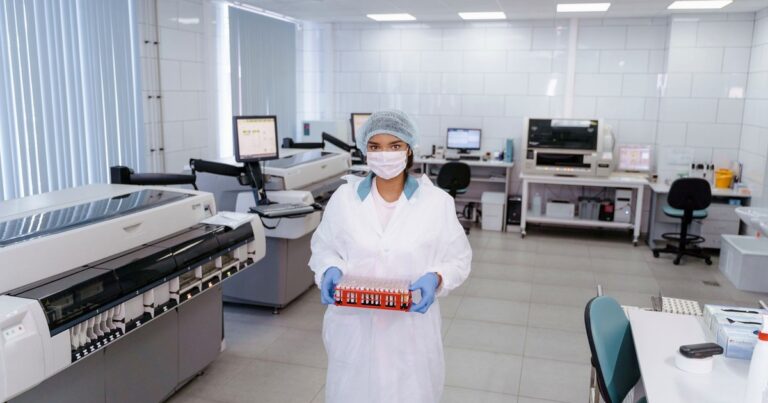
The Diploma in Medical Lab Technician (DMLT) is a two-year paramedical diploma course designed to train students in the essential skills required to perform diagnostic tests in a medical laboratory. Graduates play a vital role in healthcare by assisting doctors in disease diagnosis, treatment, and prevention through accurate lab analysis.
Who is Eligible for the DMLT Course in India?
To be eligible for the DMLT course in India, candidates must have successfully completed their 10+2 (or equivalent) examination with Physics, Chemistry, and Biology (PCB) as core subjects. Some institutions may also accept candidates with Physics, Chemistry, and Mathematics (PCM) or vocational streams related to medical sciences, though PCB is generally preferred and often mandatory. A minimum aggregate score, typically ranging from 40% to 50%, is also required, varying by institution and state.
Are there age limits for DMLT entrance exams?
While most DMLT programs do not impose an upper age limit, candidates generally need to be at least 17 years old as of December 31st of the admission year. Specific age criteria can vary, so always check the prospectus of your target colleges.
Which Entrance Exams are Required for DMLT Admission in 2026?
Admission to DMLT programs in India for 2026 is primarily based on either state-level entrance exams or institutional-level entrance exams. There isn’t a single national-level entrance exam for DMLT; instead, various states conduct their own common entrance tests, and many private colleges have their independent admission processes.
Key State-Level DMLT Entrance Exams (Examples):
- UP DMLT Entrance Exam: Uttar Pradesh conducts its own entrance test for government and some private DMLT colleges.
- Maharashtra DMLT CET: Maharashtra often has a Common Entrance Test for paramedical courses, including DMLT.
- Karnataka DMLT Entrance: Karnataka may use a state-level exam or rely on 10+2 merit for DMLT admissions.
- Other State Paramedical CETs: Many other states like Rajasthan, Bihar, and Madhya Pradesh conduct similar entrance exams for paramedical diplomas.
Institutional-Level Entrance Exams:
Many private universities and colleges conduct their own entrance exams. These can range from basic aptitude tests to more comprehensive exams covering PCB subjects. Some renowned institutions might also consider NEET scores, though it’s less common for diploma programs.
What is the Typical Application Process for DMLT Entrance Exams?
The application process for DMLT entrance exams generally involves online registration, form filling, document upload, and fee payment. Candidates must visit the official website of the respective state examination board or the individual college to apply.
Step-by-Step Application Guide:
- Online Registration: Create an account on the official portal using a valid email ID and mobile number.
- Fill Application Form: Provide personal details, educational qualifications, and contact information accurately.
- Upload Documents: Scan and upload required documents such as mark sheets (10th, 12th), photograph, signature, and caste certificate (if applicable).
- Pay Application Fee: Submit the non-refundable application fee online via net banking, credit card, or debit card. Fees typically range from INR 500 to INR 1500.
- Review and Submit: Carefully review all entered information before final submission. Print a copy of the application form for future reference.
- Admit Card Download: Download the admit card from the official website a few weeks before the exam date.
What is the Exam Pattern and Syllabus for DMLT Entrance Exams?
DMLT entrance exams typically follow a multiple-choice question (MCQ) format and cover subjects from the 10+2 science syllabus. The primary subjects tested are Physics, Chemistry, and Biology (Botany and Zoology).
Common Exam Pattern:
- Mode: Offline (OMR-based) or Online (Computer-Based Test – CBT).
- Type of Questions: Multiple Choice Questions (MCQs).
- Number of Questions: Varies, usually between 100-150.
- Total Marks: Varies, often 100-200 marks.
- Duration: Typically 90-180 minutes.
- Marking Scheme: Generally +1 or +4 for correct answers. Some exams may have negative marking, so check the specific exam notification.
- Language: English and/or regional languages.
Typical Syllabus for DMLT Entrance Exams:
- Physics: Mechanics, Thermodynamics, Optics, Electricity & Magnetism, Modern Physics.
- Chemistry: Physical Chemistry (Atomic Structure, Chemical Bonding, States of Matter), Inorganic Chemistry (Periodic Table, p-block, d-block elements), Organic Chemistry (Basic Principles, Hydrocarbons, Biomolecules).
- Biology: Botany (Plant Physiology, Reproduction, Genetics, Ecology), Zoology (Human Physiology, Animal Kingdom, Evolution, Human Health & Diseases).
Key Dates for DMLT Entrance Exams 2026 (Tentative)
The exact dates for DMLT entrance exams in 2026 will be released by respective state boards and institutions. However, based on previous years’ trends, here are the tentative timelines:
| Event | Tentative Timeline (State/Institutional Exams) |
|---|---|
| Application Start Date | April – May 2026 |
| Application End Date | May – June 2026 |
| Admit Card Release | June – July 2026 |
| Entrance Exam Date | July – August 2026 |
| Result Declaration | August – September 2026 |
| Counselling/Admission | September – October 2026 |
Note: These dates are highly tentative and subject to change. Always refer to the official notifications for precise schedules.
How Much Does a DMLT Course Cost in India?
The cost of a DMLT course in India varies significantly between government and private institutions. Government colleges generally offer the course at a much lower fee due to subsidies, while private colleges have higher fees.
| Institution Type | Average Annual Fee Range (INR) | Total Course Fee Range (2 Years) (INR) |
|---|---|---|
| Government Colleges | INR 10,000 – INR 30,000 | INR 20,000 – INR 60,000 |
| Private Colleges | INR 50,000 – INR 1,50,000 | INR 1,00,000 – INR 3,00,000 |
Additional costs may include examination fees, hostel charges, study materials, and practical equipment.
Is DMLT Worth It for Jobs and Career Prospects?
Yes, a Diploma in Medical Lab Technician (DMLT) is a highly valuable and career-oriented course with excellent job prospects in the ever-growing healthcare sector. Graduates are in high demand in hospitals, diagnostic centers, pathology labs, blood banks, and research institutions.
Career Opportunities After DMLT:
- Medical Lab Technician: Performing various tests like blood counts, urine analysis, microbiology cultures, etc.
- Pathology Technician: Assisting pathologists in analyzing tissue samples and body fluids.
- Blood Bank Technician: Managing blood collection, storage, and cross-matching.
- Research Assistant: Working in research labs, assisting scientists with experiments and data collection.
- Phlebotomist: Specializing in drawing blood samples from patients.
Average Salary After DMLT:
Starting salaries for DMLT graduates in India typically range from INR 1.8 LPA to INR 3.0 LPA. With experience (2-5 years), salaries can increase to INR 3.0 LPA to INR 5.0 LPA or more, especially in larger hospitals or specialized diagnostic centers. Further education, like a B.Sc. MLT, can lead to higher-paying roles and career advancement.
What are the Advantages and Disadvantages of Pursuing DMLT?
Like any career path, DMLT has its own set of pros and cons that prospective students should consider.
Advantages (Pros):
- High Demand: Constant need for skilled lab technicians in healthcare.
- Quick Entry into Workforce: A 2-year diploma allows for faster employment compared to degree courses.
- Decent Starting Salary: Provides a respectable income for diploma holders.
- Essential Role: Technicians play a critical role in patient diagnosis and care.
- Further Education Options: Can pursue B.Sc. MLT or other specialized courses later.
- Diverse Work Settings: Opportunities in hospitals, clinics, research labs, public health, etc.
Disadvantages (Cons):
- Repetitive Work: Some tasks can be routine and repetitive.
- Exposure to Biohazards: Risk of exposure to infectious materials, requiring strict safety protocols.
- Stressful Environment: High-pressure situations, especially in emergency labs.
- Limited Independent Practice: Work is usually under the supervision of pathologists or senior scientists.
- Standing for Long Hours: Requires physical stamina.
DMLT vs. B.Sc. MLT: Which is Better?
Both DMLT and B.Sc. MLT are excellent choices in medical laboratory technology, but they cater to different career aspirations and educational commitments. DMLT is a diploma, while B.Sc. MLT is a bachelor’s degree.
| Feature | Diploma in Medical Lab Technician (DMLT) | B.Sc. Medical Lab Technology (B.Sc. MLT) |
|---|---|---|
| Duration | 2 years | 3 years |
| Eligibility | 10+2 PCB (40-50% aggregate) | 10+2 PCB (50% aggregate, often entrance exam) |
| Focus | Practical skills, routine lab procedures | In-depth theoretical knowledge, advanced techniques, research |
| Entry Level Roles | Lab Technician, Phlebotomist | Medical Lab Technologist, Lab Supervisor, Research Assistant |
| Career Growth | Good, but often requires B.Sc. for senior roles | Better, faster progression to supervisory/managerial roles |
| Salary Potential | Lower starting, grows with experience | Higher starting, better long-term potential |
| Further Education | Can pursue B.Sc. MLT (lateral entry possible) | Can pursue M.Sc. MLT, PhD |
If you want a quicker entry into the workforce and a strong practical foundation, DMLT is ideal. If you aim for higher positions, research, or academic careers, B.Sc. MLT is the better long-term choice, and DMLT can serve as a stepping stone.
Explore more on FindMyCollege
Related pages for Diploma in Medical Lab Technician aspirants on findmycollege.com:
Frequently Asked Questions