Electrical and Computer Engineering Courses: Details, Fees & Scope
Nishit Kumar is a senior EdTech industry leader with over a decade of experience in building and scaling education platforms, shaping their product, content, and growth strategy. At…
Electrical and Computer Engineering courses are offered as B.Tech, B.E., and Integrated B.Tech M.Tech programs in India across at least 90 colleges. Admissions are based on national and state-level entrance exams such as JEE Main, JEE Advanced, GATE, MHT CET, and WBJEE.
Students can explore complete details below regarding degree options, eligibility requirements, entrance exams, university fees, top-ranked institutions, skill certifications, and career scope.
| Parameter | Details |
|---|---|
| Degree Levels Offered | B.Tech, B.E., B.Tech M.Tech Integrated Course |
| Key Entrance Exams | JEE Main, JEE Advanced, GATE, MHT CET, WBJEE, AP EAMCET, TS EAMCET, KCET |
| Core Job Roles | Computer Hardware Engineer, Artificial Intelligence Engineer, Business Development Executive |
| Prominent Institutions Accepting Applications | Parul University (Vadodara), Chandigarh University, Shiv Nadar University (Delhi NCR) |
What is Electrical and Computer Engineering
The Electrical and Computer Engineering domain offers undergraduate and dual-degree technical programs, including B.Tech (Bachelor of Technology), B.E. (Bachelor of Engineering), and B.Tech M.Tech Integrated dual-degree courses. At least 90 colleges offer Electrical and Computer Engineering programs in India, including 4 government institutions and 35 private institutions.
This academic branch bridges hardware systems, electrical circuits, signals, software architecture, and networking capabilities. Students receive training to design physical computer hardware as well as program algorithms and intelligent systems.
Technical certifications to boost Electrical and Computer Engineering skills
Enrolling in technical skill certifications allows engineering students to build practical expertise alongside core academic coursework. Industry certification options include Machine Learning Certification, Artificial Intelligence Certification, Cyber Security Certification, Ethical Hacking Certification, and Full Stack Development Certification.
These credentials validate hands-on proficiency in software development, cybersecurity protocols, and intelligent systems, strengthening resume profiles for technical hardware and software engineering roles.
Electrical and Computer Engineering Fees
Course fees for Electrical and Computer Engineering vary depending on college ownership, infrastructure, and institutional funding. Among private engineering colleges with fee data (24 colleges), the median total course fee is ₹3.77 lakh, with the middle half of institutions charging between ₹2.32 lakh and ₹5.38 lakh.
Government engineering colleges offer low-cost technical education. For instance, College of Engineering Trivandrum charges a total course fee of ₹64,450, Bharathidasan Institute of Technology, Anna University charges ₹92,000, and University Institute of Engineering and Technology Kurukshetra charges ₹3.04 lakh.
| College | City | Ownership | Total course fee |
|---|---|---|---|
| College of Engineering Trivandrum | Thiruvananthapuram | Government | ₹64,450 |
| Bharathidasan Institute of Technology, Anna University | Tiruchirappalli | Government | ₹92,000 |
| University Institute of Engineering and Technology Kurukshetra | Kurukshetra | Government | ₹3.04 lakh |
| Jamia Millia Islamia University | Delhi | Government | ₹6.13 lakh |
Top Electrical and Computer Engineering Colleges
Top engineering institutions offering Electrical and Computer Engineering are located across key academic hubs in India. Among colleges offering this discipline, state-wise distributions include Maharashtra with 16 colleges, Uttar Pradesh with 15 colleges, Kerala with 11 colleges, Tamil Nadu with 10 colleges, Odisha with 7 colleges, and Karnataka with 5 colleges.
Leading NIRF-ranked institutions offering Electrical and Computer Engineering programs include Jamia Millia Islamia University in Delhi (NIRF rank 4), Amrita Vishwa Vidyapeetham in Coimbatore (NIRF rank 8), Vellore Institute of Technology Vellore (NIRF rank 14), Kalinga Institute of Industrial Technology in Bhubaneswar (NIRF rank 17), and Amity University Noida (NIRF rank 22).
| College | City | Ownership | Total course fee | NIRF rank |
|---|---|---|---|---|
| Jamia Millia Islamia University | Delhi | Government | ₹6.13 lakh | 4 (Overall, 2025) |
| Vellore Institute of Technology Vellore | Vellore | — | ₹7.80 lakh | 14 (Overall, 2025) |
| Kalinga Institute of Industrial Technology | Bhubaneswar | — | ₹14.91 lakh | 17 (Overall, 2025) |
| Amity University Noida | Noida | — | ₹11.72 lakh | 22 (Overall, 2025) |
| Thapar Institute of Engineering and Technology | Patiala | Private | ₹21.60 lakh | 26 (Overall, 2025) |
| Graphic Era University | Dehradun | — | ₹12.30 lakh | 48 (Overall, 2025) |
| Shiv Nadar University | Greater Noida | — | ₹34.64 lakh | 57 (Overall, 2025) |
| Manipal University Jaipur | Jaipur | — | ₹4.86 lakh | 58 (Overall, 2025) |
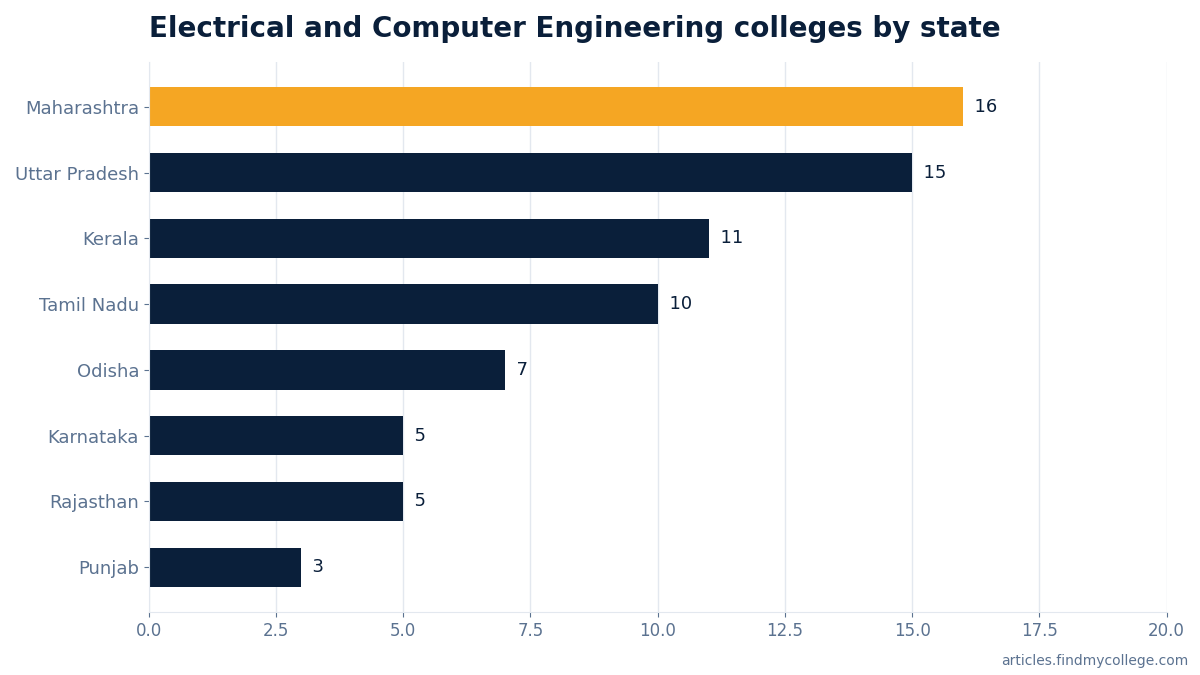
Regional breakdown of engineering colleges across Indian states
| City | Colleges | Fee range | Well-known options |
|---|---|---|---|
| Greater Noida | 6 | ₹1.56 lakh – ₹34.64 lakh | Gautam Buddha University, Shiv Nadar University |
| Pune | 6 | ₹4.05 lakh – ₹10.06 lakh | MIT World Peace University, Bharati Vidyapeeth University College of Engineering |
| Chennai | 5 | ₹3.20 lakh – ₹9.20 lakh | VIT University Chennai, Vels Institute of Science, Technology & Advanced Studies |
| Bangalore | 4 | ₹3.15 lakh – ₹11.65 lakh | REVA University, Chanakya University |
| Kolkata | 3 | ₹4.84 lakh – ₹4.84 lakh | Meghnad Saha Institute of Technology, Techno International New Town |
| Cuttack | 3 | ₹2.16 lakh – ₹3.45 lakh | Dhaneswar Rath Institute of Engineering and Management Studies, Ajay Binay Institute of Technology |
| Jaipur | 3 | ₹3.34 lakh – ₹4.86 lakh | Manipal University Jaipur, Poornima University |
| Lucknow | 3 | ₹5.50 lakh – ₹8.20 lakh | Integral University, SRM, Institute of Technology |
| Maharashtra | Mumbai, Pune | MHT CET, JEE Main |
| Delhi NCR | Delhi, Noida | JEE Main, IPU CET |
| West Bengal | Kolkata | WBJEE, JEE Main |
| Gujarat | Vadodara, Ahmedabad | GUJCET, JEE Main |
Top engineering colleges in India are located across regions like Bangalore, Delhi NCR, Maharashtra, Tamil Nadu, Karnataka, Uttar Pradesh, West Bengal, Telangana, Andhra Pradesh, and Gujarat. Among states, Maharashtra has 16 colleges, Uttar Pradesh has 15, and Kerala has 11.
How to Apply for Electrical and Computer Engineering Admission in 2026: Step by Step
- Check Eligibility Criteria: Verify academic qualifications in 10+2 with Physics, Chemistry, and Mathematics for undergraduate entry, or a relevant bachelor’s degree for postgraduate programs.
- Register and Appear for Entrance Exams: Apply and sit for national entrance exams like JEE Main/JEE Advanced or state-level entrance tests like MHT CET, WBJEE, AP EAMCET, TS EAMCET, or KCET.
- Apply to Target Universities: Submit direct college applications to participating institutions such as Parul University, Chandigarh University, or Shiv Nadar University.
- Participate in Counselling and Merit Allotment: Participate in centralized or university counselling sessions using entrance exam scores and rank predictors.
- Submit Documents and Pay Admission Fees: Complete document verification and pay the required fee to confirm seat allotment.
| What to do | Where | Link |
|---|---|---|
| Compare colleges, fees and cutoffs | Electrical and Computer Engineering colleges in India | findmycollege.com |
FAQs
What degree programs are available in Electrical and Computer Engineering?
Degree programs include undergraduate options like B.Tech (Bachelor of Technology), B.E. (Bachelor of Engineering), and B.Tech M.Tech Integrated dual-degree programs.
Which entrance exams are accepted for Electrical and Computer Engineering admissions?
Admissions accept national entrance exams like JEE Main, JEE Advanced, and GATE, as well as state exams such as MHT CET, WBJEE, AP EAMCET, TS EAMCET, and KCET.
What career profiles can graduates pursue in this field?
Graduates can work in technical roles such as Computer Hardware Engineer, Artificial Intelligence Engineer, and Business Development Executive.
What technical certifications complement an Electrical and Computer Engineering degree?
Certifications in Machine Learning, Artificial Intelligence, Cyber Security, Ethical Hacking, and Full Stack Development complement the core engineering curriculum.
Which Indian states and cities are major hubs for engineering education?
Major hubs include cities like Bangalore, Delhi NCR, and states such as Maharashtra, Tamil Nadu, Karnataka, Uttar Pradesh, West Bengal, Telangana, Andhra Pradesh, and Gujarat.