JEE Main 2026 January 28 Shift-Wise Exam Analysis: Difficulty Level and Section Review
The National Testing Agency (NTA) conducted the JEE Main 2026 Session 1 examination on January 28, 2026, in two shifts for Paper 1 (B.E./B.Tech). As thousands of aspirants appeared for the computer-based test across centres in India and abroad, early feedback and expert reviews have begun to shape a clearer picture of the paper’s overall difficulty level, section-wise trends, and expected performance benchmarks.
The JEE Main 2026 January 28 exam followed the prescribed NTA pattern and syllabus, with a mix of Multiple Choice Questions (MCQs) and Numerical Value Questions. Initial reactions indicate a moderate to moderately difficult paper, with noticeable variation across subjects and shifts.
Overall Difficulty Level of JEE Main 2026 (January 28)
Based on student feedback and coaching institute reviews:
-
Overall difficulty: Moderate
-
Compared to earlier shifts: Slightly tougher than some January 21 shifts, comparable to January 22 papers
-
Time management: A key challenge, particularly in Mathematics
The paper maintained balance across all three subjects, without any major deviation from the official JEE Main 2026 syllabus.
Physics Section Analysis
The Physics section was considered moderate in difficulty by most candidates. Questions were largely based on standard Class 11 and Class 12 concepts, with a strong emphasis on numerical problem-solving.
- Topics such as Mechanics, Current Electricity, Magnetism, Modern Physics, and Thermodynamics appeared frequently across both shifts.
- While several questions were formula-based, many required a clear conceptual understanding rather than direct substitution. Some numerical problems involved multiple steps, making them slightly time-consuming.
Overall, Physics was viewed as a scoring section for well-prepared candidates, though speed and accuracy played an important role in maximising attempts.
Chemistry Section Analysis
The Chemistry section was rated easy to moderate, with a fairly balanced distribution of questions from Physical, Organic, and Inorganic Chemistry.
- NCERT-based questions dominated, particularly in Inorganic Chemistry, making the section familiar for candidates with thorough textbook preparation.
- Organic Chemistry included a mix of reaction-based and concept-driven questions, while Physical Chemistry featured calculation-oriented problems that required careful reading and accuracy.
Students felt that Chemistry could be handled well with strong NCERT fundamentals, though tricky options and statement-based questions increased the difficulty slightly in some cases.
People Also Read

Mathematics Section Analysis
The Mathematics section emerged as the toughest and most time-consuming part of the paper for many students.
- Questions were lengthy and calculation-intensive, which made time management challenging. Even candidates comfortable with the syllabus found it difficult to attempt all questions within the given time.
- High-weightage topics included Calculus, Coordinate Geometry, Algebra, and Probability.
Although the concepts were familiar, solving the questions required multiple steps and careful calculations, leading to fewer attempts overall in this section.
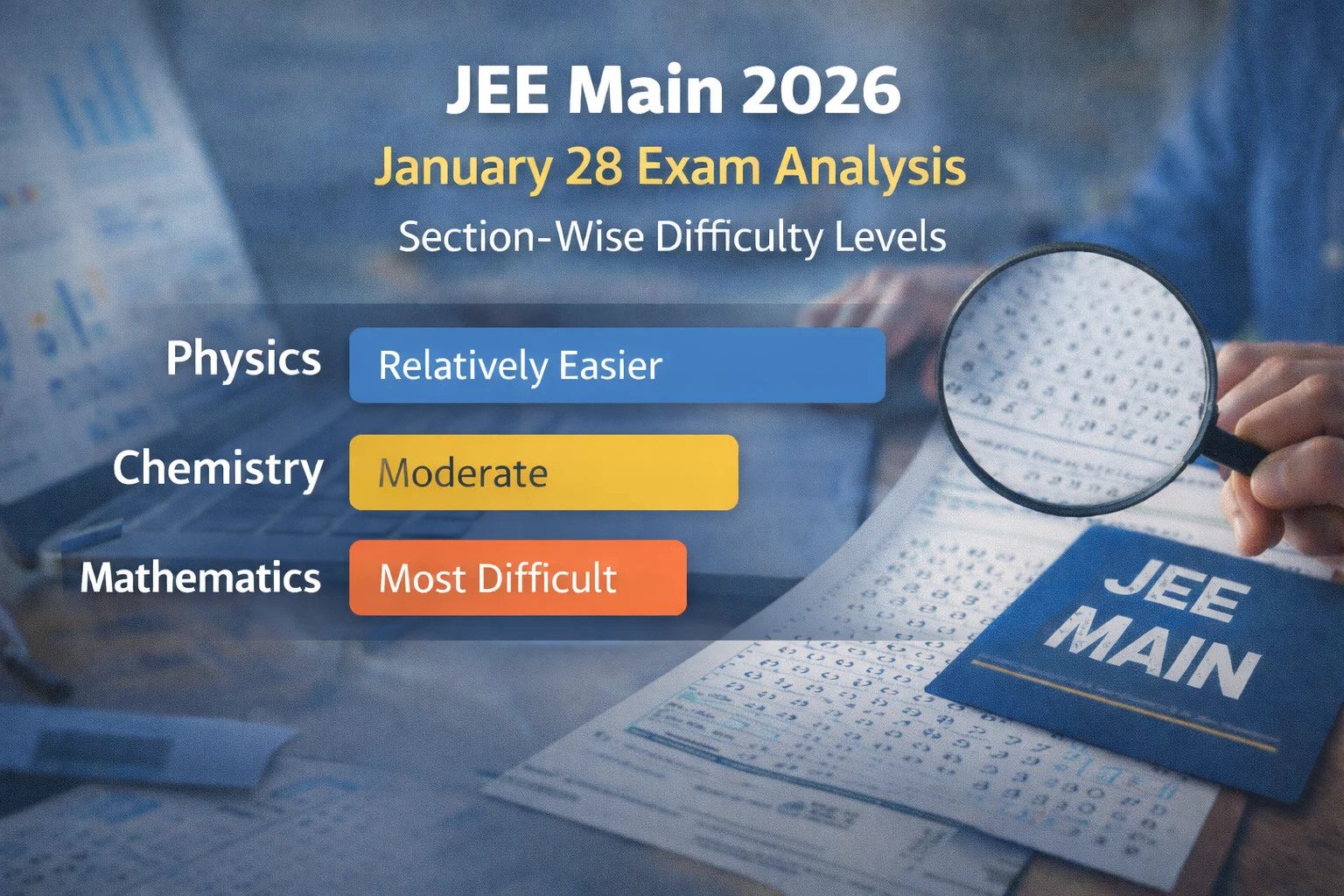
Section-Wise Difficulty Comparison
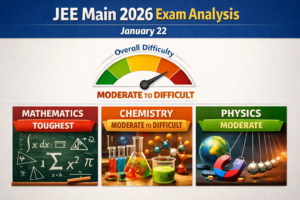
Based on overall student feedback and expert reviews, the difficulty level across sections was as follows:
-
Mathematics – Most difficult and time-consuming
-
Chemistry – Moderate with tricky and statement-based options
-
Physics – Relatively easier but numerical-heavy
Final Student Reactions and Expert View
Most students felt that the JEE Main 2026 January 28 paper focused on conceptual clarity rather than rote learning. Smart question selection, accuracy, and calm time management were crucial for performing well.
Experts believe that this paper sets a balanced benchmark for upcoming shifts and reinforces the importance of strong fundamentals and regular practice, especially for Mathematics-heavy papers.



📰 More Education News
- MPSC Declares IAS, IPS Exam Results; Issues Corrigenda on Engineer Posts, MERB Extends DeadlineMar 17, 2026 • Simran
- PSTET 2026 Provisional Answer Key Released at pstet2025.org; Download Response Sheet HereMar 17, 2026 • Shreoshree Chakrabarty
- PSSSB Clerk Exam 2026 Postponed from March to April, Check Final Schedule with Exam Syllabus & PatternMar 17, 2026 • Aayush Kukreja
- UP Police SI Exam 2026 Concludes with Massive Participation; Focus Now On Answer Key and Cutoff ExpectationsMar 17, 2026 • Aayush Kukreja