KEA Releases Draft Engineering Seat Matrix 2026-27; New Structural Caps on Engineering Intake Announced
The Karnataka Examinations Authority (KEA) has released the much-awaited Draft Engineering Seat Matrix for the 2026-27 academic session, bringing significant changes to engineering admissions across the state. The draft document introduces structural caps on student intake in engineering colleges, particularly targeting Computer Science and allied branches that have witnessed rapid expansion in recent years.
The move is expected to have a major impact on engineering admissions through the Karnataka Common Entrance Test (KCET) counselling process. Students, parents, and educational institutions are closely examining the draft seat matrix as it outlines the proposed seat distribution for the upcoming admission cycle.
According to the draft proposal, engineering colleges will face restrictions on excessive seat expansion in certain high-demand disciplines. The initiative aims to improve educational quality, maintain infrastructure standards, and ensure balanced growth across engineering branches.
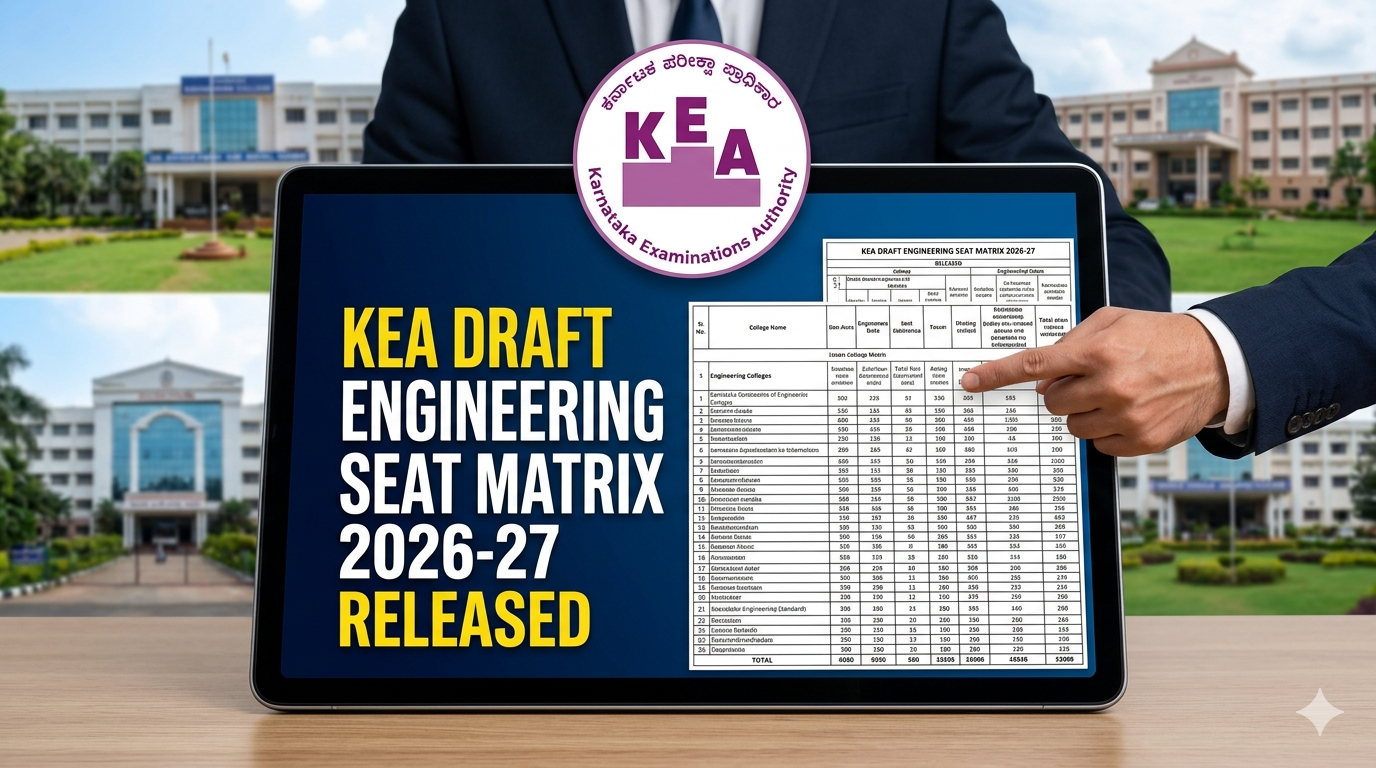
KEA Draft Engineering Seat Matrix 2026-27 Released
The release of the KEA Draft Engineering Seat Matrix 2026-27 marks an important milestone in Karnataka’s engineering admission process. The seat matrix provides details regarding the number of seats available in participating engineering institutions under various admission categories.
The draft matrix includes:
- Government engineering colleges
- Aided engineering institutions
- Private engineering colleges
- Minority institutions
- University-affiliated engineering colleges
- Self-financing engineering institutes
The seat matrix serves as the foundation for KCET counselling and determines the number of seats available for allocation during various rounds of admission.
Students planning to participate in Karnataka engineering admissions can use the draft matrix to understand the likely seat availability before the final version is published.
Karnataka Introduces Structural Caps on Engineering Intake
One of the biggest highlights of the draft seat matrix is the introduction of structural caps on intake capacity.
Over the last few years, several engineering colleges in Karnataka significantly increased seats in Computer Science Engineering and emerging technology programs such as:
- Artificial Intelligence
- Machine Learning
- Data Science
- Cyber Security
- Artificial Intelligence and Data Science
- Computer Science and Engineering (Specializations)
The government and educational regulators observed that many institutions were rapidly expanding intake capacities to meet growing student demand.
Under the new proposal, colleges may not be allowed to expand indefinitely in popular branches. Reports indicate that institutions could face a ceiling on the total number of seats offered across Computer Science-related disciplines.
The policy is aimed at preventing uncontrolled growth while ensuring that colleges maintain adequate faculty strength, laboratory facilities, and academic resources.
Why Has KEA Introduced Intake Restrictions?
The decision comes amid growing concerns regarding quality assurance in engineering education.
Experts have pointed out that while student demand for technology-focused courses continues to rise, excessive seat expansion can create several challenges.
Some of the key concerns include:
Faculty Shortages
Rapidly increasing student intake often makes it difficult for institutions to recruit qualified faculty members at the same pace.
Infrastructure Constraints
Engineering programs require laboratories, classrooms, computing facilities, and project spaces. Excessive admissions may put pressure on existing infrastructure.
Placement Challenges
When intake numbers increase significantly, colleges may find it harder to provide adequate placement opportunities for all graduating students.
Academic Quality
Maintaining student-teacher ratios and ensuring effective classroom learning becomes more difficult with uncontrolled growth.
The newly proposed caps are expected to address these concerns and create a more sustainable framework for engineering education in Karnataka.
Impact on Computer Science Engineering Admissions
Computer Science Engineering has remained the most sought-after engineering branch among students for several years.
The rapid growth of the technology sector, demand for software professionals, and increasing opportunities in artificial intelligence and data science have driven student interest toward these programs.
However, the proposed structural caps could influence seat availability in several ways.
Increased Competition
If seat expansion is restricted, competition for admission to top Computer Science programs may become more intense.
Stable Intake Levels
Students may witness relatively stable seat numbers across major institutions instead of frequent yearly increases.
Better Academic Resources
The restrictions are expected to improve access to faculty members, laboratories, and institutional resources.
Focus on Emerging Disciplines
Colleges may be encouraged to strengthen existing programs rather than continuously increasing intake.
What the Draft Seat Matrix Means for KCET 2026 Aspirants
The release of the draft seat matrix is especially important for students preparing for KCET counselling.
The document offers a preliminary picture of seat availability across engineering colleges and branches.
Candidates can use the information to:
- Shortlist colleges
- Compare branch-wise seat availability
- Understand admission trends
- Prepare counselling strategies
- Assess competition levels
Although the draft matrix is subject to change, it provides valuable insights that can help students make informed decisions before the counselling process begins.
Stakeholders Invited to Submit Objections
KEA has opened a consultation period for stakeholders to review the draft engineering seat matrix.
Engineering colleges, educational associations, students, and parents can submit objections, suggestions, or feedback regarding the proposed seat allocations and intake restrictions.
The objection window is expected to play an important role in refining the final seat matrix.
Institutions that believe the proposed caps may affect their academic plans or infrastructure utilization can present their concerns to the authorities during this period.
After reviewing all submissions, the final seat matrix will be released.
Karnataka Continues to Lead in Engineering Education
Karnataka remains one of India’s leading destinations for engineering education.
The state is home to hundreds of engineering colleges and attracts students from across the country due to its strong academic ecosystem and thriving technology industry.
Cities such as Bengaluru have become major centers for innovation, software development, startups, and research, making engineering education in Karnataka particularly attractive.
The state government has consistently focused on improving educational standards while ensuring that institutions maintain quality infrastructure and teaching resources.
The latest proposal reflects this broader objective of balancing growth with quality.
Final Seat Matrix to Guide Counselling Process
Once stakeholder feedback is reviewed, KEA will publish the final Engineering Seat Matrix 2026-27.
The final document will be used during:
- KCET counselling
- Option entry
- Choice filling
- Seat allotment
- Admission confirmation
- Reporting to colleges
Students are advised to closely monitor official KEA announcements and counselling schedules.
The final seat matrix will determine the exact number of seats available in each college and branch for the 2026-27 admission cycle.
Conclusion
The release of the KEA Draft Engineering Seat Matrix 2026-27 signals an important policy shift in Karnataka’s engineering admission framework. By introducing structural caps on intake, especially in Computer Science and related branches, the state aims to ensure sustainable growth, maintain academic quality, and strengthen engineering education standards.
While the proposal may increase competition for seats in popular branches, it is expected to improve faculty availability, infrastructure utilization, and overall learning outcomes. As stakeholders submit feedback and the final matrix takes shape, students preparing for KCET counselling will be watching closely for updates that could influence their admission plans.