M.Sc Physiotherapy vs Allied Health Courses (2026)
Nishit Kumar is a senior EdTech industry leader with over a decade of experience in building and scaling education platforms, shaping their product, content, and growth strategy. At…
Latest update: M.Sc in Physiotherapy 2026 admissions & dates updated. Read more ›
M.Sc in Physiotherapy vs Allied Health Degrees: Quick Comparison (2026)
For students in India considering a Master’s degree in the Science stream, particularly those interested in rehabilitation and healthcare, the M.Sc in Physiotherapy is a prominent choice. However, it’s essential to compare it against closely related and equally impactful postgraduate programs to make an informed decision. This comparison focuses on M.Sc in Physiotherapy against M.Sc in Occupational Therapy, M.Sc in Sports Physiotherapy, and M.Sc in Public Health, highlighting their distinct features and career trajectories for 2026.
| Course | Duration | Eligibility | Avg Fees (range) | Top Careers | Avg Starting Salary | Best For |
|---|---|---|---|---|---|---|
| M.Sc in Physiotherapy | 2 years | BPT (Bachelor of Physiotherapy) | ₹50,000 – ₹3,00,000 per year | Clinical Physiotherapist, Lecturer, Researcher, Rehabilitation Specialist | ₹3,00,000 – ₹6,00,000 per year | Students passionate about physical rehabilitation, musculoskeletal health, and clinical practice. |
| M.Sc in Occupational Therapy | 2 years | BOT (Bachelor of Occupational Therapy) | ₹40,000 – ₹2,50,000 per year | Occupational Therapist, Rehabilitation Counselor, Ergonomist, Special Educator | ₹2,50,000 – ₹5,50,000 per year | Students interested in helping individuals achieve independence in daily activities, focusing on mental, physical, and social aspects. |
| M.Sc in Sports Physiotherapy | 2 years | BPT (Bachelor of Physiotherapy) | ₹60,000 – ₹4,00,000 per year | Sports Physiotherapist, Fitness Consultant, Performance Analyst, Team Physiotherapist | ₹3,50,000 – ₹7,00,000 per year | Physiotherapists keen on working with athletes, injury prevention, and performance enhancement in sports. |
| M.Sc in Public Health | 2 years | Any Bachelor’s degree (preferably Science/Health background) | ₹30,000 – ₹2,00,000 per year | Public Health Specialist, Epidemiologist, Health Policy Analyst, Program Manager | ₹3,00,000 – ₹7,00,000 per year | Students interested in population-level health, disease prevention, health policy, and community well-being. |
M.Sc in Physiotherapy vs M.Sc in Occupational Therapy
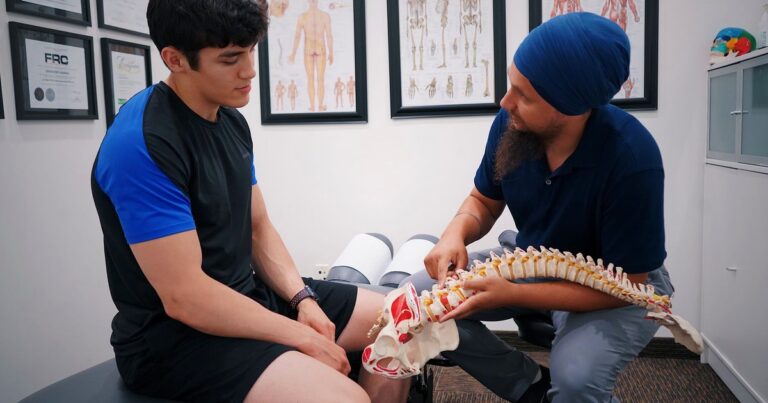
While both M.Sc in Physiotherapy and M.Sc in Occupational Therapy focus on rehabilitation, their approaches differ significantly. Physiotherapy primarily addresses physical impairments, pain, and mobility issues through exercises, manual therapy, and electrotherapy to restore physical function. Occupational Therapy, on the other hand, focuses on enabling individuals to participate in meaningful daily activities (occupations) by adapting tasks, environments, or teaching new skills, often involving cognitive, psychological, and physical aspects. Physiotherapy is more about ‘fixing’ the body, while Occupational Therapy is about ‘adapting’ the person and environment for function. M.Sc in Physiotherapy suits those passionate about biomechanics and physical recovery, while M.Sc in Occupational Therapy is ideal for those interested in holistic functional independence and adaptive strategies.
M.Sc in Physiotherapy vs M.Sc in Sports Physiotherapy
M.Sc in Sports Physiotherapy is a specialized branch of M.Sc in Physiotherapy. The core M.Sc in Physiotherapy provides a broad understanding of musculoskeletal, neurological, cardiopulmonary, and community physiotherapy across various age groups and conditions. In contrast, M.Sc in Sports Physiotherapy delves deep into sports-specific injuries, rehabilitation protocols for athletes, performance enhancement, and injury prevention in a sporting context. While a general M.Sc in Physiotherapy prepares you for diverse clinical settings, the sports specialization offers a focused career path within sports teams, academies, and athletic performance centers. M.Sc in Physiotherapy is for a generalist clinical role, whereas M.Sc in Sports Physiotherapy is for those dedicated to the unique demands of athletic populations.
M.Sc in Physiotherapy vs M.Sc in Public Health
These two Master’s degrees represent distinct career paths within the broader health sector. M.Sc in Physiotherapy is a clinical degree, preparing graduates for direct patient care, diagnosis, and treatment of physical ailments in hospitals, clinics, or private practice. M.Sc in Public Health, however, is a non-clinical, population-focused degree that deals with preventing disease, promoting health, and improving the quality of life for entire communities through policy, research, and program implementation. While a physiotherapist treats individuals, a public health professional works on a larger scale to impact health outcomes for groups. M.Sc in Physiotherapy is for hands-on patient interaction, while M.Sc in Public Health is for those interested in health system management, policy, and community-level interventions.
Which one should you choose?
- Choose M.Sc in Physiotherapy if: You are a BPT graduate keen on a broad clinical practice, enjoy direct patient interaction, and want to specialize in musculoskeletal, neurological, or cardiopulmonary rehabilitation across various age groups.
- Choose M.Sc in Occupational Therapy if: You are interested in a holistic approach to rehabilitation, helping individuals regain independence in daily life activities, and focusing on adaptive strategies for physical, cognitive, and psychosocial challenges.
- Choose M.Sc in Sports Physiotherapy if: You are a BPT graduate with a strong passion for sports, want to work with athletes, prevent and treat sports injuries, and optimize athletic performance.
- Choose M.Sc in Public Health if: You are interested in health at a population level, prefer non-clinical roles, and want to work in areas like epidemiology, health policy, health promotion, or disease prevention for communities.
Explore more on FindMyCollege
Related pages for M.Sc in Physiotherapy aspirants on findmycollege.com:
Frequently Asked Questions