MIT Scholarships for Indian Students 2026: Eligibility, Aid, and Application
MIT offers need-based aid, including first-year grant and health insurance, to Indian students. Find complete details including coverage, eligibility, application process and more here.
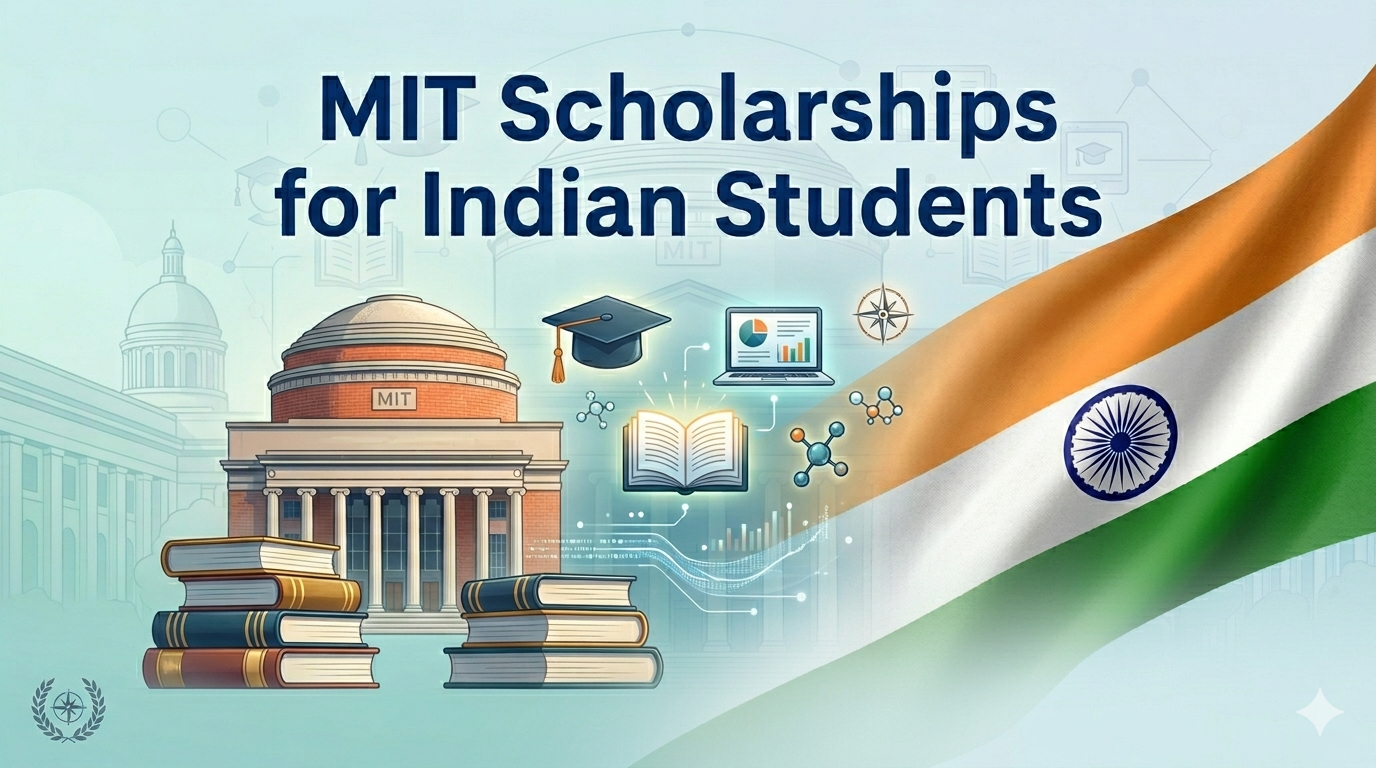
Securing an education at the prestigious Massachusetts Institute of Technology is a tangible goal for Indian students, thanks to robust MIT scholarships for Indian students that prioritize need-based aid. MIT is committed to meeting 100% of demonstrated financial need for all admitted students, including international applicants, ensuring affordability. This means many Indian students can receive full scholarships covering tuition, housing, and more. This article will guide you through eligibility criteria, application steps, deadlines, and the scope of aid for 2026.
Massachusetts Institute of Technology Financial Aid for Indian Students 2026
MIT follows a need-based financial aid model that reduces costs for international students, including Indians. Aid is provided through MIT Scholarships, which are non-repayable grants based on financial need rather than merit. Around 57% of undergraduates receive this support. Eligibility requires admission to MIT and submission of financial documents, while international students are not eligible for U.S. federal scholarships.
These internal MIT Scholarships For Indian Students are substantial, covering a significant portion of the estimated annual costs, which are detailed below along with other financial aid specifics.
| Category | Details |
| Application Fee | $75 (₹6,887), with fee waivers available |
| Median MIT Scholarship | $69,777 (2024–2025 median for internal grants) |
| First Year Grant | $2,000 for highest-need first-year students |
| Health Insurance Grant | Covers MIT SHIP for highest-need undergraduates |
| Graduate Aid | Decentralised, managed by individual departments |
| Graduate Fellowship | Up to $4,000 (₹3.67 lakh) stipend for living expenses |
| Postgraduate Eligibility | Minimum 65% in undergraduate degree for PG courses |
Does MIT Offer Full Scholarships for Indian Students in 2026?
MIT is committed to meeting 100% of demonstrated financial need for international students, including Indian students, for the 2026-27 academic year. This commitment ensures that financial barriers do not prevent qualified students from attending. Many MIT Scholarships For Indian Students are available to support their educational journey. Graduate fellowships can cover partial or full tuition, plus a stipend up to $4,000 (₹3.67 lakh) for living expenses. Highest-need first-year students receive a $2,000 grant, and health insurance costs are covered for highest-need undergraduates.
Indian Scholarships for MIT Education
Besides official MIT scholarships, a wide range of international scholarships for Indian students are also available. These provide ready financial support, needed to finance education in a renowned institution like MIT. Some key options are detailed below:
| Scholarship Name | Benefits | Eligibility |
| Fulbright-Nehru Master’s Fellowships | • Tuition fees
• Healthcare expenses • Partial living expenses |
• Minimum 55% in bachelor’s program
• Community service experience • Three years of work experience (minimum) |
| Inlaks Shivdasani Foundation Scholarships | • Up to 100,000 USD (₹91.83 lakh) | • Minimum 70% in bachelor’s program.
• Applicants should be below 30 years of age |
| JN Tata Endowment For Higher Education of Indians | • Loan scholarship between 1,00,000 and 10,00,000 INR
• An additional gift worth INR 75,000 (depending on the case) |
• Minimum 60% in bachelor’s degree
• Enrolling in a two-year master’s programme • Below 45 years of age |
| KC Mahindra Education Trust Scholarship | • Interest-free loan of INR 4,00,000 to 8,00,000 | • Minimum 65% in bachelor’s program |
MIT Scholarship Eligibility Criteria & Documentation for Indian Applicants 2026
Undergraduate need-based aid calculation considers factors like family size, siblings in college, taxes paid, permanent residence, total family income and assets, private school tuition for younger siblings, and unreimbursed medical expenses. Prospective students should also note specific documentation for the CSS Profile and crucial application deadlines. The table above details the specific financial records required for the CSS Profile and outlines the critical application submission dates for different admission rounds.
- Primary Eligibility Requirement: Proof of admission to an MIT undergraduate or postgraduate program.
- Minimum UG Degree Percentage: Minimum of 65% in undergraduate degree for postgraduate courses.
- Graduate Program Scholarships: Usually decentralized, managed by individual departments.
- Required Application Document 1: CSS Profile (MIT CSS Code 3514) via College Board.
- Required Application Document 2: Parental tax returns via College Board’s secure IDOC.
- Non-U.S. Parental Documentation: Tax return from that country, English translation if applicable.
How to Apply for MIT Scholarships and Financial Aid 2026-27
Applying for MIT Scholarships and Financial Aid requires gaining admission first, then completing specific financial documentation. This guide outlines the step-by-step process, eligibility, and key deadlines, including important details for Mit Scholarships For Indian Students.
- Step 1: Admission: Submit your application for admission to MIT first.
- Step 2: CSS Profile: Complete the CSS Profile on College Board website (MIT CSS Code: 3514). This includes parents’ tax returns (2 years ago), wage statements, bank balances, investments.
- Step 3: Parental Docs: Submit parents’ tax returns/income to College Board’s IDOC.
- Step 4: View Offer: Access MIT Application Portal to track documents and view offers.
The application process involves several detailed steps, requiring careful submission of financial documentation through specific channels. The application deadlines are as follows:
| Application Type | Deadline (2026-27) |
| Early Action | November 30 |
| Regular Action | February 15 |
| Continuing Students | April 15 |
Documents Required for MIT Scholarships for Indian Students
MIT financial aid and scholarships for Indian students require a set of academic, financial, and identity-related documents to evaluate eligibility for need-based assistance. These documents help the university assess both admission qualification and the level of financial support required:
- Completed Application Forms – MIT admission application along with the financial aid application
- CSS Profile (MIT CSS Code: 3514) – Detailed financial information form used to assess family income, assets, and expenses
- Parental Income Documents – Salary slips, income certificates, or employer statements
- Tax Returns (Parent/Guardian) – Income tax returns for the most recent year (submitted via IDOC)
- Bank Statements – Recent statements showing savings, deposits, and financial assets
- Secondary School Records – Mark sheets, transcripts, and academic reports (for undergraduate applicants)
- Standardized Test Scores (if applicable) – SAT/ACT scores (if submitted as part of admission)
- Passport Copy – For identity verification and international student records
- IDOC Submission Documents – Additional financial verification documents required by MIT via the College Board system
Things to Remember Before Applying for MIT Scholarships for Indian Students
Applying for MIT financial aid is a structured and documentation-heavy process where accuracy, timing, and consistency play a major role in determining the final aid package. Since MIT meets full demonstrated need, even small mistakes in financial reporting can affect eligibility.
- Aid is strictly need-based, not merit-based – MIT evaluates your financial situation, not grades or achievements, to determine scholarship eligibility.
- Admission and financial aid are separate processes – You must apply for MIT admission first, and then submit financial aid documents separately to be considered.
- CSS Profile is mandatory – This form (MIT CSS Code: 3514) is the primary tool used to assess family income, assets, and financial capacity.
- IDOC submission is required for verification – Parents’ tax returns and financial documents must be uploaded through the College Board’s IDOC system.
- Consistency across documents is critical – Income, savings, and asset details must match across the CSS Profile, tax returns, and bank statements.
- Deadlines are non-negotiable – Early Action (Nov 30), Regular Action (Feb 15), and Continuing Students (Apr 15) deadlines must be strictly followed.
- Report complete and real financial details – All income sources, including business, savings, and other earnings, must be disclosed honestly.
- Currency conversion should be accurate and consistent – Financial data reported in INR must be correctly converted into USD for evaluation.
- Keep documents well-organized in advance – Tax returns, salary slips, and bank statements should be prepared early to avoid delays in IDOC submission.
- Be responsive to MIT follow-ups – The financial aid office may request clarification, and delayed responses can impact your aid decision timeline.
Frequently Asked Questions
What types of financial aid does MIT offer Indian undergraduate students?
MIT offers need-based financial aid to Indian undergraduate students through institutional scholarships and grants. These are non-repayable and cover tuition, housing, and other expenses based on demonstrated financial need, ensuring affordability for most admitted students, including international applicants.
What is the application process for MIT financial aid for Indian applicants?
Indian applicants must first apply for admission, then complete the CSS Profile (MIT CSS Code: 3514) and submit parental financial documents via IDOC. MIT evaluates financial need and provides aid offers after reviewing all academic and financial information.
When should Indian students apply for MIT scholarships and financial aid?
Students must apply alongside their admission application. Deadlines are November 30 for Early Action, February 15 for Regular Action, and April 15 for continuing students. Missing these deadlines may reduce eligibility for MIT need-based financial aid consideration.
How does MIT’s need-based aid compare for international Indian students?
MIT meets 100% of demonstrated financial need for all admitted students, including Indians. Aid is not merit-based but depends on financial circumstances. Around 57% of undergraduates receive support, making MIT highly affordable for qualified international students.
Are there external scholarships available for MIT admission to Indian students?
Yes, Indian students can also apply for external scholarships like Fulbright-Nehru, Inlaks Shivdasani Foundation, JN Tata Endowment, and KC Mahindra. These provide additional funding support alongside MIT’s institutional aid, helping cover tuition and living expenses.