M.Tech Distance Education Courses: Online Programs and Approvals
Nishit Kumar is a senior EdTech industry leader with over a decade of experience in building and scaling education platforms, shaping their product, content, and growth strategy. At…
- 1 Oct 2026LPUNEST 2027 Registration Window Opened
LPUNEST 2027 registration for postgraduate engineering admissions is currently ongoing and will remain open till 15 January 2027.
M.Tech distance and online education programs are offered for working professionals with fee structures ranging between ₹20,000 to ₹2,00,000 depending on the institution. While pure distance M.Tech degrees generally lack AICTE approval, approved online degree programs (such as IISc Bengaluru’s online M.Tech for sponsored professionals) and UGC-recognized blended/part-time options are valid for career upskilling.
Prospective candidates can evaluate eligibility criteria, AICTE regulatory approvals, semester syllabus structures, fee benchmarks across top engineering colleges, and career growth outcomes for distance and online M.Tech options across India.
| Parameter | Details |
|---|---|
| Course Duration | 2 Years (4 Semesters) to 3 Years (for sponsored/online modes) |
| Eligibility Criteria | BE/B.Tech or equivalent degree with minimum 45% to 60% aggregate marks |
| Average Course Fees | ₹20,000 to ₹1,00,000 for distance programs; ₹50,000 to ₹2,00,000 for online/part-time options |
| Regulatory Status | UGC recognized (some universities); Pure distance mode is generally NOT AICTE approved |
| Popular Specializations | Computer Science & Engineering, ECE, Civil Engineering, Mechanical, Data Science, VLSI |
| GATE Requirement | Usually not mandatory for distance or part-time M.Tech programs |
What is M.Tech
M.Tech (Master of Technology) is a two-year postgraduate degree program that provides advanced technical knowledge, practical skills, and specialization in specific engineering disciplines. Standard regular and distance M.Tech courses have a nominal duration of 2 years divided into 4 semesters, while select sponsored online or part-time programs extend up to 3 years to accommodate workplace schedules.
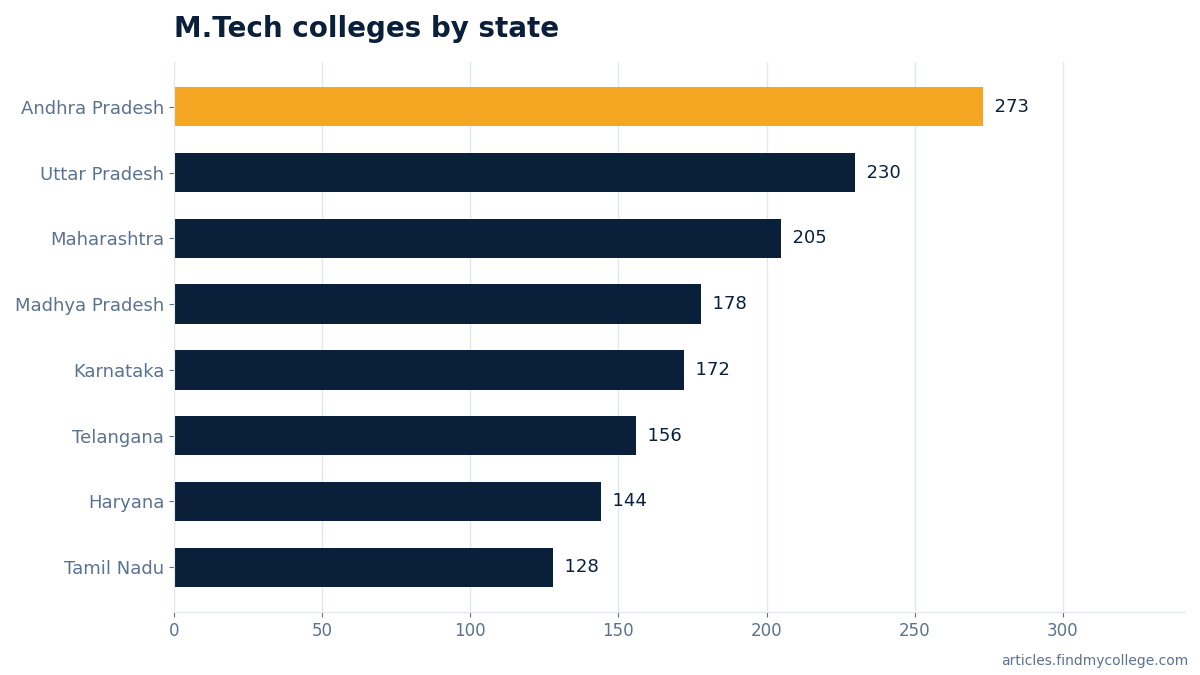
At least 2364 colleges offer M.Tech programs across India, comprising 143 government colleges and 1002 private institutions. Advanced engineering specializations include Computer Science, Electronics and Communication, Data Science, Cyber Security, Thermal Engineering, and Structural Engineering.
Validity and AICTE Approvals of Distance and Online M.Tech Degrees
Pure distance M.Tech programs carry UGC approval in select open universities, but AICTE does not grant approval for pure distance engineering degrees.
Online M.Tech degree programs and sponsored blended options offered by recognized universities under UGC regulations provide a valid pathway for professional upskilling. For example, IISc Bengaluru offers fully online M.Tech degree programs in Data Science & Business Analytics and ECE for sponsored practicing engineers and scientists. The online M.Tech degree awarded by IISc Bengaluru is equivalent in credits, project rigour, and course level to its residential M.Tech degree.
M.Tech Eligibility
Eligibility for distance and online M.Tech programs requires candidates to hold a B.E./B.Tech degree in a relevant engineering branch with at least 45% to 60% aggregate marks from a recognized university. Full-time regular programs generally require 50% to 60% marks alongside a valid GATE score for top-tier institutes.
Employer-sponsored online M.Tech degrees, such as those at IISc Bengaluru, require candidates to be active practicing engineers or scientists whose employer signs a formal Memorandum of Agreement (MoA) with the university. Standard GATE scores are usually not required for distance or online learning pathways, though institutional screening tests or interviews may apply.
Comparing Full-Time, Part-Time, and Distance M.Tech Course Modes
Selecting the appropriate learning format requires evaluating course duration, regulatory approvals, entrance requirements, and overall tuition costs across modes.
| Parameter | Full-Time Regular M.Tech | Part-Time M.Tech | M.Tech Distance / Online |
|---|---|---|---|
| Duration | 2 Years | 2.5 to 3 Years | 2 to 3 Years |
| Eligibility | BE/BTech (50-60%) | BE/BTech + Work Exp | BE/BTech (45-60%) |
| GATE Requirement | Mandatory for top institutes | Optional / Institute Specific | Usually Not Required |
| AICTE Approval | Yes | Yes (Approved Centers) | No for pure distance; Yes for UGC online |
M.Tech Career Scope and Salary
Average annual starting salaries for M.Tech graduates range from ₹3 Lakhs for CSE/ECE graduates up to ₹19 Lakhs per annum for Executive Engineering roles. The median average placement package across 79 reporting engineering colleges stands at 3.73 LPA.
Graduates move into high-demand designations including Senior Software Engineer, Data Scientist, Systems Architect, R&D Specialist, and Executive Engineer across core technology and infrastructure sectors.
How to Apply for M.Tech Admission in 2026: Step by Step
- Check Eligibility Criteria: Verify that you possess a B.E./B.Tech degree in a relevant branch with at least 45% to 60% aggregate marks from a recognized university.
- Select Program Mode and Institution: Choose between open university distance learning (IGNOU/Annamalai) or employer-sponsored online M.Tech degrees (such as IISc Bengaluru).
- Obtain Sponsoring MoA (If Applicable): For sponsored online degrees like IISc, ensure your employer has signed a Memorandum of Agreement (MoA) with the institute.
- Submit Online Application Form: Fill out the online application portal of the respective institution and pay the application processing fee (usually ₹500 to ₹2,000).
- Document Verification and Screening: Upload 10th/12th mark sheets, BE/BTech degree certificates, photo ID, and work experience/sponsorship certificates for university evaluation.
- Interview or Entrance Evaluation: Appear for an online written test or interview if required by institutional regulations.
- Pay Admission Fees and LMS Activation: Upon selection, pay the semester tuition fee to confirm admission and receive credentials for the Learning Management System (LMS).
| What to do | Where | Link |
|---|---|---|
| exam registration | Karnataka Examinations Authority (KEA PGCET) | cetonline.karnataka.gov.in |
| Compare colleges, fees and cutoffs | M.Tech colleges in India | findmycollege.com |
FAQs
What is a MTech course?
M.Tech (Master of Technology) is a two-year postgraduate degree program that provides advanced technical knowledge, practical skills, and specialization in specific engineering disciplines.
M Tech distance education is valid or not?
Pure distance M.Tech programs carry UGC approval in select open universities, but AICTE does not grant approval for pure distance engineering degrees.
What is the typical cost of an MTech degree in India?
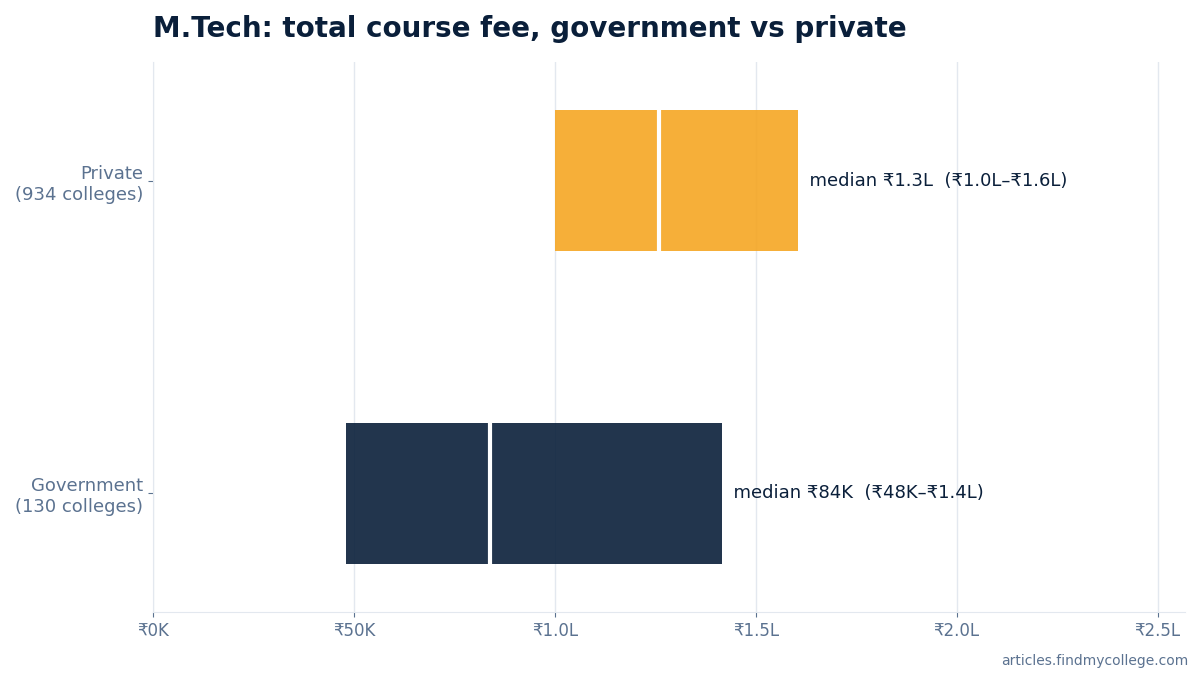
Distance M.Tech programs range from ₹20,000 to ₹1,00,000, while full-time regular M.Tech degrees typically cost between ₹50,000 and ₹4,00,000 for the complete course.
What is the average salary after MTech?
Average annual starting salaries for M.Tech graduates range from ₹3 Lakhs per annum for CSE/ECE graduates up to ₹19 Lakhs per annum for Executive Engineers depending on specialization and company.
Is MTech a 2 year course?
Yes, standard regular and distance M.Tech courses have a nominal duration of 2 years (4 semesters). Some sponsored online or part-time programs extend up to 3 years.