Ph.D in Microbiology Admission 2026 India: Eligibility, Fees, Jobs
Nishit Kumar is a senior EdTech industry leader with over a decade of experience in building and scaling education platforms, shaping their product, content, and growth strategy. At…
Latest update: Ph.D in Microbiology 2026 admissions & dates updated. Read more ›
Welcome to the comprehensive guide for Ph.D in Microbiology Admission 2026 in India. This page is designed to provide prospective students and their parents with all essential information regarding eligibility, application procedures, entrance exams, fee structures, career opportunities, and much more for pursuing a doctoral degree in Microbiology.
What is Ph.D in Microbiology?
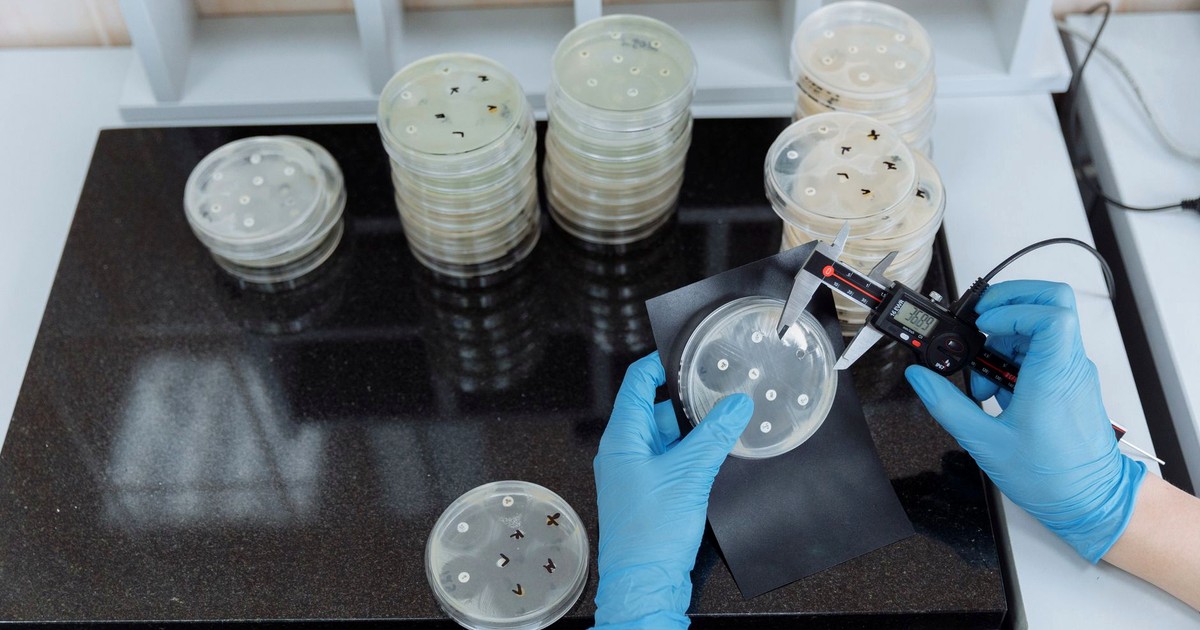
A Ph.D in Microbiology is a doctoral-level research program focused on the study of microscopic organisms such such as bacteria, viruses, fungi, algae, and protozoa. It involves advanced theoretical knowledge and extensive practical research, culminating in a dissertation that contributes original findings to the field. This program typically spans 3 to 6 years, depending on the research topic and institutional guidelines.
What is the eligibility for Ph.D in Microbiology Admission 2026?
To be eligible for Ph.D in Microbiology Admission 2026, candidates must generally hold a Master’s degree in Microbiology or a related field (such as Biotechnology, Biochemistry, Life Sciences, or Medical Microbiology) from a recognized university, with a minimum aggregate score, often between 55% to 60%. Some institutions may offer relaxation for reserved categories.
- Master’s Degree: M.Sc. in Microbiology, Medical Microbiology, Applied Microbiology, Biotechnology, Biochemistry, or a relevant Life Sciences discipline.
- Minimum Marks: Typically 55% aggregate marks (or equivalent CGPA) at the Master’s level. A 5% relaxation is often provided for SC/ST/OBC (non-creamy layer)/Differently-abled candidates.
- Entrance Exam: Most universities require candidates to qualify a national-level (e.g., UGC NET, CSIR NET, GATE) or university-specific entrance examination.
- Research Proposal: Some institutions may require a preliminary research proposal as part of the application.
What is the application process for Ph.D in Microbiology Admission 2026?
The application process for Ph.D in Microbiology Admission 2026 typically involves several stages, starting with online registration, followed by an entrance examination, and finally an interview round. Candidates should meticulously follow the specific guidelines of their chosen university.
- Online Application: Fill out the application form on the university’s official website, providing personal, academic, and contact details.
- Document Submission: Upload scanned copies of academic transcripts (10th, 12th, Bachelor’s, Master’s), degree certificates, caste certificate (if applicable), passport-sized photographs, and signature.
- Application Fee Payment: Pay the non-refundable application fee online. This can range from INR 500 to INR 2000.
- Entrance Exam: Appear for the university’s entrance test or submit scores from accepted national-level exams.
- Interview/Viva Voce: Shortlisted candidates are called for an interview, often involving a discussion about their research interests and a potential research proposal.
- Merit List & Admission: Final selection is based on entrance exam scores, interview performance, and academic record.
What are the key dates for Ph.D in Microbiology Admission 2026?
Key dates for Ph.D in Microbiology Admission 2026 vary significantly between universities and national entrance exams. However, most admission cycles for the academic year 2026-2027 will fall within the timelines provided below.
Tentative Admission 2026 Timeline for Ph.D in Microbiology
| Event | Tentative Dates (National Exams) | Tentative Dates (University Specific) |
|---|---|---|
| Application Window Opens | September – October 2025 (for Dec 2025/June 2026 exams) | March – April 2026 |
| Application Deadline | October – November 2025 | April – May 2026 |
| Admit Card Release | November – December 2025 | May 2026 |
| Entrance Exam Date | December 2025 / June 2026 | May – June 2026 |
| Result Declaration | January / July 2026 | June – July 2026 |
| Interview/Viva Voce | February – March / August – September 2026 | July – August 2026 |
| Final Admission & Enrollment | April / October 2026 | August – September 2026 |
Note: These dates are indicative and subject to change. Candidates are advised to check the official websites of their target universities and examination bodies for precise schedules.
How much does Ph.D in Microbiology cost in India?
The cost of pursuing a Ph.D in Microbiology in India varies significantly based on the type of institution (government vs. private) and whether the student receives a fellowship or stipend. Annual fees can range from INR 10,000 to INR 1,50,000.
Ph.D in Microbiology Fee Ranges (Annual)
| Institution Type | Annual Fee Range (INR) | Additional Costs (Approx. Annual) |
|---|---|---|
| Government Universities/Institutes (e.g., IITs, Central Universities) | 10,000 – 50,000 | Hostel: 15,000 – 30,000, Mess: 25,000 – 40,000 |
| Private Universities/Institutes | 50,000 – 1,50,000 | Hostel: 30,000 – 70,000, Mess: 30,000 – 50,000 |
Many Ph.D scholars receive fellowships (e.g., UGC JRF, CSIR JRF, DBT-JRF, ICMR-JRF) which provide a monthly stipend (typically INR 31,000 – INR 35,000 for the first two years, increasing thereafter) and a contingency grant, often covering or significantly reducing the financial burden.
What are the top entrance exams for Ph.D in Microbiology?
The top entrance exams for Ph.D in Microbiology are primarily national-level tests like CSIR NET and UGC NET, along with university-specific examinations. Qualifying these exams is often a prerequisite for admission and fellowship eligibility.
- CSIR NET (Council of Scientific & Industrial Research National Eligibility Test): Conducted for Junior Research Fellowship (JRF) and Lectureship (LS) in Science subjects, including Life Sciences. Essential for many science Ph.D admissions.
- UGC NET (University Grants Commission National Eligibility Test): Conducted for JRF and Assistant Professorship in various subjects, including Environmental Sciences, which can be relevant for some microbiology specializations.
- GATE (Graduate Aptitude Test in Engineering): While primarily for Engineering, GATE scores in Biotechnology (BT) or Life Sciences (XL) are accepted by some IITs and NITs for Ph.D admissions.
- ICMR JRF (Indian Council of Medical Research Junior Research Fellowship): For research in Biomedical Sciences, including Medical Microbiology.
- DBT JRF (Department of Biotechnology Junior Research Fellowship): For research in Biotechnology and Life Sciences.
- University-Specific Entrance Tests: Many central and state universities conduct their own entrance exams, followed by an interview.
What specializations are available in Ph.D in Microbiology?
A Ph.D in Microbiology offers a diverse range of specializations, allowing students to focus on specific areas of microbial life and their applications. Common specializations include Medical Microbiology, Environmental Microbiology, Industrial Microbiology, and Food Microbiology.
- Medical Microbiology: Focuses on pathogenic microorganisms, infectious diseases, diagnostics, and antimicrobial resistance.
- Environmental Microbiology: Studies microorganisms in natural and artificial environments, including bioremediation, biogeochemical cycles, and microbial ecology.
- Industrial Microbiology: Deals with the use of microbes in industrial processes for producing pharmaceuticals, biofuels, enzymes, and other biotechnological products.
- Food Microbiology: Examines microorganisms in food production, spoilage, preservation, and foodborne illnesses.
- Agricultural Microbiology: Investigates soil microbes, plant-microbe interactions, biofertilizers, and biopesticides.
- Molecular Microbiology: Explores the molecular mechanisms of microbial life, genetics, and gene expression.
- Virology: Dedicated study of viruses, their structure, replication, and interaction with host cells.
Is Ph.D in Microbiology worth it for jobs and salary?
Yes, a Ph.D in Microbiology is generally considered highly valuable for specialized research, academic, and industry roles, often leading to rewarding career paths with competitive salaries. The worth depends on the individual’s research focus, skills, and networking.
A Ph.D opens doors to advanced positions that are typically inaccessible with only a Master’s degree. Graduates are sought after in academia, research institutions, pharmaceutical companies, biotechnology firms, food industries, and public health organizations.
Career Prospects and Salary Ranges for Ph.D in Microbiology Graduates
| Job Role | Average Annual Salary Range (INR) | Key Responsibilities |
|---|---|---|
| Research Scientist | 5,00,000 – 15,00,000+ | Designing and conducting experiments, data analysis, publishing research. |
| Professor/Assistant Professor | 6,00,000 – 18,00,000+ | Teaching, mentoring students, conducting independent research, grant writing. |
| Microbiologist (R&D) | 4,50,000 – 12,00,000 | Developing new products/processes, quality control, testing. |
| Clinical Microbiologist | 5,00,000 – 15,00,000 | Diagnosing infectious diseases, managing lab operations in hospitals. |
| Biotechnologist | 4,00,000 – 10,00,000 | Applying biological systems for product development in various industries. |
| Public Health Microbiologist | 4,00,000 – 9,00,000 | Disease surveillance, outbreak investigation, public health policy. |
Salaries can vary based on experience, institution, location, and specific industry. Postdoctoral fellowships often serve as a bridge to permanent research or academic positions, offering stipends in the range of INR 45,000 – INR 60,000 per month.
How does Ph.D in Microbiology compare to other science Ph.D programs?
Ph.D in Microbiology stands out from other science Ph.D programs due to its specific focus on microorganisms, which are fundamental to various biological processes and have direct applications in health, environment, and industry. While sharing a strong foundation in molecular biology and biochemistry with other life science disciplines, microbiology offers unique research avenues.
- Broader Impact: Microorganisms are ubiquitous and critical to almost every ecosystem and biological process, offering diverse research opportunities from disease mechanisms to climate change.
- Interdisciplinary Nature: Often intersects with fields like immunology, genetics, bioinformatics, environmental science, and chemical engineering.
- Applied Research: Strong emphasis on applied research with direct implications in pharmaceuticals, diagnostics, food safety, and environmental remediation.
- Demand: High demand for microbiologists in public health, infectious disease research, and biotechnology sectors, especially post-pandemic.
Explore more on FindMyCollege
Related pages for Ph.D in Microbiology aspirants on findmycollege.com:
Frequently Asked Questions
Which colleges offer Ph.D in Microbiology in India?
Many prominent institutions in India offer Ph.D in Microbiology, including various IITs (e.g., IIT Bombay, IIT Delhi – Biotechnology departments with microbiology focus), Central Universities (e.g., Delhi University, Banaras Hindu University, University of Hyderabad), AIIMS, JNU, Pune University, and several state universities and private institutions like Amity University, VIT, and Manipal Academy of Higher Education.
Can I pursue Ph.D in Microbiology without a NET/GATE score?
While a NET/GATE score significantly enhances your chances and often qualifies you for fellowships, some universities do admit candidates based on their own entrance examinations followed by an interview. However, securing a fellowship without a national-level qualification might be challenging.
What is the typical duration of a Ph.D in Microbiology program?
The typical duration for a Ph.D in Microbiology in India is 3 to 6 years. This includes coursework, comprehensive exams, research work, thesis writing, and viva voce. Some universities allow for extensions under specific circumstances.
Are there any scholarships or fellowships available for Ph.D in Microbiology students?
Yes, numerous scholarships and fellowships are available, including UGC JRF, CSIR JRF, DBT JRF, ICMR JRF, INSPIRE Fellowship, and various university-specific research assistantships. These provide monthly stipends and contingency grants to support research expenses.
What kind of research topics are common in Ph.D in Microbiology?
Common research topics include antimicrobial resistance mechanisms, microbial pathogenesis, vaccine development, bioremediation of pollutants, microbial fuel cells, gut microbiome studies, viral epidemiology, food spoilage prevention, and discovery of novel microbial enzymes or compounds.
Is it possible to do a part-time Ph.D in Microbiology?
Some universities offer part-time Ph.D programs, especially for working professionals. Eligibility criteria and duration might differ from full-time programs. It’s essential to check with individual institutions for their specific part-time Ph.D policies.