Scope of Nursing in India (2026): Jobs, Salary, Top Recruiters & Future
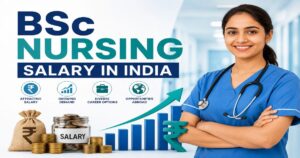
Nurses in India can anticipate an average annual salary ranging from ₹3.0 LPA to ₹7.0 LPA in 2026, reflecting a profession with critical demand. This vital field offers diverse career specializations, driving patient care and community well-being across various healthcare settings.
Defining Nursing Practice: Roles, Functions, and Responsibilities 2026
Nursing practice defines the services a trained health professional is deemed competent and licensed to perform, providing a crucial framework for patient safety and professional accountability. It guides practice decision-making and protects the public from unsafe care, ensuring quality.
- Definition: Services a trained health professional is competent and licensed to perform.
- Purpose: Central to patient safety, professional accountability, and integrity of the nursing profession.
- Defined by: State nurse practice acts, board of nursing, and professional guidance like ANA.
- Who: Registered Nurses (RNs) and Advanced Practice Registered Nurses (APRNs) with active licenses.
- What: Protection, promotion, and optimization of health; prevention of illness and injury.
- Dynamic Nature: Evolves with health policy, clinical knowledge, technology, and healthcare delivery models.
The comprehensive scope of nursing is further detailed by specific roles, responsibilities, and established standards that guide professional conduct and patient care across various settings.
| Aspect | Description |
|---|---|
| Legal Process | Two-step process: state legislature passes a ‘nurse practice act,’ then regulatory bodies create and implement rules. |
| General Responsibilities | Providing accurate, ethical, quality care; health promotion, disease prevention, coordination, palliative care, assessments, evaluations, holistic care. |
| LPN Scope of Practice | Observing patients and reporting data about their health status, ensuring high-quality and thoughtful care. |
| RN Scope of Practice | Outlines responsibilities in assessment, patient education, care coordination, and evidence-based interventions. |
| APRN/NP Scope of Practice | May include expanded authority in diagnosis, treatment, and primary care services, depending on state laws and credentialing. |
| Where Nurses Practice | Wherever a patient is in need of care, including hospitals, nursing homes, clinics, schools, workplaces, and ambulatory settings. |
| When Nurses Practice | Whenever there is a need for nursing knowledge, compassion, and expertise. |
| Why Nurses Practice | The main objective is to achieve the most positive patient outcomes, in keeping with nursing’s social contract and obligation to society. |
This table illustrates the foundational legal framework, general duties, and specific responsibilities across different nursing roles, highlighting the breadth of nursing practice.
Career Paths and Specializations in Indian Nursing 2026
India’s healthcare sector offers rewarding opportunities for nurses due to the constant need for skilled professionals. This section explores diverse career paths, specializations, and salary expectations for B.Sc Nursing graduates, highlighting the extensive roles available across various healthcare settings.
| Job Role | Description | Required Skills | Average Salary |
|---|---|---|---|
| Staff Nurse | Provides direct patient care and ensures smooth healthcare operations. | Care planning, patient assessment, and medical administration. | INR 3 LPA- INR 5 LPA |
| Army Nurse | Offers critical medical care to veterans and works in high-stress environments. | General nursing, trauma management, and emergency care. | INR 7 LPA- INR 9 LPA |
| Industrial Nurse | Promotes and maintains workers’ health in industrial settings. | Medical management, health promotion, and emergency care. | INR 3 LPA- INR 9 LPA |
| Nurse Supervisor | Oversees and coordinates the activities of nursing staff. | Strong leadership, data management, and clinical expertise. | INR 5 LPA- INR 10 LPA |
| Nurse Educator | Teaches and mentors aspiring nurses. | Mentorship, facilitating learning, and designing curriculum. | INR 4.9 LPA- INR 5.4 LPA |
| Psychiatric Nurse | Provides comprehensive care to patients with mental health disorders. | Crisis intervention, medical management, and observation skills. | INR 3 LPA- INR 5 LPA |
| Director of Nursing | Manages and supervises the overall nursing staff of the healthcare facility. | Communication with nursing staff, leadership, and financial acumen. | INR 20 LPA- INR 50 LPA |
| Community Health Nurse | Works with communities to promote well-being and prevent illness. | Patient assessment, wound care, and health education. | INR 3.5 LPA- INR 6 LPA |
| Home Care Nurse | Provides patient care to individuals recovering from injury or illness or with chronic conditions. | Administering injections, wound care, and medication management. | INR 2 LPA- INR 3.5 LPA |
| Deputy Nursing Superintendent | Oversees the daily operations of the nursing department, including staff management, quality assurance, and budgeting. | Patient safety, staff development, and clinical judgement. | INR 8 LPA- INR 12 LPA |
This table illustrates the diverse and rewarding career options available to B.Sc. Nursing graduates, showcasing varied responsibilities and salary ranges across different specializations.
- Career opportunities unlocked by B.Sc Nursing: Critical care, geriatrics, and paediatrics.
- Top career choices after B.Sc Nursing: Staff Nurse, Army Nurse, Community Health Nurse, and Home Care Nurse.
- Top recruiters for B.Sc Nursing graduates: Apollo Healthcare, Manipal Hospitals, and Clove Dental.
Entry-level salary after B.Sc Nursing ranges from INR 2 LPA to INR 4 LPA. Mid-level professionals with 3-5 years of experience can earn ₹4,50,000 to ₹6,00,000 per annum, while senior-level roles command ₹7,00,000 to ₹9,00,000 per annum.
- Extensive roles for nursing professionals: Health centres, clinics, hospitals, health education, clinical care, and healthcare management.
- Key specializations after B.Sc. Nursing: Critical Care, Pediatric, Geriatric, Psychiatric, Oncology, Midwifery and Neonatal Nursing.
The government sector offers roles like Military Nurse, providing nursing and medical care to soldiers, with an average salary of INR 7 LPA- INR 16 LPA. Indian nurses working abroad can achieve significantly higher salaries, ranging from ₹20,00,000 to ₹40,00,000 per annum, further expanding the global scope of nursing.
- Additional career options after B.Sc. Nursing: ICU Nurse, Community Health Worker, Public Health Educator, Healthcare Facilitator, Corporate Healthcare Professional, and Clinical Research Coordinator.
B.Sc. Nursing: Opportunities, Salary, and Essential Skills 2026
The B.Sc. Nursing program offers a stable career with high demand and diverse opportunities, both in India and abroad. This section details the comprehensive opportunities available, including salary expectations across various experience levels and essential skills for success in this vital field.
| Experience (in Years) | Highest Salary (INR) | Average Salary (INR) | Lowest Salary (INR) |
|---|---|---|---|
| 0 – 2 | 5.5 LPA | 4.0 LPA | 2.5 LPA |
| 3 – 5 | 10.0 LPA | 6.5 LPA | 4.5 LPA |
| 6 – 9 | 15 LPA | 12.5 LPA | 8.0 LPA |
| 10 – 15 | 20 LPA | 13 LPA | 10 LPA |
| 16 & Above | More than 20 LPA | 15 LPA | 12 LPA |
This table clearly illustrates the significant salary growth potential for B.Sc. Nursing graduates, with earnings increasing substantially with more experience.
- Key Reasons: High Demand, Diverse Career Options, Personal Fulfillment, Stable Career, Opportunities Abroad.
The scope of nursing extends across various sectors, offering diverse career paths and specializations. Graduates can pursue roles in healthcare, logistics, education, and even healthcare IT.
- Essential Skills: Communication and Empathy, Critical thinking and Problem Solving, Technical Skills, Attention to Detail, Leadership and Teamwork.
Entry-level salaries for fresh graduates typically range from ₹2,00,000 to ₹4,00,000 per annum, with registered nurses earning around INR 2.8 LPA. Nurses working abroad can command significantly higher salaries, ranging from ₹20,00,000 to ₹40,00,000 per annum.
- Program Duration: 4-year undergraduate program.
- Top Career Choices: Staff Nurse, Army Nurse, Community Health Nurse, Home Care Nurse.
- Specializations: Critical Care Nursing, Pediatric Nursing, Geriatric Nursing, Psychiatric Nursing, Oncology Nursing, Midwifery and Neonatal Nursing.
The government sector offers significant opportunities, particularly for Military Nurses who provide medical care to soldiers. A B.Sc. Nursing degree and State Nursing Council registration are required, with salaries ranging from INR 7 LPA to INR 16 LPA.
- Top Recruiters: Apollo Healthcare, Manipal Hospitals, Apollo Hospitals, Fortis Healthcare, Indian Armed Forces, Cipla.
People Also Read



Indian vs. International Nursing Practice Frameworks 2026
The future of nursing in India is set for significant growth, with the World Health Organization projecting a need for an additional 2.4 million nurses by 2030. This section explores the evolving landscape of Indian nursing alongside the attractive opportunities and rigorous requirements of international practice.
- Indian Demand (2030): India needs 2.4 million additional nurses (WHO).
- International Demand: High need for skilled nurses overseas (USA, UK, Canada, Australia, Gulf).
- Indian Entry Salary: Entry-level annual salary ranges from ₹2.5 to ₹6 lakh p.a.
- International Salary: Overseas offers higher salaries and attractive financial incentives.
- Indian Regulatory Changes (2026-27): New admission eligibility for Allied & Healthcare Courses.
- International Requirements: Licensing exams (NCLEX-RN, CBT, OSCE, CRNE) and IELTS.
While India presents a robust domestic scope of nursing with upcoming regulatory changes, international practice frameworks offer significantly higher earning potential and diverse professional exposure, albeit with stringent qualification requirements.
| Aspect | Detail |
|---|---|
| Indian Middle Level Salary | ₹4 to ₹8 lakh p.a. |
| Indian Senior Level Salary | ₹8 to ₹15 lakhs or more p.a. |
| Indian Entrance Exam (2026) | Gateway for B.Sc Nursing admission in India. |
| Indian Evolving Frameworks | Curriculum updates, EBP, technology (telehealth, e-health, m-health), interdisciplinary teamwork, leadership, specialized courses. |
| International Exposure & Training | Advanced healthcare technologies, global work experience, multicultural environments, specialized training. |
| International Practice Adaptability | Adaptability to international work cultures is required. |
Navigating and Expanding Your Nursing Practice in 2026
In 2026, nursing practice is set to expand significantly, with many jurisdictions broadening clinical responsibilities from nurse prescribing to advanced practice autonomy. This expansion aims to increase access to care but necessitates robust governance and supervision structures from leaders.
- 2026 Nursing Trend: Expanded clinical responsibilities and scope of nursing practice are broadening across jurisdictions.
- Implication: Increased access requires leaders to strengthen governance, credentialing, and supervision structures.
- Action for Leaders: Review local regulatory changes.
- Action for Leaders: Update competency frameworks.
- Action for Leaders: Build collaborative practice agreements where appropriate.
- Action for Leaders: Adapt role expectations based on international reforms.
These key trends highlight the imperative for nurse leaders to proactively address regulatory shifts and adapt organizational frameworks to support the expanding scope of nursing practice.
| Practical Playbook Step | Action |
|---|---|
| Step 1 | Prioritize three clinical Remote Patient Monitoring (RPM) pilots with highest ROI potential. |
| Step 2 | Run reimbursement scenarios with finance for new payment pilots. |
| Step 3 | Form an AI governance committee (nursing + informatics + ethics) to pilot tools. |
| Step 4 | Design new job families (digital nurse, RPM coordinator) and training pathways. |
| Step 5 | Implement workload analytics, flexible scheduling, and leadership coaching for retention. |
These practical playbook steps offer concrete strategies for leaders to implement new technologies and roles, ensuring staff readiness and retention amidst evolving practice models.
Nursing Salary Prospects and Growth in Indian Healthcare 2026
Nursing in India for 2026 shows promising salary growth, with experienced nurses earning ₹50,000 – ₹60,000+ per month. This section details salary prospects across different sectors, highlighting the financial trajectory within the Indian healthcare system.
| Feature | Government Hospitals | Private Hospitals |
|---|---|---|
| Starting Salary | ₹30,000 – ₹40,000 | ₹25,000 – ₹35,000 |
| Maximum Salary | ₹60,000 – ₹80,000 | ₹50,000 – ₹80,000 |
| Job Security | High | Moderate |
| Benefits | Pension, medical insurance | Bonuses, incentives |
This comparison reveals that while government nursing roles often offer higher starting salaries and superior job security with benefits, private sector positions can match maximum salary potential and provide performance-based incentives.
Frequently Asked Questions
What are the most in-demand nursing specializations in India for 2026, considering current trends?
Critical care, emergency nursing, and advanced practice roles like nurse practitioners are projected to be highly sought after in 2026. There’s also growing demand for specialized nurses in geriatrics and mental health due to India’s changing demographics.
How does the salary for a B.Sc. Nursing graduate in a private hospital compare to a government hospital in India in 2026?
In 2026, a B.Sc. Nursing graduate in a private hospital might start with ₹2.5-4.5 LPA, while a government hospital often offers a more structured pay scale, potentially starting around ₹3.5-6 LPA, along with better benefits and job security.
Beyond direct patient care, what alternative career paths are emerging for nurses in India by 2026?
Nurses are increasingly finding roles in healthcare IT, medical writing, clinical research coordination, and health administration. Opportunities in public health, health education, and corporate wellness programs are also expanding.
Which Indian cities are expected to offer the highest number of nursing job opportunities and better career progression in 2026?
Major metropolitan areas like Bengaluru, Delhi-NCR, Mumbai, Chennai, and Hyderabad are anticipated to continue leading in job opportunities due to their concentration of large hospital chains and healthcare infrastructure. Tier-2 cities with developing healthcare sectors are also showing promising growth.
What impact will technology, such as AI and telemedicine, have on the daily roles and future scope of nurses in India by 2026?
Technology will likely automate routine tasks, allowing nurses to focus more on complex patient care and critical thinking. Telemedicine will expand reach, requiring nurses to adapt to remote consultation and digital health management, enhancing efficiency and accessibility.
Related Reading