UGC Directs Universities, Colleges to Upload 2025 Student Records by June 30
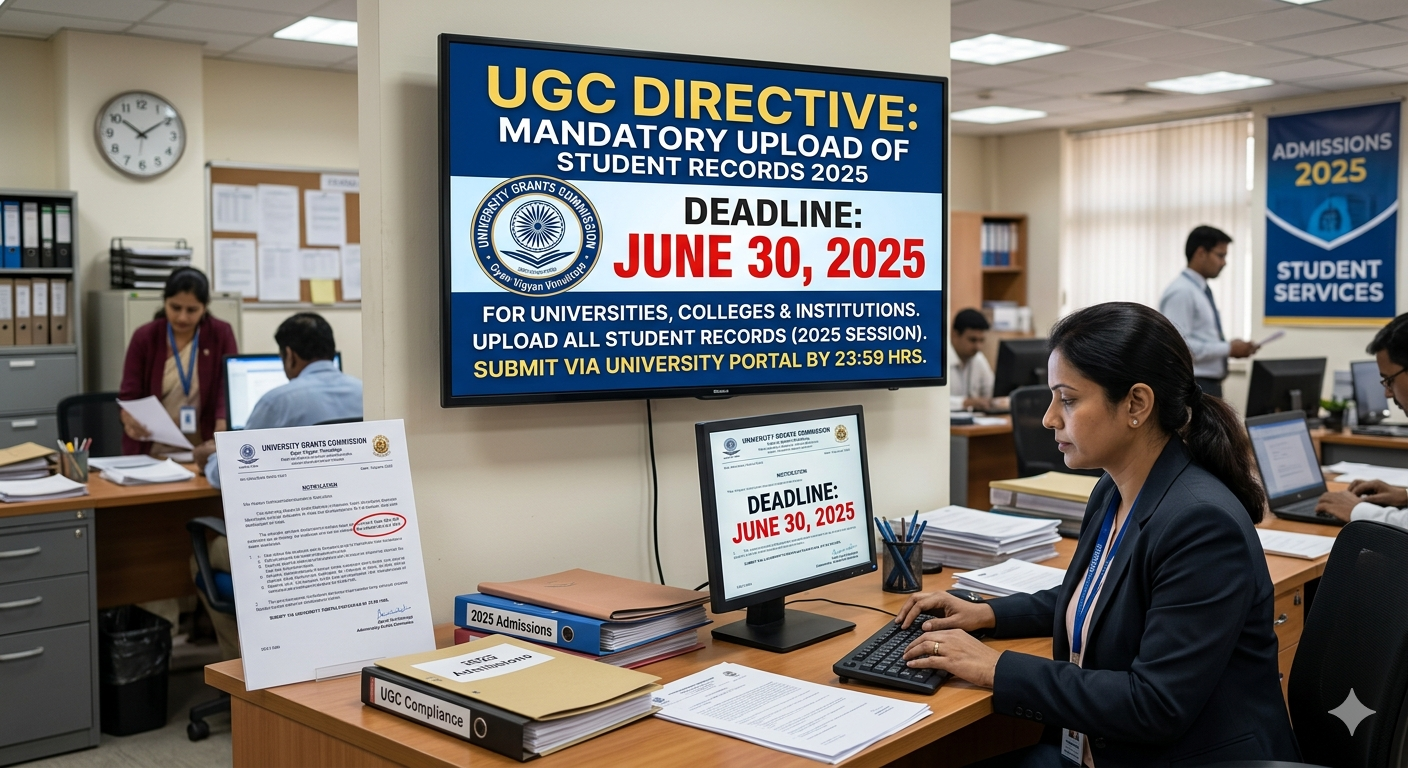
The University Grants Commission (UGC) has issued an important directive to all higher education institutions across India, asking them to upload academic records of students for the Examination Year 2025 on the National Academic Depository (NAD) and Academic Bank of Credits (ABC) platform by June 30. The move is aimed at strengthening the digital academic ecosystem envisioned under the National Education Policy (NEP) 2020 and ensuring that students have seamless access to their academic records and earned credits.
According to the latest notification, the directive applies to universities, autonomous colleges, and other higher education institutions that award academic credits. Institutions have been instructed to complete the uploading process within the prescribed timeline, as no fresh opportunity for uploading Examination Year 2025 records will be provided after the deadline.
What the UGC Has Directed
The UGC has asked all Higher Education Institutions (HEIs) to upload students’ academic records, including marksheets, grade sheets, and corresponding credit information, to the NAD-ABC platform. These records are essential for maintaining a centralized digital repository of student achievements and academic progress.
The commission has emphasized that Vice Chancellors, Directors, Principals, and heads of institutions must ensure timely compliance with the directive. The upload process is expected to cover all eligible student records related to Examination Year 2025.
The June 30 deadline has been described as the final opportunity for institutions to upload these records. Once the upload window closes, fresh submissions for Examination Year 2025 will not be accepted on the platform.
Importance of the Academic Bank of Credits
The Academic Bank of Credits is one of the flagship initiatives introduced under the National Education Policy 2020. It serves as a digital repository that stores academic credits earned by students from recognized institutions. These credits can later be accumulated, transferred, redeemed, and utilized across institutions, supporting a more flexible higher education system.
The ABC framework has been designed to give students greater academic mobility. It allows learners to move between institutions, take breaks from education, and return later without losing the credits they have already earned. This flexibility is a major reform in India’s higher education sector.
The platform also supports multiple entry and exit options, a key feature recommended under NEP 2020. Students can earn certificates, diplomas, or degrees depending on the number of credits accumulated during their academic journey.
Why Timely Uploading Matters
The UGC has highlighted that timely uploading of academic records is critical for the smooth functioning of the ABC ecosystem. Students depend on the availability of their academic data to access various educational services and opportunities.
If institutions fail to upload records within the stipulated timeline, students may face challenges in accessing their earned credits and academic achievements through the digital platform. The centralized system is intended to reduce paperwork, improve transparency, and make academic verification easier for students and institutions alike.
The upload process also helps in linking academic records with student identification systems, thereby creating a more efficient and integrated educational database. Such integration is expected to benefit students pursuing higher studies, internships, employment opportunities, and credit transfers between institutions.
No Fresh Uploads After June 30
One of the most significant aspects of the latest directive is the strict deadline. The UGC has clearly stated that no fresh uploads for Examination Year 2025 will be accepted after June 30. Institutions that miss the deadline may not receive another opportunity to upload student records for the concerned examination year.
This decision reflects the commission’s effort to ensure consistency and timely maintenance of the national academic database. Similar deadlines have been issued in the past to encourage institutions to update student data regularly and maintain the integrity of the system.
The UGC has therefore urged institutions to review their progress and complete all pending uploads before the deadline expires.
Scope for Corrections
While fresh uploads will not be permitted after June 30, the UGC has indicated that corrections or modifications to already uploaded records may be allowed in exceptional cases. Such corrections will be subject to the procedures and rules established under the NAD-ABC framework.
This provision is intended to ensure that institutions can rectify genuine errors without compromising the overall reliability of the database. However, the commission has made it clear that such corrections will only be considered under specific circumstances.
NEP 2020 and Digital Transformation
The latest directive is part of the broader effort to implement the National Education Policy 2020, which promotes technology-driven reforms in higher education. NEP 2020 envisions a student-centric learning system supported by digital infrastructure and flexible academic pathways.
The Academic Bank of Credits is considered a cornerstone of this vision. By creating a nationwide repository of academic achievements, the platform enables greater transparency, accountability, and accessibility in higher education. Students can maintain a lifelong record of their learning achievements, while institutions can streamline administrative processes.
The growing adoption of digital academic records across universities has already demonstrated the potential of the initiative. Several institutions across India have digitized millions of student records, helping strengthen the country’s educational data infrastructure.
Benefits for Students
The successful implementation of the NAD-ABC platform offers several benefits for students:
- Easy access to digital academic records.
- Seamless transfer of credits between institutions.
- Support for multiple entry and exit options.
- Faster academic verification processes.
- Reduced dependence on physical documents.
- Improved academic mobility and flexibility.
- Better integration with future educational opportunities.
As higher education becomes increasingly digital, maintaining accurate and updated academic records is becoming more important than ever.
What Institutions Should Do Next
Universities and colleges are expected to immediately review their pending records and ensure that all Examination Year 2025 data is uploaded before June 30. Administrators must verify the accuracy of marksheets, grade sheets, and credit-related information before submission.
The UGC has stressed that timely compliance will help students fully benefit from the Academic Bank of Credits framework and support the successful implementation of NEP 2020 goals. Institutions that complete the process within the deadline will contribute to building a more transparent, efficient, and student-friendly higher education system in India.
With the deadline approaching, universities and colleges are expected to accelerate their efforts and ensure that all required student records are uploaded without delay. The initiative marks another significant step toward the digital transformation of India’s higher education landscape and reinforces the government’s commitment to creating a modern, flexible, and technology-enabled academic ecosystem.

📰 More Education News
- TNEA Counselling 2026 Random Numbers Released at tneaonline.org; Certificate Verification UnderwayJun 10, 2026 • Simran
- JoSAA 2026 Mock Allotment (Round 2 OUT) LIVE: Choice Filling Last Date & Counselling ScheduleJun 10, 2026 • Simran
- COMEDK UGET 2026 Counselling Registration Deadline Extended Again; Apply by June 12Jun 10, 2026 • Simran
- CCSU PG Admission 2026: Registration Process Ends on June 15; Apply Online @ccsuniversityadm.samarth.edu.inJun 10, 2026 • Simran