Veterinary Science Courses: Admission, Eligibility, Fees & Scope
Nishit Kumar is a senior EdTech industry leader with over a decade of experience in building and scaling education platforms, shaping their product, content, and growth strategy. At…
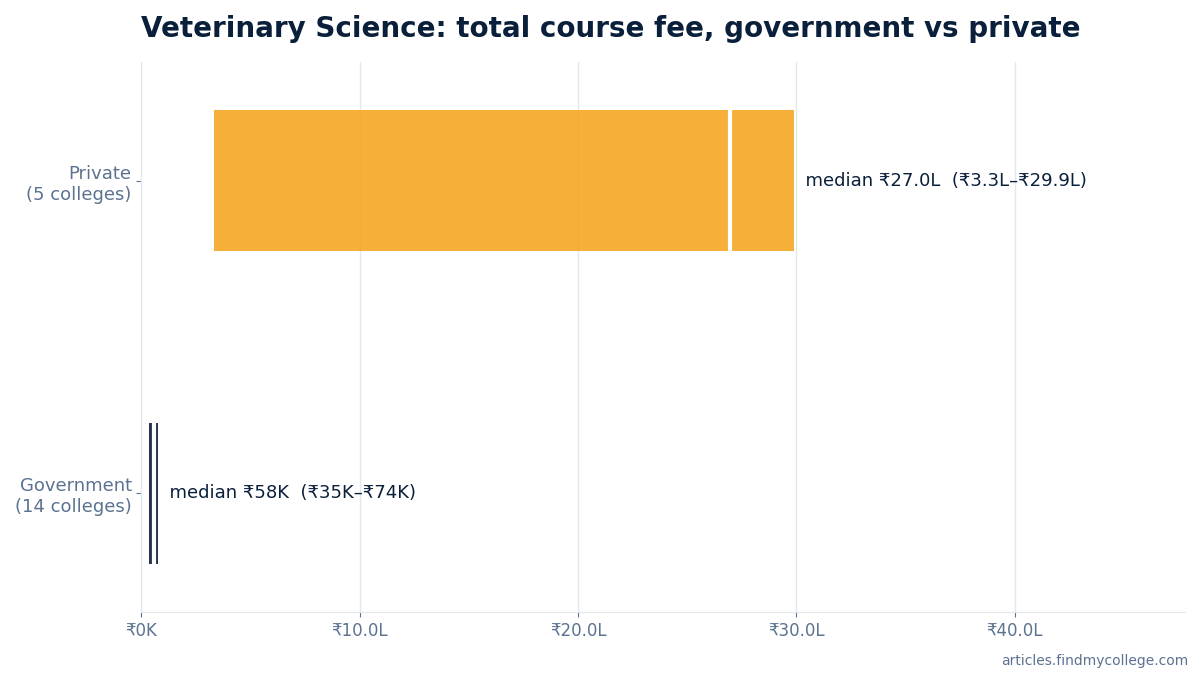
Veterinary Science in India is primarily pursued through the 5.5-year Bachelor of Veterinary Science & Animal Husbandry (BVSc & AH) undergraduate degree, which includes 4.5 years of academic study and a 1-year compulsory internship. Admissions are conducted based on NEET-UG scores, with tuition fees ranging from ₹50,000 to ₹1.5 Lakh per year in government colleges and ₹1 Lakh to ₹5 Lakh per year in private institutions.
Prospective students can explore eligibility criteria, NEET-UG counselling procedures, year-wise subject breakdowns, state-wise government and private college fees, top-ranked institutions, and salary prospects across professional roles.
| Parameter | Details |
|---|---|
| Degree Name | Bachelor of Veterinary Science & Animal Husbandry (BVSc & AH) |
| Course Duration | 5.5 years (4.5 years study + 1-year compulsory internship) |
| Eligibility | 10+2 with PCB & English (50% aggregate, 47.5% for SC/ST), Min 17 years age |
| Mandatory Entrance Exam | NEET-UG |
| Regulatory Body | Veterinary Council of India (VCI) |
| Government College Annual Fee | ₹50,000 to ₹1,50,000 per year |
| Private College Annual Fee | ₹1,00,000 to ₹5,00,000 per year |
| Average Starting Salary | ₹6.1 LPA to ₹6.5 LPA |
What is Veterinary Science
Veterinary Science deals with the medical diagnosis, prevention, treatment, and surgical care of diseases in domestic, farm, wild animals, and birds. In India, statutory regulations for veterinary education and practice are overseen by the Veterinary Council of India (VCI), established under the Indian Veterinary Council Act, 1984 under the Department of Animal Husbandry and Dairying.
The field encompasses various academic qualification levels ranging from undergraduate clinical degrees to postgraduate specialisations and doctoral research programs.
Veterinary Science Eligibility
Admission to the BVSc & AH degree program requires candidates to satisfy clear academic criteria and age parameters set by regulatory authorities:
- Qualifying Examination: Passed 10+2 higher secondary examination with Physics, Chemistry, Biology/Biotechnology, and English as core subjects.
- Minimum Aggregate Marks: At least 50% aggregate marks in Physics, Chemistry, Biology, and English for General category candidates, and 47.5% for SC/ST candidates.
- Minimum Age: Candidates must attain a minimum age of 17 years on or before 31st December of the admission year.
Veterinary Science Admission Process
Admissions to BVSc & AH programs in India are conducted using NEET-UG scores compiled by the National Testing Agency (NTA). The Veterinary Council of India (VCI) conducts online counselling for 15% All India Quota seats in recognised veterinary colleges across India using NEET-UG scores. Admissions for the remaining seats in state-run colleges are managed by respective state counselling authorities based on regional merit lists.
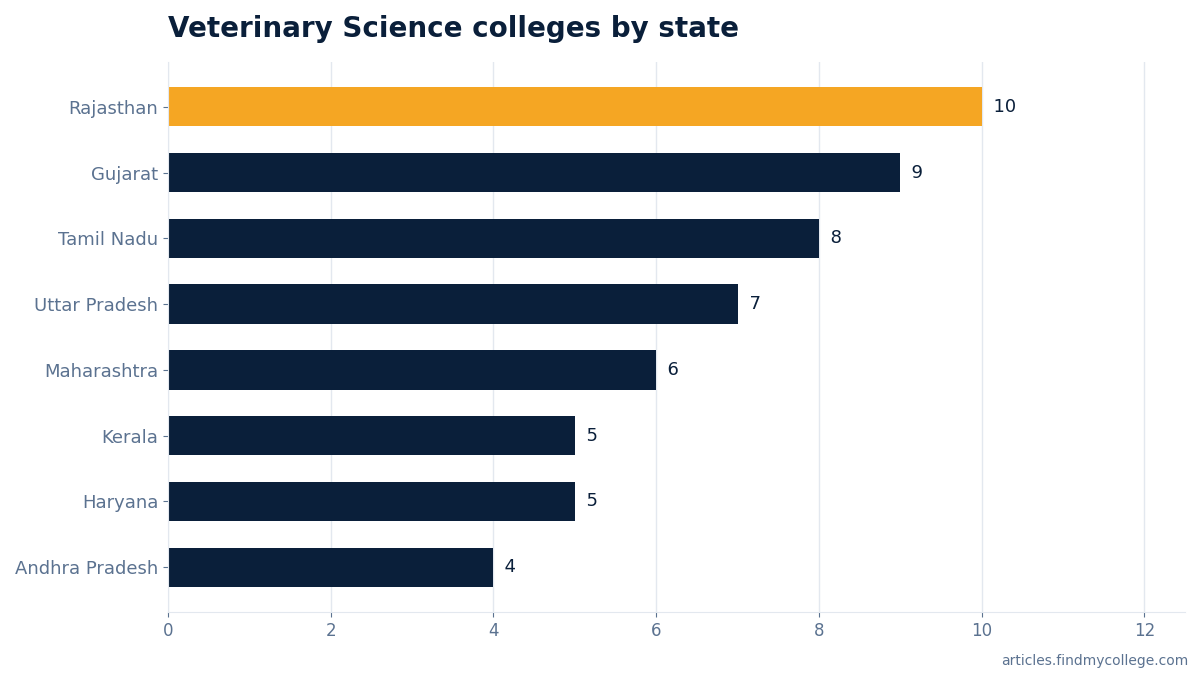
There are 53 government BVSc & AH colleges in India distributed across 24 states and union territories offering approximately 5,300 seats.
Veterinary Science Syllabus and Subjects
| Academic Year | Subjects |
|---|---|
| Year 1 | Anatomy, physiology, biochemistry |
| Year 2 | Pathology, microbiology, pharmacology |
| Year 3 | Surgery, animal nutrition, ethics |
| Year 4 | Veterinary medicine, reproduction |
| Year 5 | Clinical practice, surgery, research, compulsory internship |
Universities set their timetables under the VCI Minimum Standards of Veterinary Education Regulations, 2016. Students also study aquatic animal health, livestock management, and advanced veterinary surgery as the course progresses.
Veterinary Science Career Scope and Salary
Veterinary graduates work in clinical practice, public health, disease control, livestock administration, research institutions, and defense services. The average starting salary for a Veterinary Doctor in India is approximately ₹6.1 LPA to ₹6.5 LPA, depending on professional experience, location, and post-graduation specialisation.
Prominent organisations recruiting veterinary professionals include IVRI Bareilly, PETA India, ICMR, Indian Veterinary Association, and the CRPF paramedical department.
Career Scope and Higher Studies Options After BVSc & AH
After graduating with a BVSc & AH degree, students can enter immediate professional practice or pursue postgraduate specialisation. Master of Veterinary Science (MVSc) is a 2-year degree program. Postgraduate MVSc admissions are primarily conducted through ICAR AIEEA PG held by the National Testing Agency (NTA) and state university PG tests. Doctoral studies (Ph.D) extend between 3 to 5 years for scientific research careers.
Graduates can also obtain specialized short-term skill certifications, including the PG Diploma in Animal Welfare and Ethics from IGNOU or the Certificate in Veterinary Physician Assistant from NCTA.
How to Choose the Right Veterinary Science College in India
Selecting an appropriate veterinary college involves checking essential institutional factors:
- VCI Recognition: Confirm that the degree program is recognized by the Veterinary Council of India (VCI), established under the Indian Veterinary Council Act, 1984 under the Department of Animal Husbandry and Dairying.
- Seat Matrix: Evaluate seat distribution across 53 government BVSc & AH colleges in India across 24 states and union territories offering approximately 5,300 seats.
- Clinical Facilities: Assess veterinary teaching hospitals, diagnostic labs, and animal housing capacity available on campus for practical training.
How to Apply for Veterinary Science Admission in 2026: Step by Step
- Check Eligibility Criteria: Verify 10+2 qualification with Physics, Chemistry, Biology/Biotechnology, and English securing at least 50% aggregate marks (47.5% for SC/ST) and age minimum 17 years by 31st December of admission year.
- Register & Appear for NEET-UG: Apply and sit for the NEET-UG entrance test conducted by the National Testing Agency (NTA), as NEET scores are compulsory for BVSc & AH admissions.
- Check Merit List & Allotment Results: Review cutoff scores and seat allotment lists published by VCI or respective state counselling authorities.
- Document Verification & College Reporting: Report to the allotted veterinary college with 10th/12th mark sheets, NEET score card, category certificate, and medical fitness certificates for physical verification.
- Pay Course Fees & Finalize Admission: Pay annual tuition fees (ranging between ₹50,000 to ₹1.5 Lakh for government or ₹1 Lakh to ₹5 Lakh for private colleges) to secure enrollment.
| What to do | Where | Link |
|---|---|---|
| 15% All India Quota counselling registration and official BV | Veterinary Council of India Admissions Portal | vci.admissions.nic.in |
| Compare colleges, fees and cutoffs | Veterinary Science colleges in India | findmycollege.com |